Genre
Free Jazz
Late 1950s onward — USA — Liberated, Confrontational, Collective
Free jazz strips away the guardrails — fixed chord changes, preset forms, steady metered time — and asks musicians to build something together in real time with no map. The result can be furious and dense, or spacious and almost meditative, but it's always demanding: of the players and of anyone listening closely. This is jazz that trusts the musicians completely and extends the same trust to you.

The formal starting gun is usually Ornette Coleman's arrival in New York around 1959, but the ideas had been building for a while. Coleman came out of Fort Worth playing a plastic alto saxophone and a harmonic language that bypassed chord changes entirely, focusing instead on melody as its own self-sufficient logic. His quartet's residency at the Five Spot in New York in 1959 genuinely rattled people — some musicians walked out, others stayed and had their heads turned around. His album The Shape of Jazz to Come (1959) made the argument clearly: you don't need the chord sequence underneath if the melodic line knows where it wants to go.
The album that gave the genre its name came a year later. Coleman recorded Free Jazz (1960) with a double quartet — two rhythm sections, two horn players on each side of a stereo split — improvising simultaneously for nearly forty minutes. It was a provocation, and it worked as one. But free jazz was never just one approach. Cecil Taylor was building something completely different at the same time: dense, percussive, almost orchestral piano music that hit like a prepared piano and a jazz band colliding. Taylor had absorbed Bartók and Ellington equally and wasn't interested in settling into either tradition. His records are not easy listening, but they reward patience in a way that few things do.
The mid-1960s brought the music into dialogue with the civil rights and Black Power movements. The Association for the Advancement of Creative Musicians, founded in Chicago in 1965, turned free improvisation into a community project — musicians like Muhal Richard Abrams, Roscoe Mitchell, and Anthony Braxton were running their own concerts, publishing their own scores, teaching kids. The AACM understood that artistic freedom and economic independence were the same fight. Meanwhile in New York, Albert Ayler was doing something even more radical: he was pulling free jazz back toward folk melody and gospel, playing hymn-like themes at the top and bottom of performances that disintegrated into sheets of pure sound in between. His records confuse people who expect free music to always be aggressive — it isn't, and Ayler proves it.
Free jazz never became a mainstream taste, and that's fine — it was never asking for your approval. What it did was permanently expand what jazz musicians thought they were allowed to do. You can hear it downstream in the loft scene of the 1970s, in noise music, in the avant-garde improvisation that kept bubbling out of Chicago, London, and Berlin through the following decades. The musicians who made it weren't trying to destroy jazz; most of them loved the tradition deeply. They were arguing that the tradition was big enough to include this too.
No chord changes, no fixed form, no problem — if the musicians actually know what they're doing.
Essential Albums
♫
The Shape of Jazz to Come
Ornette Coleman · 1959
The album that demonstrated you could make coherent, emotionally direct jazz without leaning on chord changes — and that doing so opened up more space, not less.
♫
Free Jazz: A Collective Improvisation
Ornette Coleman · 1960
Forty minutes of two quartets improvising simultaneously — chaotic on paper, but structurally rigorous in practice, and the record that named an entire movement.
♫
Unit Structures
Cecil Taylor · 1966
Taylor at his most systematic and fierce, building dense collective sound from first principles — about as far from swing-era piano as you can get while still being jazz.
♫
Spiritual Unity
Albert Ayler · 1964
Just alto saxophone, bass, and drums, but Ayler turns that into something that sounds like a whole congregation — sacred, raw, and impossible to categorize.
In This Genre
112 artists in your library♫
Sirone
Bass - United States - Free Jazz
Sirone was the bassist who held the center of some of the wildest free jazz of the 1970s without ever losing the thread. He's best known as a third of the Revolutionary Ensemble, a trio that proved you didn't need drums or piano to build something that swung and screamed in equal measure. Spend time with his playing and you start to notice how much weight a bass can carry when nobody told it to stay in the background.
♫
Muhal Richard Abrams
Piano - USA - Avant-Garde Jazz
Muhal Richard Abrams was the quiet architect behind one of the most genuinely radical experiments in American music — the Association for the Advancement of Creative Musicians, which he co-founded in Chicago in 1965. His own piano playing was impossible to pin down: blues, classical, free improvisation, and electronic textures all coexisted in his work without any apparent contradiction. He never chased trends, which is probably why his music still sounds like nobody else's.
♫
Irene Aebi
Vocals, Cello - Switzerland - Avant-Garde Jazz
Irene Aebi didn't come up through jazz clubs — she came up through classical training, and it shows in every note she sings. For decades she was the voice at the center of Steve Lacy's music, turning poems by writers like Robert Creeley and Brion Gysin into something between art song and free improvisation.
♫
Rashied Ali
Drums - United States - Free Jazz
Rashied Ali is the drummer who helped John Coltrane blow the doors off the whole idea of jazz time-keeping. He didn't swing so much as surround you, playing in waves instead of bars, and by the time he was done nobody could argue that a drummer had to keep the beat to keep the music together.
♫
Arild Andersen
Double Bass · Norway · Nordic Jazz
Arild Andersen has spent six decades proving that the double bass can carry a whole story on its own — melodic, searching, and never just keeping time. He came up through the Oslo scene in the late 1960s and quickly became one of the most in-demand bassists in European jazz, but he was always more interested in building something personal than in collecting session credits. His recordings for ECM Records defined a particular kind of Nordic sound: spacious, cool-headed, and quietly ambitious.
♫
Albert Ayler
Tenor Saxophone · USA · Free Jazz
Albert Ayler didn't just play outside the changes — he seemed to come from a completely different tradition, one rooted in marching bands, folk hymns, and something older than jazz itself. His tenor saxophone sound was enormous and raw, closer to a human cry than any instrument most listeners had heard. He made only a handful of records before his death at 34, but they rewired what a lot of people thought music could do.
♫
Derek Bailey
Guitar - England - Free Improvisation
Derek Bailey spent decades trying to play guitar like nobody had ever told him how. He started out reading charts in dance bands and ended up inventing a vocabulary of clicks, scrapes, and broken chords that barely sounds like guitar at all. If you think you know what the instrument can do, he's the guy who'll make you reconsider.
♫
Gato Barbieri
Tenor Saxophone - Argentina - Latin Jazz / Free Jazz
Gato Barbieri played the tenor saxophone like he was shouting across a canyon — raw, cracked, full of feeling. He started out screaming inside the free jazz movement in Europe, then turned around and built a sound soaked in the folk music of his native Argentina, and somewhere in between he scored a movie that made him briefly, strangely famous.
♫
Han Bennink
Drums - Netherlands - Avant-Garde Jazz
Han Bennink plays drums like he's trying to destroy them and love them at the same time. He's the guy who'll swing as hard as any bebop drummer for sixteen bars and then start hitting a clog, the floor, or a clarinet reed with equal conviction. Dutch jazz basically starts with him.
♫
Tim Berne
Saxophone - United States - Avant-Garde Jazz
Tim Berne writes music that feels like it's rearranging furniture while you're still sitting in the chair. He's spent decades building long, knotty compositions for small groups that sound improvised and composed at the same time, and he's never much cared whether that made him easy to sell.
♫
Ed Blackwell
Drums - United States - Free Jazz
Ed Blackwell brought New Orleans with him wherever he played — the parade-ground snap, the second-line swing, the sense that a drum kit could sing a melody instead of just keeping time. He became one of the quiet architects of free jazz by refusing to abandon where he came from.
Paul Bley
Piano - Canada - Post-Bop, Free Jazz, Fusion
Paul Bley was a restless architectural genius of the keyboard whose music seemed to exist in perpetual conversation with silence. Operating across seven decades with unwavering experimental curiosity, he mapped territories between bebop, free improvisation, and electronic innovation that few pianists dared approach. His whisper-light touch and harmonic sophistication made him an invisible architect of modern jazz's most adventurous corners.
♫
Carla Bley
Piano, Composition — USA — Avant-Garde
Carla Bley wrote some of the strangest, funniest, and most ambitious music in jazz — and she did most of it on her own terms, outside the major label system, often with her own band and her own record company. She came up as a cigarette girl at Birdland who taught herself theory, and ended up composing a three-hour jazz opera that became one of the more genuinely bizarre artifacts of the 1960s avant-garde. Her music can be absurdist and tender in the same breath, and there's nobody else who sounds quite like her.
♫
Hamiet Bluiett
Baritone Saxophone - United States - Avant-Garde Jazz
Hamiet Bluiett made the baritone saxophone do things nobody expected from an instrument that size — he could growl like a tuba or scream like an alto, sometimes in the same phrase. He co-founded the World Saxophone Quartet and spent decades proving the baritone could lead a band instead of just holding down the bottom.
♫
Lester Bowie
Trumpet - United States - Avant-Garde Jazz
Lester Bowie played trumpet like he was laughing and crying at the same time, sometimes in the same phrase. He co-founded the Art Ensemble of Chicago, wore a lab coat on stage instead of a suit, and spent four decades proving that avant-garde music could be funny, funky, and deadly serious all at once.
♫
Anthony Braxton
Reeds & Woodwinds — USA — Avant-Garde
Anthony Braxton has spent over fifty years building one of the most elaborate and genuinely strange bodies of work in all of jazz — or whatever you want to call it, since he'd probably argue the label itself is too small. He plays alto saxophone, clarinet, flute, contrabass clarinet, and a handful of other instruments, but what's really distinctive is how he thinks: in systems, in diagrams, in music that references itself across decades. If you go in expecting a linear listening experience, he will cheerfully disappoint you.
♫
Peter Brötzmann
Saxophone - Germany - Free Jazz
Brötzmann played saxophone like he was trying to tear a hole in the air. He came out of postwar Germany with a sound so raw and relentless that it basically announced European free jazz had arrived and didn't need America's permission.
♫
Kent Carter
Bass, Cello - USA - Free Jazz
Kent Carter spent most of his career as the guy holding down the bottom while everyone else in the room went sideways. He left New York for Paris in the late 1960s and never really left, becoming one of the quiet architects of European free jazz — a bassist and cellist who could anchor a Steve Lacy tune with real elegance one night and dissolve into pure noise the next.
♫
Don Cherry
Trumpet - USA - Free Jazz / World
Don Cherry was the guy who kept walking through doors that nobody else knew were there. He came up playing with Ornette Coleman and helped blow apart the rulebook on what jazz could be, then spent the rest of his life roaming the world collecting sounds — African, Indian, Tibetan, Scandinavian — and folding them into something that was entirely his own. If you want to understand where jazz went after bebop, Cherry is one of the most honest answers.
♫
Jon Christensen
Drums - Norway - Nordic Jazz
Jon Christensen never hit a drum like he was trying to prove something. He played like he had all the time in the world, which is exactly why half of Europe's best pianists and saxophonists wanted him behind them. If you've ever heard an ECM record and thought the drums sounded unusually spacious and unhurried, there's a decent chance it was him.
♫
Steve Coleman
Alto Saxophone - USA - Avant-Garde
Steve Coleman spent years quietly building one of the most systematically original approaches to rhythm in jazz, and the music world mostly caught up with him decades later. His concept — M-Base, a framework for thinking about groove, structure, and improvisation as interlocking systems — sounds academic until you actually hear it, at which point it just sounds alive. He is the kind of musician other musicians study obsessively.
♫
Ornette Coleman
Alto Saxophone - USA - Free Jazz
Ornette Coleman arrived in New York in 1959 and essentially broke jazz open — not by accident, but by design. He had spent years developing a way of playing that treated melody as a living, breathing thing, free from the obligation to follow chord changes. The music that followed was called free jazz, a term he practically invented, and it divided serious listeners right down the middle.
♫
Jerome Cooper
Drums - United States - Avant-Garde Jazz
Jerome Cooper never wanted to just keep time — he wanted to rethink what a drum kit was for. As a founding member of the Revolutionary Ensemble, he spent decades proving that percussion could carry melody, color, and structure just as well as rhythm, and he kept chasing that idea solo, with balafon and electronics in hand, long after the group broke up.
♫
Larry Coryell
Guitar - USA - Jazz Fusion
Larry Coryell was one of the first guitarists to seriously merge rock energy with jazz vocabulary, arriving in New York in the mid-1960s when that combination felt genuinely dangerous and new. He had the chops to hang with anyone — bebop heads, free players, classical composers — and spent his whole career restlessly moving between those worlds. The fact that he never settled into a single lane frustrated some people and made him all the more interesting to others.
♫
Association For The Advancement Of Creative Musicians
Collective - USA - Avant-Garde
Founded in Chicago in 1965, the AACM is less a band than a movement — a self-organized collective of African American musicians who decided they didn't need the music industry's permission to make, present, and distribute their own work. What came out of it reshaped the outer edges of jazz and kept reshaping them for decades. If you've ever wondered where the weirder, freer end of the music comes from, a lot of it traces back here.
♫
Andrew Cyrille
Drums - United States - Free Jazz / Avant-Garde
Andrew Cyrille spent over a decade inside one of the most demanding bands in jazz history, Cecil Taylor's unit, and came out the other side with a drumming language all his own — one built on space, texture, and conversation rather than raw power. He never needed to be the loudest guy in the room to be the most essential one.
♫
Jack DeJohnette
Drums - United States - Fusion, Post-Bop, Free Jazz
Jack DeJohnette is a polymath drummer whose restless creativity has made him indispensable across decades of jazz evolution. From his groundbreaking work with Miles Davis to his visionary leadership of his own ensembles, DeJohnette has consistently pushed the boundaries of what percussion can express, blending technical mastery with poetic sensitivity.
♫
Whit Dickey
Drums - United States - Free Jazz / Avant-Garde Jazz
Whit Dickey is a drummer who learned to listen before he learned to lead, and it shows in everything he plays. He spent years inside David S. Ware's quartet, one of the great unsung bands of modern jazz, before stepping out as a bandleader and label owner in his own right, shaping a corner of the free jazz world that rewards patience over noise.

Eric Dolphy
Woodwinds - United States - Free Jazz Pioneer
Eric Dolphy was a virtuoso of the alto saxophone, bass clarinet, and flute who refused to be confined by any single musical language. His work with Charles Mingus and John Coltrane pushed the boundaries of harmonic and rhythmic possibility, creating a sonic vocabulary that sounded alien yet deeply human. In his brief but incandescent career, Dolphy became the architect of a new kind of listening—one where the instrument could sing, wail, laugh, and cry in ways that defied conventional melody.
♫
Hamid Drake
Drums & Percussion - USA - Free Jazz / Spiritual Jazz
Hamid Drake is one of those drummers who makes you reconsider what rhythm is actually for. Rooted equally in African American jazz tradition, West African drumming, reggae, and Sufi devotional music, he plays like someone who has spent decades thinking about how a beat can hold a whole community together. He's been a fixture in Chicago's avant-garde scene for years, but his name deserves to be better known outside the circles where it already glows.
♫
Axel Dörner
Trumpet - Germany - Avant-Garde Jazz
Axel Dörner can make a trumpet sound like almost anything except a trumpet — wind through a pipe, a dial tone, static on a radio. He built a career on taking the instrument apart and finding sounds nobody else had bothered to look for, while somehow still showing up in straight-ahead quartets playing real tunes with real swing.
♫
Bill Frisell
Guitar · American · Contemporary
Bill Frisell is the guitarist who made Americana and jazz stop arguing with each other. Over four decades he has built a sound so distinctly his own that you can usually tell it's him within about five seconds — that clean, unhurried tone, those chords that seem to float just slightly off the ground. He works slowly and quietly, but the catalog he's assembled is genuinely extraordinary.

Jan Garbarek
Tenor Saxophone - Norway - Nordic Jazz & World Fusion
Jan Garbarek transformed the tenor saxophone into an instrument of profound spiritual inquiry, pioneering a distinctly Nordic sound that married free jazz exploration with world music influences. His soaring, often wordless vocals and lyrical approach created a template for generative, mood-rich jazz that transcended genre boundaries. For over five decades, he has remained one of Europe's most distinctive and influential improvisers.
♫
Jimmy Garrison
Bass - USA - Modal Jazz
Jimmy Garrison spent the most important years of his career holding down the bottom end of one of the most demanding groups in jazz history, and he did it without ever calling attention to himself. He was the bassist in John Coltrane's classic quartet, the one who had to keep something resembling a center while Coltrane and McCoy Tyner and Elvin Jones were pulling in every direction at once. That he managed it — and made it sound natural — says everything about how good he was.
♫
George Garzone
Tenor Saxophone - USA - Post-Bop
George Garzone has been one of the most quietly influential tenor saxophonists in jazz for decades, the kind of player who turns up everywhere and somehow never gets quite the mainstream spotlight his playing deserves. He built a devoted following through his teaching at Berklee and his work with the long-running Boston-based group the Fringe, and his approach to improvisation — a system he calls 'triadic chromatic' — has shaped how a generation of saxophonists think about melody and harmony. If you haven't dug into his playing yet, you're in for a surprise.
♫
Charles Gayle
Saxophone - USA - Free Jazz
For most of his life, Charles Gayle played saxophone on New York City streets because no club would have him — not because he lacked ability, but because his music was too raw, too uncompromising, too everything. He spent years homeless, busking in subway stations, before the downtown avant-garde scene finally caught up with him in his fifties. What followed was a recording career that made a lot of younger free jazz players look polite by comparison.
♫
Marcus Gilmore
Drums - USA - Post-Bop / Contemporary Jazz
Marcus Gilmore is one of the most sought-after drummers in jazz right now, and for good reason — he plays with a precision and rhythmic imagination that makes even veteran bandleaders sit up straighter. The grandson of Roy Haynes, he carries a serious lineage without being weighed down by it. His playing sounds like someone who has absorbed everything and is now doing exactly what he wants with it.
♫
Jimmy Giuffre
Clarinet - United States - Cool Jazz / Free Jazz
Jimmy Giuffre wrote one of the most famous charts in big band history before he turned thirty, then spent the rest of his life quietly dismantling everything jazz was supposed to sound like. He traded drums and walking bass for whispered counterpoint, and by the early sixties he was making music so spare and strange that even the free jazz crowd didn't quite know what to do with it.
♫
Vinko Globokar
Trombone - France/Slovenia - Avant-Garde Jazz
Vinko Globokar treats the trombone like it owes him something — breathing through it, screaming through it, making it talk in ways that have nothing to do with swing charts. He came up between classical composition and free improvisation and never picked a side, which is exactly why jazz people who know his name tend to speak of him with a mix of respect and confusion.
♫
Milford Graves
Drums - USA - Free Jazz / Avant-Garde
Milford Graves approached the drum kit less like a timekeeper and more like a researcher — someone genuinely trying to figure out what rhythm is made of at the cellular level. He studied the human heartbeat, acupuncture, and martial arts not as hobbies but as extensions of the same investigation he was running on his instrument. The result was drumming unlike anything else in jazz: polyrhythmic, unpredictable, and completely his own.
♫
Bob Gullotti
Drums - USA - Avant-Garde Jazz
Bob Gullotti spent nearly five decades behind the kit in Boston, mostly known outside a small circle of devoted fans for one thing: keeping The Fringe together. That trio, with saxophonist George Garzone and bassist John Lockwood, played weekly gigs for over forty years, and Gullotti was the glue that let the other two go as far out as they wanted.
♫
Barry Guy
Double Bass - England - Free Jazz / Avant-Garde
Barry Guy plays the double bass like it owes him money — bowing it into shrieks, slapping it, treating the strings as percussion as much as pitch. He's spent decades moving between free improvisation and notated composition without ever picking a side, running a big band of anarchic soloists one week and sawing through Biber sonatas the next.
♫
Charlie Haden
Bass - USA - Free Jazz / Chamber Jazz
Charlie Haden played the bass like it was carrying the weight of something personal — a political conviction, a memory, a grief he hadn't finished with yet. He came up through the avant-garde fire of Ornette Coleman's revolution, but his sound was always rooted in melody, in the old country music he heard as a child singing on his family's radio show in Iowa. By the end of his life he had made records of such quiet beauty that they felt less like jazz albums and more like letters.
♫
Roy Haynes
Drums - USA - Hard Bop / Post-Bop
Roy Haynes has been playing drums professionally since the 1940s and is still doing it better than almost anyone alive. He has worked with pretty much every major figure in jazz across eight decades — not as a sideman who faded into the background, but as a genuine force who pushed every band he joined. The man has a snare sound you can identify in about two seconds.
♫
Billy Higgins
Drums - USA - Hard Bop / Free Jazz
Billy Higgins might be the most purely joyful drummer in the history of jazz — a guy who seemed genuinely delighted to be playing, every single time. He was on so many landmark recordings that his name became a kind of guarantee of quality, from the earliest Ornette Coleman records to decades of work with Cedar Walton. What's remarkable is that through all of it, he never lost that feeling of lightness, that sense that the drums were something to smile about.
♫
Terumasa Hino
Trumpet - Japan - Post-Bop
Terumasa Hino came up in Tokyo playing hard bop with a ferocity that had nothing to do with imitation and everything to do with conviction. He spent decades building a reputation in Japan before Blue Note came calling, and by the time Western audiences caught on, he had already gone somewhere else entirely. His trumpet playing is aggressive, searching, and occasionally uncomfortable in the best possible way.
♫
Dave Holland
Double Bass · England · Post-Bop / Contemporary Jazz
Dave Holland is the kind of bassist who changes the way you hear the instrument — not because he's flashy, but because every note he plays sounds like a decision. He arrived in New York in 1968 at the invitation of Miles Davis and spent the next five decades building one of the most consistently inventive bodies of work in modern jazz. His bass lines don't just keep time; they argue, question, and sometimes take over the conversation entirely.
♫
Fred Hopkins
Bass - United States - Free Jazz
Fred Hopkins played bass like he was having a conversation with the whole history of the instrument at once — walking one minute, bowing a cello-deep drone the next. He spent his best years in Air, the Chicago trio that took apart ragtime and free jazz and put them back together in ways nobody had quite tried before.
♫
Daniel Humair
Drums - Switzerland - Post-Bop
Daniel Humair is the drummer who made Paris one of the great jazz capitals of the world without ever needing New York's blessing. He swings as hard as anyone who came up idolizing Kenny Clarke, but he never stopped pushing toward the edges, backing Eric Dolphy one year and French modernists the next. He's also a serious painter, which tells you something about how he hears rhythm — as color, as gesture, not just as time.
♫
Shabaka Hutchings
Saxophone - United Kingdom - Spiritual Jazz
Shabaka Hutchings spent the last decade turning three different bands into three different arguments for why jazz still matters outside the conservatory. Then, at the height of his influence, he put the saxophone down and picked up the flute. That kind of nerve is rare, and it's exactly what makes him worth paying attention to.
♫
Joseph Jarman
Saxophone - United States - Avant-Garde Jazz
Joseph Jarman spent his career proving that a saxophonist could also be a poet, a dancer, a priest, and a provocateur, all in the same set. He helped build the Art Ensemble of Chicago into one of the most theatrical bands in jazz history, then walked away from music almost entirely to run a martial arts dojo and study Buddhism, before quietly coming back to it later in life.
♫
Leroy Jenkins
Violin - United States - Free Jazz
Leroy Jenkins took an instrument nobody associated with jazz and made it sound like it had been there all along, screaming and singing right alongside the horns. He came up through Chicago's AACM scene and spent the rest of his life proving the violin could hold its own in the noisiest, most unruly corners of improvised music.
♫
Oliver Johnson
Drums - United States - Free Jazz
Oliver Johnson was the drummer who followed the American free jazz exodus to Paris and never really came back. He spent decades as the rhythmic engine behind some of the most uncompromising music of the era, trading the clatter of New York lofts for the cafes and clubs of the French capital.

Elvin Jones
Drums - USA - Modal Jazz & Free Jazz
Elvin Jones was the propulsive heartbeat of John Coltrane's classic quartet, a drummer whose polyrhythmic intensity and seemingly telepathic interplay with his bandmates redefined what percussion could achieve in jazz. His approach—simultaneously swinging and free, supportive yet solistically adventurous—became the blueprint for generations of jazz drummers seeking to balance musicality with raw power.
♫
Masabumi Kikuchi
Piano - Japan - Post-Bop / Free Jazz
Masabumi Kikuchi spent decades building a reputation as one of Japan's most serious jazz pianists, but the music he made in the last chapter of his life is where things get genuinely strange and remarkable. He stripped everything back — no rhythm section, long silences, tones that seem to dissolve before they resolve — and arrived at something that sounds like no one else. If you come to him expecting swing or even conventional post-bop, you'll need to adjust your ears.
♫
Rahsaan Roland Kirk
Multi-Instrumentalist - United States - Avant-Garde Jazz
Rahsaan Roland Kirk could play three horns at once and somehow make it sound like a conversation, not a party trick. He was blind, loud, funny, political, and completely serious about music even when he was juggling a tenor sax, a manzello, and a stritch at the same time.
♫
Joachim Kühn
Piano - Germany - Free Jazz / Fusion
Joachim Kühn grew up on the wrong side of the Berlin Wall and spent his career refusing to stay put stylistically, jumping from free jazz to fusion to acoustic trio work like a man who never quite trusted comfort. He's the rare European pianist Ornette Coleman actually wanted to play with, which tells you something about how seriously he takes harmony as a thing you can bend rather than obey.
♫
Steve Lacy
Soprano Saxophone - USA - Free Jazz / Avant-Garde
Steve Lacy spent decades making the soprano saxophone his own instrument — not borrowing it from Sidney Bechet or John Coltrane, but rebuilding it from the inside out. He found his true north in the music of Thelonious Monk and never really left, even as he pushed into some of the furthest reaches of free improvisation. By the time he settled in Paris and started leading his own groups, he had become one of the most quietly radical voices in jazz.
♫
Booker Little
Trumpet - USA - Post-Bop
Booker Little died at 23, which means most people file him under 'tragic genius' and move on. That's a shame, because what he left behind is genuinely strange and exciting music that doesn't sound like anyone else from that period. He was working out ideas that most trumpeters wouldn't catch up to for years.
♫
Paul Lovens
Drums, Percussion - Germany - Avant-Garde Jazz
Paul Lovens doesn't play drums so much as dismantle the whole idea of a drum kit and rebuild it into something stranger and more personal. He's been one of the quiet engines of European free improvisation for five decades, the guy behind the kit in the Alexander von Schlippenbach Trio who never once sounds like he's keeping time in any conventional sense.
♫
Bernard Lubat
Piano, Drums, Vibraphone - France - Avant-Garde Jazz
Bernard Lubat never picked one instrument and stuck with it, which tells you everything about how he thinks about music. He came up as a drummer good enough to tour with Stan Getz, then kept adding piano, vibraphone, accordion, and his own voice to the pile, turning concerts into something closer to theater. He also went home to the tiny Gascon village of Uzeste and built a festival there instead of chasing Paris.
♫
Jimmy Lyons
Alto Saxophone - United States - Avant-Garde Jazz
Jimmy Lyons spent a quarter century standing next to Cecil Taylor, playing lines so fast and angular they sounded like they'd snap in half, and somehow they never did. He came up loving Charlie Parker and never really stopped loving him, which made his version of free jazz sound different from everyone else's — bebop bones wearing a very different skin.
♫
Paul Lytton
Drummer/Percussion - England - Free Jazz
Paul Lytton never sounded like a drummer trying to swing — he sounded like someone building a radio out of scrap metal in real time. For half a century he's been one of the quiet engines of European free improvisation, half percussionist, half inventor, rarely interested in keeping time the way anyone taught him to.
♫
Sachiko M
Sine Waves - Japan - Avant-Garde Improvisation
Sachiko M started out sampling other people's sounds and ended up throwing almost everything away, down to a single sine wave and the silence around it. She's one of the few improvisers who built a whole language out of subtraction, and once you hear her play you understand why the Tokyo scene she helped shape got nicknamed onkyo — sound, stripped bare.
♫
Rudi Mahall
Bass Clarinet - Germany - Free Jazz
Rudi Mahall picked an instrument that most jazz musicians treat as a novelty and made it sound completely normal to improvise on for forty minutes straight. He is the rare bass clarinetist who built an entire career around the horn rather than doubling on it between saxophone solos, and in doing so he became one of the central voices in Berlin's free jazz and avant-garde scene.
♫
Albert Mangelsdorff
Trombone - Germany - Avant-Garde Jazz
Mangelsdorff figured out how to sing and play the trombone at the same time, which sounds like a gimmick until you hear what he actually did with it. He spent five decades proving that German jazz didn't have to live in the shadow of American masters, and by the end he'd built something nobody else really owned.
♫
Mike Mantler
Trumpet & Composition - Austria - Avant-Garde Jazz
Mike Mantler never chased the spotlight as a player, but as an organizer and composer he built the room where some of the wildest jazz of the late 1960s and 70s got to happen. He's the guy who founded the Jazz Composers Orchestra Association, married Carla Bley, and spent decades writing music that sat somewhere between big-band ambition and free-jazz nerve.
♫
Ken McIntyre
Alto Saxophone - United States - Avant-Garde Jazz
Ken McIntyre spent as much time in classrooms as he did on bandstands, and you can hear it in his playing — careful, searching, never showing off just to show off. He cut one of the great lost records of 1960 with Eric Dolphy, then more or less vanished from the center of the jazz conversation while he built a teaching career, before resurfacing decades later with a run of records for a Danish label that nobody talks about enough.
♫
Myra Melford
Piano - United States - Avant-Garde Jazz
Myra Melford plays piano like she's got a drum kit hidden inside it — all elbows and gospel fire one minute, quiet as a held breath the next. She came up studying with Don Pullen, which explains a lot, but she built something entirely her own out of blues, Indian harmonium music, and a restless curiosity about what a trio or quintet can actually do.
♫
Roscoe Mitchell
Reeds / Percussion - USA - Avant-Garde
Roscoe Mitchell has been building his own musical universe since the mid-1960s, when he helped found the Association for the Advancement of Creative Musicians in Chicago and started making records that sounded like nothing anyone had heard before. He plays alto, soprano, and bass saxophones, along with a sprawling collection of small percussion instruments, and he treats silence with the same seriousness he gives to sound. More than fifty years in, he is still releasing work that sounds like it came from someone with somewhere new to go.
♫
Butch Morris
Cornet - United States - Avant-Garde Jazz
Butch Morris picked up a cornet but ended up inventing a new job. He called it conduction — a way of leading a room full of improvisers using hand signals instead of sheet music, somewhere between a composer, a traffic cop, and a jazz musician who got tired of soloing.

Paul Motian
Drums - United States - Free Jazz / Post-Bop
Paul Motian was a drummer who transformed the instrument from timekeeper to melodic voice, creating conversations rather than keeping tempo. His work with Bill Evans and Keith Jarrett established him as a conceptual innovator, while his leadership of the Paul Motian Trio proved that drums could anchor ensembles with lyrical sensitivity and architectural sophistication. For half a century, he pursued music that valued listening over virtuosity.
♫
David Murray
Tenor Saxophone & Bass Clarinet - USA - Avant-Garde Jazz
David Murray showed up in New York in the mid-1970s with a tenor sound so big it seemed to need its own zip code, and he's been filling rooms with it ever since. He can honk and scream like Albert Ayler one minute and croon like Ben Webster the next, sometimes in the same solo, and he's never bothered picking a side.
♫
Sunny Murray
Drums - USA - Free Jazz
Sunny Murray didn't just play free jazz — he helped invent the idea that a drummer didn't have to keep time at all. Working alongside Cecil Taylor and Albert Ayler in the early 1960s, he dissolved the rhythmic floor that jazz had always stood on, replacing pulse with pressure, density, and pure sound. What came out the other side was something most listeners had never heard from a drum kit before.
♫
Tony Oxley
Drums - England - Avant-Garde Jazz
Tony Oxley spent the sixties keeping time for visiting American giants at Ronnie Scott's, then spent the rest of his life tearing time apart. He built a drum kit wired with contact mics and electronics decades before that was fashionable, and he used it to make some of the most unruly, intelligent music to come out of British jazz.
♫
Emile Parisien
Soprano Saxophone - France - Contemporary Jazz
Emile Parisien picked an instrument that most modern jazz players treat as a side hustle and made it his whole voice. His soprano sax playing is fast, funny, a little unhinged at the edges, and it has made him one of the most fun French jazz musicians to watch live in the last two decades.
♫
William Parker
Double Bass - United States - Free Jazz
William Parker has spent five decades making the bass sound like it's carrying the whole weight of the music, and somehow it always does. He came up in the New York loft scene of the 1970s, spent a decade inside Cecil Taylor's unit, and eventually became the guy other players called when they needed someone who could hold a free improvisation together without ever making it feel tame.
♫
Evan Parker
Saxophone - England - Free Jazz
Evan Parker figured out how to make a saxophone sound like a flock of birds arguing with itself, and then he built a forty-year career out of it. He is not the kind of musician you put on at a dinner party, but if you want to hear what a single horn can actually do when nobody tells it to stop, start here.
♫
Gary Peacock
Bass - USA - Post-Bop / Free Jazz
Gary Peacock spent decades quietly redefining what a jazz bassist could do — not through flash, but through an almost uncanny ability to listen and respond. He was the kind of player who made everyone around him sound better without ever calling attention to himself. His forty-year partnership with Keith Jarrett and Jack DeJohnette in the Standards Trio produced some of the most beloved acoustic jazz recordings of the last half-century.
♫
Michel Portal
Clarinet & Saxophone - France - Free Jazz / Avant-Garde
Michel Portal is the guy who could play a Mozart clarinet concerto in the afternoon and tear a free improvisation apart at night, and never once treated the two as contradictory. He came up through the strict world of French conservatory training and then spent decades blowing it open, moving between contemporary classical music, film scores, and some of the most unruly jazz to come out of Europe.
♫
Steve Potts
Saxophone - United States - Avant-Garde Jazz
If you know Steve Potts at all, you probably know him as the other saxophone in Steve Lacy's band — the alto and soprano voice that spent decades weaving around Lacy's own soprano lines. That partnership is the whole story in a way, but it's a good story: few horn pairings in jazz have lasted as long or sounded as tight.
♫
Don Pullen
Piano - United States - Avant-Garde Jazz
Don Pullen played piano like he had two separate musicians fighting for the keyboard — one hand rolling out tone clusters that sounded like a fistfight, the other laying down a gospel line so warm it could've come from a Sunday service back home. He spent years as a secret weapon in other people's bands before anyone outside the avant-garde scene really knew his name, and by the time he died he'd made some of the most purely enjoyable records to come out of free jazz.
♫
Miles Davis Quintet
Ensemble - USA - Hard Bop / Post-Bop
The Second Great Quintet — as people eventually started calling it — was one of those rare bands where everyone in the room was operating at the same level at the same time, which almost never happens. Miles Davis had done it before with different players, but this group had a particular chemistry that made even rehearsed material sound like it was being invented on the spot. Five years, a handful of studio records, and a mountain of live recordings later, they stopped before they wore it out.
♫
Sun Ra
Piano, Keyboards - USA - Avant-Garde Jazz
Sun Ra built a world before he built a band. Born Herman Poole Blount in Birmingham, Alabama, he eventually claimed to be from Saturn — and whether you take that literally or not, his music does sound like it came from somewhere else. For nearly five decades he led the Arkestra, a collective that played everything from Fletcher Henderson-style swing to free noise to electronic chaos, often on the same night.
♫
Dewey Redman
Tenor Saxophone - USA - Free Jazz / Post-Bop
Dewey Redman came up the hard way, spending his thirties playing Texas roadhouses while his peers were already making records in New York. When he finally arrived on the downtown scene, he brought something that hadn't quite been heard before — a raw, honking sound rooted in the blues that fit perfectly inside the free jazz world without ever losing its earthiness.
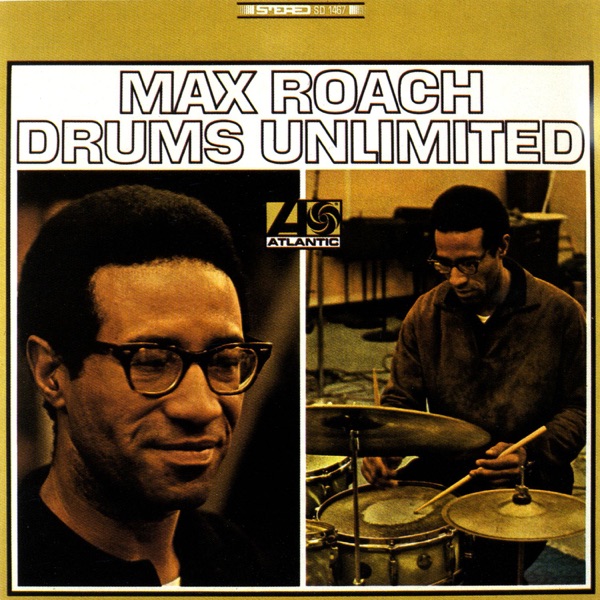
Max Roach
Drums - United States - Bebop, Hard Bop, Free Jazz
Max Roach didn't just keep time—he reinvented what drums could say in jazz. As a bebop pioneer and relentless innovator, he transformed the kit from a timekeeping instrument into a conversational voice equal to any horn, wielding brushes and sticks with compositional precision. His restless curiosity drove him across decades of musical evolution, from hard bop sophistication to politically charged free jazz.
♫
Aldo Romano
Drums - Italy/France - Free Jazz & Post-Bop
Aldo Romano is one of those musicians who seemed to be everywhere in European jazz without ever becoming a household name outside it. He started out playing guitar as a kid obsessed with Django Reinhardt, switched to drums, and ended up as the rhythmic engine behind some of the most important French and Italian jazz records of the last sixty years.
♫
Terje Rypdal
Guitar - Norway - Nordic Jazz / Fusion
Terje Rypdal took the electric guitar somewhere most jazz players never thought to go — into wide-open Nordic landscapes where rock distortion, orchestral textures, and free improvisation blur together until the genre labels just stop making sense. He came up through the Norwegian rock scene before finding his way to Jan Garbarek and the ECM label, where he spent decades making music that sounded like weather. Nobody else has sounded quite like him.
♫
David S. Ware
Tenor Saxophone - United States - Free Jazz
David S. Ware played tenor saxophone like he was trying to move furniture with it. He spent the 70s paying dues in Cecil Taylor's band, then built his own quartet in the 90s that turned out to be one of the great overlooked units in modern jazz — four guys blowing wide open but somehow always listening to each other.
♫
Pharoah Sanders
Tenor Saxophone · USA · Spiritual Jazz / Free Jazz
Pharoah Sanders made some of the most intense music of the 1960s alongside John Coltrane, and then spent the following decades finding his way toward something more lyrical and meditative. His tenor saxophone sound — huge, overblown, capable of both violence and tenderness — is one of the most recognisable in jazz. His 1969 album Karma, with its side-long piece "The Creator Has a Master Plan," remains one of the defining documents of spiritual jazz. In his later years he moved closer to soul and gospel, and his 2021 collaboration with Floating Points and the London Symphony Orchestra introduced him to a new generation.
♫
Heinz Sauer
Tenor Saxophone - Germany - Post-Bop / Avant-Garde Jazz
Heinz Sauer spent decades as one of Germany's most respected big-band saxophonists before quietly becoming one of its most interesting improvisers late in life. He never chased attention, which is probably why it took until his seventies for the rest of the world to catch up with what musicians in Frankfurt already knew.
♫
Archie Shepp
Tenor Saxophone - USA - Free Jazz
Archie Shepp arrived on the New York scene in the early 1960s with something to say — and it wasn't just musical. A playwright, poet, and fiercely political thinker as much as a saxophonist, he made records that felt like arguments, and he wanted you to feel the weight of them. Decades on, he's mellowed into blues and ballads without ever abandoning the heat that made him matter.
♫
Matthew Shipp
Piano - United States - Free Jazz
Matthew Shipp plays piano like he's building something out of concrete and glass — heavy, deliberate, occasionally beautiful in a way you don't expect. He came up through the New York free jazz scene of the late '80s and never left it, but he's spent decades proving that 'free' doesn't have to mean chaotic.
♫
Alan Silva
Double Bass - USA/France - Avant-Garde Jazz
Alan Silva didn't play bass so much as unleash it — bowing clouds of sound that could fill a room the way an orchestra does. He came up fast in the mid-60s New York free jazz scene, then spent the rest of his life pushing further out, eventually trading strings for synthesizers without ever losing that orchestral instinct.
♫
Wadada Leo Smith
Trumpet - United States - Avant-Garde Jazz
Wadada Leo Smith plays trumpet like he's not in a hurry to prove anything, which is exactly what makes him so compelling. He came out of the Chicago AACM scene with an interest in silence as much as sound, and spent the next five decades building compositions that treat American history, spirituality, and space itself as material worth improvising on.
♫
Tomasz Stanko
Trumpet · Poland · Free Jazz / ECM
Tomasz Stanko was the great voice of European free jazz — a Polish trumpeter whose sound was dark, spacious, and unmistakably his own. He came up in the 1960s alongside Krzysztof Komeda and spent decades building a body of work that moved from free improvisation toward a more lyrical but still uncompromising style. His ECM recordings from the 1990s onward are among the most distinctive in the catalogue: melancholy, searching, and quietly magnificent.
♫
Bobo Stenson
Piano - Sweden - Nordic Jazz
Bobo Stenson has been making piano records for over fifty years, and he still sounds like nobody else. He came up through the Swedish jazz scene in the 1960s but long ago moved past any obvious reference points, arriving at a style that is spare, patient, and quietly gripping. If you want to understand what Nordic jazz actually sounds like at its most refined, he is the place to start.
♫
Ståle Storløkken
Keyboards - Norway - Nordic Jazz
Ståle Storløkken is the guy who made keyboards sound dangerous again in Nordic jazz, pulling organ drones and synth textures into rooms where you'd expect a quiet piano trio. He's spent decades inside Supersilent, one of the strangest and most patient improvising groups to come out of Norway, and lent his sound to everyone from Terje Rypdal to Arve Henriksen. If you think of Nordic jazz as polite and icy, Storløkken is there to mess with that idea.
♫
Thomas Strønen
Drums - Norway - Nordic Jazz
Thomas Strønen plays drums like he's painting with a very limited palette and somehow making it feel endless. He came up through Norway's fertile improv scene, built a genre-bending duo with Iain Ballamy called Food, and has spent the last decade making some of the most quietly gripping chamber-jazz records on ECM. If you think of drummers as timekeepers, he will rearrange that idea pretty quickly.
♫
Craig Taborn
Piano · USA · Avant-Garde / Post-Bop
Craig Taborn is one of those pianists who makes you rethink what the instrument is actually capable of — not through flash, but through a kind of relentless interior logic that keeps pulling the music somewhere you didn't expect. He works across jazz, electronics, and free improvisation without ever sounding like he's switching modes, because for him those aren't really separate things. Spend an afternoon with his records and you'll start hearing familiar ideas from very different angles.
♫
Aki Takase
Piano - Japan/Germany - Avant-Garde Jazz
Aki Takase left Japan for Berlin in the 1980s and never looked back, building a career that treats stride piano and free improvisation as neighbors rather than opposites. She can quote Fats Waller one minute and tear the keyboard apart the next, and somehow it never feels like a gimmick.
♫
Cecil Taylor
Piano - USA - Free Jazz
Cecil Taylor approached the piano like nobody else — clusters of notes fired at high velocity, rhythm treated as a physical force rather than a steady pulse, the instrument itself pushed until it sounded like a whole orchestra in argument with itself. He spent decades on the margins of a music industry that had no idea what to do with him, playing for tiny audiences and teaching to pay rent, while younger musicians quietly studied everything he did. When the wider world eventually caught up, he had already moved somewhere else entirely.
♫
Henry Threadgill
Alto Saxophone & Flute - USA - Avant-Garde Jazz
Henry Threadgill builds bands the way an architect builds buildings without walls. He came out of Chicago's AACM scene with a horn player's ear and a composer's stubbornness, and spent decades figuring out how tubas, cellos, and accordions could carry the weight that pianos and basses usually do. Nobody else's music sounds quite like his, and that's not an accident.
♫
Lennie Tristano
Piano - USA - Cool Jazz / Avant-Garde
Lennie Tristano built his own corner of jazz and refused to let anyone redecorate it. Blind from childhood, self-taught in ways that bent the rules most pianists took for granted, he developed a style so logically intricate and emotionally cool that it still sounds like nothing else. He was a teacher as much as a performer, and some of his students went on to define what cool jazz actually meant in practice.

McCoy Tyner
Piano - United States - Modal Jazz, Free Jazz
McCoy Tyner was the architectural mind behind John Coltrane's most visionary recordings, a pianist whose massive hands and harmonic innovation redefined what the instrument could do in a modal context. His approach—stacked quartal chords, torrential runs, and a rhythmic independence that locked into grooves while soaring above them—became the blueprint for generations of jazz pianists. Beyond his legendary work with Coltrane, Tyner built a solo career that spanned six decades, proving himself one of the most consequential voices in post-bop jazz.
♫
Ken Vandermark
Saxophone & Clarinet - USA - Free Jazz / Avant-Garde Jazz
Ken Vandermark is the guy who proved you could build a whole career in jazz without ever really leaving the underground — and then got handed a MacArthur grant for it. He plays tenor sax, baritone, and clarinet like they owe him money, running bands in and out of Chicago with a work rate that makes other musicians tired just reading his discography.
♫
Nasheet Waits
Drums - United States - Contemporary Jazz
Nasheet Waits grew up with jazz drumming in his blood and then spent a career proving he didn't need to lean on his father's name to earn his own. He's the drummer you call when a band wants to push and pull at the same time — swinging hard one measure, breaking the time apart the next.
♫
Mal Waldron
Piano - USA / Germany - Post-Bop
Mal Waldron spent decades being slightly underestimated, which suited him fine — he made some of the most deliberately spare, pressure-cooked piano music in jazz. Best known for his years accompanying Billie Holiday and for writing 'Soul Eyes,' he later relocated to Europe and built a solo career that most American audiences missed entirely. What he left behind is stranger, darker, and more original than his reputation usually lets on.
♫
Nate Wooley
Trumpet - USA - Avant-Garde Jazz
Nate Wooley plays trumpet like he's trying to find out what the instrument is actually made of — breath, metal, spit, feedback, all of it fair game. He came up through free improvisation and noise scenes before jazz people fully caught on, and he's spent two decades making records that sound like almost nothing else with a trumpet on the cover.
♫
John Zorn
Alto Saxophone - USA - Avant-Garde Jazz
John Zorn doesn't really do genres, he does collisions — jazz slamming into hardcore, klezmer crashing through film noir soundtracks, all of it stitched together with a downtown New York energy that never sits still. He built his own label just to keep up with himself, and forty-plus years later he still hasn't slowed down.
♫
Art Ensemble of Chicago
Ensemble - USA - AACM / Free Jazz / Avant-Garde
The Art Ensemble of Chicago didn't just play free jazz — they turned a concert into something closer to a ritual, a circus, and a history lesson all at once. Rooted in the Association for the Advancement of Creative Musicians, they brought face paint, African percussion, toy instruments, and decades of African American musical tradition onto the same stage. Nobody before them had tried to hold that much at once, and very few since have pulled it off.
♫
Alexander von Schlippenbach
Piano - Germany - Free Jazz
Schlippenbach built one of the longest-running trios in free jazz history and never once made it comfortable. He's the guy who can play Monk's entire songbook from memory and then spend the next set tearing the piano apart looking for something Monk never wrote.