Space Is the First Instrument
Before you press play on anything by Roscoe Mitchell, it helps to know that silence is part of his vocabulary. He will let a phrase hang in the air for what feels like too long, and then drop a single note that recontextualizes everything that came before it. If you go in expecting the kind of free jazz that just piles energy on top of energy until it explodes, you are going to be surprised. Mitchell's music can be genuinely quiet, and that restraint is one of the things that makes him different from most of his peers.
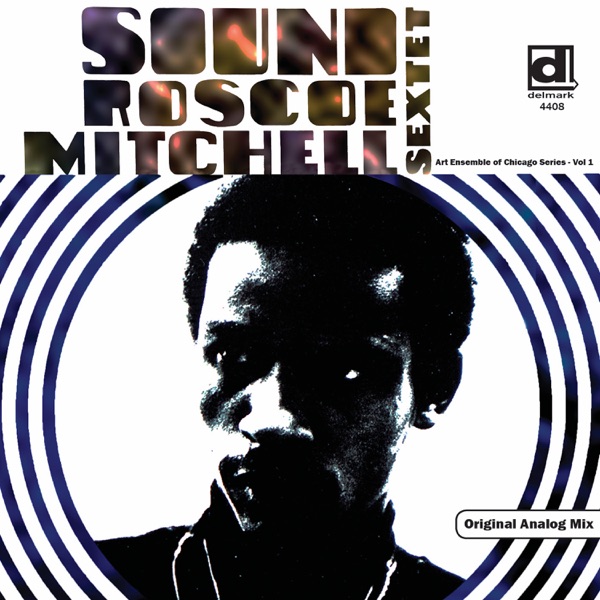
He grew up in Chicago and served in the Army before returning to the city in the early 1960s, where he fell in with a circle of musicians who were asking serious questions about what jazz could be. That circle became the AACM — the Association for the Advancement of Creative Musicians — and Mitchell was one of its founding members. The AACM was less a style than an attitude: African American musicians in Chicago controlling their own creative and economic lives, and pushing the music into genuinely new territory. Mitchell's debut as a leader, Sound (1966), came out of that world and it still sounds startling. The opening track lurches between near-silence and sudden collective noise in a way that was unlike anything else being recorded at the time.
The Art Ensemble of Chicago, which Mitchell co-founded with Lester Bowie, Joseph Jarman, Malachi Favors, and later Don Moye, became the most visible expression of those ideas. They wore face paint and theatrical costumes, surrounded themselves with hundreds of instruments onstage, and drew on everything from African percussion to bebop to European classical music. Mitchell was never the front man — that role suited Lester Bowie's theatrical instincts better — but he was one of the group's primary composers and its most rigorous musical thinker. The Art Ensemble's records from the late 1960s through the 1970s hold up because they are genuinely strange without being difficult for the sake of it.
As a solo artist Mitchell has kept moving. His Note Factory ensemble recordings from the 1990s and 2000s explored long-form composition in ways that felt closer to contemporary classical music than to jazz, and he has collaborated extensively with musicians outside the jazz world entirely. He joined the faculty at Mills College in California, which gave him a home base and a new set of collaborators. Records like Nine to Get Ready (1997) show how far his compositional thinking had developed — these are structured pieces with room for improvisation built in, not just blowing sessions with a loose framework.
What Mitchell has consistently done is treat every element of music — pitch, duration, texture, silence — as something worth thinking about carefully. He is not flashy. He will not play a hundred notes when three will do the job. If you come to his music expecting the kind of saxophone pyrotechnics associated with free jazz, you might feel like something is missing at first. Give it time. The music rewards patience, and once you hear what he is actually doing with space and color and the relationship between individual sounds, it becomes very hard to go back to players who are just filling up the air.