Genre
Spiritual Jazz
1960s–1970s — United States — Devotional, Modal, Expansive
Spiritual jazz is jazz that reaches explicitly toward something beyond the notes — God, ancestors, cosmic consciousness, collective liberation. It draws heavily on modal playing, extended improvisation, African and Eastern musical ideas, and a sense that the bandstand is also a sacred space. The music can be quiet and meditative or loud and ecstatic, but there is always the feeling that something is being sought rather than merely performed.

The roots of spiritual jazz run through the whole history of African American music — gospel, field hollers, the church — but the genre crystallized in the early 1960s when modal jazz opened up enough harmonic space for musicians to actually go somewhere without the chord changes dragging them back. John Coltrane is the obvious starting point. A Love Supreme (1965) is the album most people point to, and for good reason: it is a suite explicitly dedicated to God, complete with a written prayer in the liner notes, and Coltrane plays it like every phrase is an act of gratitude. But the album works not just because of its intent — it works because the quartet, with McCoy Tyner on piano, Jimmy Garrison on bass, and Elvin Jones on drums, had spent years building the telepathy to hold that kind of long-form emotional arc together.
Coltrane opened a door and a lot of musicians walked through it. Pharoah Sanders took the energy further outward, into longer collective improvisations and howling overtones that made some listeners uncomfortable and others feel like they were being wrung clean. Karma (1969) is the key Sanders record — Leon Thomas singing and yodeling over dense group improvisation, the whole thing feeling more like a ritual than a concert. Around the same time, the Association for the Advancement of Creative Musicians was doing similar work in Chicago. Sun Ra had been doing it since the 1950s, building an entire mythology around music as cosmic mission. These weren't just artistic statements; they were responses to what was happening in the streets, to the civil rights movement, to the question of what African American culture could claim as its own.
The genre's other great strand is quieter. Alice Coltrane — who replaced Tyner in John Coltrane's band and outlived her husband by decades — made records in the early 1970s that drew on Vedantic philosophy, Indian classical music, and jazz in roughly equal measure. Journey in Satchidananda (1971) puts harp, tambura, and bass clarinet together in a way that shouldn't work but absolutely does. Alice Coltrane isn't a footnote to her husband's story; she's a major figure in her own right who spent decades running an ashram in California and recording music that most of the jazz world largely ignored until recently. Her late recordings, made for her ashram community and not commercially released until after her death, have introduced her to a whole new generation of listeners.
Spiritual jazz never really went away, but it spent a long time at the margins. The reissue boom of the 2000s and 2010s — particularly through labels like Luaka Bop and BBE, and through Floating Points's championing of records that had been largely forgotten — brought a new audience to the music. Younger musicians today, from Kamasi Washington to Shabaka Hutchings, have picked up the thread explicitly, making music that is just as interested in collective meaning as it is in individual virtuosity. What holds all of this together across sixty-plus years is a refusal to treat music as mere entertainment. These musicians thought jazz could do something — could heal, uplift, connect people to each other and to something larger. Whether you share that belief or not, the conviction behind the playing is hard to fake.
The bandstand as sacred space — every note reaching toward something the musicians can't quite name but are absolutely certain exists.
Essential Albums
♫
A Love Supreme
John Coltrane · 1964
The defining document of the genre — a four-part suite offered as explicit devotion, played by a quartet so locked in that every extended solo feels like it has a destination.
♫
Karma
Pharoah Sanders · 1969
Thirty-plus minutes of collective improvisation with Leon Thomas's vocals at the center, pushing the spiritual jazz idea as far as it can go without losing the listener entirely.
♫
Journey in Satchidananda
Alice Coltrane · 1971
Alice Coltrane builds her own language here — harp-led, Indian-inflected, meditative — proving the genre had room for something other than intensity and volume.
♫
Spiritual Unity
Albert Ayler · 1964
A trio record that strips everything back to raw, almost folk-like melodies blown apart by Ayler's saxophone — devotional music that sounds nothing like anything before it.
In This Genre
68 artists in your library♫
Irakere
Ensemble - Cuba - Latin Jazz
Irakere started as a rule-breaking experiment inside Cuba's state-run music system and turned into one of the loudest, most technically stunning bands to come out of Havana. They took santería drumming, big band horns, rock guitar and bebop chops and mashed them into something nobody in the US or Cuba had quite heard before.
♫
Madlib (Otis Jackson Jr.)
Producer/Multi-Instrumentalist - USA - Spiritual Jazz / Jazz Fusion
Madlib isn't a jazz musician in the traditional sense — he's a crate-digger who fell so deep into jazz records that he started making his own, under a dozen fake names, playing every instrument himself. He built an entire imaginary band called Yesterdays New Quintet just so he could channel Sun Ra, Alice Coltrane, and Roy Ayers without anyone looking over his shoulder.
♫
Muhal Richard Abrams
Piano - USA - Avant-Garde Jazz
Muhal Richard Abrams was the quiet architect behind one of the most genuinely radical experiments in American music — the Association for the Advancement of Creative Musicians, which he co-founded in Chicago in 1965. His own piano playing was impossible to pin down: blues, classical, free improvisation, and electronic textures all coexisted in his work without any apparent contradiction. He never chased trends, which is probably why his music still sounds like nobody else's.
♫
Amina Alaoui
Vocal - Morocco - Andalusian Jazz
Amina Alaoui sings in a language that predates the microphone by centuries, and somehow it still sounds like it belongs in a room with a jazz rhythm section. She grew up steeped in the Andalusian classical tradition of Fez, then spent a career finding out what happens when you let that tradition breathe next to improvisation.
♫
Rashied Ali
Drums - United States - Free Jazz
Rashied Ali is the drummer who helped John Coltrane blow the doors off the whole idea of jazz time-keeping. He didn't swing so much as surround you, playing in waves instead of bars, and by the time he was done nobody could argue that a drummer had to keep the beat to keep the music together.
♫
Peter Apfelbaum
Saxophone, Keyboards - USA - Spiritual Jazz / Fusion
Peter Apfelbaum is the guy who never met a genre he didn't want to throw into the pot. He built his reputation leading a sprawling, horn-heavy collective called the Hieroglyphics Ensemble, a band that sounded like it had one foot in a Harlem big band and the other in a Lagos street parade. Spend any time with his records and you start to understand he's less interested in jazz as a category than jazz as a meeting place.
♫
Albert Ayler
Tenor Saxophone · USA · Free Jazz
Albert Ayler didn't just play outside the changes — he seemed to come from a completely different tradition, one rooted in marching bands, folk hymns, and something older than jazz itself. His tenor saxophone sound was enormous and raw, closer to a human cry than any instrument most listeners had heard. He made only a handful of records before his death at 34, but they rewired what a lot of people thought music could do.
♫
Sidney Bechet
Soprano Saxophone & Clarinet — USA/France — Early Jazz
Sidney Bechet played with a ferocity and individuality that made him stand out even in an era full of giants. He was among the first jazz musicians to make the soprano saxophone his primary voice, bending it into something that sounded almost vocal — raw, wide-vibrato, impossible to mistake for anyone else. New Orleans born, Paris adopted, he spent his life being simultaneously ahead of his time and deeply rooted in the oldest strains of the music.
♫
Nat Birchall
Saxophone - England - Spiritual Jazz
Nat Birchall didn't come up through conservatories or big bands — he came up through Manchester's reggae sound systems before John Coltrane rewired his head for good. What followed was decades of quiet, devoted work building a sound that owes everything to spiritual jazz's deepest wells and almost nothing to trend.
♫
Brian Blade
Drums - USA - Post-Bop
Brian Blade grew up in Shreveport, Louisiana, the son of a Pentecostal preacher, and you can hear that upbringing in every drumset he sits behind. He plays with the patience of someone who knows when to hold back and the release of someone who really means it when he finally lets go. Over the past three decades he has become one of the most sought-after drummers in jazz, not by being flashy, but by being exactly what the music needs.
♫
Hamiet Bluiett
Baritone Saxophone - United States - Avant-Garde Jazz
Hamiet Bluiett made the baritone saxophone do things nobody expected from an instrument that size — he could growl like a tuba or scream like an alto, sometimes in the same phrase. He co-founded the World Saxophone Quartet and spent decades proving the baritone could lead a band instead of just holding down the bottom.
♫
Lester Bowie
Trumpet - United States - Avant-Garde Jazz
Lester Bowie played trumpet like he was laughing and crying at the same time, sometimes in the same phrase. He co-founded the Art Ensemble of Chicago, wore a lab coat on stage instead of a suit, and spent four decades proving that avant-garde music could be funny, funky, and deadly serious all at once.
♫
Moses Boyd
Drums - United Kingdom - Contemporary Jazz
Moses Boyd came up in the same South London scene that gave the world Shabaka Hutchings and Nubya Garcia, but he's always been the one thinking about beats first, drum kit second. He plays like someone who grew up on grime and broken beat as much as Art Blakey, and that combination has made him one of the more interesting rhythmic minds in British jazz right now.
♫
Anouar Brahem
Oud - Tunisia - Contemporary Jazz
Anouar Brahem has spent four decades quietly doing something most musicians never pull off: making the oud sound completely at home in jazz without sacrificing what makes the instrument distinctly itself. His records for ECM have a stillness to them that borders on radical — long melodic lines, lots of space, and a palette that draws from Arabic maqam traditions as naturally as it does from modal jazz. He is not trying to bridge two worlds so much as he has built his own.
♫
Doug Carn
Organ, Piano - United States - Spiritual Jazz
Doug Carn made some of the most quietly radical jazz records of the early 1970s by doing something almost heretical: putting words to instrumental classics by John Coltrane and Wayne Shorter. Paired with his then-wife, vocalist Jean Carn, he turned Black Jazz Records into a home for organ-driven spiritual jazz that sounded like church, protest, and late-night meditation all at once.
♫
Joe Chambers
Drums & Vibraphone — USA — Post-Bop
Joe Chambers spent years as one of the most in-demand drummers in New York without ever becoming a household name, which tells you something about how jazz rewards certain kinds of visibility over others. He played on a staggering run of Blue Note records in the 1960s without being the guy anyone put on the poster. Later in his career he turned seriously to the vibraphone, and the results were good enough to make you wonder why he waited.
♫
Don Cherry
Trumpet - USA - Free Jazz / World
Don Cherry was the guy who kept walking through doors that nobody else knew were there. He came up playing with Ornette Coleman and helped blow apart the rulebook on what jazz could be, then spent the rest of his life roaming the world collecting sounds — African, Indian, Tibetan, Scandinavian — and folding them into something that was entirely his own. If you want to understand where jazz went after bebop, Cherry is one of the most honest answers.
John Coltrane
Tenor & Soprano Saxophone · USA · Hard Bop, Modal, Avant-Garde
John Coltrane didn't just play music — he interrogated it, pulling at its seams until something transcendent came loose. From the scorching bebop of his Miles Davis years to the devotional storms of A Love Supreme, he compressed a lifetime of evolution into barely two decades of recording. No saxophonist before or since has made the instrument sound simultaneously so human and so far beyond it.
♫
Alice Coltrane
Harp & Piano · USA · Spiritual Jazz / Avant-Garde
Alice Coltrane arrived at the intersection of jazz, Indian classical music, and spiritual devotion and made it sound completely natural. A brilliant pianist who later became equally identified with the harp, she recorded a series of albums for Impulse! in the late 1960s and early 1970s that remain some of the most singular documents in American music. Her work sits in the tradition of her late husband John Coltrane while reaching somewhere entirely her own — meditative, searching, and saturated with the sense that music was a form of worship.
♫
Nicola Conte
Guitar - Italy - Spiritual Jazz & Latin Jazz Revival
Nicola Conte didn't come up through smoky clubs or conservatories — he came up through record crates. A DJ from Bari who fell hard for bossa nova, spiritual jazz, and Blue Note deep cuts, he turned that obsession into a career making new records that sound like lost ones. He's less a jazz musician in the traditional sense and more a curator who learned to play.
♫
Association For The Advancement Of Creative Musicians
Collective - USA - Avant-Garde
Founded in Chicago in 1965, the AACM is less a band than a movement — a self-organized collective of African American musicians who decided they didn't need the music industry's permission to make, present, and distribute their own work. What came out of it reshaped the outer edges of jazz and kept reshaping them for decades. If you've ever wondered where the weirder, freer end of the music comes from, a lot of it traces back here.
♫
Theon Cross
Tuba - England - Jazz Fusion
Theon Cross took an instrument nobody expected to see fronting a jazz band and made it sound like a bass drop. He came up through London's brass band tradition and ended up as the low end of Sons of Kemet, then walked out on his own and proved the tuba could carry a whole record by itself.
♫
Donald Dean
Drums - USA - Soul Jazz
If you've spent any time digging through Black Jazz Records sides from the early '70s, you've heard Donald Dean's cymbal work without necessarily knowing his name. He was the drummer other musicians trusted to hold a groove together while everyone else got loose on top of it.
♫
Whit Dickey
Drums - United States - Free Jazz / Avant-Garde Jazz
Whit Dickey is a drummer who learned to listen before he learned to lead, and it shows in everything he plays. He spent years inside David S. Ware's quartet, one of the great unsung bands of modern jazz, before stepping out as a bandleader and label owner in his own right, shaping a corner of the free jazz world that rewards patience over noise.
♫
Johnny Dodds
Clarinet - USA - Early Jazz
Johnny Dodds was the clarinet voice of New Orleans jazz at its most raw and alive, a player whose sound cut through a room like nothing else happening in the 1920s. He recorded with practically everyone who mattered in Chicago during that decade, and his work with Louis Armstrong's Hot Five and Hot Seven sessions captures something that almost no one else in jazz has ever managed: genuine, unforced blues feeling on a European concert instrument. He never became a household name the way Armstrong did, but anyone who has spent time with those records knows exactly how much of their power comes from that plaintive, reedy clarinet weaving around the trumpet.
♫
Hamid Drake
Drums & Percussion - USA - Free Jazz / Spiritual Jazz
Hamid Drake is one of those drummers who makes you reconsider what rhythm is actually for. Rooted equally in African American jazz tradition, West African drumming, reggae, and Sufi devotional music, he plays like someone who has spent decades thinking about how a beat can hold a whole community together. He's been a fixture in Chicago's avant-garde scene for years, but his name deserves to be better known outside the circles where it already glows.
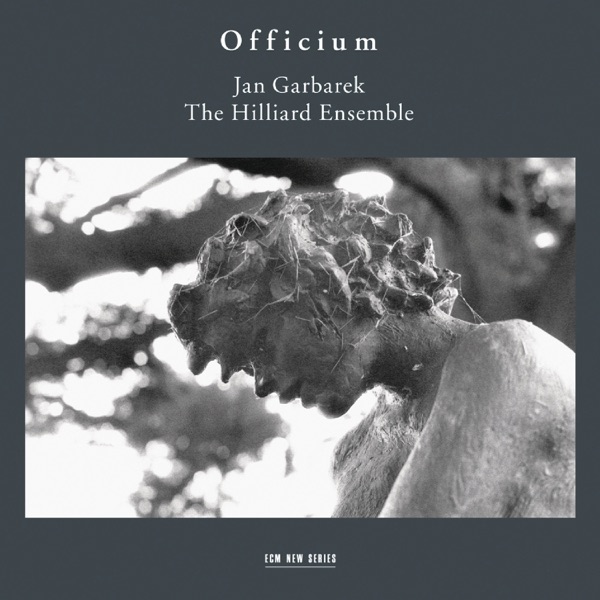
Jan Garbarek
Tenor Saxophone - Norway - Nordic Jazz & World Fusion
Jan Garbarek transformed the tenor saxophone into an instrument of profound spiritual inquiry, pioneering a distinctly Nordic sound that married free jazz exploration with world music influences. His soaring, often wordless vocals and lyrical approach created a template for generative, mood-rich jazz that transcended genre boundaries. For over five decades, he has remained one of Europe's most distinctive and influential improvisers.
♫
Nubya Garcia
Tenor Saxophone - UK - Contemporary Jazz / Afrobeats Fusion
Nubya Garcia came up through the same London scene that suddenly had the rest of the world paying attention to British jazz, and she quickly became one of its most distinctive voices. Her tenor saxophone playing pulls from Caribbean and African rhythms — her family roots run through Trinidad and Guyana — and you can hear all of that in the way she phrases. She makes music that feels warm and lived-in, not like it's trying to prove a point.
♫
Jimmy Garrison
Bass - USA - Modal Jazz
Jimmy Garrison spent the most important years of his career holding down the bottom end of one of the most demanding groups in jazz history, and he did it without ever calling attention to himself. He was the bassist in John Coltrane's classic quartet, the one who had to keep something resembling a center while Coltrane and McCoy Tyner and Elvin Jones were pulling in every direction at once. That he managed it — and made it sound natural — says everything about how good he was.
♫
Charles Gayle
Saxophone - USA - Free Jazz
For most of his life, Charles Gayle played saxophone on New York City streets because no club would have him — not because he lacked ability, but because his music was too raw, too uncompromising, too everything. He spent years homeless, busking in subway stations, before the downtown avant-garde scene finally caught up with him in his fifties. What followed was a recording career that made a lot of younger free jazz players look polite by comparison.
♫
Milford Graves
Drums - USA - Free Jazz / Avant-Garde
Milford Graves approached the drum kit less like a timekeeper and more like a researcher — someone genuinely trying to figure out what rhythm is made of at the cellular level. He studied the human heartbeat, acupuncture, and martial arts not as hobbies but as extensions of the same investigation he was running on his instrument. The result was drumming unlike anything else in jazz: polyrhythmic, unpredictable, and completely his own.
♫
Matthew Halsall
Trumpet - England - Spiritual Jazz
Matthew Halsall makes jazz that sounds like it was recorded in a garden after rain — unhurried, modal, full of space. He built his own label to release it, which tells you something about how little interest he has in fitting into anyone else's idea of what British jazz should sound like.
♫
Billy Hart
Drums - United States - Post-Bop
Billy Hart has spent sixty years making other people's bands sound better, which is maybe the quietest kind of genius there is. He played electric with Herbie Hancock, acoustic with McCoy Tyner, and somehow kept his own sound intact through all of it — a drummer who never needed to be the loudest thing in the room to be the reason it worked.
♫
Eddie Henderson
Trumpet - United States - Post-Bop / Fusion
Eddie Henderson spent the first part of his adult life becoming a doctor and the rest of it proving he didn't have to choose between stethoscope and trumpet. He's the rare musician who played alongside Miles Davis as a teenager, then went and got an M.D. before circling back to become one of the most reliable post-bop trumpeters of his generation.
♫
Zakir Hussain
Tabla - India - Jazz Fusion
Zakir Hussain made the tabla speak in a language jazz musicians understood without translation. He grew up in a house where rhythm was the family business, then spent fifty years proving that Indian classical music and jazz could sit in the same room and argue productively.
♫
Shabaka Hutchings
Saxophone - United Kingdom - Spiritual Jazz
Shabaka Hutchings spent the last decade turning three different bands into three different arguments for why jazz still matters outside the conservatory. Then, at the height of his influence, he put the saxophone down and picked up the flute. That kind of nerve is rare, and it's exactly what makes him worth paying attention to.
♫
Joseph Jarman
Saxophone - United States - Avant-Garde Jazz
Joseph Jarman spent his career proving that a saxophonist could also be a poet, a dancer, a priest, and a provocateur, all in the same set. He helped build the Art Ensemble of Chicago into one of the most theatrical bands in jazz history, then walked away from music almost entirely to run a martial arts dojo and study Buddhism, before quietly coming back to it later in life.
♫
Leroy Jenkins
Violin - United States - Free Jazz
Leroy Jenkins took an instrument nobody associated with jazz and made it sound like it had been there all along, screaming and singing right alongside the horns. He came up through Chicago's AACM scene and spent the rest of his life proving the violin could hold its own in the noisiest, most unruly corners of improvised music.
♫
Rudolph Johnson
Tenor Saxophone - United States - Spiritual Jazz
Rudolph Johnson cut two albums for Black Jazz Records in the early seventies and then more or less vanished from the jazz conversation, which is a shame, because those records are some of the warmest, most soulful tenor playing to come out of that whole spiritual jazz moment. He never chased a bigger name for himself. He just played with real conviction and let the tape roll.
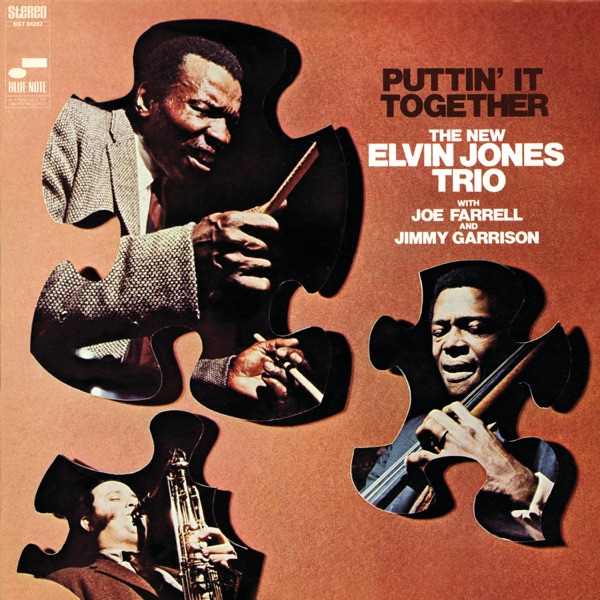
Elvin Jones
Drums - USA - Modal Jazz & Free Jazz
Elvin Jones was the propulsive heartbeat of John Coltrane's classic quartet, a drummer whose polyrhythmic intensity and seemingly telepathic interplay with his bandmates redefined what percussion could achieve in jazz. His approach—simultaneously swinging and free, supportive yet solistically adventurous—became the blueprint for generations of jazz drummers seeking to balance musicality with raw power.
♫
Anders Jormin
Double Bass - Sweden - Nordic Jazz
Anders Jormin has spent decades making the double bass sound like it has no interest in keeping time — which is a compliment. Working mostly in the space between jazz and contemporary classical music, he has built a catalog that rewards patience and punishes background listening. His collaborations with Charles Lloyd and his long partnership with drummer Jon Christensen represent some of the most quietly absorbing music to come out of Scandinavia in the past thirty years.
♫
Calvin Keys
Guitar - USA - Soul Jazz
Calvin Keys is one of those guitarists who spent decades playing in other people's bands before anyone thought to put his name on the marquee. He had a tone that could cut through a Hammond organ trio one night and float over a spiritual jazz sermon the next, and once Black Jazz Records finally let him lead his own session, it turned out he'd been worth the wait all along.
♫
Rahsaan Roland Kirk
Multi-Instrumentalist - United States - Avant-Garde Jazz
Rahsaan Roland Kirk could play three horns at once and somehow make it sound like a conversation, not a party trick. He was blind, loud, funny, political, and completely serious about music even when he was juggling a tenor sax, a manzello, and a stritch at the same time.
♫
Yusef Lateef
Saxophone & Flute - United States - Spiritual Jazz
Yusef Lateef played saxophone like a hard bop veteran and flute like he'd learned it somewhere far from Detroit, which in a way he had, at least in his head. He spent decades folding oboe, bassoon, and instruments most jazz musicians couldn't name into his records, long before 'world music' was a section in the record store.

Charles Lloyd
Tenor Saxophone, Flute - United States - Post-Bop, World Fusion
Charles Lloyd is a restless spiritual seeker whose saxophone and flute playing has traversed post-bop innovation, psychedelic rock collaboration, and world music fusion across six decades. His 1966 album Forest Flower became an unlikely crossover hit, introducing thousands to the possibilities of adventurous jazz, while his tireless exploration of musical dialogue with fellow travelers has kept him perpetually relevant. A bandleader, composer, and humble philosopher, Lloyd remains one of jazz's most unpredictable and generous voices.
♫
Flying Lotus
Producer / Composer - USA - Electronic Jazz
Steven Ellison grew up in Los Angeles with jazz royalty in his bloodline — his great-aunt is Alice Coltrane — and you can hear that inheritance in everything he makes, even when it's buried under drums that sound like they're falling down stairs. He makes music that sits at the edge of hip-hop, jazz, and electronic experimentation, refusing to settle into any of them. Few producers have built a world as sonically distinct as his.
♫
Frank Lowe
Tenor Saxophone - United States - Free Jazz
Frank Lowe played tenor like he still had Memphis dirt on his shoes, even after years in New York's loft jazz trenches. He could honk and holler like a chitlin' circuit R&B man one minute, then tear the melody apart the next — a free jazz voice that never forgot where it came from.
♫
Bennie Maupin
Reeds & Woodwinds - USA - Modal Jazz / Jazz Fusion
Bennie Maupin is the kind of musician other musicians know about even when the general public doesn't. He played bass clarinet on one of the most important jazz albums ever made, spent years as the spine of Herbie Hancock's Mwandishi band, and built a solo career that quietly rewarded anyone paying close attention.
♫
Roscoe Mitchell
Reeds / Percussion - USA - Avant-Garde
Roscoe Mitchell has been building his own musical universe since the mid-1960s, when he helped found the Association for the Advancement of Creative Musicians in Chicago and started making records that sounded like nothing anyone had heard before. He plays alto, soprano, and bass saxophones, along with a sprawling collection of small percussion instruments, and he treats silence with the same seriousness he gives to sound. More than fifty years in, he is still releasing work that sounds like it came from someone with somewhere new to go.
♫
Airto Moreira
Percussion - Brazil - Jazz Fusion
Airto Moreira showed up in the American jazz scene in the late 1960s with a suitcase full of instruments most musicians had never seen, let alone heard on a jazz record. Within a few years he'd changed what a rhythm section could sound like, sneaking berimbaus and cuicas into sessions that were supposed to be about electric pianos and distorted trumpets. He's one of those players you've heard a hundred times without knowing his name.
♫
Idris Muhammad
Drums - USA - Soul Jazz
Idris Muhammad grew up in New Orleans banging on pots and pans before he ever sat behind a kit, and you can hear that street-parade bounce in everything he played, whether it was a Fats Domino session or a Pharoah Sanders record. He spent decades as the drummer other musicians called when they needed a groove that could swing and funk at the same time, and somehow he made that look easy.
♫
Sunny Murray
Drums - USA - Free Jazz
Sunny Murray didn't just play free jazz — he helped invent the idea that a drummer didn't have to keep time at all. Working alongside Cecil Taylor and Albert Ayler in the early 1960s, he dissolved the rhythmic floor that jazz had always stood on, replacing pulse with pressure, density, and pure sound. What came out the other side was something most listeners had never heard from a drum kit before.
♫
David Murray
Tenor Saxophone & Bass Clarinet - USA - Avant-Garde Jazz
David Murray showed up in New York in the mid-1970s with a tenor sound so big it seemed to need its own zip code, and he's been filling rooms with it ever since. He can honk and scream like Albert Ayler one minute and croon like Ben Webster the next, sometimes in the same solo, and he's never bothered picking a side.
♫
William Parker
Double Bass - United States - Free Jazz
William Parker has spent five decades making the bass sound like it's carrying the whole weight of the music, and somehow it always does. He came up in the New York loft scene of the 1970s, spent a decade inside Cecil Taylor's unit, and eventually became the guy other players called when they needed someone who could hold a free improvisation together without ever making it feel tame.
♫
Baden Powell
Guitar - Brazil - Afro-Samba
Baden Powell picked up a guitar as a kid in the hills outside Rio and turned it into something nobody else was doing quite the same way — part classical technique, part samba pulse, part something older and stranger pulled from Afro-Brazilian ritual music. He wrote some of the most enduring songs in the Brazilian songbook, then spent decades proving the guitar could carry all of that weight by itself.
♫
Don Pullen
Piano - United States - Avant-Garde Jazz
Don Pullen played piano like he had two separate musicians fighting for the keyboard — one hand rolling out tone clusters that sounded like a fistfight, the other laying down a gospel line so warm it could've come from a Sunday service back home. He spent years as a secret weapon in other people's bands before anyone outside the avant-garde scene really knew his name, and by the time he died he'd made some of the most purely enjoyable records to come out of free jazz.
♫
Sun Ra
Piano, Keyboards - USA - Avant-Garde Jazz
Sun Ra built a world before he built a band. Born Herman Poole Blount in Birmingham, Alabama, he eventually claimed to be from Saturn — and whether you take that literally or not, his music does sound like it came from somewhere else. For nearly five decades he led the Arkestra, a collective that played everything from Fletcher Henderson-style swing to free noise to electronic chaos, often on the same night.
♫
David S. Ware
Tenor Saxophone - United States - Free Jazz
David S. Ware played tenor saxophone like he was trying to move furniture with it. He spent the 70s paying dues in Cecil Taylor's band, then built his own quartet in the 90s that turned out to be one of the great overlooked units in modern jazz — four guys blowing wide open but somehow always listening to each other.
♫
Pharoah Sanders
Tenor Saxophone · USA · Spiritual Jazz / Free Jazz
Pharoah Sanders made some of the most intense music of the 1960s alongside John Coltrane, and then spent the following decades finding his way toward something more lyrical and meditative. His tenor saxophone sound — huge, overblown, capable of both violence and tenderness — is one of the most recognisable in jazz. His 1969 album Karma, with its side-long piece "The Creator Has a Master Plan," remains one of the defining documents of spiritual jazz. In his later years he moved closer to soul and gospel, and his 2021 collaboration with Floating Points and the London Symphony Orchestra introduced him to a new generation.
♫
Archie Shepp
Tenor Saxophone - USA - Free Jazz
Archie Shepp arrived on the New York scene in the early 1960s with something to say — and it wasn't just musical. A playwright, poet, and fiercely political thinker as much as a saxophonist, he made records that felt like arguments, and he wanted you to feel the weight of them. Decades on, he's mellowed into blues and ballads without ever abandoning the heat that made him matter.
♫
Alan Silva
Double Bass - USA/France - Avant-Garde Jazz
Alan Silva didn't play bass so much as unleash it — bowing clouds of sound that could fill a room the way an orchestra does. He came up fast in the mid-60s New York free jazz scene, then spent the rest of his life pushing further out, eventually trading strings for synthesizers without ever losing that orchestral instinct.
♫
Tom Skinner
Drums - England - Contemporary Jazz
Tom Skinner is the drummer you've probably heard without realizing it — holding down the low-end chaos of Sons of Kemet, locking in with Thom Yorke and Jonny Greenwood in The Smile, and quietly making one of the best jazz records of the decade under his own name. He moves between scenes like it's nothing, because to him it probably is nothing — just rhythm, wherever it's needed.
♫
Lonnie Liston Smith
Piano, Keyboards - United States - Spiritual Jazz / Jazz Fusion
Lonnie Liston Smith figured out early that the Fender Rhodes could sound like a sunrise, and he spent the better part of the 1970s proving it. His records with the Cosmic Echoes turned spiritual jazz into something you could dance to, which is a harder trick than it sounds.
♫
Donald Smith
Piano - United States - Spiritual Jazz
Donald Smith made one classic album and then mostly vanished into other people's bands, which is exactly the kind of quiet injustice that makes record collectors obsessive. He came out of a musical family in Richmond, Virginia, and spent his career as a pianist, vocalist, and arranger who showed up on other musicians' sessions far more often than his own name showed up on a cover.
♫
Wadada Leo Smith
Trumpet - United States - Avant-Garde Jazz
Wadada Leo Smith plays trumpet like he's not in a hurry to prove anything, which is exactly what makes him so compelling. He came out of the Chicago AACM scene with an interest in silence as much as sound, and spent the next five decades building compositions that treat American history, spirituality, and space itself as material worth improvising on.
♫
Blue Note Trip 2
Compilation - USA - Various Artists
This is not an artist, it's a mixtape with a record label's whole back catalog as raw material. Blue Note Trip 2 takes deep cuts from the vault and sits them next to contemporary reworkings, letting a Horace Silver groove bleed into a DJ edit without much warning. It's less a listening experience than a listening argument: that the old stuff and the new stuff were always speaking the same language.

McCoy Tyner
Piano - United States - Modal Jazz, Free Jazz
McCoy Tyner was the architectural mind behind John Coltrane's most visionary recordings, a pianist whose massive hands and harmonic innovation redefined what the instrument could do in a modal context. His approach—stacked quartal chords, torrential runs, and a rhythmic independence that locked into grooves while soaring above them—became the blueprint for generations of jazz pianists. Beyond his legendary work with Coltrane, Tyner built a solo career that spanned six decades, proving himself one of the most consequential voices in post-bop jazz.
♫
Kamasi Washington
Tenor Saxophone · USA · Spiritual Jazz / Neo-Soul
Kamasi Washington arrived fully formed in 2015 with a triple album that made a lot of people realize jazz hadn't gone anywhere — they'd just stopped looking. A product of the fertile South Los Angeles music scene, he brings the ambition of John Coltrane's modal period into a world shaped by hip-hop, gospel, and the sprawling creative community around Kendrick Lamar.