Where do you listen?
Choose your streaming service
inside the sleeve
Loading…
inside the sleeveITS
⌕
Read About
Tenor & Soprano Saxophone · USA · Hard Bop, Modal, Avant-Garde

John
Coltrane

Start here A Love Supreme (1965) →
1926 – 1967, Philadelphia, USA

John Coltrane didn't just play music — he interrogated it, pulling at its seams until something transcendent came loose. From the scorching bebop of his Miles Davis years to the devotional storms of A Love Supreme, he compressed a lifetime of evolution into barely two decades of recording. No saxophonist before or since has made the instrument sound simultaneously so human and so far beyond it.

Modal JazzSpiritual JazzHard BopAvant-Garde Jazz
John Coltrane

Sheets of Sound, Oceans of Spirit

John William Coltrane was born in Hamlet, North Carolina, in 1926 and grew up in High Point, where the church became his first great musical influence—one that would shape his thinking for the rest of his life. His father played several instruments as an amateur, and when both his father and his maternal grandfather, a minister, died within months of each other, the young Coltrane turned to music with new intensity. By the time he moved to Philadelphia in the mid-1940s, he was immersed in bebop, studying at the Granoff Studios and the Ornstein School of Music while absorbing everything Charlie Parker and Dizzy Gillespie were doing by ear.

His early professional years were unremarkable by comparison with what came later. He played with Eddie Vinson, Dizzy Gillespie, and several rhythm-and-blues bands, steadily developing his technique without yet revealing the voice that would make him famous. That changed in 1955 when Miles Davis invited him into his new quintet. The partnership transformed both musicians. Miles sometimes complained that Coltrane's solos went on too long, prompting the famous exchange in which he asked why Coltrane played so much, and Coltrane replied that he simply didn't know how to stop. Whether perfectly remembered or not, the story captures something essential: Coltrane was searching for ideas faster than he could fully express them.

His recordings for Prestige and later Atlantic during the late 1950s document one of the fastest artistic evolutions in jazz history. Critic Ira Gitler famously described Coltrane's style as "sheets of sound" because of the dense cascades of notes that seemed to pour endlessly through rapidly changing harmonies. It was never virtuosity for its own sake. Coltrane was trying to explore every melodic possibility contained within each chord. Then came Giant Steps (1960). Built around a harmonic cycle that moved through three distant key centers at extraordinary speed, it became one of the defining technical challenges in jazz and permanently expanded the language of modern improvisation.

Yet even as he mastered harmonic complexity, Coltrane began looking beyond it. Playing with Miles Davis on the Kind of Blue sessions introduced him to modal jazz, where static harmonies created space for melody, rhythm, and tone to unfold more freely. That discovery opened a new path. By 1961 he had assembled his classic quartet with pianist McCoy Tyner, bassist Jimmy Garrison, and drummer Elvin Jones—a group often regarded as one of the greatest working bands in jazz history. In December 1964 they recorded A Love Supreme, a four-part suite conceived as a prayer of gratitude to God. The album became an extraordinary commercial success for such an ambitious work and remains one of the most powerful spiritual statements ever recorded in jazz.

His final years were also his most controversial. Beginning with Ascension (1965), an explosive large-ensemble improvisation featuring eleven musicians, Coltrane moved ever further toward free jazz and collective improvisation. He gradually expanded beyond the classic quartet, bringing in additional musicians—including his second wife, Alice Coltrane—to create music that drew equally from jazz, avant-garde composition, and spiritual practice. Admirers heard revelation; critics heard chaos. Coltrane never seemed interested in resolving that debate. He died of liver cancer in July 1967 at the age of forty. The body of work he left behind stretches from lyrical ballads to uncompromising abstraction, but every phase reflects the same relentless pursuit: the belief that music could reach places words never could.

Facts
BornSeptember 23, 1926 · Hamlet, North Carolina, USA
DiedJuly 17, 1967, Huntington, New York, United States
InstrumentTenor saxophone, Soprano saxophone, Bass clarinet
Active1945 – 1967
Known forGiant Steps, A Love Supreme, the Classic Quartet, sheets of sound technique
Connections
Miles DavisBandleader & Collaborator, New York
→
McCoy TynerPianist, Classic Quartet, New York
→
Elvin JonesDrummer, Classic Quartet, New York
→
Read more
GuideJohn Coltrane albums in order: from ballads to the outer edgeSidemanPaul Chambers: the bass behind everything

Discography

19 records
Giant Steps
Giant Steps
1960
My Favorite Things
My Favorite Things
1961
A Love Supreme
A Love Supreme
1965
Coltrane
Coltrane
1957
John Coltrane with the Red Garland Trio
1958
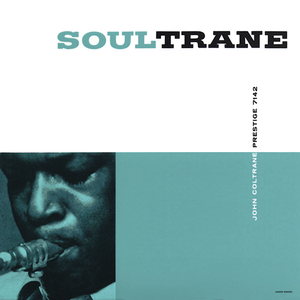
Soultrane
Soultrane
1958
Blue Train
Blue Train
1958
The Ray Draper Quintet featuring John Coltrane
1959
Cattin’ with Coltrane and Quinichette
1959
Giant Steps (mono)
Giant Steps (mono)
1960
Lush Life
Lush Life
1961
Bags & Trane
Bags & Trane
1961
Coltrane Jazz
Coltrane Jazz
1961
Settin’ the Pace
Settin’ the Pace
1961
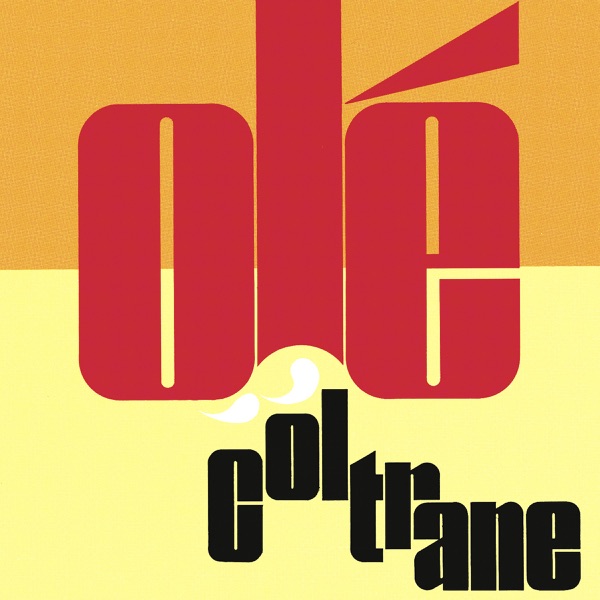
Olé Coltrane
Olé Coltrane
1961
John Coltrane and Johnny Hartman
1963
Coltrane's Sound
Coltrane's Sound
1964
Soul Junction
Soul Junction
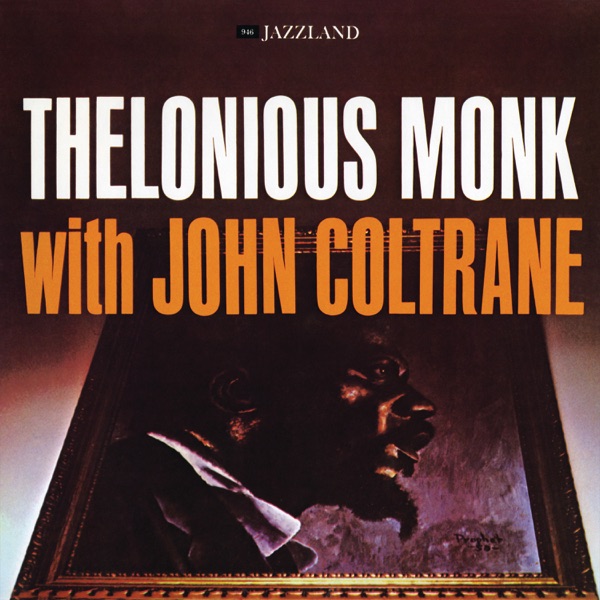
Thelonious Monk with John Coltrane

Collaborations

Live on Youtube

Explore Further

Selected connections
Saxophonist, USA
Wayne Shorter
Like Coltrane, Shorter fused rigorous harmonic thinking with a spiritual restlessness — his work with Miles Davis's second great quintet picks up precisely where Coltrane's modal experiments pointed.
Explore →
Album, 1964
A Love Supreme
The summit of Coltrane's middle period and one of the defining artistic statements of the twentieth century — four movements conceived as a single, sustained act of devotion.
Explore →

Who's playing
Listen next
Recording Info
Track listing
Musicians
Further Reading
Read more

Where next?

More by this artist

Albums with the same musicians

From the same era

Similar artists

inside the sleeve
Growing
Jazz, explained without pretension.
Read · Follow the connections · Press play
Right now: 7,100+ albums · 440+ artists
Start here
New to jazz? These artists are good places to start.
Loading…
Explore
Nine records worth getting lost in.
Born today
Album of the day
A landmark record, every day.
Read
  • Loading…
Article archive →
Recently added
Purpose
Inside the Sleeve is your companion on a journey through jazz — not a textbook, but something closer to a knowledgeable friend sitting next to you while you listen. Read about an artist, press play, follow a connection, discover an album you didn't know you needed.
Suggestions
Read

Articles

Essays, guides, and lists about jazz and the records that matter.

Loading…

Genre

Key Artists
Further Reading

Essential Albums

Related Genres

In This Genre

About

Inside the Sleeve

Work in progress

Inside the Sleeve grows continuously — new artists and albums are added, essays refined, as visitors explore and our editors follow up on what they find. Content, features, and design are still evolving; use the Report error button on any page to flag something that seems off.

Content

Every artist, album, and release date on Inside the Sleeve is real — verified against trusted sources including MusicBrainz and Wikipedia. We don't invent discographies or fabricate records. AI compiles that verified information into readable prose — essays on artists, albums, and the music itself. We can't manually review every essay before publishing, but every reported error is checked by a human editor.

Inside the Sleeve is not a review site. We're not here to rate or rank — we're here to guide you in. Where an album stands out, we'll say so. Where an artist changed everything, you'll know why. But we won't tear anything down. Jazz history is complex and sources sometimes disagree — if you spot something that seems off, please report it.

Streaming

Inside the Sleeve links to Spotify and Apple Music so you can listen while you read. These are not affiliate links. For Spotify, links open a search on open.spotify.com — we do not have direct links to specific recordings. For Apple Music, direct links are used where available, otherwise a search is opened.

Your choice of streaming service is stored locally in your browser only. It is never sent to our servers.

We're working on deeper Spotify integration, including direct links to specific recordings.

Privacy

Inside the Sleeve does not collect personal data and does not use cookies. We count page visits anonymously using a self-hosted analytics tool — no personal identifiers are stored, and the data never leaves our own server. The only preference stored on your device is your streaming service choice, saved locally in your browser and never transmitted.

When you submit a suggestion or error report, the text you write is stored in our database. No name or email is required or collected unless you choose to provide one.

Third-party services

Spotify and Apple Music are independent services with their own terms of use and privacy policies. Inside the Sleeve is not affiliated with or endorsed by either company.

Support

Inside the Sleeve is free and ad-free. If you enjoy it, a coffee helps cover server costs and keeps the project going.

Amazon

Some book recommendations on Inside the Sleeve link to Amazon. Buying through these links costs you nothing extra — but Amazon pays us a small commission, which goes directly towards keeping the site running. It's a simple way to support the project if you were going to buy the book anyway.

As an Amazon Associate, Inside the Sleeve earns from qualifying purchases.

Questions or feedback? Use the suggestion box on the front page.

Inside the Sleeve — A guide for those who want to go beyond the obvious About & Privacy