Where do you listen?
Choose your streaming service
inside the sleeve
Loading…
inside the sleeveITS
⌕
Read About
Piano - United States - Modal Jazz, Free Jazz

McCoy
Tyner

1938 - 2020, Philadelphia, United States

McCoy Tyner was the architectural mind behind John Coltrane's most visionary recordings, a pianist whose massive hands and harmonic innovation redefined what the instrument could do in a modal context. His approach—stacked quartal chords, torrential runs, and a rhythmic independence that locked into grooves while soaring above them—became the blueprint for generations of jazz pianists. Beyond his legendary work with Coltrane, Tyner built a solo career that spanned six decades, proving himself one of the most consequential voices in post-bop jazz.

Modal JazzPost-BopFree JazzSpiritual JazzHard Bop
McCoy Tyner

The Weight of Ascending Chords

When McCoy Tyner joined John Coltrane's quartet in 1960, he walked in as a young pianist who'd already paid his dues playing hard bop with Benny Golson and Art Taylor. But Coltrane wasn't looking for someone to play it safe. He wanted to push harmony into places where standard chord progressions couldn't go, and he needed a pianist willing to follow him there. Tyner figured it out: he started using quartal harmony—stacking fourths and fifths instead of traditional triads—which gave everything this open, floating quality. It was exactly what Coltrane needed to do those sheets of sound. Listen to "A Love Supreme" or "Interstellar Space" and you'll hear how Tyner became the bedrock that let Coltrane explore endlessly.

What made Tyner stand out was that he never just went through the motions. His left hand did more than keep time; it had its own voice, trading rhythmic ideas with Elvin Jones's drums like they were having a conversation. His right hand used block chords and rolling arpeggios that could fill a room with sound, but he knew when to pull back and leave space. There's something generous about how he played—he made room for everyone else while making sure you knew he was there. That balance between supporting the bandstand and making your own statement? That became his thing, and it's a real gift.

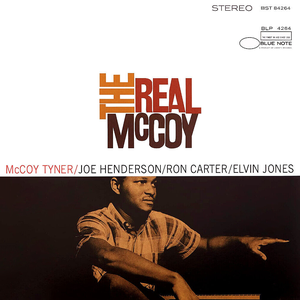
After he left Coltrane in 1965, Tyner spent the next five decades showing he was a lot more than a sideman. Albums like The Real McCoy (1967), Enlightenment, and Fly With the Wind proved he had his own vision as a bandleader and composer. He played with Rahsaan Roland Kirk, Sonny Rollins, and plenty of others, bringing that same weight and harmonic intelligence to every gig. Young pianists like Herbie Hancock took notes, and musicians are still figuring out how to use quartal harmony without just copying what he did.

The thing about Tyner's later work is that he never got comfortable. Even in his 70s and 80s, he was absorbing world music, adding gospel touches, and rethinking how structure and freedom could work together. His 2003 album Golden Moments with Bennie Wallace showed a guy still curious, still looking for new things. He wasn't interested in trading on what he'd done forty years before.

McCoy Tyner died in 2020 at 81, and what he left behind matters. Sixty years of recorded music that shows how jazz piano kept evolving. But more than that—he left behind a way of thinking about harmony that still works, still sounds fresh. Younger pianists still study how he balanced power with subtlety, still try to figure out how to use what he discovered without just repeating it. That's how you know someone really mattered.

Facts
BornDecember 11, 1938, Philadelphia, Pennsylvania
DiedJanuary 11, 2020, New York, United States
InstrumentPiano
Active1958–2020
Known forJohn Coltrane Quartet, modal jazz innovations, quartal harmony, spiritual approach to improvisation
Connections
John ColtraneBandleader and collaborator, Philadelphia/New York
→
Elvin JonesDrummer in Coltrane quartet, New York
→
Jimmy GarrisonBassist in Coltrane quartet, New York
→
Benny GolsonEarly mentor and bandleader, Philadelphia
→
Sonny RollinsFrequent collaborator, New York
→
Read more
GuideRyo Fukui at 80: the quiet Japanese pianist the West is still discoveringGuideEddie Palmieri at 90: jazz respect and dancers losing their minds

Discography

14 records
The Real McCoy
The Real McCoy
1967
The Real McCoy (The Rudy Van Gelder Edition)
1959
The Impulse Story
The Impulse Story
1961
Inception
Inception
1962
Nights of Ballads & Blues
1963
Today and Tomorrow
Today and Tomorrow
1964
Sahara
Sahara
1972
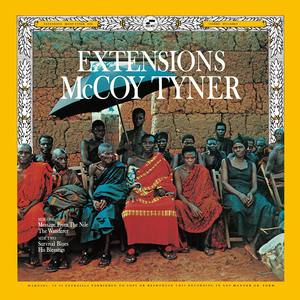
Extensions
Extensions
1972
Fly With The Wind
Fly With The Wind
1976
Revelations
Revelations
1988
Supertrios
Supertrios
1989
Warsaw Concert 1991
Warsaw Concert 1991
1991
Soliloquy
Soliloquy
1992
Things Ain't What They Used To Be

Collaborations

Live on Youtube

Explore Further

Selected connections
Album, 1965
A Love Supreme - John Coltrane Quartet
Essential document of Tyner's harmonic vision with Coltrane; understand the foundation of modal jazz piano.
Explore →
Album, 1967
The Real McCoy
Tyner's first great solo statement as a leader; showcases his compositional voice and bandleading sensibilities.
Explore →
Pianist, United States
Herbie Hancock
Direct inheritor of Tyner's approach to modal harmony; bridges hard bop and funk-fusion.
Explore →
Album, 1973
Sahara - McCoy Tyner
Experimental world music fusion that demonstrates Tyner's lifelong evolution beyond his Coltrane associations.
Explore →

Who's playing
Listen next
Recording Info
Track listing
Musicians
Further Reading
Read more

Where next?

More by this artist

Albums with the same musicians

From the same era

Similar artists

inside the sleeve
Growing
Jazz, explained without pretension.
Read · Follow the connections · Press play
Right now: 7,100+ albums · 440+ artists
Start here
New to jazz? These artists are good places to start.
Loading…
Explore
Nine records worth getting lost in.
Born today
Album of the day
A landmark record, every day.
Read
  • Loading…
Article archive →
Recently added
Purpose
Inside the Sleeve is your companion on a journey through jazz — not a textbook, but something closer to a knowledgeable friend sitting next to you while you listen. Read about an artist, press play, follow a connection, discover an album you didn't know you needed.
Suggestions
Read

Articles

Essays, guides, and lists about jazz and the records that matter.

Loading…

Genre

Key Artists
Further Reading

Essential Albums

Related Genres

In This Genre

About

Inside the Sleeve

Work in progress

Inside the Sleeve grows continuously — new artists and albums are added, essays refined, as visitors explore and our editors follow up on what they find. Content, features, and design are still evolving; use the Report error button on any page to flag something that seems off.

Content

Every artist, album, and release date on Inside the Sleeve is real — verified against trusted sources including MusicBrainz and Wikipedia. We don't invent discographies or fabricate records. AI compiles that verified information into readable prose — essays on artists, albums, and the music itself. We can't manually review every essay before publishing, but every reported error is checked by a human editor.

Inside the Sleeve is not a review site. We're not here to rate or rank — we're here to guide you in. Where an album stands out, we'll say so. Where an artist changed everything, you'll know why. But we won't tear anything down. Jazz history is complex and sources sometimes disagree — if you spot something that seems off, please report it.

Streaming

Inside the Sleeve links to Spotify and Apple Music so you can listen while you read. These are not affiliate links. For Spotify, links open a search on open.spotify.com — we do not have direct links to specific recordings. For Apple Music, direct links are used where available, otherwise a search is opened.

Your choice of streaming service is stored locally in your browser only. It is never sent to our servers.

We're working on deeper Spotify integration, including direct links to specific recordings.

Privacy

Inside the Sleeve does not collect personal data and does not use cookies. We count page visits anonymously using a self-hosted analytics tool — no personal identifiers are stored, and the data never leaves our own server. The only preference stored on your device is your streaming service choice, saved locally in your browser and never transmitted.

When you submit a suggestion or error report, the text you write is stored in our database. No name or email is required or collected unless you choose to provide one.

Third-party services

Spotify and Apple Music are independent services with their own terms of use and privacy policies. Inside the Sleeve is not affiliated with or endorsed by either company.

Support

Inside the Sleeve is free and ad-free. If you enjoy it, a coffee helps cover server costs and keeps the project going.

Amazon

Some book recommendations on Inside the Sleeve link to Amazon. Buying through these links costs you nothing extra — but Amazon pays us a small commission, which goes directly towards keeping the site running. It's a simple way to support the project if you were going to buy the book anyway.

As an Amazon Associate, Inside the Sleeve earns from qualifying purchases.

Questions or feedback? Use the suggestion box on the front page.

Inside the Sleeve — A guide for those who want to go beyond the obvious About & Privacy