Desert Sounds: McCoy Tyner Goes Exploring
Tyner steps outside the piano trio here, chasing African and Eastern sounds with real conviction.
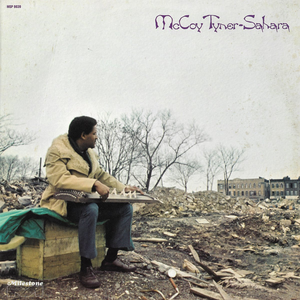
By 1972, McCoy Tyner had spent years as the architect of John Coltrane's sound, building those towering modal structures on piano. Sahara finds him moving deliberately away from that legacy. This is his first album for Milestone, and he's brought in Sonny Fortune on saxophones, Calvin Hill on bass, and Alphonse Mouzon on drums—three musicians who were hungry to explore beyond bebop language.
What makes this record stick is that everyone here picks up extra instruments. Tyner plays koto and flute alongside piano. Fortune switches between soprano and tenor. Hill and Mouzon add percussion layers. You can hear them stretching toward something looser and more textural. The African and Eastern influences aren't window dressing—they actually shape how the music breathes and moves. There's space here, and silence, and a willingness to let sounds sit without resolution. If you've been hearing Tyner only as the powerhouse comping behind Coltrane, this will surprise you. He's curious, even restless.
This isn't Tyner's strongest work overall, and it won't appeal to listeners who want straight-ahead jazz soloing. But if you're already familiar with his trio recordings and want to hear what he was thinking in the early seventies, it's worth the time. The album sits in an interesting place in his catalog—neither central to his legacy nor forgotten, but the kind of record that reveals an artist testing boundaries. It's solid, inventive, and honestly made.
Who's playing