Both Hands on the Future
Herbie Hancock arrived in New York in 1961 as an unusually accomplished young pianist. He had already performed a Mozart concerto with the Chicago Symphony Orchestra at eleven, but jazz would take him in a completely different direction. New York changed him quickly. He connected with trumpeter Donald Byrd, joined his band, and soon recorded his first album for Blue Note, Takin' Off (1962). The record introduced "Watermelon Man," a blues-inflected groove that Mongo Santamaría turned into a major hit. Hancock was twenty-two years old and already writing compositions that other musicians wanted to play.
The greatest education came from Miles Davis. The Second Great Quintet — Miles, Wayne Shorter, Ron Carter, and Tony Williams — was one of the most remarkable small groups of the 1960s. Between 1963 and 1968, Hancock learned the value of space, restraint, and leaving room for the music to breathe. Davis encouraged him to avoid filling every moment, allowing harmonies to remain open and unresolved. You can hear that approach on E.S.P. (1965) and Miles Smiles (1967), where the band seems to create the music together in real time. Hancock's floating piano voicings, often moving independently from the bass, became one of the defining sounds of modern jazz accompaniment.
His own Blue Note recordings explored a different side of his imagination — more composed, more carefully arranged, and rich with colour. Empyrean Isles (1964) and Maiden Voyage (1965) remain among his greatest achievements, with the latter built around a concept of oceanic movement and spacious melodies. Speak Like a Child (1968) and The Prisoner (1969) continued that exploration, combining unusual arrangements with a deep sense of atmosphere. Hancock brought a new kind of refinement to jazz: sophisticated but never distant, detailed but always connected to feeling and swing.
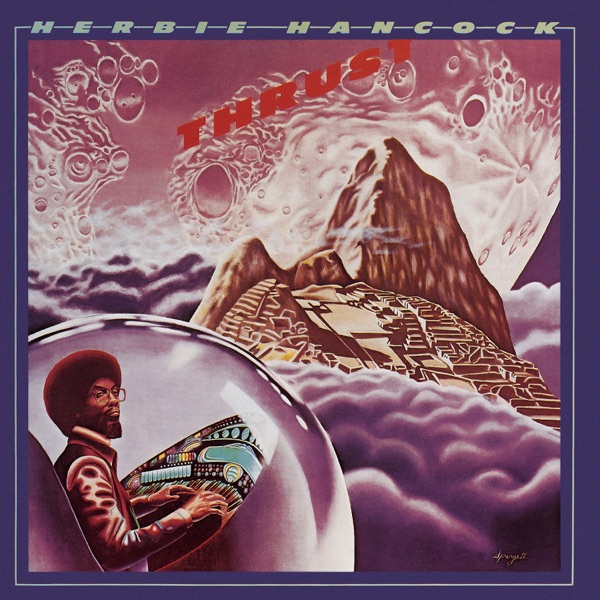
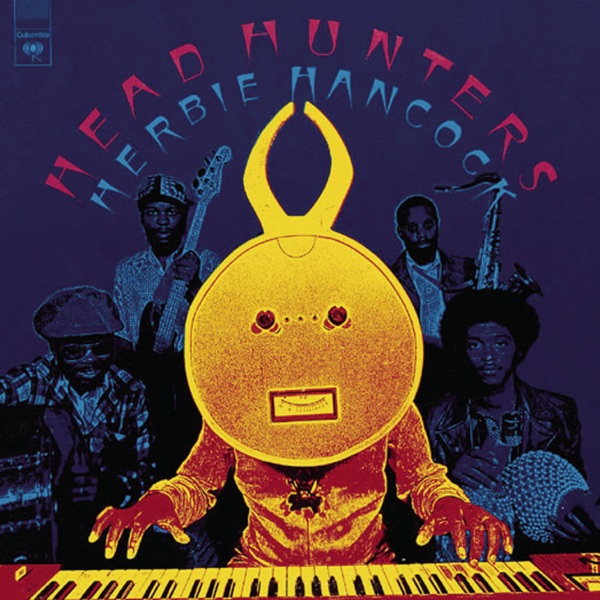
Then came the early 1970s. Hancock moved away from the acoustic piano and embraced synthesizers, the Fender Rhodes, funk rhythms, and the influence of artists such as Sly Stone and James Brown. Head Hunters (1973) was the result — a dramatic shift that became one of the most successful jazz albums ever released. "Chameleon" stretches a single groove into a hypnotic sixteen-minute journey, with a band so locked into the rhythm that the music seems to move on its own. Some traditional jazz listeners saw it as a departure from the genre's roots, while others recognised it as a natural evolution. Hancock took the electric direction explored by Miles Davis and brought it into a deeper relationship with funk, without sacrificing the improvisational spirit of jazz.
Since then, Hancock has continued to move freely between different musical worlds. He has returned to acoustic jazz with projects such as V.S.O.P. (1977), explored the Great American Songbook on Gershwin's World (1998), and paid tribute to Joni Mitchell through River: The Joni Letters (2007). He has also embraced electronic music, hip-hop influences, and collaborations with artists far beyond jazz. In 1983, "Rockit" introduced him to a new generation through MTV, proving once again that he was never interested in staying in one place.
What makes Hancock unique is not just his ability to change direction, but the curiosity behind those changes. At the piano, his touch remains remarkably gentle even when the ideas are complex. He can move from the harmonic sophistication of Bill Evans to a deep funk groove without ever sounding like he is forcing the transition. More than six decades into his career, Herbie Hancock continues to explore, because for him jazz has never been a destination — it has always been a journey.