Where do you listen?
Choose your streaming service
inside the sleeve
Loading…
inside the sleeveITS
⌕
Read About

♫

Facts
Connections
Read more

Discography

Collaborations

Live on Youtube

Explore Further

Selected connections
1965 · Album

Maiden Voyage

↑ Herbie Hancock

Recorded March 16, 1965 · Van Gelder Studio, Englewood Cliffs, New Jersey · Blue Note Records · Produced by Alfred Lion
Maiden Voyage

Floating Through Modal Dreams and Space

Maiden Voyage transcends the boundaries of hard bop, creating a weightless soundscape that defines modal jazz exploration.

Herbie Hancock's Maiden Voyage is one of the most beautiful and peaceful albums in jazz. Released in 1965, it shows Hancock growing up as a composer and bandleader, leaving behind the soul-jazz sounds he'd made before and moving into something quieter and more sophisticated. The music doesn't really swing in the traditional way—it floats. It drifts. You get this feeling of someone thinking deeply about something, and that was really special when it came out. It still is. The way these songs are written, they take their time, like someone painting a landscape slowly. The space between the notes matters as much as the notes themselves.

The title track does everything right. Hancock wrote a melody so pretty it almost sounds like a hymn, and he built it on modal chords that just keep stretching out. You've got Hancock on piano, Freddie Hubbard on trumpet, and George Coleman on tenor sax, and they're kind of talking to each other in the way they play the melody. It feels like they're learning the tune together as they go. The bass player Ron Carter and drummer Tony Williams don't push too hard—they're just there, letting the top voices have room to breathe. It's almost like chamber music. What makes this album work is that Hancock knows when to hold back. He doesn't try to take over or make everything loud.

What's really important about this album is that it proves jazz could be quiet and smart without losing people. Hancock takes ideas from Miles Davis and John Coltrane's modal jazz, but he does something different with them—something more song-like, more mysterious, more spiritual. A lot of musicians learned from this record. It showed that jazz could be the kind of music where you close your eyes and just sit with it. More than fifty years later, it still works exactly the way it's supposed to. It's just good.

Who's playing
Ron Carterbass
Herbie Hancockpiano
George Colemantenor saxophone
Freddie Hubbardtrumpet
Tony Williamsdrums
Listen next
By Herbie Hancock
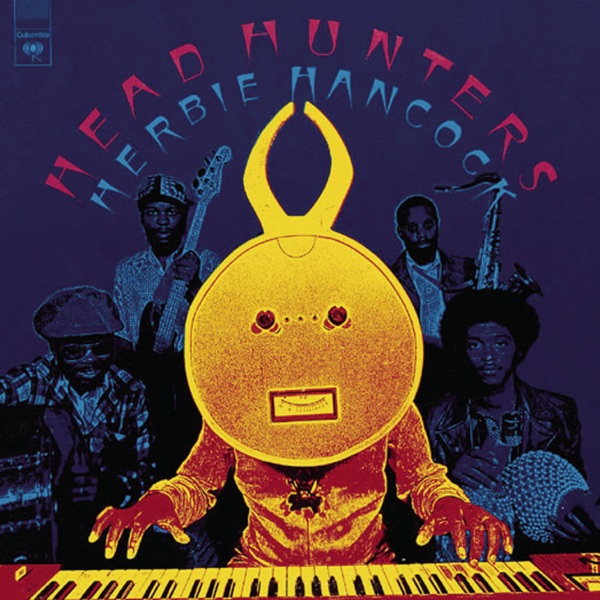
Head Hunters 1973
Freddie Hubbard's own record
Breaking Point 1964
Freddie Hubbard plays trumpet here
More Post-Bop
At the Five Spot 1961
Booker Little
Recording Info
Track listing
1Maiden Voyage7:57
2The Eye of the Hurricane6:01
3Little One8:47
4Survival of the Fittest10:03
5Dolphin Dance9:16
Musicians
Further Reading
Read more
ExplainerWhat is modal jazz?

Where next?

More by Herbie Hancock
Head Hunters 1973
My Point of View 1963
Takin' Off 1962
The Egg 1968
All 26 albums →
The musicians on this record
Breaking Point 1964
Freddie Hubbard
plays trumpet here
Dear Miles, 1962
Ron Carter
plays bass here
The Joy of Flying 1965
Tony Williams
plays drums (drum set) here
Their own records, close in time
More Post-Bop
At the Five Spot 1961
Booker Little
Inception 1962
McCoy Tyner
Third Season 1967
Hank Mobley
Gary Burton & Keith Jarrett 1971
Gary Burton
All 235 Post-Bop artists →

More by this artist

Albums with the same musicians

From the same era

Similar artists

inside the sleeve
Growing
Jazz, explained without pretension.
Read · Follow the connections · Press play
Right now: 7,100+ albums · 440+ artists
Start here
New to jazz? These artists are good places to start.
Loading…
Explore
Nine records worth getting lost in.
Born today
Album of the day
A landmark record, every day.
Read
  • Loading…
Article archive →
Recently added
Purpose
Inside the Sleeve is your companion on a journey through jazz — not a textbook, but something closer to a knowledgeable friend sitting next to you while you listen. Read about an artist, press play, follow a connection, discover an album you didn't know you needed.
Suggestions
Read

Articles

Essays, guides, and lists about jazz and the records that matter.

Loading…

Genre

Key Artists
Further Reading

Essential Albums

Related Genres

In This Genre

About

Inside the Sleeve

Work in progress

Inside the Sleeve grows continuously — new artists and albums are added, essays refined, as visitors explore and our editors follow up on what they find. Content, features, and design are still evolving; use the Report error button on any page to flag something that seems off.

Content

Every artist, album, and release date on Inside the Sleeve is real — verified against trusted sources including MusicBrainz and Wikipedia. We don't invent discographies or fabricate records. AI compiles that verified information into readable prose — essays on artists, albums, and the music itself. We can't manually review every essay before publishing, but every reported error is checked by a human editor.

Inside the Sleeve is not a review site. We're not here to rate or rank — we're here to guide you in. Where an album stands out, we'll say so. Where an artist changed everything, you'll know why. But we won't tear anything down. Jazz history is complex and sources sometimes disagree — if you spot something that seems off, please report it.

Streaming

Inside the Sleeve links to Spotify and Apple Music so you can listen while you read. These are not affiliate links. For Spotify, links open a search on open.spotify.com — we do not have direct links to specific recordings. For Apple Music, direct links are used where available, otherwise a search is opened.

Your choice of streaming service is stored locally in your browser only. It is never sent to our servers.

We're working on deeper Spotify integration, including direct links to specific recordings.

Privacy

Inside the Sleeve does not collect personal data and does not use cookies. We count page visits anonymously using a self-hosted analytics tool — no personal identifiers are stored, and the data never leaves our own server. The only preference stored on your device is your streaming service choice, saved locally in your browser and never transmitted.

When you submit a suggestion or error report, the text you write is stored in our database. No name or email is required or collected unless you choose to provide one.

Third-party services

Spotify and Apple Music are independent services with their own terms of use and privacy policies. Inside the Sleeve is not affiliated with or endorsed by either company.

Support

Inside the Sleeve is free and ad-free. If you enjoy it, a coffee helps cover server costs and keeps the project going.

Amazon

Some book recommendations on Inside the Sleeve link to Amazon. Buying through these links costs you nothing extra — but Amazon pays us a small commission, which goes directly towards keeping the site running. It's a simple way to support the project if you were going to buy the book anyway.

As an Amazon Associate, Inside the Sleeve earns from qualifying purchases.

Questions or feedback? Use the suggestion box on the front page.

Inside the Sleeve — A guide for those who want to go beyond the obvious About & Privacy