1961 · Album
At the Five Spot
Recorded July 16, 1961 · Prestige Records · Produced by Not specified in source material
One Night That Rewired Jazz Forever
Dolphy and Little's dissonance alarmed the old guard but electrified everyone paying attention.
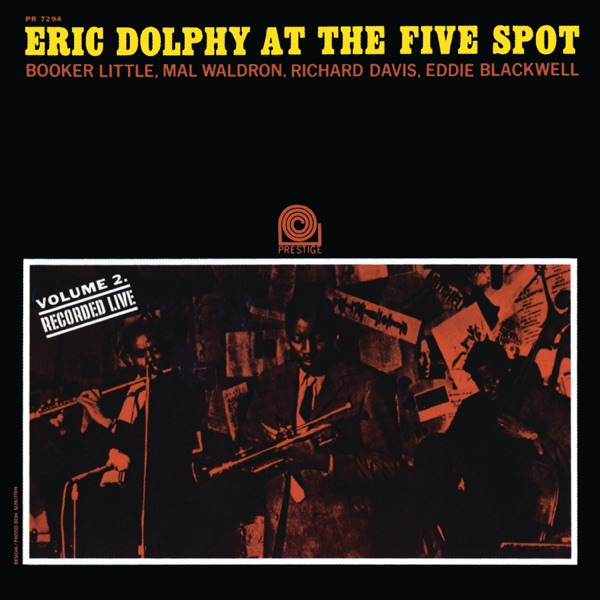
On July 16, 1961, engineer Rudy Van Gelder set up his equipment at the Five Spot in New York for what would be the only recorded night of Eric Dolphy and Booker Little's two-week residency. The decision to capture just this one performance—rather than multiple nights—meant the tape contains a group at a specific moment: sharp, committed, unedited by the usual studio retakes. Mal Waldron on piano, Richard Davis on bass, and Ed Blackwell on drums rounded out a lineup that had clearly spent two weeks sharpening itself into something unusual.
What came across the speakers was music that made older jazz ears uncomfortable. Dolphy and Little weren't playing changes the way bebop taught them; they were exploring atonality and dissonance openly, the kind of thing that got dismissed as noise by traditionalists but resonated hard with musicians watching the post-bop world take shape. AllMusic reviewer Michael G. Nastos heard a group that had "developed into a role model for all progressive jazz combos to come," with Waldron's piano work and Davis's classical-rooted bass creating space for Blackwell's inventive drumming to breathe. The Penguin Guide to Jazz Recordings later gave it a perfect 4/4.
Prestige Records released two volumes from this single night, in 1961 and 1963. The album mattered because it documented what the conversation sounded like when serious musicians decided convention wasn't the point anymore—when Dolphy and Little's group stood alongside Ornette Coleman and John Coltrane as evidence that jazz was capable of genuine upheaval.
Who's playing
Where next?


The musicians on this record

Out to Lunch 1964
Eric Dolphy
plays flute here
plays flute here

Left Alone 1960
Mal Waldron
plays piano here
plays piano here
♫
Tune In 1969
Ed Blackwell
plays drums (drum set) here
plays drums (drum set) here


