The Edge Before the Fall
Little grew up in Memphis, Tennessee, and by the time he arrived in Chicago as a teenager he was already technically formidable. He studied at the Chicago Conservatory of Music and fell in with Max Roach, joining his quintet in the late 1950s when he was barely old enough to drink. The Roach band was serious, politically engaged music, and Little fit right in — his playing had a kind of urgency to it that matched the times.
What makes Little distinctive is the tension in his sound. He had a slightly veiled, almost pinched tone compared to the bright blare of Clifford Brown or the cool elegance of Miles Davis, and he used it deliberately. His lines had this angular, searching quality — you'd think he was heading somewhere familiar and then he'd turn a corner into something unexpected. He was clearly absorbing what Ornette Coleman was doing with harmony, but he wasn't abandoning structure entirely. He was trying to find a middle ground that was his own.
The records he made as a leader are where you hear that most clearly. Out Front (1961) is probably his masterpiece — a small group session with Eric Dolphy on reeds, Max Roach on drums, and a writing sensibility that was pushing hard against the boundaries of post-bop without snapping them. The compositions have real architecture. This wasn't blowing sessions or heads-then-solos-and-out; Little was thinking about orchestration and ensemble texture in a way that was unusual for the format.
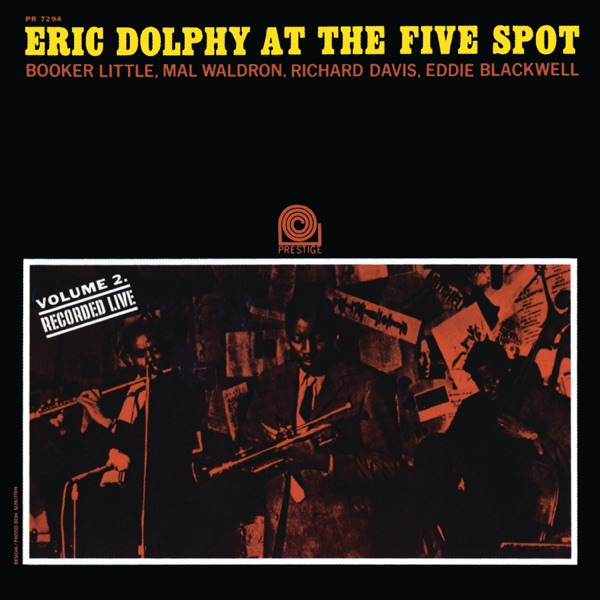
He also played on Eric Dolphy at the Five Spot (1961), a live recording from New York that documents a residency the two musicians shared. Hearing Little in that context — cooking on a bandstand with Dolphy, Mal Waldron, Richard Davis, and Ed Blackwell — you get a sense of how far along he was. He's completely in command, trading ideas with Dolphy without either player dominating, and the interplay sounds contemporary in a way that a lot of 1961 jazz simply doesn't.
He died of uremia, a kidney disease, in October 1961. It is genuinely difficult not to wonder what he would have done next, because the music he left suggests someone still accelerating. The records aren't artifacts of a promising career cut short — they're the work of someone who had already arrived somewhere interesting and was clearly about to go further.