Where do you listen?
Choose your streaming service
inside the sleeve
Loading…
inside the sleeveITS
⌕
Read About
Trumpet - USA - Post-Bop / Modal Jazz

Woody
Shaw

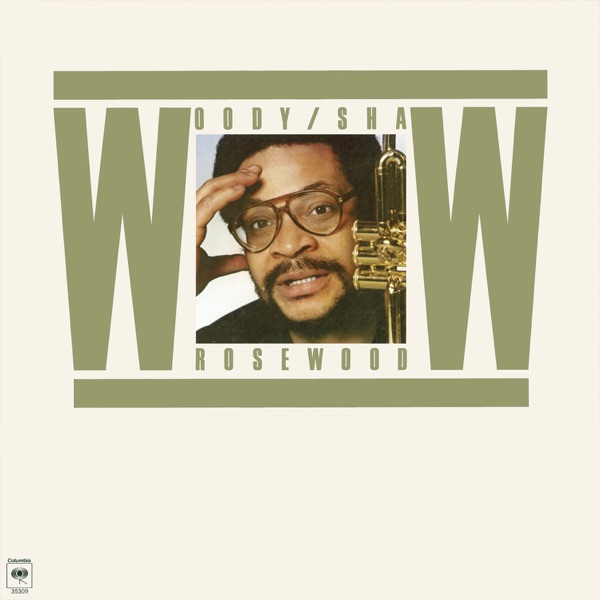
Start here Rosewood (1978) →
1944 - 1989, Newark, USA

Woody Shaw was doing things on the trumpet in the 1970s and 80s that almost nobody else was even attempting — reaching into whole-tone scales and quartal harmonies at a time when most of his peers were either playing it safe or chasing fusion money. He built a sound that felt genuinely modern without abandoning swing, which is a harder trick than it sounds. The tragedy is that he never quite got the recognition he deserved while he was alive, and the music still sounds ahead of its time.

Post-BopHard BopModal Jazz
♫

The Trumpet's Restless Geometry

Shaw grew up in Newark, New Jersey, surrounded by serious music from an early age — his father sang gospel, and the local scene was rich enough to push a young player fast. By his late teens he was already in New York, serious enough to catch the attention of Eric Dolphy, with whom he briefly worked before Dolphy's death in 1964. That early connection to the avant-garde was real and lasting. Shaw never became a free jazz player exactly, but he absorbed enough of that openness to keep his playing from ever getting too comfortable.

What makes Shaw distinctive is the interval choices. Where most hard bop trumpeters lean on thirds and blues-based lines, Shaw was constantly reaching for fourths and tritones, building phrases that feel angular without sounding academic. It's music that keeps you slightly off balance in a good way — you think you know where the line is going and then it turns somewhere unexpected. Woody Shaw Concert Ensemble at the Berliner Jazztage (1976) is a good place to hear this clearly. The writing is open and spacious, and Shaw's solos have this logic to them that rewards repeated listening.

He had a productive run with Dexter Gordon as a sideman in the mid-1970s, and that experience playing in a hard-swinging context alongside a giant of the music clearly did him good. His own albums for Columbia in the late 1970s — Rosewood (1978) chief among them — caught him at a peak. Rosewood (1978) especially is the record to start with: it has the whole band locked in, the writing is excellent, and Shaw sounds absolutely confident without being showy. Louis Hayes and Ronnie Mathews are both on that record and worth your attention in their own right.

Shaw also had a long and important relationship with Art Blakey and the Jazz Messengers, the kind of hard bop training ground that sharpened his rhythmic instincts without cramping his harmonic ideas. He moved between that world and the more experimental circles around Horace Silver and later Jackie McLean with unusual ease, which tells you something about how broadly musical he was. McLean in particular recognized something in Shaw early and gave him room to develop.

His later years were hard. He lost his sight progressively due to a genetic condition, and the circumstances of his death — struck by a subway train in New York in 1989 — were awful. He was 44. The discography he left behind is deep enough that you can spend real time in it, and the best of it holds up completely. If you've been sleeping on him because the name doesn't ring as loud as Miles Davis or Freddie Hubbard, that's exactly the kind of gap this music was made to fill.

Facts
BornDecember 24, 1944, Laurinburg, North Carolina, USA
DiedMay 10, 1989, Rochester, New York, USA
InstrumentTrumpet, Flugelhorn
ActiveEarly 1960s – 1989
Known forQuartal and whole-tone harmonic language on trumpet, Columbia Records albums of the late 1970s
Connections
Eric DolphyEarly mentor and collaborator, New York
→
Art BlakeyBandleader, Jazz Messengers alumni connection, New York
→
Jackie McLeanCollaborator and early supporter, New York
→
Read more

Discography

36 records
♫
In the Beginning
1965
Jazz Patterns
Jazz Patterns
1970
Song of Songs
Song of Songs
1972
♫
Anthenagin
1973
The Moontrane
The Moontrane
1975
Love Dance
Love Dance
1976
Ichi-Ban
Ichi-Ban
1976
♫
Louis Hayes - Woody Shaw Quintet - Lausanne 1977
1977
Stepping Stones: Live at the Village Vanguard
1978
Little Red’s Fantasy
1978
Rosewood
Rosewood
1978
Woody III
Woody III
1979
For Sure!
For Sure!
1980
♫
Tokyo 1981
1981
♫
The Iron Men
1981
United
United
1981
♫
Night Music
1982
♫
Master of the Art
1982
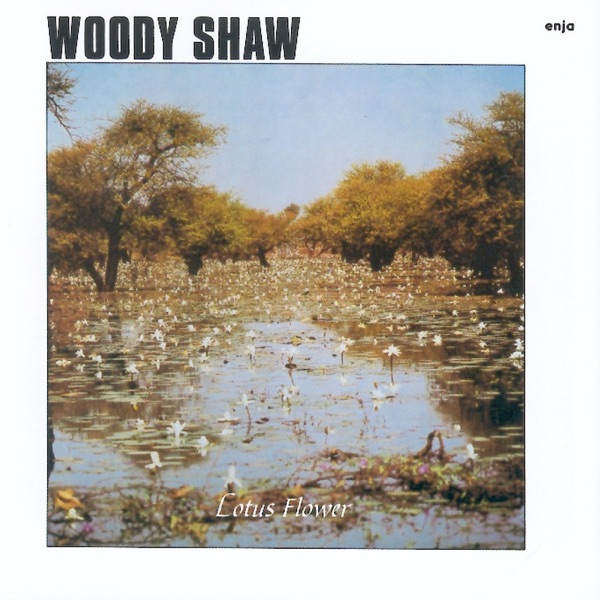
Lotus Flower
Lotus Flower
1982
Time Is Right
Time Is Right
1983
Time Speaks
Time Speaks
1983
Double Take
Double Take
1985
Setting Standards
Setting Standards
1985
Bemsha Swing
Bemsha Swing
1986
Dr. Chi
Dr. Chi
1986
Woody Shaw With Tone Jansa Quartet
1986
Imagination
Imagination
1988
The Eternal Triangle
1988
In My Own Sweet Way
In My Own Sweet Way
1989
♫
Woody And Friends
1992
Live Volume One
Live Volume One
2000
Live Volume Two
Live Volume Two
2001
Live, Volume Three
Live, Volume Three
2002
Live Volume Four
Live Volume Four
2005
Stepping Stones (Live at The Village Vanguard, NY August 1978) - Bonus Tracks
2012
The Tour Volume Two
The Tour Volume Two
2017

Collaborations

Live on Youtube

Explore Further

Selected connections
Trumpeter, USA
Freddie Hubbard
Shaw's closest peer on the instrument in the post-bop era — similarly adventurous harmonically, with a harder bop edge. Comparing the two is one of the great exercises in understanding what a single instrument can contain.
Explore →
Album, 1978
Rosewood
Shaw's clearest statement as a leader — strong writing, great band, and his trumpet playing at its most confident. The right starting point before digging into the deeper catalog.
Explore →

Who's playing
Listen next
Recording Info
Track listing
Musicians
Further Reading
Read more

Where next?

More by this artist

Albums with the same musicians

From the same era

Similar artists

inside the sleeve
Growing
Jazz, explained without pretension.
Read · Follow the connections · Press play
Right now: 7,100+ albums · 440+ artists
Start here
New to jazz? These artists are good places to start.
Loading…
Explore
Nine records worth getting lost in.
Born today
Album of the day
A landmark record, every day.
Read
  • Loading…
Article archive →
Recently added
Purpose
Inside the Sleeve is your companion on a journey through jazz — not a textbook, but something closer to a knowledgeable friend sitting next to you while you listen. Read about an artist, press play, follow a connection, discover an album you didn't know you needed.
Suggestions
Read

Articles

Essays, guides, and lists about jazz and the records that matter.

Loading…

Genre

Key Artists
Further Reading

Essential Albums

Related Genres

In This Genre

About

Inside the Sleeve

Work in progress

Inside the Sleeve grows continuously — new artists and albums are added, essays refined, as visitors explore and our editors follow up on what they find. Content, features, and design are still evolving; use the Report error button on any page to flag something that seems off.

Content

Every artist, album, and release date on Inside the Sleeve is real — verified against trusted sources including MusicBrainz and Wikipedia. We don't invent discographies or fabricate records. AI compiles that verified information into readable prose — essays on artists, albums, and the music itself. We can't manually review every essay before publishing, but every reported error is checked by a human editor.

Inside the Sleeve is not a review site. We're not here to rate or rank — we're here to guide you in. Where an album stands out, we'll say so. Where an artist changed everything, you'll know why. But we won't tear anything down. Jazz history is complex and sources sometimes disagree — if you spot something that seems off, please report it.

Streaming

Inside the Sleeve links to Spotify and Apple Music so you can listen while you read. These are not affiliate links. For Spotify, links open a search on open.spotify.com — we do not have direct links to specific recordings. For Apple Music, direct links are used where available, otherwise a search is opened.

Your choice of streaming service is stored locally in your browser only. It is never sent to our servers.

We're working on deeper Spotify integration, including direct links to specific recordings.

Privacy

Inside the Sleeve does not collect personal data and does not use cookies. We count page visits anonymously using a self-hosted analytics tool — no personal identifiers are stored, and the data never leaves our own server. The only preference stored on your device is your streaming service choice, saved locally in your browser and never transmitted.

When you submit a suggestion or error report, the text you write is stored in our database. No name or email is required or collected unless you choose to provide one.

Third-party services

Spotify and Apple Music are independent services with their own terms of use and privacy policies. Inside the Sleeve is not affiliated with or endorsed by either company.

Support

Inside the Sleeve is free and ad-free. If you enjoy it, a coffee helps cover server costs and keeps the project going.

Amazon

Some book recommendations on Inside the Sleeve link to Amazon. Buying through these links costs you nothing extra — but Amazon pays us a small commission, which goes directly towards keeping the site running. It's a simple way to support the project if you were going to buy the book anyway.

As an Amazon Associate, Inside the Sleeve earns from qualifying purchases.

Questions or feedback? Use the suggestion box on the front page.

Inside the Sleeve — A guide for those who want to go beyond the obvious About & Privacy