Where do you listen?
Choose your streaming service
inside the sleeve
Loading…
inside the sleeveITS
⌕
Read About
Woodwinds - United States - Free Jazz Pioneer

Eric
Dolphy

1928 - 1964, Los Angeles, United States

Eric Dolphy was a virtuoso of the alto saxophone, bass clarinet, and flute who refused to be confined by any single musical language. His work with Charles Mingus and John Coltrane pushed the boundaries of harmonic and rhythmic possibility, creating a sonic vocabulary that sounded alien yet deeply human. In his brief but incandescent career, Dolphy became the architect of a new kind of listening—one where the instrument could sing, wail, laugh, and cry in ways that defied conventional melody.

Free JazzAvant-Garde Jazz
Eric Dolphy

The Prophet Who Played in Tongues

Eric Dolphy showed up in jazz at exactly the right moment—when musicians were figuring out how to play lots of different ideas at the same time instead of taking turns. He started out in Los Angeles meeting players who wanted to try new chord progressions and combinations, but when he moved to New York in 1959, that's when things really clicked. He became one of the key voices in the experimental jazz movement of the early 1960s. The thing that made him different from some other free jazz players is that he never threw out the rulebook entirely. He kept one eye on melody and harmony while he was reimagining what they could do. His bass clarinet sound was really something—woody and sad-sounding, almost like a human voice trying to tell you something.

Charles Mingus got what Dolphy was doing in a way that mattered. Both of them believed that if you wanted real freedom, you actually needed to understand structure first. On records like "The Black Saint and the Sinner Lady (1963)," you can hear this directly—Dolphy's clarinet lines weaving through Mingus's arrangements, everything written out but also sounding like they're making it up as they go. What helped this work was that Dolphy had serious technical skills. He could handle complicated chords and break them apart at the same time, which kept you guessing about where the music was headed.

When Dolphy played with John Coltrane's quartet, they made some really difficult but incredibly satisfying records. On albums like "Africa/Brass" and "Live at the Village Vanguard," Dolphy's work on multiple woodwinds gave Coltrane's spiritual search another angle. Coltrane was reaching toward something bigger, while Dolphy kept things grounded in the actual sound—squeaks, bent notes, the sharp attack of the bass clarinet cutting through. The two of them showed you what it actually sounded like when musicians listened to each other and built something together.

Dolphy died in Berlin in 1964 when he was only thirty-six. His career was just getting going. The records he left behind—especially "Out There (1960)" and "Out to Lunch"—still sound modern today. You hear those weird intervals and broken-up melodies and they still catch you off-guard. What stands out about Dolphy is that no matter how far out he went, his playing always felt like someone talking directly to you. He didn't hide behind the experiments.

People sometimes sleep on Dolphy because Coltrane and Mingus got so much more attention. But his ideas are still as sharp and honest as when he recorded them. He showed that you can play free jazz without giving up your technique or your ability to reach people emotionally. You just use everything you know to say something new, in a way that only you can say it.
Facts
BornJune 20, 1928, Los Angeles, California
DiedJune 29, 1964, Berlin, Germany
InstrumentsAlto saxophone, bass clarinet, flute, soprano saxophone
Active1950-1964
Known forPioneering free jazz; collaborations with Charles Mingus and John Coltrane; virtuosic multi-reed mastery
Connections
Charles MingusBandleader and primary collaborator, New York
→
John ColtraneQuartet member, New York
→
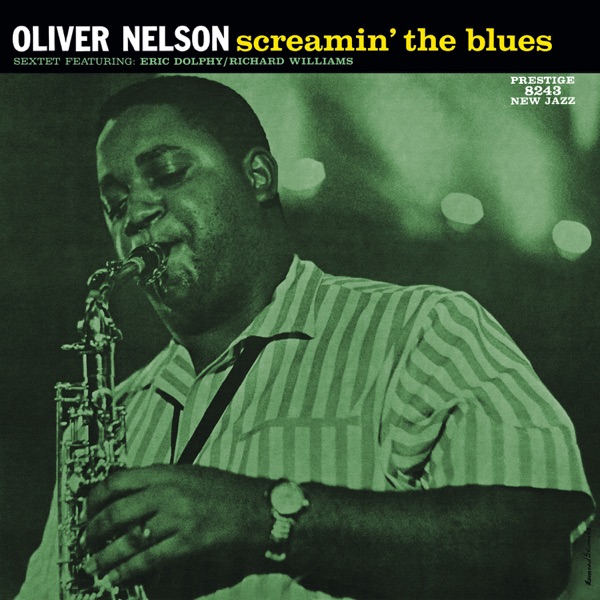
Oliver NelsonArranger and collaborator, New York
→
Booker LittleTrumpet player, frequent bandmate, New York
→
Mal WaldronPianist and collaborator, New York
→
Read more

Discography

12 records
Out to Lunch
Out to Lunch
1964
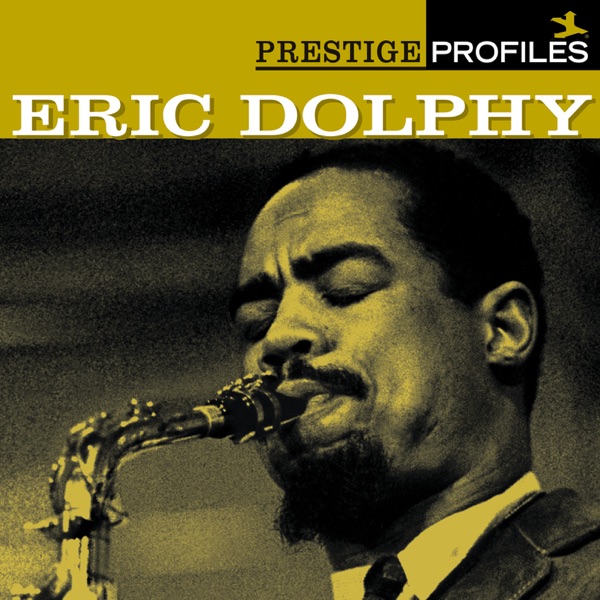
Prestige Profiles Eric Dolphy
1959
Outward Bound
Outward Bound
1960
Other Aspects
Other Aspects
1960
Out There
Out There
1961
Eric Dolphy at the Five Spot
1961
Far Cry
Far Cry
1962
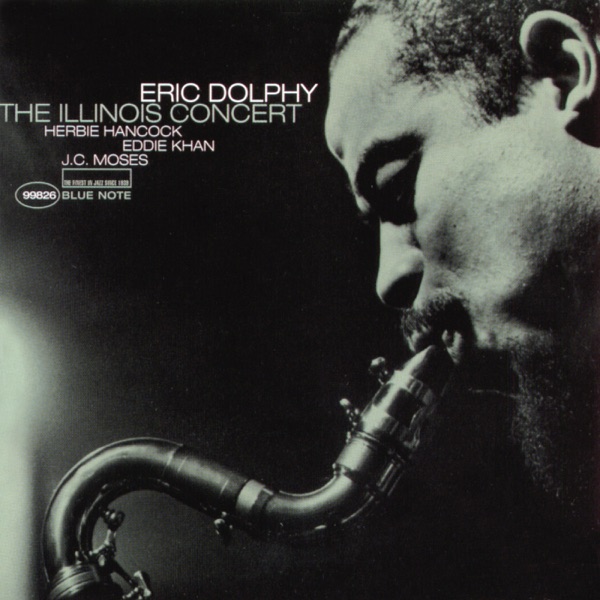
Illinois Concert
Illinois Concert
1963
Iron Man
Iron Man
1963
Out To Lunch (The Rudy Van Gelder Edition)
1964
Last Date
Last Date
1965
The Illinois Concert
1999

Collaborations

Live on Youtube

Explore Further

Selected connections
Album, 1960
Out There
Dolphy's first album as leader, showcasing his multi-reed mastery and innovative approach to standards and originals.
Explore →
Album, 1961
Mingus Ah Um
Essential collaboration revealing Dolphy's role in Mingus's revolutionary big-band vision.
Explore →
Album, 1964
Out of Nowhere
Final album, a prescient meditation on melody and freedom recorded in Copenhagen shortly before his death.
Explore →

Who's playing
Listen next
Recording Info
Track listing
Musicians
Further Reading
Read more

Where next?

More by this artist

Albums with the same musicians

From the same era

Similar artists

inside the sleeve
Growing
Jazz, explained without pretension.
Read · Follow the connections · Press play
Right now: 7,100+ albums · 440+ artists
Start here
New to jazz? These artists are good places to start.
Loading…
Explore
Nine records worth getting lost in.
Born today
Album of the day
A landmark record, every day.
Read
  • Loading…
Article archive →
Recently added
Purpose
Inside the Sleeve is your companion on a journey through jazz — not a textbook, but something closer to a knowledgeable friend sitting next to you while you listen. Read about an artist, press play, follow a connection, discover an album you didn't know you needed.
Suggestions
Read

Articles

Essays, guides, and lists about jazz and the records that matter.

Loading…

Genre

Key Artists
Further Reading

Essential Albums

Related Genres

In This Genre

About

Inside the Sleeve

Work in progress

Inside the Sleeve grows continuously — new artists and albums are added, essays refined, as visitors explore and our editors follow up on what they find. Content, features, and design are still evolving; use the Report error button on any page to flag something that seems off.

Content

Every artist, album, and release date on Inside the Sleeve is real — verified against trusted sources including MusicBrainz and Wikipedia. We don't invent discographies or fabricate records. AI compiles that verified information into readable prose — essays on artists, albums, and the music itself. We can't manually review every essay before publishing, but every reported error is checked by a human editor.

Inside the Sleeve is not a review site. We're not here to rate or rank — we're here to guide you in. Where an album stands out, we'll say so. Where an artist changed everything, you'll know why. But we won't tear anything down. Jazz history is complex and sources sometimes disagree — if you spot something that seems off, please report it.

Streaming

Inside the Sleeve links to Spotify and Apple Music so you can listen while you read. These are not affiliate links. For Spotify, links open a search on open.spotify.com — we do not have direct links to specific recordings. For Apple Music, direct links are used where available, otherwise a search is opened.

Your choice of streaming service is stored locally in your browser only. It is never sent to our servers.

We're working on deeper Spotify integration, including direct links to specific recordings.

Privacy

Inside the Sleeve does not collect personal data and does not use cookies. We count page visits anonymously using a self-hosted analytics tool — no personal identifiers are stored, and the data never leaves our own server. The only preference stored on your device is your streaming service choice, saved locally in your browser and never transmitted.

When you submit a suggestion or error report, the text you write is stored in our database. No name or email is required or collected unless you choose to provide one.

Third-party services

Spotify and Apple Music are independent services with their own terms of use and privacy policies. Inside the Sleeve is not affiliated with or endorsed by either company.

Support

Inside the Sleeve is free and ad-free. If you enjoy it, a coffee helps cover server costs and keeps the project going.

Amazon

Some book recommendations on Inside the Sleeve link to Amazon. Buying through these links costs you nothing extra — but Amazon pays us a small commission, which goes directly towards keeping the site running. It's a simple way to support the project if you were going to buy the book anyway.

As an Amazon Associate, Inside the Sleeve earns from qualifying purchases.

Questions or feedback? Use the suggestion box on the front page.

Inside the Sleeve — A guide for those who want to go beyond the obvious About & Privacy