Where do you listen?
Choose your streaming service
inside the sleeve
Loading…
inside the sleeveITS
⌕
Read About
Alto Saxophone - USA - Free Jazz

Ornette
Coleman

Start here The Shape of Jazz to Come (1959) →
1930 - 2015, Fort Worth, USA

Ornette Coleman arrived in New York in 1959 and essentially broke jazz open — not by accident, but by design. He had spent years developing a way of playing that treated melody as a living, breathing thing, free from the obligation to follow chord changes. The music that followed was called free jazz, a term he practically invented, and it divided serious listeners right down the middle.

Free JazzAvant-Garde Jazz
Ornette Coleman

The Shape of Sound Itself

Before Ornette Coleman walked into the Five Spot in 1959, the rules of bebop were basically law. You played the changes. You followed the harmonic map. Coleman looked at that map and said, essentially, what if the melody doesn't need it? His concept — which he later named harmolodics — was about liberating melody from its dependence on predetermined chord progressions. The tune could go wherever it needed to go emotionally. That idea sounds simple until you try to play it, or until you really listen to what he was doing.

The early Atlantic recordings are the place to start. The Shape of Jazz to Come (1959) is the one that hit first and hardest. The album's opening track, "Lonely Woman," became Coleman's signature piece — a haunting melody that showed his approach was never about abandoning beauty, but finding a different path to it. The band — Don Cherry on cornet, Charlie Haden on bass, Billy Higgins on drums — was playing something that felt both ancient and completely new. Cherry and Coleman would weave around each other without locking into a shared harmonic grid, and somehow it swung. Free Jazz (1960), the double-quartet record that gave the whole movement its name, pushed things further: two groups playing simultaneously, improvising collectively in real time. It shouldn't work. It does.

What often gets lost in discussions about Coleman's radicalism is how lyrical he was. His alto tone was raw and slightly sharp compared to the cool, polished sound of Lee Konitz or Paul Desmond, but it was deeply expressive in a way that connected to blues and gospel — the music he grew up with in Texas. You can hear that clearly on ballads and slower pieces scattered through his career. He wasn't interested in abstraction for its own sake. He wanted emotional directness, and the harmolodic theory was his way of getting there more honestly.

By the late 1970s and into the 1980s, Coleman had formed Prime Time, an electric band that brought guitars, multiple basses, and a harder rhythmic pulse into his concept. Albums like Dancing in Your Head (1977) split audiences again. Some felt it was Coleman adapting to the times; others heard it as a natural extension of harmolodics into denser, louder terrain. Pat Metheny, who recorded Song X (1986) with Coleman, was clearly energized by the collaboration. Prime Time never quite got the credit it deserved — it sits awkwardly between jazz and rock in a way that makes both camps nervous.

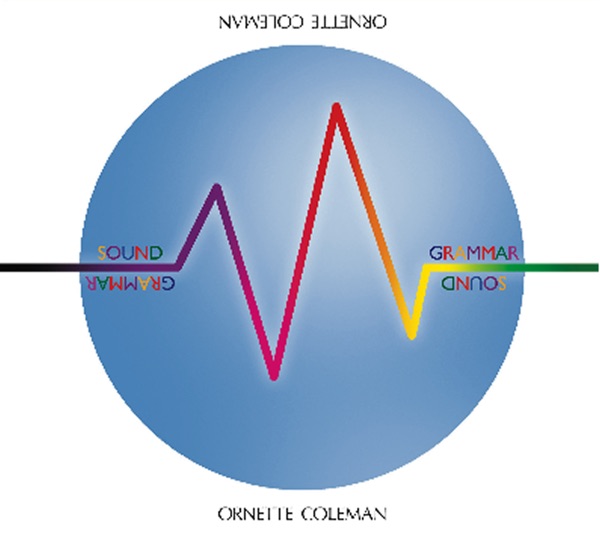
Coleman kept working until near the end of his life, performing and composing, including orchestral pieces and string quartets. He won a received a Pulitzer Prize Special Citation in 2007 for his recording Sound Grammar (2006), which was quietly remarkable — a live trio date with two basses and drums that showed he could still do it with almost nothing. What you take away from a serious listen to Coleman's catalog isn't chaos. It's a very particular kind of freedom, one that required enormous discipline to achieve and enormous courage to defend when almost everyone in jazz initially told him he was wrong.

Facts
BornMarch 9, 1930, Fort Worth, Texas, USA
DiedJune 11, 2015, New York, United States
InstrumentAlto Saxophone, Trumpet, Violin
Active1950s - 2015
Known forFree jazz, harmolodics, The Shape of Jazz to Come
Connections
Don CherryLongtime musical partner, New York
→
Charlie HadenBassist, Atlantic-era quartet
→
Pat MethenyCollaborator, Song X sessions
→
Read more
GuideDon Cherry at 90: treating the whole world's music as one thing

Discography

25 records
The Shape of Jazz to Come
1959
The Music Of Ornette Coleman: Something Else!!!
1958
Tomorrow Is The Question!
1959
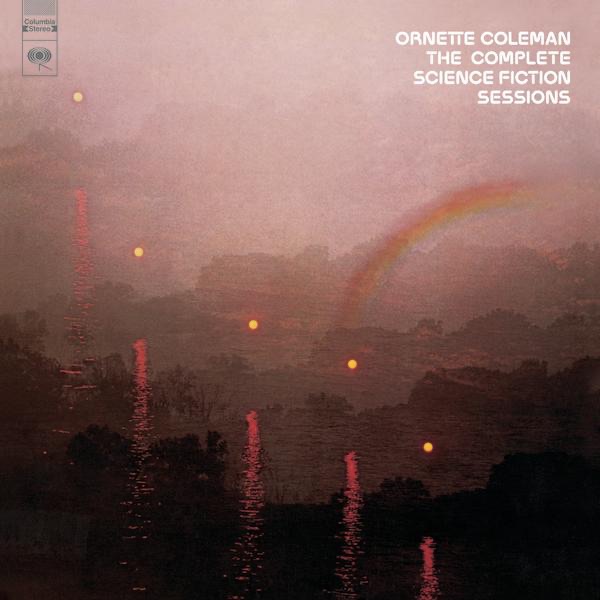
The Complete Science Fiction Sessions
1960
This Is Our Music
This Is Our Music
1960
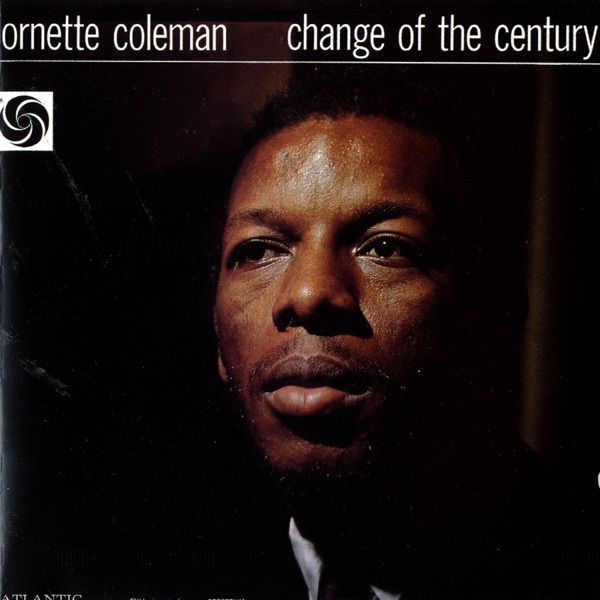
Change of the Century
1960
Free Jazz
Free Jazz
1961
Chappaqua Suite
Chappaqua Suite
1966
The Empty Foxhole
The Empty Foxhole
1966
♫
An Evening With Ornette Coleman
1967
New York Is Now
New York Is Now
1968
Ornette at 12
Ornette at 12
1969
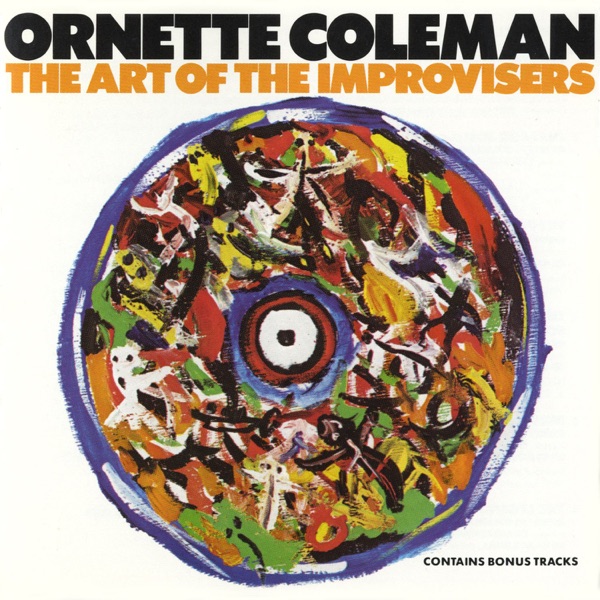
The Art of the Improvisers
1970
Twins
Twins
1971
Love Call
Love Call
1971
Science Fiction
Science Fiction
1972
Crisis
Crisis
1972
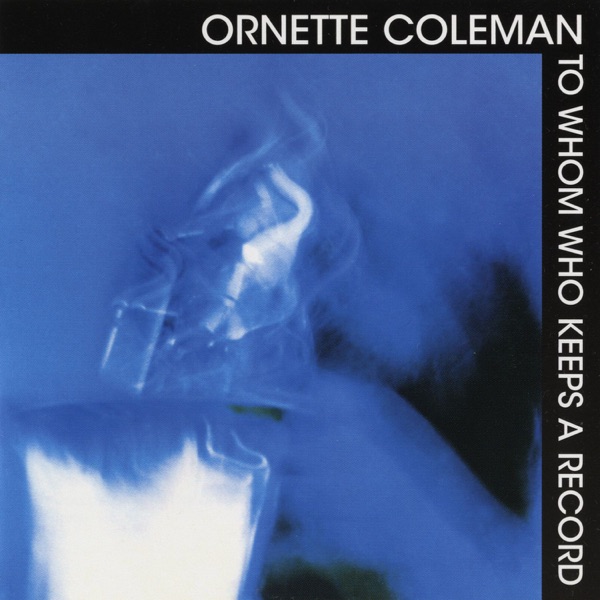
To Whom Who Keeps a Record
1975
Sound Grammar
Sound Grammar
2006
Friends and Neighbors: Ornette Live at Prince Street
Tomorrow Is the Question! The New Music of Ornette Coleman!
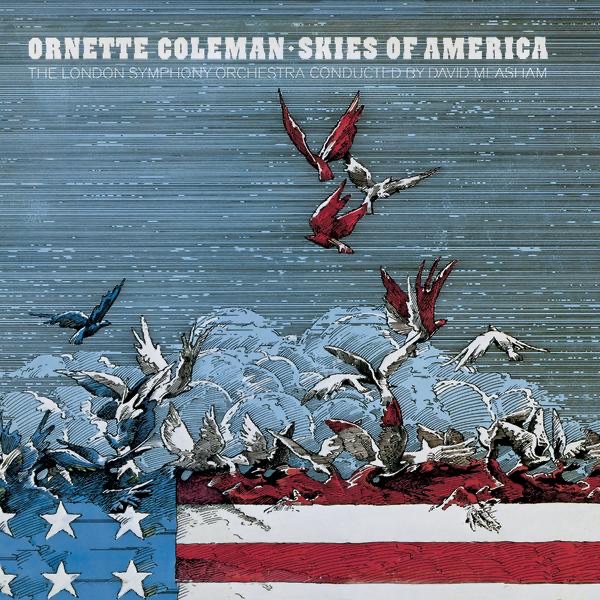
Skies of America
Skies of America
Something Else!!!! The Music of Ornette Coleman
The Music of Ornette Coleman
Ornette on Tenor
Ornette on Tenor

Collaborations

Live on Youtube

Explore Further

Selected connections
Bassist, USA
Charlie Haden
Haden's elastic, singing bass lines were central to what made the early Coleman quartets feel grounded rather than unmoored. His own Liberation Music Orchestra shows he was always more than a sideman.
Explore →
Album, 1965
At the Golden Circle Stockholm
A two-volume live set recorded in Sweden with just Ed Blackwell on drums and David Izenzon on bass — lean, concentrated, and one of the best arguments for how much Coleman could do with almost nothing around him.
Explore →

Who's playing
Listen next
Recording Info
Track listing
Musicians
Further Reading
Read more

Where next?

More by this artist

Albums with the same musicians

From the same era

Similar artists

inside the sleeve
Growing
Jazz, explained without pretension.
Read · Follow the connections · Press play
Right now: 7,100+ albums · 440+ artists
Start here
New to jazz? These artists are good places to start.
Loading…
Explore
Nine records worth getting lost in.
Born today
Album of the day
A landmark record, every day.
Read
  • Loading…
Article archive →
Recently added
Purpose
Inside the Sleeve is your companion on a journey through jazz — not a textbook, but something closer to a knowledgeable friend sitting next to you while you listen. Read about an artist, press play, follow a connection, discover an album you didn't know you needed.
Suggestions
Read

Articles

Essays, guides, and lists about jazz and the records that matter.

Loading…

Genre

Key Artists
Further Reading

Essential Albums

Related Genres

In This Genre

About

Inside the Sleeve

Work in progress

Inside the Sleeve grows continuously — new artists and albums are added, essays refined, as visitors explore and our editors follow up on what they find. Content, features, and design are still evolving; use the Report error button on any page to flag something that seems off.

Content

Every artist, album, and release date on Inside the Sleeve is real — verified against trusted sources including MusicBrainz and Wikipedia. We don't invent discographies or fabricate records. AI compiles that verified information into readable prose — essays on artists, albums, and the music itself. We can't manually review every essay before publishing, but every reported error is checked by a human editor.

Inside the Sleeve is not a review site. We're not here to rate or rank — we're here to guide you in. Where an album stands out, we'll say so. Where an artist changed everything, you'll know why. But we won't tear anything down. Jazz history is complex and sources sometimes disagree — if you spot something that seems off, please report it.

Streaming

Inside the Sleeve links to Spotify and Apple Music so you can listen while you read. These are not affiliate links. For Spotify, links open a search on open.spotify.com — we do not have direct links to specific recordings. For Apple Music, direct links are used where available, otherwise a search is opened.

Your choice of streaming service is stored locally in your browser only. It is never sent to our servers.

We're working on deeper Spotify integration, including direct links to specific recordings.

Privacy

Inside the Sleeve does not collect personal data and does not use cookies. We count page visits anonymously using a self-hosted analytics tool — no personal identifiers are stored, and the data never leaves our own server. The only preference stored on your device is your streaming service choice, saved locally in your browser and never transmitted.

When you submit a suggestion or error report, the text you write is stored in our database. No name or email is required or collected unless you choose to provide one.

Third-party services

Spotify and Apple Music are independent services with their own terms of use and privacy policies. Inside the Sleeve is not affiliated with or endorsed by either company.

Support

Inside the Sleeve is free and ad-free. If you enjoy it, a coffee helps cover server costs and keeps the project going.

Amazon

Some book recommendations on Inside the Sleeve link to Amazon. Buying through these links costs you nothing extra — but Amazon pays us a small commission, which goes directly towards keeping the site running. It's a simple way to support the project if you were going to buy the book anyway.

As an Amazon Associate, Inside the Sleeve earns from qualifying purchases.

Questions or feedback? Use the suggestion box on the front page.

Inside the Sleeve — A guide for those who want to go beyond the obvious About & Privacy