The Weight of the Note
Before Charlie Haden became one of jazz's great bassists, he was a child singing country and gospel on a family radio program in the American Midwest. That background — vernacular, deeply melodic, rooted in tradition — never left him, even when he ended up on the front lines of one of jazz's most radical moments. When he joined Ornette Coleman's quartet in the late 1950s, he wasn't just keeping time; he was finding a new way to let the bass sing on its own terms, free from the tyranny of chord changes, following the emotional logic of the music rather than its harmonic grid.
Haden's tone is the first thing you notice. Where many jazz bassists aim for a round, punchy attack, Haden drew long, singing notes out of the instrument — woody, warm, occasionally almost mournful. He understood space the way a sculptor understands negative space. What he didn't play mattered as much as what he did. On The Shape of Jazz to Come (1959), the Coleman record that effectively announced the free jazz movement to the world, Haden sounds simultaneously free and grounded, like an anchor that can float.
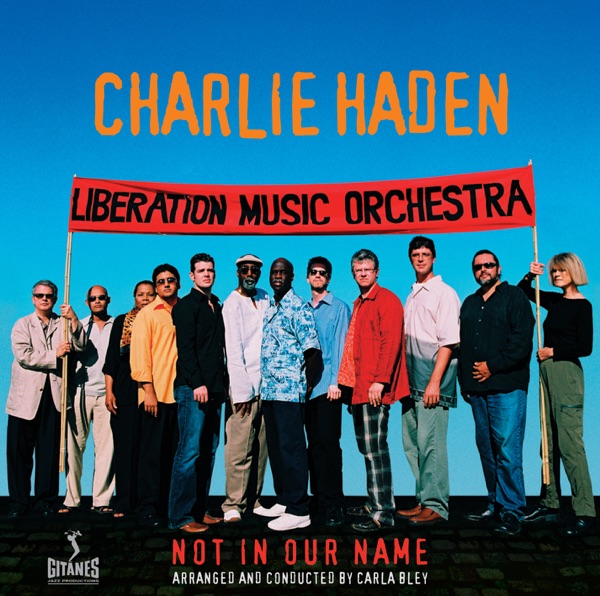
His political commitments shaped his music explicitly, which was unusual and sometimes costly. He founded the Liberation Music Orchestra in 1969, a large ensemble that wove together Spanish Civil War songs, African American freedom movement anthems, and jazz improvisation into something genuinely angry and genuinely beautiful. It's the kind of record that sounds like it was made because someone felt they had no other choice. The project continued across several decades, with Carla Bley as his essential collaborator, and the records hold up not as period pieces but as music with a real pulse.
But Haden was not only a firebrand. He had an almost contradictory gift for tenderness. His duo recordings — with Pat Metheny, with Gonzalo Rubalcaba, with Kenny Barron — show a musician who could strip a standard down to its emotional skeleton without sentimentality. Quartet West (1959), the ensemble he led from the 1980s onward, conjured the sound of Los Angeles noir — late-night radio, old ballads, a slightly melancholy glamour. Those records have a mood you can fall into without quite meaning to.
What you should know before you press play is that Haden rewards patience and close listening. He is not a flashy player; there are no pyrotechnics, no moments designed to make you say wow. Instead, there is the sense of someone thinking through music in real time, choosing every note deliberately, leaving room for the other musicians to breathe. He is one of those rare players who makes everyone around him sound better, not by competing but by listening so hard it becomes its own kind of generosity.