Where do you listen?
Choose your streaming service
inside the sleeve
Loading…
inside the sleeveITS
⌕
Read About
Piano, Composition — USA — Avant-Garde

Carla
Bley

Start here Escalator Over the Hill (1971) →
1936 — Present, USA

Carla Bley wrote some of the strangest, funniest, and most ambitious music in jazz — and she did most of it on her own terms, outside the major label system, often with her own band and her own record company. She came up as a cigarette girl at Birdland who taught herself theory, and ended up composing a three-hour jazz opera that became one of the more genuinely bizarre artifacts of the 1960s avant-garde. Her music can be absurdist and tender in the same breath, and there's nobody else who sounds quite like her.

Avant-Garde JazzFree JazzPost-BopContemporary Jazz
♫

Chaos With a Straight Face

If you're coming to Carla Bley for the first time, the best place to start is probably Escalator Over the Hill (1971), the sprawling double album she composed and produced over several years with lyricist Paul Haines. It's a jazz opera, sort of — it also has rock, Indian classical music, and a cast that includes Jack Bruce, Don Cherry, and Gato Barbieri, among others. It is genuinely strange listening, and it shouldn't work as well as it does. But somehow the whole thing holds together through sheer force of compositional personality. Bley has a way of making chaos feel structured without draining the life out of it.

She grew up in Oakland, California, and moved to New York as a teenager. The story of teaching herself harmony and theory while working as a cigarette girl at Birdland is true, and it matters — she was absorbing the music directly from the room rather than from a conservatory. She married Paul Bley in the late 1950s and became embedded in the downtown New York scene that was pushing jazz into new territory. She co-founded the Jazz Composer's Orchestra with Mike Mantler, who became her long-term partner and collaborator, and together they set up JCOA Records and later WATT Records to distribute their own work. That kind of structural independence was rare then and it shaped everything she did afterward.

Her piano playing tends to get overshadowed by her composing, which is understandable but a little unfair. She's not a virtuoso in any conventional sense — she plays with a kind of deliberate economy, leaving a lot of space, and her touch has a dry, almost sardonic quality. It fits her compositional voice perfectly. When she leads her own groups, the music often has this wry, slightly theatrical quality, like the band is in on a joke that takes a few listens to fully get. Dinner Music (1977) is a good example — the title is a bit of a gag, but the music is genuinely sophisticated and more accessible than some of her earlier work.

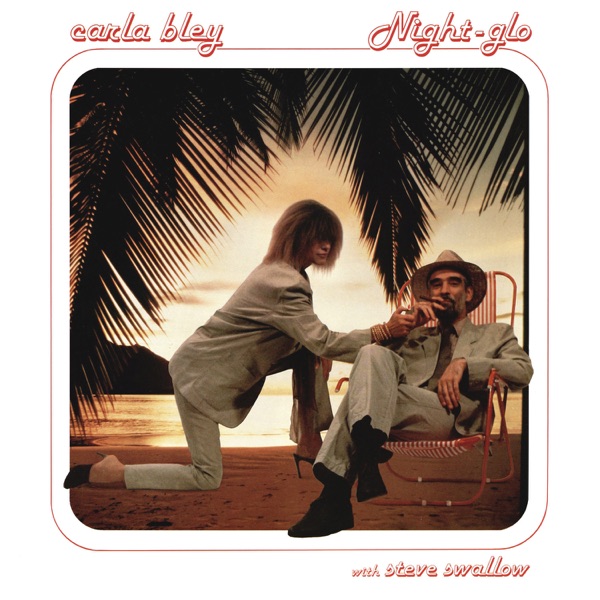
Through the 1980s and beyond, she led various configurations of what became known as the Carla Bley Band, and she also did a lot of work in smaller settings. The collaborations with bassist Steve Swallow, her partner since the early 1980s, produced some of her warmest and most direct music. Duets (1988), recorded with Swallow, strips things back to just piano and bass and lets you hear how much personality she gets out of a relatively simple setup. She's also written for big bands and chamber groups, and the writing is always recognizably hers — you could pick a Carla Bley chart out of a stack without seeing the cover.

What makes her worth spending real time with is that she never made a career out of being difficult. Some of the avant-garde composers of her generation can feel like they're daring you not to enjoy yourself. Bley's music has humor and swing even when it's being structurally adventurous. She can write something that sounds like a children's song and make it feel completely at home next to something dissonant and gnarly. That range, and the consistency with which she's maintained it across six decades, is the thing.

Facts
BornMay 11, 1936, Oakland, California
InstrumentPiano, Organ, Composer
Active1950s — Present
Known forLarge-scale jazz composition, WATT Records, Escalator Over the Hill
Connections
Paul BleyFormer husband, collaborator — New York
→
Mike MantlerCo-founder, Jazz Composer's Orchestra — New York
→
Steve SwallowLong-term collaborator and partner — New York
→
Read more

Discography

23 records
♫
Jazz Realities
1966
Escalator Over the Hill
1971
Tropic Appetites
Tropic Appetites
1974
♫
13 & 3/4
1975
Dinner Music
Dinner Music
1977
Social Studies
Social Studies
1981
Heavy Heart
Heavy Heart
1984
Night-glo
Night-glo
1985
Sextet
Sextet
1987
Fleur Carnivore
Fleur Carnivore
1989
Go Together
Go Together
1993
Big Band Theory
Big Band Theory
1993
Songs With Legs
Songs With Legs
1995
Fancy Chamber Music
Fancy Chamber Music
1998
Are We There Yet?
Are We There Yet?
1999
4x4
4x4
2000
The Lost Chords
The Lost Chords
2004
The Lost Chords Find Paolo Fresu
2007
Carla’s Christmas Carols
2009
Trios
Trios
2013
Andando el tiempo
Andando el tiempo
2016
Life Goes On
Life Goes On
2020
Joyful Noise (Live In Hamburg 1984)
2026

Collaborations

Live on Youtube

Explore Further

Selected connections
Bassist, USA
Steve Swallow
Swallow appears on decades of Bley's recordings and the duo recordings between them are some of her most approachable work — a good thread to pull.
Explore →
Album, 1971
Escalator Over the Hill
The big one. Overwhelming at first, but give it a full uninterrupted listen and it starts to make its own kind of sense.
Explore →
Composer, USA
Charlie Haden
Haden shared Bley's commitment to politically engaged, independently produced jazz and they overlapped in several important contexts worth exploring.
Explore →

Who's playing
Listen next
Recording Info
Track listing
Musicians
Further Reading
Read more

Where next?

More by this artist

Albums with the same musicians

From the same era

Similar artists

inside the sleeve
Growing
Jazz, explained without pretension.
Read · Follow the connections · Press play
Right now: 7,100+ albums · 440+ artists
Start here
New to jazz? These artists are good places to start.
Loading…
Explore
Nine records worth getting lost in.
Born today
Album of the day
A landmark record, every day.
Read
  • Loading…
Article archive →
Recently added
Purpose
Inside the Sleeve is your companion on a journey through jazz — not a textbook, but something closer to a knowledgeable friend sitting next to you while you listen. Read about an artist, press play, follow a connection, discover an album you didn't know you needed.
Suggestions
Read

Articles

Essays, guides, and lists about jazz and the records that matter.

Loading…

Genre

Key Artists
Further Reading

Essential Albums

Related Genres

In This Genre

About

Inside the Sleeve

Work in progress

Inside the Sleeve grows continuously — new artists and albums are added, essays refined, as visitors explore and our editors follow up on what they find. Content, features, and design are still evolving; use the Report error button on any page to flag something that seems off.

Content

Every artist, album, and release date on Inside the Sleeve is real — verified against trusted sources including MusicBrainz and Wikipedia. We don't invent discographies or fabricate records. AI compiles that verified information into readable prose — essays on artists, albums, and the music itself. We can't manually review every essay before publishing, but every reported error is checked by a human editor.

Inside the Sleeve is not a review site. We're not here to rate or rank — we're here to guide you in. Where an album stands out, we'll say so. Where an artist changed everything, you'll know why. But we won't tear anything down. Jazz history is complex and sources sometimes disagree — if you spot something that seems off, please report it.

Streaming

Inside the Sleeve links to Spotify and Apple Music so you can listen while you read. These are not affiliate links. For Spotify, links open a search on open.spotify.com — we do not have direct links to specific recordings. For Apple Music, direct links are used where available, otherwise a search is opened.

Your choice of streaming service is stored locally in your browser only. It is never sent to our servers.

We're working on deeper Spotify integration, including direct links to specific recordings.

Privacy

Inside the Sleeve does not collect personal data and does not use cookies. We count page visits anonymously using a self-hosted analytics tool — no personal identifiers are stored, and the data never leaves our own server. The only preference stored on your device is your streaming service choice, saved locally in your browser and never transmitted.

When you submit a suggestion or error report, the text you write is stored in our database. No name or email is required or collected unless you choose to provide one.

Third-party services

Spotify and Apple Music are independent services with their own terms of use and privacy policies. Inside the Sleeve is not affiliated with or endorsed by either company.

Support

Inside the Sleeve is free and ad-free. If you enjoy it, a coffee helps cover server costs and keeps the project going.

Amazon

Some book recommendations on Inside the Sleeve link to Amazon. Buying through these links costs you nothing extra — but Amazon pays us a small commission, which goes directly towards keeping the site running. It's a simple way to support the project if you were going to buy the book anyway.

As an Amazon Associate, Inside the Sleeve earns from qualifying purchases.

Questions or feedback? Use the suggestion box on the front page.

Inside the Sleeve — A guide for those who want to go beyond the obvious About & Privacy