Where do you listen?
Choose your streaming service
inside the sleeve
Loading…
inside the sleeveITS
⌕
Read About
Bass - United States - Post-Bop / Jazz Fusion

Steve
Swallow

1940 - present, United States

Steve Swallow started out on upright bass like everybody else, then quietly did something almost nobody else did: he switched to electric bass in the late 1960s and never looked back, turning an instrument jazz snobs dismissed into something that could sing. He's also one of the best composers most casual jazz fans have never heard of, with tunes like Falling Grace that other musicians love to play more than the general public knows.

Post-BopJazz FusionContemporary Jazz
♫

The Bass That Learned to Sing

Here's the thing about Steve Swallow — he made a decision in the late 1960s that a lot of serious jazz musicians at the time thought was a step down. He put down the upright bass, which he'd already gotten quite good at playing behind Jimmy Giuffre and Paul Bley, and picked up an electric bass guitar. This was not a fusion cash-grab move. He wasn't chasing rock money. He just liked the sound better, and he spent decades figuring out how to make the electric bass do things nobody else was asking it to do — melodic things, conversational things, things closer to a horn than a rhythm-section anchor.

What you notice listening to Swallow is how little he sounds like a typical electric bassist. No slap, no funk aggression, none of the low-end thunder you'd get from a fusion session player. He plays with a pick, keeps the tone round and warm, and phrases like he's singing a line rather than laying down a foundation. Put on anything he did with Gary Burton in the late 1960s and 1970s and you'll hear a bass that's practically duetting with the vibraphone, not just holding the bottom.

Then there's the composing, which might actually be the more lasting part of his story. Tunes like Falling Grace and Eiderdown became genuine standards — the kind other musicians record because the tunes themselves are just good, full of interesting turns that don't announce themselves as clever. He wrote a lot of this material for and with Carla Bley, his longtime musical and life partner, and their collaboration runs through decades of recordings, including work connected to her larger ensemble projects and his own quieter trio records.

He never became a household name, and he'd probably tell you that's fine — he was never chasing that. What he did instead was spend a career making an unglamorous instrument sound like it had something to say, and writing tunes smart enough that they outlived whatever scene first played them. If you want to hear jazz bass as a voice rather than a job, Swallow is where you start.

Facts
BornOctober 4, 1940, Fair Lawn, New Jersey
InstrumentElectric bass guitar (formerly upright bass)
Active1960s - present
Known forPioneering the melodic use of electric bass in jazz; composing standards like Falling Grace and Eiderdown
Connections
Carla BleyLongtime musical and life partner, New York
→
Gary BurtonKey collaborator, Boston/New York
→
Jimmy GiuffreEarly bandleader, New York
→
Read more

Discography

25 records
♫
Unexpected
1978
Home
Home
1980
The Life of a Trio: Sunday
1990
Swallow
Swallow
1992
Fly Away Little Bird
1992
Real Book
Real Book
1994
Conversations With a Goose
1996
Carla
Carla
1996
Deconstructed
Deconstructed
1997
♫
Three Guys
1999
Always Pack Up Your Uniform On Top
2000
Brutto Tempo
Brutto Tempo
2001
♫
Have We Told You All You'd Thought To Know?
2001
Grey
Grey
2002
♫
Noisy Old Men
2002
♫
Nostalgia
2002
Little Poems
Little Poems
2002
Live in Japan, Vol. 2
2004
Live in Japan, Vol. 1
2004
New Old Age
New Old Age
2005
So There
So There
2006
Awakening
Awakening
2006
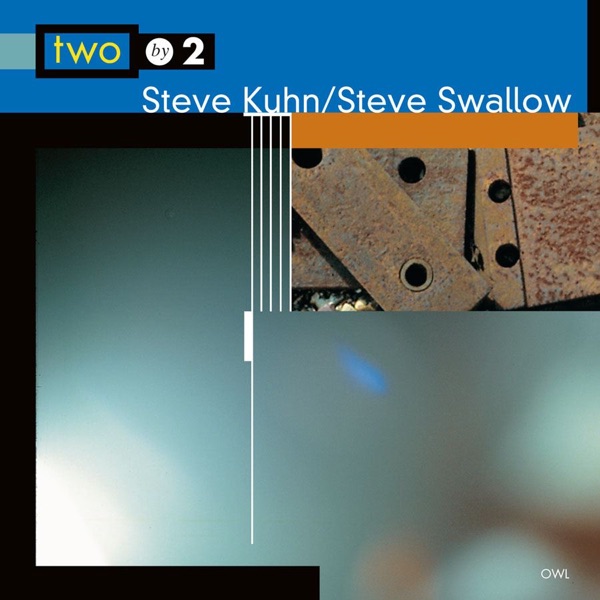
Two By Two
Two By Two
2007
Believe in Spring
Believe in Spring
2008
Swallow Songs
Swallow Songs
2008

Collaborations

Live on Youtube

Explore Further

Selected connections
Composer, United States
Carla Bley
Swallow's closest collaborator and the writer behind much of the material his bass lines shaped.
Explore →
Album, 1967
Duster (1967)
A key Gary Burton record showing Swallow's early electric bass work in a genre-blurring quartet setting.
Explore →
Vibraphonist, United States
Gary Burton
The bandleader whose group gave Swallow room to develop his melodic bass approach.
Explore →

Who's playing
Listen next
Recording Info
Track listing
Musicians
Further Reading
Read more

Where next?

More by this artist

Albums with the same musicians

From the same era

Similar artists

inside the sleeve
Growing
Jazz, explained without pretension.
Read · Follow the connections · Press play
Right now: 7,100+ albums · 440+ artists
Start here
New to jazz? These artists are good places to start.
Loading…
Explore
Nine records worth getting lost in.
Born today
Album of the day
A landmark record, every day.
Read
  • Loading…
Article archive →
Recently added
Purpose
Inside the Sleeve is your companion on a journey through jazz — not a textbook, but something closer to a knowledgeable friend sitting next to you while you listen. Read about an artist, press play, follow a connection, discover an album you didn't know you needed.
Suggestions
Read

Articles

Essays, guides, and lists about jazz and the records that matter.

Loading…

Genre

Key Artists
Further Reading

Essential Albums

Related Genres

In This Genre

About

Inside the Sleeve

Work in progress

Inside the Sleeve grows continuously — new artists and albums are added, essays refined, as visitors explore and our editors follow up on what they find. Content, features, and design are still evolving; use the Report error button on any page to flag something that seems off.

Content

Every artist, album, and release date on Inside the Sleeve is real — verified against trusted sources including MusicBrainz and Wikipedia. We don't invent discographies or fabricate records. AI compiles that verified information into readable prose — essays on artists, albums, and the music itself. We can't manually review every essay before publishing, but every reported error is checked by a human editor.

Inside the Sleeve is not a review site. We're not here to rate or rank — we're here to guide you in. Where an album stands out, we'll say so. Where an artist changed everything, you'll know why. But we won't tear anything down. Jazz history is complex and sources sometimes disagree — if you spot something that seems off, please report it.

Streaming

Inside the Sleeve links to Spotify and Apple Music so you can listen while you read. These are not affiliate links. For Spotify, links open a search on open.spotify.com — we do not have direct links to specific recordings. For Apple Music, direct links are used where available, otherwise a search is opened.

Your choice of streaming service is stored locally in your browser only. It is never sent to our servers.

We're working on deeper Spotify integration, including direct links to specific recordings.

Privacy

Inside the Sleeve does not collect personal data and does not use cookies. We count page visits anonymously using a self-hosted analytics tool — no personal identifiers are stored, and the data never leaves our own server. The only preference stored on your device is your streaming service choice, saved locally in your browser and never transmitted.

When you submit a suggestion or error report, the text you write is stored in our database. No name or email is required or collected unless you choose to provide one.

Third-party services

Spotify and Apple Music are independent services with their own terms of use and privacy policies. Inside the Sleeve is not affiliated with or endorsed by either company.

Support

Inside the Sleeve is free and ad-free. If you enjoy it, a coffee helps cover server costs and keeps the project going.

Amazon

Some book recommendations on Inside the Sleeve link to Amazon. Buying through these links costs you nothing extra — but Amazon pays us a small commission, which goes directly towards keeping the site running. It's a simple way to support the project if you were going to buy the book anyway.

As an Amazon Associate, Inside the Sleeve earns from qualifying purchases.

Questions or feedback? Use the suggestion box on the front page.

Inside the Sleeve — A guide for those who want to go beyond the obvious About & Privacy