Where do you listen?
Choose your streaming service
inside the sleeve
Loading…
inside the sleeveITS
⌕
Read About
Clarinet - United States - Cool Jazz / Free Jazz

Jimmy
Giuffre

1921 - 2008, United States

Jimmy Giuffre wrote one of the most famous charts in big band history before he turned thirty, then spent the rest of his life quietly dismantling everything jazz was supposed to sound like. He traded drums and walking bass for whispered counterpoint, and by the early sixties he was making music so spare and strange that even the free jazz crowd didn't quite know what to do with it.

Cool JazzFree JazzAvant-Garde Jazz
♫

The Sound of Almost Nothing

Start with the easy part: Jimmy Giuffre wrote "Four Brothers" for Woody Herman's band, the tune that gave the world that saxophone-section sound — three tenors and a baritone weaving around each other like they were reading each other's minds. It's a swing-era classic, people still study the voicings. If Giuffre had stopped there, he'd be a footnote, a good one, the guy who figured out a neat horn arrangement in 1947.

But he didn't stop there. He moved west, played with Shorty Rogers and the Lighthouse All-Stars, did the whole cool jazz thing competently. Then somewhere in the mid-fifties he got interested in subtraction instead of addition. His trio with Jim Hall and bassist Ralph Pena, and later with valve trombonist Bob Brookmeyer, had no drums, no piano, and barely any volume. It sounded like chamber music that had wandered into a jazz club by accident — folk melodies, blues fragments, everybody listening hard and playing soft. Traveling Light (1958) is a good entry point if you want to hear what that feels like.

Then he went further still. By 1961 and 1962, working with pianist Paul Bley and a young Steve Swallow on bass, Giuffre was making records like Fusion (1961), Thesis (1961), and Free Fall (1962) that barely sound like jazz at all in the conventional sense — no steady pulse, no chord changes to speak of, just three musicians breathing together in real time. Almost nobody bought these records. They were too quiet to be avant-garde and too strange to be background music, and they landed in a gap nobody was shopping in. Decades later, people figured out this was some of the most advanced small-group improvising of the era, years ahead of where free jazz was headed.

Giuffre never got the attention Ornette Coleman or Cecil Taylor got for pushing boundaries, partly because his version of pushing boundaries involved turning the volume down rather than up. He kept working into the nineties, still interested in space and restraint when most of his contemporaries had moved on or passed on. If you want to understand how quiet a jazz record can get and still hold your attention, this is the guy to go to.
Facts
BornApril 26, 1921, Dallas, Texas, USA
DiedApril 24, 2008, Pittsfield, Massachusetts, USA
InstrumentClarinet, tenor and baritone saxophone, composer
Active1940s - 1990s
Known forComposing "Four Brothers" and pioneering the pianoless, drumless chamber jazz trio
Connections
Jim HallGuitarist and trio collaborator, Los Angeles
→
Paul BleyPianist in Giuffre's groundbreaking early-1960s trio, New York
→
Bob BrookmeyerValve trombonist and trio member, Los Angeles
→
Steve SwallowBassist in the 1961-62 free trio, New York
→
Read more

Discography

20 records
♫
Tangents in Jazz
1955
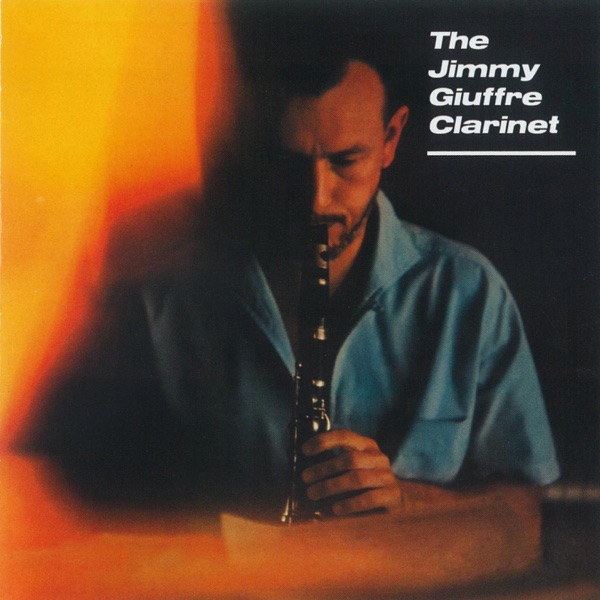
The Jimmy Giuffre Clarinet
1957
Music for Brass
Music for Brass
1957
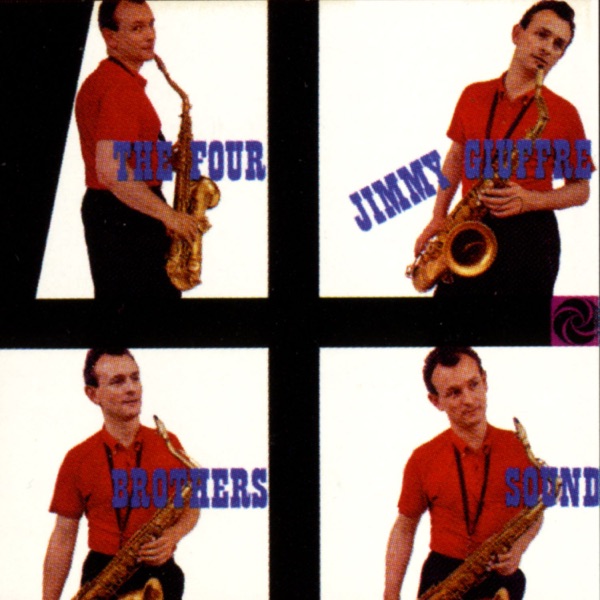
The Four Brothers Sound
1959
♫
Piece For Clarinet And String Orchestra / Mobiles
1961
Quiet Song
Quiet Song
1975
♫
IAI Festival
1978
♫
Eiffel: Live in Paris
1988
Princess
Princess
1990
♫
Tenors West
1992
River Station
River Station
1993
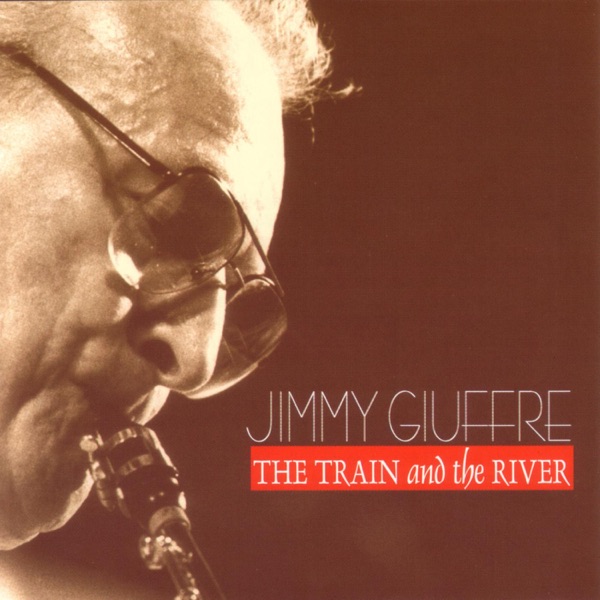
The Train and the River
1996
Momentum, Willisau 1988
1997
Paris Jazz Concert
Paris Jazz Concert
1999
Jimmy Giuffre Talks & Plays
2000
Night Dance
Night Dance
2003
Four Brothers
Four Brothers
2005
Live in 1960
Live in 1960
2007
The Swamp People
The Swamp People
2009
Jimmy Giuffre & Jim Hall Trio & Quartet

Collaborations

Live on Youtube

Explore Further

Selected connections
Pianist, United States
Paul Bley
The pianist who pushed Giuffre's trio into fully open, pulse-free territory in the early sixties.
Explore →
Album, 1961
Fusion (1961)
The sound of a working band quietly inventing a new way to improvise together, years before anyone was ready for it.
Explore →
Guitarist, United States
Jim Hall
Giuffre's longtime foil, whose understated playing matched this music's whisper-quiet logic.
Explore →

Who's playing
Listen next
Recording Info
Track listing
Musicians
Further Reading
Read more

Where next?

More by this artist

Albums with the same musicians

From the same era

Similar artists

inside the sleeve
Growing
Jazz, explained without pretension.
Read · Follow the connections · Press play
Right now: 7,100+ albums · 440+ artists
Start here
New to jazz? These artists are good places to start.
Loading…
Explore
Nine records worth getting lost in.
Born today
Album of the day
A landmark record, every day.
Read
  • Loading…
Article archive →
Recently added
Purpose
Inside the Sleeve is your companion on a journey through jazz — not a textbook, but something closer to a knowledgeable friend sitting next to you while you listen. Read about an artist, press play, follow a connection, discover an album you didn't know you needed.
Suggestions
Read

Articles

Essays, guides, and lists about jazz and the records that matter.

Loading…

Genre

Key Artists
Further Reading

Essential Albums

Related Genres

In This Genre

About

Inside the Sleeve

Work in progress

Inside the Sleeve grows continuously — new artists and albums are added, essays refined, as visitors explore and our editors follow up on what they find. Content, features, and design are still evolving; use the Report error button on any page to flag something that seems off.

Content

Every artist, album, and release date on Inside the Sleeve is real — verified against trusted sources including MusicBrainz and Wikipedia. We don't invent discographies or fabricate records. AI compiles that verified information into readable prose — essays on artists, albums, and the music itself. We can't manually review every essay before publishing, but every reported error is checked by a human editor.

Inside the Sleeve is not a review site. We're not here to rate or rank — we're here to guide you in. Where an album stands out, we'll say so. Where an artist changed everything, you'll know why. But we won't tear anything down. Jazz history is complex and sources sometimes disagree — if you spot something that seems off, please report it.

Streaming

Inside the Sleeve links to Spotify and Apple Music so you can listen while you read. These are not affiliate links. For Spotify, links open a search on open.spotify.com — we do not have direct links to specific recordings. For Apple Music, direct links are used where available, otherwise a search is opened.

Your choice of streaming service is stored locally in your browser only. It is never sent to our servers.

We're working on deeper Spotify integration, including direct links to specific recordings.

Privacy

Inside the Sleeve does not collect personal data and does not use cookies. We count page visits anonymously using a self-hosted analytics tool — no personal identifiers are stored, and the data never leaves our own server. The only preference stored on your device is your streaming service choice, saved locally in your browser and never transmitted.

When you submit a suggestion or error report, the text you write is stored in our database. No name or email is required or collected unless you choose to provide one.

Third-party services

Spotify and Apple Music are independent services with their own terms of use and privacy policies. Inside the Sleeve is not affiliated with or endorsed by either company.

Support

Inside the Sleeve is free and ad-free. If you enjoy it, a coffee helps cover server costs and keeps the project going.

Amazon

Some book recommendations on Inside the Sleeve link to Amazon. Buying through these links costs you nothing extra — but Amazon pays us a small commission, which goes directly towards keeping the site running. It's a simple way to support the project if you were going to buy the book anyway.

As an Amazon Associate, Inside the Sleeve earns from qualifying purchases.

Questions or feedback? Use the suggestion box on the front page.

Inside the Sleeve — A guide for those who want to go beyond the obvious About & Privacy