Genre
Cool Jazz
Late 1940s–1950s — New York & Los Angeles — Restrained, Cerebral, Airy
Cool jazz pulled back from bebop's intensity and replaced it with something lighter, more spacious, and more harmonically adventurous. It favored lower volume, relaxed tempos, and a dry, almost classical tone — the kind of music that thinks before it speaks. The result wasn't cold or detached; it was precise and deliberate, like a well-edited sentence.

The starting point is almost always Miles Davis's Birth of the Cool (1957) sessions, recorded in 1949 and 1950 with an unusually large nonet that included French horn and tuba alongside the usual jazz instrumentation. The idea was to slow things down, open up the arrangements, and create something that felt more orchestrated without losing the improvisational core. Davis wasn't trying to start a movement — he was just chasing a sound — but the recordings spread quickly and gave a lot of musicians permission to try something similar.
Out in Los Angeles, a distinct West Coast cool scene developed through the early 1950s with players like Chet Baker and Gerry Mulligan. The Gerry Mulligan Quartet recordings — pianoless, with Baker on trumpet — are a good example of how cool jazz worked in practice: a lot of counterpoint, a lot of space, and a real conversation between the two horns instead of one player soloing while the other waits. Dave Brubeck brought in odd time signatures and a more overtly classical influence, and his commercial success with Time Out (1959) proved that jazz audiences would follow musicians into genuinely strange rhythmic territory if the music was accessible enough.
Lennie Tristano represents a harder, more purist branch of the style that often gets overlooked. His approach was almost entirely cerebral — long, winding lines, dense counterpoint, very little vibrato — and he built a devoted school of students around him in New York. Lee Konitz, who came up through Tristano's orbit, carried that dry, searching tone into decades of work that kept evolving long after the cool era officially ended. These players remind you that cool jazz wasn't just a stylistic fashion; for some musicians it was a genuine philosophical position about how jazz should sound.
By the late 1950s, hard bop had become the dominant voice in jazz and cool jazz started to feel like it belonged to a specific moment. But the influence never went away. The chamber-like approach to small group arrangements, the integration of classical technique and form, the preference for restraint over display — all of it fed directly into the next twenty years of jazz development. When you hear Bill Evans building those delicate piano trio textures, or the early ECM recordings from the 1970s, you're hearing cool jazz's DNA at work, even if nobody's calling it that anymore.
Less heat, more light — cool jazz trusted the space between the notes as much as the notes themselves.
Essential Albums
♫
Birth of the Cool
Miles Davis · 1957
The nonet sessions that effectively named and launched the genre, with arrangements by Gil Evans, Gerry Mulligan, and others that reimagined what a jazz small group could sound like.
♫
Time Out
The Dave Brubeck Quartet · 1959
Built around odd time signatures that should have felt academic but somehow became one of the best-selling jazz records ever made.
♫
Chet Baker Sings
Chet Baker · 1954
Baker's small, unforced vocal style matched his trumpet playing perfectly, and this record made clear that cool jazz had an emotional directness all its own.
♫
Lee Konitz with Warne Marsh
Lee Konitz · 1956
Two Tristano-school saxophonists working through intricate contrapuntal improvisation — the most rigorous and rewarding example of the cool aesthetic applied to a duo format.
In This Genre
72 artists in your libraryChet Baker
Trumpet & Vocals - United States - Cool Jazz & West Coast Jazz
Chet Baker was the reluctant poster boy of cool jazz, a trumpeter whose lyrical tone and vulnerable vocals made him one of the most distinctive voices in modern jazz. Born in Oklahoma and raised in California, his ethereal sound and boyish charm captivated audiences in the 1950s, even as personal demons threatened to derail a meteoric rise. By turns innovative and heartbreaking, Baker embodied both the promise and tragedy of the jazz life.
♫
Rolf Billberg
Alto Saxophone - Sweden - Cool Jazz
Rolf Billberg was the sound of Swedish jazz at its quietest and most inward-looking, an alto player who could make a melody feel like a secret he was telling just you. He never got the international attention some of his countrymen did, but anyone who's heard his tone understands why Swedish musicians still bring his name up with a kind of hush.
♫
Ray Brown
Bass - USA - Bebop / Hard Bop
Ray Brown was the bass player other bass players wanted to be when they grew up. He had a sound so big and warm it felt like it was coming up through the floor, and a sense of swing so dependable that bandleaders would organize whole rhythm sections around him. For five decades he was the first call, the gold standard, the guy you put on the record when you needed the bottom end to be absolutely right.
♫
Dave Brubeck
Piano · USA · Cool Jazz / Third Stream
Dave Brubeck made jazz a classroom subject and a stadium attraction without ever losing the thread of genuine swing. He was the pianist who put odd time signatures on the pop charts and packed college auditoriums at a time when jazz was supposedly dying. More than a popularizer, he was a serious musical thinker who happened to believe that serious music should be fun.
♫
Charlie Byrd
Guitar - United States - Latin Jazz / Cool Jazz
Charlie Byrd was a classical guitarist who wandered into jazz and ended up changing what American listeners thought a samba could sound like. He played nylon strings, fingerstyle, often without an amp, and somehow that quiet, precise sound became the engine behind one of the biggest jazz records of the 1960s.
♫
June Christy
Vocals - USA - Cool Jazz
June Christy sang like she'd already seen how the night was going to end and decided not to make a fuss about it. She stepped into Stan Kenton's orchestra as the replacement for Anita O'Day and somehow made the job her own, turning restraint into a whole style of singing that West Coast jazz fans still swear by.
♫
Jimmy Cobb
Drums - USA - Hard Bop / Modal Jazz
Jimmy Cobb spent decades being the steadiest hand in the room, and the room was often the most important room in jazz history. He's the drummer on Kind of Blue, which means more people have heard his playing than almost any other drummer alive or dead — most of them without ever knowing his name. That anonymity suited him fine; Cobb was never about the spotlight, he was about making the music feel inevitable.
♫
Al Cohn
Tenor Saxophone - USA - Cool Jazz / Bebop
Al Cohn was one of the great tenors of his generation — warm, swinging, and built for conversation. He spent decades trading ideas with Zoot Sims in one of jazz's most naturally matched partnerships, but his solo work deserves just as much attention. If you've been sleeping on him, that's on you.
♫
Bob Cooper
Tenor Saxophone - United States - Cool Jazz
Bob Cooper spent his career as one of the most reliable tenor players on the West Coast, a guy who could swing hard in a big band and then turn around and play oboe on a cool jazz date without blinking. He never chased the spotlight the way some of his Lighthouse All-Stars bandmates did, but ask anyone who worked with him and they'll tell you he was the glue.
♫
Israel Crosby
Bass - USA - Swing / Early Jazz
Israel Crosby was playing bass with a sophistication that most musicians wouldn't catch up to for another decade, and he was doing it as a teenager in Chicago. He spent much of his career as the quiet engine behind other people's famous records, the kind of player you only notice when he's gone. Ask anyone who worked with him and the answer is always the same: the band just felt better.
♫
Tadd Dameron
Piano & Arrangement - USA - Bebop
Tadd Dameron was the guy who figured out how to make bebop beautiful. While his contemporaries were racing through chord changes, Dameron was thinking about melody, about lush voicings, about writing music that swung hard and sounded gorgeous at the same time. He never got the credit he deserved during his lifetime, but his fingerprints are all over mid-century jazz.
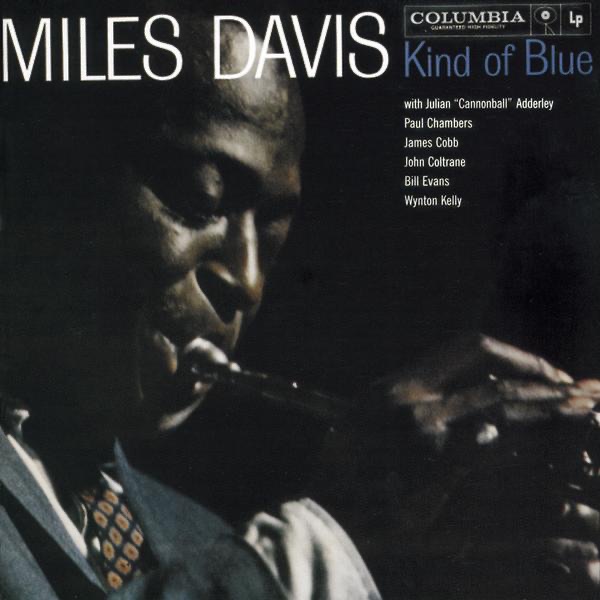
Miles Davis
Trumpet · USA · Modal / Jazz Fusion
More than any other figure in jazz, Miles Davis treated reinvention as a moral obligation — each decade brought a new sound, a new band, a new argument about where music should go. He had the rare gift of hearing the future before anyone else, and the rarer gift of making others feel it too. To trace his career is to trace the entire arc of modern jazz itself.
♫
Vinicius De Moraes
Guitar, Voice - Brazil - Bossa Nova / Latin Jazz
Poet, playwright, diplomat, and songwriter, Vinicius de Moraes was the man who put words to bossa nova before most people knew what bossa nova was. He wrote the lyrics to 'Garota de Ipanema' and the libretto for 'Orfeu da Conceição,' the play that became the film Black Orpheus — but reducing him to those two things is like describing a river by its mouth. He spent his life moving between the literary and the musical, and the seam between those two worlds is where his best work lives.
♫
Paul Desmond
Alto Saxophone - USA - Cool Jazz
Paul Desmond played alto saxophone like he was in absolutely no hurry, and that patience turned out to be one of the most distinctive sounds in jazz. For most of his career he was attached at the hip to Dave Brubeck, which made him famous but also somewhat obscured just how good he was. He wrote one of the most-played songs in jazz history, pocketed the royalties, and spent the rest of his life being quietly brilliant about it.
♫
Herb Ellis
Guitar - USA - Swing / Bebop
Herb Ellis was the kind of guitarist who made everything look easy — swinging hard without breaking a sweat, slipping bebop lines into a blues framework like he'd been doing it his whole life. He came up through the big bands, found his voice in the intimate setting of the Oscar Peterson Trio, and spent the rest of his career proving that clean, soulful, straight-ahead guitar never goes out of style. If you love the guitar and you haven't spent time with Ellis, you've got a treat waiting.
♫
Gil Evans
Arranger/Pianist - Canadian/American - Cool Jazz
Gil Evans didn't solo much and barely wrote conventional melodies, but he reshaped how jazz could sound when a whole orchestra breathed as one instrument. He's the quiet architect behind some of the most beautiful records Miles Davis ever made, and a guy who kept reinventing himself well into his sixties.
♫
Addison Farmer
Double Bass - United States - Bebop
Addison Farmer spent his career standing next to his twin brother, trumpeter Art Farmer, and in a lot of ways that's exactly where jazz history has left him. But if you listen past the family resemblance, you'll find a bassist with a clean, dependable sound who quietly held down sessions for some of the sharpest minds in 1950s New York bebop and cool jazz.
♫
Art Farmer
Trumpet & Flugelhorn - USA - Hard Bop / Cool Jazz
Art Farmer never chased the spotlight, but he had one of the most instantly recognizable horn sounds in jazz — warm, round, a little melancholy, never in a hurry. He spent his career quietly proving that you didn't need to play fast or loud to say something worth hearing.
♫
Vernell Fournier
Drums - USA - Hard Bop
Vernell Fournier is best remembered for one of the most recognizable drum grooves in jazz history — the relaxed, almost floating swing he laid down on Ahmad Jamal's live recordings at the Pershing Hotel. But reducing him to a single gig would be doing him a disservice. He was a drummer's drummer: subtle, economical, and deeply musical in a way that made everyone around him sound better.
♫
Russ Freeman
Piano - USA - Cool Jazz
Russ Freeman was the guy in the room who made everyone else sound better without calling attention to himself. A fixture of the West Coast cool scene in the 1950s, he built a career as both a quietly inventive soloist and one of the most sought-after sidemen on the Pacific Coast. If you've spent time with Chet Baker's early recordings, you've already heard Freeman — you just might not have known his name.

Stan Getz
Tenor Saxophone - United States - Cool Jazz & Bossa Nova
Stan Getz was the most lyrical tenor saxophonist of the cool jazz era, a master of ballad playing whose breathy, intimate tone became the sound of sophisticated restraint. He bridged the worlds of bebop and European sensibility, and later became the unlikely ambassador who brought bossa nova to American audiences, transforming a Brazilian regional style into a global phenomenon. His partnership with João Gilberto and Astrud Gilberto on "Getz/Gilberto" remains one of jazz's most commercially successful and artistically significant albums.
♫
Astrud Gilberto
Vocals · Brazil · Bossa Nova / Latin Jazz
Astrud Gilberto walked into a recording session in 1963 with no professional singing experience and walked out having recorded one of the most recognizable vocal performances in the history of popular music. Her voice — small, cool, almost conversational — turned out to be exactly what bossa nova needed to reach the world. She never quite got the credit she deserved for it.
♫
João Gilberto
Vocals & Guitar - Brazil - Bossa Nova
João Gilberto didn't just sing bossa nova—he invented the intimate, conversational vocal approach that became its beating heart. With his impossibly subtle phrasing and revolutionary rhythmic sophistication, he transformed the guitar and voice into a sophisticated dialogue that whispered rather than proclaimed. His influence rippled far beyond Brazil, reshaping how the entire world understood modern popular music.
♫
Jimmy Giuffre
Clarinet - United States - Cool Jazz / Free Jazz
Jimmy Giuffre wrote one of the most famous charts in big band history before he turned thirty, then spent the rest of his life quietly dismantling everything jazz was supposed to sound like. He traded drums and walking bass for whispered counterpoint, and by the early sixties he was making music so spare and strange that even the free jazz crowd didn't quite know what to do with it.
♫
Gigi Gryce
Alto Saxophone - United States - Bebop / Hard Bop
Gigi Gryce wrote some of the smartest tunes to come out of the bebop era, then walked away from the music business entirely and taught grade school under a different name. He deserves to be remembered as more than a footnote to Clifford Brown's quintet.
♫
Lars Gullin
Baritone Saxophone - Sweden - Cool Jazz
Lars Gullin was the most original jazz voice to come out of Europe in the 1950s — a Swede who fell so deeply into bebop that American musicians kept asking who he was. He played baritone saxophone with a lightness that nobody had managed before, making an instrument built for weight sound like it was floating. His own compositions were something else entirely: lyrical, melancholy, and unmistakably Scandinavian, even when built on American jazz structures.

Jim Hall
Guitar - United States - Cool Jazz & Chamber Jazz
Jim Hall was the thinking musician's guitarist—a virtuoso who approached the instrument with the precision of a classical musician and the soul of a jazz improviser. His crystalline tone and intricate harmonic sensibility made him the perfect collaborator for everyone from Bill Evans to Sonny Rollins, and his compositions reveal a composer's mind at work beneath every phrase.
♫
Chico Hamilton
Drummer - United States - Cool Jazz
Chico Hamilton never chased flash on the drums, but he had an ear for putting the right strange combination of instruments in a room together and getting magic out of it. He's the guy who put a cello in a jazz group and made it sound completely natural, then spent the next five decades finding young unknowns and letting them run wild in his band.
♫
Hampton Hawes
Piano - United States - Bebop
Hampton Hawes played bebop piano like he was born speaking the language, which in a way he was — he grew up in Los Angeles hearing Charlie Parker and Art Tatum in equal measure and figured out how to fold both into his own hands. His career got interrupted by heroin and a prison sentence, then by a presidential pardon that sounds like a plot twist, but the records he made before and after stayed sharp the whole way through.
♫
Percy Heath
Bass - United States - Hard Bop
Percy Heath spent four decades as the quiet engine of the Modern Jazz Quartet, playing bass lines so clean and so sure that people sometimes forgot how hard that is to do. He could have been a bebop firebrand like his younger brothers, but he chose steadiness instead, and built one of the great careers in jazz out of it.
♫
Billy Higgins
Drums - USA - Hard Bop / Free Jazz
Billy Higgins might be the most purely joyful drummer in the history of jazz — a guy who seemed genuinely delighted to be playing, every single time. He was on so many landmark recordings that his name became a kind of guarantee of quality, from the earliest Ornette Coleman records to decades of work with Cedar Walton. What's remarkable is that through all of it, he never lost that feeling of lightness, that sense that the drums were something to smile about.
♫
Shirley Horn
Piano & Vocals — USA — Cool Jazz / Ballad
Shirley Horn played piano and sang the way some people tell a secret — slowly, deliberately, making you lean in. She was the rare artist who understood that silence was part of the song, that the space between notes was doing real work. It took decades for the wider world to catch up to what Washington D.C. already knew.
♫
Milt Jackson
Vibraphone · USA · Hard Bop / Cool Jazz
Milt Jackson was the soul of the Modern Jazz Quartet and one of the most instantly recognisable vibraphonists in jazz. His tone was warm and slightly behind the beat in a way that made even uptempo pieces feel relaxed. Within the MJQ's chamber-jazz framework he provided the blues feeling that kept the group's classicism from becoming cold. Outside the MJQ he recorded prolifically — often harder-swinging sessions that showed how much he had kept in reserve.
♫
Bobby Jaspar
Saxophone, Flute - Belgium - Cool Jazz
Bobby Jaspar never quite got his due, partly because he died young and partly because he spent his career straddling two continents instead of planting a flag on one. He was a Belgian tenor player who moved to Paris, then to New York, picking up the flute along the way and helping turn it into a real jazz voice rather than a novelty.
♫
Thad Jones
Trumpet, Flugelhorn - USA - Hard Bop, Post-Bop
Thad Jones was one of those musicians who could make you feel underdressed just by walking onstage — a trumpet player of formidable imagination and a composer-arranger who built some of the most sophisticated big band music of the 1960s and 70s without ever making it feel like homework. He spent years as a sideman in the Count Basie orchestra, quietly absorbing everything, before co-founding the Thad Jones/Mel Lewis Orchestra in New York, which became the kind of band that other musicians would go out of their way to catch on a Monday night. The fact that he spent his last years leading a European orchestra is one of those jazz footnotes that says a lot about where the music found its most devoted audiences.
♫
Stan Kenton
Piano & Bandleader - USA - Big Band / Avant-Garde
Stan Kenton led one of the loudest, most argumentative orchestras in jazz history — a band that could shake walls and provoke equal amounts of devotion and eye-rolling from critics. He was never content to just swing; he wanted jazz to be taken seriously as concert music, and he pushed his orchestras into territory that made a lot of people genuinely uncomfortable. Whether that ambition always paid off is a debate jazz fans still haven't settled.
♫
Barney Kessel
Guitar - USA - Swing/Bebop
Barney Kessel could play absolutely anything you put in front of him, which is exactly why you've heard him a hundred times without knowing it. He built a reputation as one of the great small-group jazz guitarists of the '50s while also quietly becoming one of the busiest session players in Los Angeles, popping up behind pop singers, film scores, and everything in between.

Lee Konitz
Alto Saxophone - United States - Cool Jazz, Lennie Tristano School
Lee Konitz was the thinking musician's saxophonist, a cerebral improviser who rejected the blues-soaked emotionalism of bebop in favor of linear logic and harmonic sophistication. His cool, crystalline tone and intricate melodic lines made him a pivotal figure in cool jazz, yet he remained refreshingly uninterested in commercial success or critical consensus. For seven decades, Konitz pursued an idiosyncratic path, making music of remarkable subtlety and intellectual rigor.
♫
Michel Legrand
Piano, Composition - France - Cool Jazz
Michel Legrand wrote some of the most hummable melodies of the twentieth century and somehow still found time to be a serious jazz pianist and arranger. He moved between film scores, chanson, and jazz sessions so easily that people sometimes forgot how good he actually was at all three.
♫
John Lewis
Piano · USA · Cool Jazz / Third Stream
John Lewis was the architect of the Modern Jazz Quartet's sound — a pianist and composer who believed jazz and European classical music had more in common than either tradition admitted. His writing was spare, contrapuntal, and disciplined; his playing matched it. The MJQ's recordings remain some of the most distinctive documents in jazz: music that swings but never rushes, that is complex but never shows off.
♫
Shelly Manne
Drums - USA - Cool Jazz / Hard Bop
Shelly Manne was the drummer who made West Coast jazz sound like something more than a soundtrack for palm trees. He could swing as hard as anyone in New York, but he also knew how to listen — which, for a drummer, is rarer than it sounds.
♫
Warne Marsh
Tenor Saxophone - USA - Cool Jazz
Warne Marsh spent most of his career as one of jazz's best-kept secrets — a tenor saxophonist of extraordinary subtlety who never quite fit the commercial mold and seemed perfectly fine with that. A devoted disciple of Lennie Tristano, he pursued a kind of linear, emotionally controlled improvisation that could sound alien on first listen and completely addictive on the tenth. If you've never heard him, you're in for a slow-burn surprise.
♫
Bremer McCoy
Double Bass & Keys - Denmark - Nordic Jazz
Jonathan Bremer on double bass and Morten McCoy on keys make a duo that sounds bigger than two people should. They strip jazz down to a pulse and a texture, and somehow that's enough.
♫
Gary McFarland
Vibraphone / Composer - USA - Cool Jazz
Gary McFarland came to jazz late, picked up arranging almost entirely on his own, and within a few years was writing charts that seasoned professionals couldn't stop talking about. He had a gift for making a big band sound intimate and a small group sound lush, and he did it without ever losing the swing. He was dead at 38, which means we're left guessing how far he might have gone.
♫
Ron Miles
Cornet - USA - Contemporary Jazz
Ron Miles played cornet like he was telling you a story he'd been turning over in his head for years, patient and unhurried, every note placed like it mattered. He spent most of his career in Denver, a long way from the usual jazz capitals, and built one of the most quietly distinctive bodies of work in American music almost under the radar.
♫
Red Mitchell
Bass - United States - Cool Jazz
Red Mitchell played the bass like it owed him money for melody, not just rhythm. He spent the 1950s as one of the most in-demand low end players on the West Coast, then quietly rewrote how the instrument could be tuned, and eventually moved to Sweden where American jazz fans mostly lost track of him.
♫
Joe Morello
Drums - USA - Cool Jazz
Joe Morello spent most of his career sitting behind Dave Brubeck, and that one fact has a way of making people underestimate him — which is exactly backwards. He was one of the most technically gifted drummers in jazz history, capable of playing in odd time signatures with a relaxed ease that made other drummers want to quietly give up.
♫
George Morrow
Bass - USA - Hard Bop
George Morrow spent the better part of a decade as the anchor beneath Clifford Brown and Max Roach, one of the most celebrated small groups in hard bop history — and still managed to remain one of the least-discussed musicians in that band. His playing was sturdy, melodic, and deeply swinging, the kind of bass work that makes everything around it feel inevitable.

Gerry Mulligan
Baritone Saxophone - United States - Cool Jazz & Bebop
Gerry Mulligan was the architect of cool jazz's most elegant invention: the pianoless quartet. With his rich, buttery baritone sax and compositional sophistication, he transformed what could have been a limitation into a revolutionary sound that influenced generations of musicians. His blend of intellectual rigor and warm lyricism made him one of jazz's most distinctive and enduring voices.
♫
Anita O'Day
Vocals - USA - Swing / Bop
Anita O'Day came up hard — carnivals, walkathons, dime-a-dance halls — and it showed in her voice in the best possible way. She sang with a cool, almost detached authority that made other singers sound like they were trying too hard. When bebop arrived, she didn't resist it; she figured it out and made it hers.
♫
Art Pepper
Alto Saxophone · USA · West Coast Jazz / Hard Bop
Art Pepper was one of the great alto saxophonists of the postwar era — a West Coast player with a lyrical, slightly vulnerable tone that stood in deliberate contrast to the harder-edged East Coast sound. His life was defined by heroin addiction and repeated imprisonment, and his playing carries that weight without being defeated by it. The records he made in the late 1950s, especially the sessions with Miles Davis rhythm section alumni, are among the finest West Coast jazz documents. His late-career comeback, documented on a series of Contemporary and Galaxy albums, is one of jazz's most remarkable second acts.
♫
Oscar Pettiford
Bass & Cello - USA - Bebop
Oscar Pettiford was one of the first bassists to take Charlie Parker and Dizzy Gillespie's harmonic ideas seriously and translate them to a low-end instrument — and he did it without waiting for permission from anyone. He also picked up the cello and essentially invented jazz cello as a solo voice, which is either the most underrated achievement in the music or the best-kept secret depending on who you ask. He died at 37, which means most people who discover him spend the rest of their listening life wondering what he would have done next.
♫
Baden Powell
Guitar - Brazil - Afro-Samba
Baden Powell picked up a guitar as a kid in the hills outside Rio and turned it into something nobody else was doing quite the same way — part classical technique, part samba pulse, part something older and stranger pulled from Afro-Brazilian ritual music. He wrote some of the most enduring songs in the Brazilian songbook, then spent decades proving the guitar could carry all of that weight by itself.
♫
André Previn
Piano - Germany/USA - Cool Jazz
André Previn never settled on one job title, and that's the whole story. He was a studio pianist who scored Hollywood pictures, a jazz trio leader who could swing hard without breaking a sweat, and later a conductor leading major symphony orchestras. Most musicians pick a lane; Previn just kept driving through all of them.
♫
Nelson Riddle
Arranger / Conductor - USA - Vocal Jazz
Nelson Riddle is the reason Frank Sinatra's Capitol Records albums sound the way they do — those strings that swell without going soft, those brass sections that punch without turning ugly. He was the arranger's arranger, a man who understood that the best orchestral writing stays out of the singer's way while somehow making everything around them feel inevitable. If you've ever wondered why certain mid-century vocal recordings feel like they exist in their own complete universe, Riddle is usually somewhere near the answer.
♫
Georg Riedel
Bass - Sweden - Nordic Jazz
Georg Riedel has been the quiet backbone of Swedish jazz for over six decades, a bassist whose name appears on so many essential recordings that you start to wonder if he was simply everywhere at once. Born in Karlsbad and raised in Sweden, he became the go-to collaborator for the country's greatest jazz voices, most famously Jan Garbarek and Monica Zetterlund. Beyond jazz, he built a second life as a beloved composer for children's music, which in Sweden made him something close to a national institution.
♫
Shorty Rogers
Trumpet - United States - Cool Jazz
Shorty Rogers was the guy who made West Coast jazz sound like it was having fun. He wrote charts that swung hard but never broke a sweat, and he put together small groups that felt like chamber music with a wink. If cool jazz has a mascot, it's probably him, trumpet in hand, grinning at the absurdity of taking jazz this seriously while making it sound this light.
♫
Jimmy Rowles
Piano - United States - Swing / Cool Jazz
Jimmy Rowles spent decades as the piano player singers wanted standing behind them, which is a strange kind of fame — everyone who mattered in jazz vocals knew his name, but the wider public mostly didn't. He had ears like nobody else, a dry sense of humor, and a way of finding the weird, beautiful chord that made a familiar tune sound like you'd never heard it.
♫
Pete Rugolo
Arranger/Composer - Italy/USA - Cool Jazz
Pete Rugolo never blew a horn on a bandstand, but he shaped how a whole generation thought a big band could sound. As Stan Kenton's chief arranger in the 1940s, he turned a dance orchestra into something closer to a modern classical ensemble, then spent the rest of his career writing music for television that millions of people heard without ever knowing his name.
♫
Gunther Schuller
French Horn, Composer - USA - Third Stream
Gunther Schuller never fit in one box, and he hated the idea of staying in one. He played French horn in symphony orchestras by day, wrote some of the smartest books ever published about jazz, and spent decades trying to get classical musicians and jazz musicians to actually listen to each other instead of sneering across the aisle.
♫
George Shearing
Piano - England/USA - Cool Jazz
George Shearing was blind from birth and built one of the most recognizable sounds in jazz piano anyway — a lush, close-harmony voicing that made his quintet a hit machine in the 1950s. He wrote 'Lullaby of Birdland' almost as an afterthought, and it outlived nearly everything else he did, which says more about the tune than about the rest of his catalog.
♫
Zoot Sims
Tenor Saxophone - USA - Swing / Cool Jazz
Zoot Sims was the kind of tenor saxophonist who made the whole thing look easy — and that ease was exactly the point. He swung hard without breaking a sweat, played with warmth and directness, and never got tangled up in complexity for its own sake. In a world full of heavyweights wrestling with the horn, Zoot just sang through it.
♫
Martial Solal
Piano - France - Bebop
Martial Solal spent seventy years proving that European jazz pianists didn't need to imitate Americans to be taken seriously. He had a mind for harmony that could make a standard sound like it was being invented on the spot, and he never really slowed down trying to prove it.
♫
Bill Stewart
Drums - USA - Post-Bop
Bill Stewart is the kind of drummer other drummers talk about — quietly, with a mixture of admiration and mild bewilderment. He came up through the Iowa jazz scene before planting himself in New York, where he became one of the most in-demand sidemen of the 1990s and beyond. His playing is conversational and unexpected without ever being showy, which turns out to be a harder trick to pull off than it sounds.
♫
Billy Strayhorn
Piano & Composition - USA - Swing / Cool Jazz
Billy Strayhorn spent most of his career inside the shadow of Duke Ellington, and that arrangement suited neither of them perfectly — but what came out of it was some of the most sophisticated music the jazz world has ever heard. He wrote the songs you already know by heart without knowing his name: 'Take the A Train,' 'Lush Life,' 'Chelsea Bridge.' The miracle is that his voice was so distinct from Ellington's that anyone paying attention could hear the difference immediately.
♫
Rene Thomas
Guitar - Belgium - Bebop
Rene Thomas grew up in the shadow of Django Reinhardt's legend, but he never settled for being the next Django. He pushed his guitar toward bebop's sharper edges, and by the time American players like Sonny Rollins and Stan Getz came through Europe, they wanted him in the band, not just on the bill.
♫
Claude Thornhill
Piano - USA - Cool Jazz / Big Band
Claude Thornhill led one of the strangest, most beautiful big bands of the 1940s — a band that moved slow, sat low, and sounded like no one else. He added French horns and a tuba to the jazz orchestra and then told everyone to cool it, literally. His influence ran deep into what would eventually be called cool jazz, though he rarely gets the credit he deserves.
♫
Cal Tjader
Vibraphone - USA - Latin Jazz
Cal Tjader was the guy who made Latin jazz feel completely natural coming from a Swedish-American kid from St. Louis. He spent decades recording for Fantasy Records out of San Francisco, building a sound that mixed Afro-Cuban rhythms with cool West Coast jazz in a way that never felt forced. If you've ever heard vibraphone and bongos lock together in a way that makes a room feel warmer, there's a decent chance Tjader was somewhere in the family tree.
♫
Mel Tormé
Vocalist - USA - Vocal Jazz
They called him the Velvet Fog because of that smooth, controlled voice, but the nickname undersold how much musician was packed into it. Tormé could scat like a horn player, write songs that became standards, and sing a ballad so clean it almost sounded too easy — which was the whole trick.
♫
Lennie Tristano
Piano - USA - Cool Jazz / Avant-Garde
Lennie Tristano built his own corner of jazz and refused to let anyone redecorate it. Blind from childhood, self-taught in ways that bent the rules most pianists took for granted, he developed a style so logically intricate and emotionally cool that it still sounds like nothing else. He was a teacher as much as a performer, and some of his students went on to define what cool jazz actually meant in practice.
♫
Mark Turner
Tenor Saxophone - USA - Post-Bop
Mark Turner is the kind of tenor saxophonist who makes you lean in and pay close attention, because what he's doing is subtle enough to miss and rewarding enough to chase. He came up through the New York scene in the 1990s and quietly built one of the most distinctive voices on his instrument without ever chasing the spotlight. His playing is dry, precise, and harmonically dense — the opposite of showboating, and all the better for it.
♫
Lester Young
Tenor Saxophone - USA - Swing / Cool Jazz
Lester Young played the tenor saxophone like he was in no particular hurry, which was either deeply relaxing or deeply unsettling depending on what you expected jazz to sound like in the late 1930s. He had a tone that was lighter and airier than almost anyone else on the instrument at the time, and he used space the way other musicians used notes. Calling him 'Pres' — short for President — was Billie Holiday's idea, and it stuck, because it fit.