Where do you listen?
Choose your streaming service
inside the sleeve
Loading…
inside the sleeveITS
⌕
Read About
Piano - United States - Bebop

Hampton
Hawes

1928 - 1977, United States

Hampton Hawes played bebop piano like he was born speaking the language, which in a way he was — he grew up in Los Angeles hearing Charlie Parker and Art Tatum in equal measure and figured out how to fold both into his own hands. His career got interrupted by heroin and a prison sentence, then by a presidential pardon that sounds like a plot twist, but the records he made before and after stayed sharp the whole way through.

BebopHard BopCool Jazz
Hampton Hawes

West Coast Bebop, Full Strength

People throw around the term West Coast jazz like it automatically means cool and polite, all pastel shirts and understatement. Hampton Hawes blows that up immediately. He was from Los Angeles, he played with the Lighthouse All-Stars and the California crowd, and yet his piano playing has the same hard swing and blues grit you'd expect out of New York. He grew up the son of a minister, learned church piano as a kid, and then got pulled hard toward bebop once he heard what Charlie Parker and Bud Powell were doing. You can hear both of those roots in his playing — the gospel weight in his left hand, the fast bebop lines running on top.

His early trio records, especially the ones he cut for Contemporary in the mid-1950s, are where you want to start. The Trio, Vol. 1 (1955) is a good entry point — just piano, bass, and drums, no horns to hide behind, which was the format that suited him best because it put all the attention on how he phrased a line and how he swung a rhythm section. He wasn't an innovator chasing a new harmonic language the way some of his contemporaries were. He was more of a guy who took bebop vocabulary and played it with total conviction, fast hands, and a blues feeling that never let the music get too cerebral.

Then his career got derailed. He was arrested on narcotics charges in 1958 and sentenced to ten years, a sentence way out of proportion to what he'd actually done, and he ended up serving real time before President Kennedy granted him executive clemency in 1963. He wrote about all of it — the addiction, the prison years, the jazz life in LA — in his autobiography, Raise Up Off Me, which is honestly one of the best books a jazz musician has written about their own life. No self-pity, no glamorizing, just a clear-eyed account of what it actually felt like.

When he got out he kept playing, picked up the electric piano for a while in the early 1970s because that's where the money and the gigs were, and made records right up until he died in 1977. He never became a household name outside of serious jazz listeners, and that's fine — he wasn't trying to be. What he left behind is a body of trio and small-group recordings where the piano playing is consistently alive, consistently swinging, and never boring.

If you want to understand why musicians who worked with him talk about him with real affection, put on one of those Contemporary trio sides and just listen to how he builds a solo. There's no padding. Every chorus moves somewhere. He had the kind of technique that could've turned into empty flash, but he always kept the blues underneath it, which is probably the most honest way to describe his whole career.

Facts
BornNovember 13, 1928, Los Angeles, California
DiedMay 22, 1977, Los Angeles, California
InstrumentPiano
Active1940s - 1977
Known forTrio recordings for Contemporary Records, his autobiography Raise Up Off Me, and bringing bebop's full intensity to the West Coast scene
Connections
Charles MingusCollaborator, Los Angeles
→
Red MitchellBassist in his classic trio, Los Angeles
→
Shelly ManneDrummer and frequent collaborator, Los Angeles
→
Read more

Discography

27 records
The Trio, Volume 3: Everybody Likes Hampton Hawes
1956
The Trio, Volume 2: This Is Hampton Hawes
1956
Mingus Three
Mingus Three
1957
For Real!
For Real!
1961
Green Leaves of Summer
1964
Curtis Fuller & Hampton Hawes With French Horns
1965
The Seance
The Seance
1969
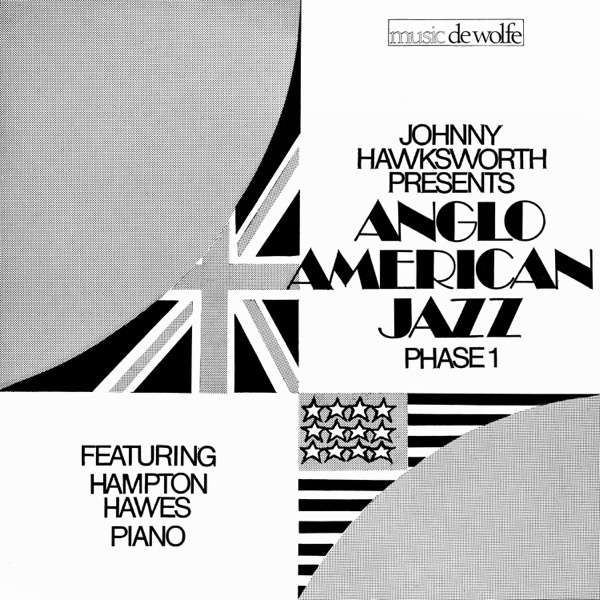
Anglo American Jazz Phase 1
1971
♫
Spanish Steps
1971
♫
Universe
1972
♫
Blues For Walls
1973
♫
Northern Windows
1974
♫
Memory Lane Live
1977
♫
Recorded Live At The Great American Music Hall
1983
♫
Pedro Iturralde Quartet featuring Hampton Hawes
1986
♫
Live at the Jazz Showcase in Chicago, Volume Two
1989
♫
Blues for Bud
1990
♫
All Night Session!, Volume 3
1991
♫
All Night Session!, Volume 2
1991
♫
Live at the Montmarte
1995
♫
All Night Session
1996
♫
Bird Song
1999
♫
Memorial
1999
♫
Hamp's Piano
2011
♫
Live at the Jazz Showcase in Chicago, Volume One
2020
♫
The East/West Controversy
♫
The Challenge

Collaborations

Live on Youtube

Explore Further

Selected connections
Pianist, United States
Bud Powell
The bebop pianist whose vocabulary Hawes absorbed and made his own on the West Coast.
Explore →
Album, 1955
The Trio, Vol. 1 (1955)
The best starting point for hearing Hawes at his sharpest in a stripped-down format.
Explore →
Bassist, United States
Red Mitchell
His longtime trio partner, essential to understanding the sound of those Contemporary sessions.
Explore →

Who's playing
Listen next
Recording Info
Track listing
Musicians
Further Reading
Read more

Where next?

More by this artist

Albums with the same musicians

From the same era

Similar artists

inside the sleeve
Growing
Jazz, explained without pretension.
Read · Follow the connections · Press play
Right now: 7,100+ albums · 440+ artists
Start here
New to jazz? These artists are good places to start.
Loading…
Explore
Nine records worth getting lost in.
Born today
Album of the day
A landmark record, every day.
Read
  • Loading…
Article archive →
Recently added
Purpose
Inside the Sleeve is your companion on a journey through jazz — not a textbook, but something closer to a knowledgeable friend sitting next to you while you listen. Read about an artist, press play, follow a connection, discover an album you didn't know you needed.
Suggestions
Read

Articles

Essays, guides, and lists about jazz and the records that matter.

Loading…

Genre

Key Artists
Further Reading

Essential Albums

Related Genres

In This Genre

About

Inside the Sleeve

Work in progress

Inside the Sleeve grows continuously — new artists and albums are added, essays refined, as visitors explore and our editors follow up on what they find. Content, features, and design are still evolving; use the Report error button on any page to flag something that seems off.

Content

Every artist, album, and release date on Inside the Sleeve is real — verified against trusted sources including MusicBrainz and Wikipedia. We don't invent discographies or fabricate records. AI compiles that verified information into readable prose — essays on artists, albums, and the music itself. We can't manually review every essay before publishing, but every reported error is checked by a human editor.

Inside the Sleeve is not a review site. We're not here to rate or rank — we're here to guide you in. Where an album stands out, we'll say so. Where an artist changed everything, you'll know why. But we won't tear anything down. Jazz history is complex and sources sometimes disagree — if you spot something that seems off, please report it.

Streaming

Inside the Sleeve links to Spotify and Apple Music so you can listen while you read. These are not affiliate links. For Spotify, links open a search on open.spotify.com — we do not have direct links to specific recordings. For Apple Music, direct links are used where available, otherwise a search is opened.

Your choice of streaming service is stored locally in your browser only. It is never sent to our servers.

We're working on deeper Spotify integration, including direct links to specific recordings.

Privacy

Inside the Sleeve does not collect personal data and does not use cookies. We count page visits anonymously using a self-hosted analytics tool — no personal identifiers are stored, and the data never leaves our own server. The only preference stored on your device is your streaming service choice, saved locally in your browser and never transmitted.

When you submit a suggestion or error report, the text you write is stored in our database. No name or email is required or collected unless you choose to provide one.

Third-party services

Spotify and Apple Music are independent services with their own terms of use and privacy policies. Inside the Sleeve is not affiliated with or endorsed by either company.

Support

Inside the Sleeve is free and ad-free. If you enjoy it, a coffee helps cover server costs and keeps the project going.

Amazon

Some book recommendations on Inside the Sleeve link to Amazon. Buying through these links costs you nothing extra — but Amazon pays us a small commission, which goes directly towards keeping the site running. It's a simple way to support the project if you were going to buy the book anyway.

As an Amazon Associate, Inside the Sleeve earns from qualifying purchases.

Questions or feedback? Use the suggestion box on the front page.

Inside the Sleeve — A guide for those who want to go beyond the obvious About & Privacy