Where do you listen?
Choose your streaming service
inside the sleeve
Loading…
inside the sleeveITS
⌕
Read About
Piano - United States - Bebop

Bud
Powell

1924 - 1966, New York City, United States

Bud Powell was the pianist who made bebop speak with ten fingers, translating the harmonic and rhythmic innovations of Charlie Parker and Dizzy Gillespie to the keyboard. His lightning-fast runs and crystalline touch redefined what the piano could do in modern jazz, establishing a language that still influences pianists today. Though his life was marked by personal struggle and institutional confinement, his recorded legacy stands as a monument to creative genius.

Bebop
Bud Powell

The Velocity of Thought

When Bud Powell started playing piano in the mid-1940s, the instrument had a pretty narrow job in jazz groups—you comped chords, kept things moving, stayed out of the way. Powell basically said no to all that. He made the piano sound like a horn, like a saxophone that could do things no saxophone could actually do. His right hand moved impossibly fast, throwing out these intricate melodies and reharmonized chord changes that matched exactly what the bebop guys were trying to do. Listen to those records from 1947 to 1950 and you're hearing someone with complete technical control—but he's not showing off. Every note serves the music. Unlike earlier pianists who filled every bar with stride figures or dense accompaniment, Powell reduced the left hand to sparse, perfectly timed chords. That left space for the right hand to unfold long, horn-like lines.

What made Powell different was how he mixed formal classical training with real blues feeling and the kind of rhythmic flexibility that comes from deep jazz knowledge. His sound was sharp and clear—almost thin compared to the rounded tone of swing pianists like Count Basie. But that clarity was the whole point. When he voiced chords in tight clusters or flew through fast passages, you could actually hear what he was doing even at breakneck tempos. He created a whole language for modern piano: tritone subs, extended upper structures, how to comp behind a soloist in a way that supports without annoying. Other pianists learned by copying him.

The thing is, Powell fought serious mental illness his entire life. Psychiatric hospitals, shock treatments, constant struggle—it affected how much music he was able to record and how reliable he could be as a performer. We don't have as complete a picture of his work as we should. But what he did capture on tape, especially those trio dates and sessions with Parker and Gillespie, shows exactly what bebop piano was supposed to sound like.

After Powell, every jazz pianist worth listening to studied his records. Herbie Hancock, Chick Corea, Keith Jarrett—they all built their language from what Powell invented. He made it impossible to think of the piano as anything less than a lead instrument, right up front. He proved it could do what horns did. The sadness is that illness interrupted what could have been an even larger body of work. He had the gift and the knowledge, but circumstances kept getting in the way.

Facts
BornSeptember 27, 1924, New York City
DiedAugust 1, 1966, New York City
InstrumentPiano
Active1943-1966
Known forBebop piano vocabulary, rapid single-note lines, complex harmonic voicings, trio leadership
Connections
Charlie ParkerCollaborator and bebop pioneer, New York
→
Dizzy GillespieCollaborator and bandleader, New York
→
Thelonious MonkContemporary modernist pianist, New York
→
Max RoachDrummer in trio collaborations, New York
→
Oscar PettifordBass collaborator on classic recordings, New York
→
Read more
GuideNiels-Henning Ørsted Pedersen at 80: the best bassist most people haven't heard of

Discography

7 records
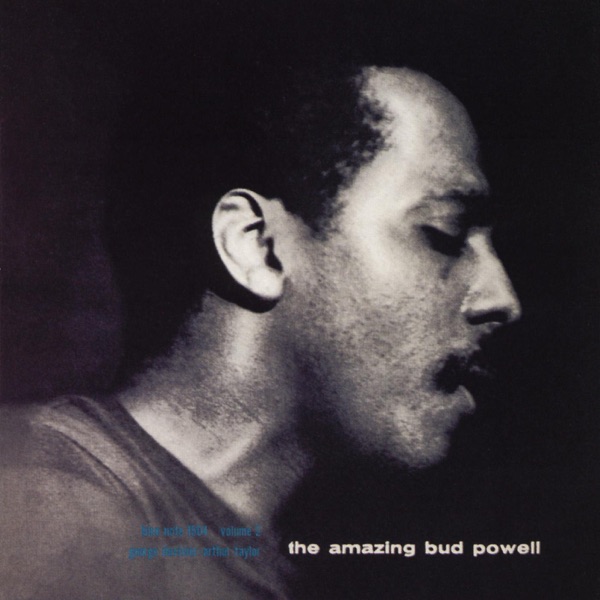
The Amazing Bud Powell
1954
Inner Fires
Inner Fires
1953
The Genius Of Bud Powell
1956
Celia
Celia
1957
Strictly Powell
Strictly Powell
1957
Un Poco Loco
Un Poco Loco
1958
The Amazing Bud Powell: Vol. 2
1959

Collaborations

Live on Youtube

Explore Further

Selected connections
Pianist, United States
Herbie Hancock
Direct heir to Powell's harmonic language; took his innovations into fusion and funk.
Explore →
Pianist, United States
Chick Corea
Another pianist shaped entirely by Powell's technical approach and architectural thinking.
Explore →
Album, 1949
The Amazing Bud Powell Vol. 1
Essential definitive statement of bebop piano; includes 'Tempus Fugit' and 'Parisian Thoroughfare.'
Explore →
Album, 1953
The Scene Changes
Later trio work showing Powell's continued development despite personal difficulties.
Explore →

Who's playing
Listen next
Recording Info
Track listing
Musicians
Further Reading
Read more

Where next?

More by this artist

Albums with the same musicians

From the same era

Similar artists

inside the sleeve
Growing
Jazz, explained without pretension.
Read · Follow the connections · Press play
Right now: 7,100+ albums · 440+ artists
Start here
New to jazz? These artists are good places to start.
Loading…
Explore
Nine records worth getting lost in.
Born today
Album of the day
A landmark record, every day.
Read
  • Loading…
Article archive →
Recently added
Purpose
Inside the Sleeve is your companion on a journey through jazz — not a textbook, but something closer to a knowledgeable friend sitting next to you while you listen. Read about an artist, press play, follow a connection, discover an album you didn't know you needed.
Suggestions
Read

Articles

Essays, guides, and lists about jazz and the records that matter.

Loading…

Genre

Key Artists
Further Reading

Essential Albums

Related Genres

In This Genre

About

Inside the Sleeve

Work in progress

Inside the Sleeve grows continuously — new artists and albums are added, essays refined, as visitors explore and our editors follow up on what they find. Content, features, and design are still evolving; use the Report error button on any page to flag something that seems off.

Content

Every artist, album, and release date on Inside the Sleeve is real — verified against trusted sources including MusicBrainz and Wikipedia. We don't invent discographies or fabricate records. AI compiles that verified information into readable prose — essays on artists, albums, and the music itself. We can't manually review every essay before publishing, but every reported error is checked by a human editor.

Inside the Sleeve is not a review site. We're not here to rate or rank — we're here to guide you in. Where an album stands out, we'll say so. Where an artist changed everything, you'll know why. But we won't tear anything down. Jazz history is complex and sources sometimes disagree — if you spot something that seems off, please report it.

Streaming

Inside the Sleeve links to Spotify and Apple Music so you can listen while you read. These are not affiliate links. For Spotify, links open a search on open.spotify.com — we do not have direct links to specific recordings. For Apple Music, direct links are used where available, otherwise a search is opened.

Your choice of streaming service is stored locally in your browser only. It is never sent to our servers.

We're working on deeper Spotify integration, including direct links to specific recordings.

Privacy

Inside the Sleeve does not collect personal data and does not use cookies. We count page visits anonymously using a self-hosted analytics tool — no personal identifiers are stored, and the data never leaves our own server. The only preference stored on your device is your streaming service choice, saved locally in your browser and never transmitted.

When you submit a suggestion or error report, the text you write is stored in our database. No name or email is required or collected unless you choose to provide one.

Third-party services

Spotify and Apple Music are independent services with their own terms of use and privacy policies. Inside the Sleeve is not affiliated with or endorsed by either company.

Support

Inside the Sleeve is free and ad-free. If you enjoy it, a coffee helps cover server costs and keeps the project going.

Amazon

Some book recommendations on Inside the Sleeve link to Amazon. Buying through these links costs you nothing extra — but Amazon pays us a small commission, which goes directly towards keeping the site running. It's a simple way to support the project if you were going to buy the book anyway.

As an Amazon Associate, Inside the Sleeve earns from qualifying purchases.

Questions or feedback? Use the suggestion box on the front page.

Inside the Sleeve — A guide for those who want to go beyond the obvious About & Privacy