The Geometry of Loneliness
When Monk came into his own in the early 1940s, bebop was taking shape around him. Charlie Parker, Dizzy Gillespie, Kenny Clarke and others were pushing jazz in new directions—faster lines, complex harmonies, unexpected accents and a new kind of virtuosity. Monk wasn't standing outside that revolution. He was one of the people helping create it. At Minton's Playhouse in Harlem, he developed a style that was unmistakably his own: angular, spacious and full of rhythmic surprises.
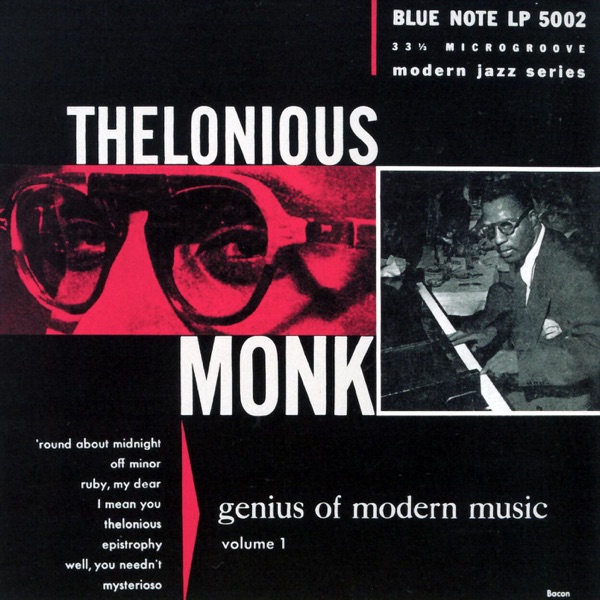
His compositions could sound as if they had been stripped down to the essential parts. "Round Midnight," "Mysterioso" and "Well, You Needn't" didn't follow the smooth, predictable logic of much earlier jazz. Monk left space where other pianists might have filled it, placed notes in unexpected places, and made melodies seem slightly off-center without ever losing their sense of swing.
His piano sound was equally distinctive. He played with a hard, percussive touch, using silence as deliberately as sound. His so-called "wrong" notes weren't mistakes or decoration—they were part of the language. Monk could take a familiar chord or melody, add a note that seemed to clash with it, and somehow make the tension feel inevitable. His sense of rhythm was just as important as his harmony: a phrase could land a beat later than you expected, leaving you briefly wondering where the music had gone before the pieces suddenly clicked back into place.
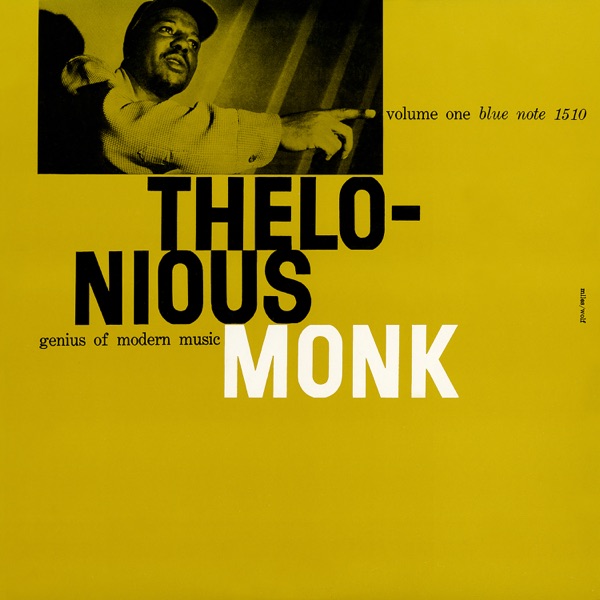
Monk began recording as a leader for Blue Note in 1947, but wider recognition came slowly. His music was already highly regarded among musicians, yet it didn't immediately translate into broad popularity. His career was also disrupted in the early 1950s when he lost his New York cabaret card, severely restricting where he could work. He continued to record and perform, however, and gradually built a reputation as one of the most original composers and pianists in modern jazz.
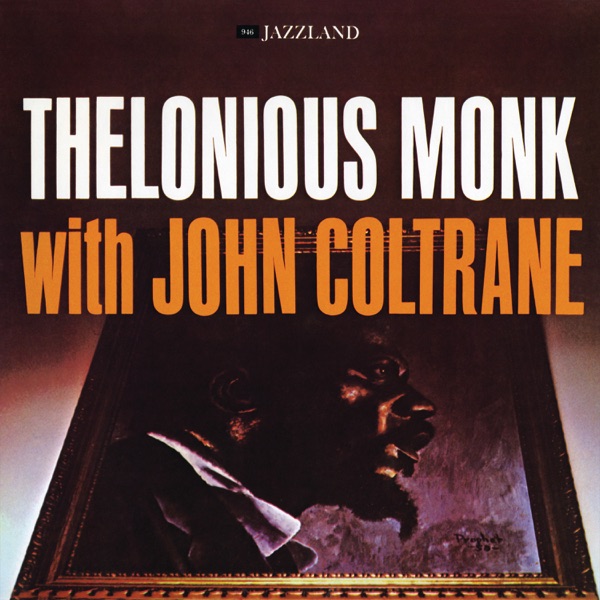
By the mid-1950s, the wider jazz world was paying much more attention. His recordings with John Coltrane in 1957 are a perfect example of what made Monk so compelling. Coltrane's restless, searching saxophone lines could have seemed completely at odds with Monk's angular compositions, but the two musicians understood each other's language. The recordings later collected as Thelonious Monk with John Coltrane show how Monk's strange harmonies and Coltrane's intensity could work together.
At the same time, Monk's compositions were becoming part of the jazz vocabulary. "Blue Monk" and "Straight, No Chaser" were memorable enough to become standards, while tunes such as "'Round Midnight" became fundamental pieces of the jazz repertoire. Monk showed that modern jazz didn't have to abandon melody or swing. You could make the music harmonically strange and rhythmically unpredictable without making it cold or inaccessible.
And success never made Monk conventional. He was famous for his eccentric behavior, sometimes getting up from the piano during performances and dancing beside the band while his musicians continued playing. By the early 1970s, he had largely withdrawn from public performance, and he made only a handful of later appearances. His final public performance came in 1976.
By then, his influence was already secure. Monk had shown that jazz could be intellectually demanding without losing its humor, swing or humanity. His music could sound strange, but the strangeness was never the point by itself. It was a way of making you listen more closely.