1968 · Album
Underground
Recorded 1967 · Columbia Records · Produced by Teo Macero
Monk's Angles: The Sound of Deliberate Strangeness
Monk plays like he's solving a puzzle only he can hear, and we get to eavesdrop.
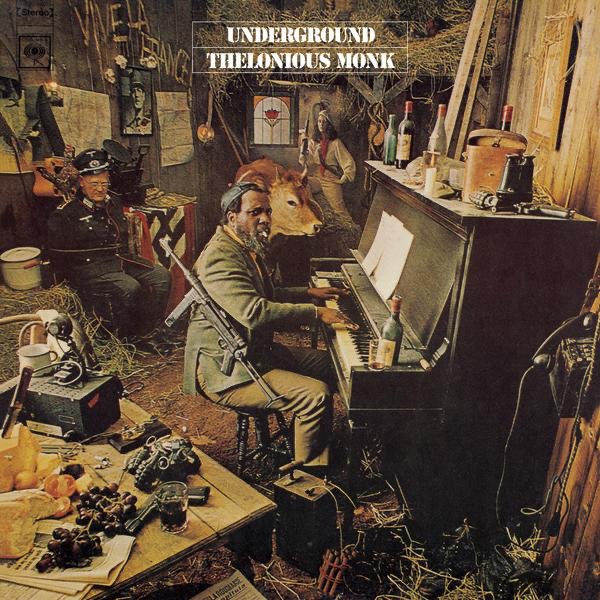
Underground doesn't feel like a Thelonious Monk record at first. It feels like someone's basement session where the usual rules got left upstairs. Recorded in 1967, this album captures Monk in a looser, more exploratory mood than his earlier work, and honestly, it can catch you off guard. The piano lines are still unmistakably his—those awkward angles and unexpected silences—but there's less structure here, more searching. Tracks like "Green Chimneys" show Monk working through ideas that don't resolve neatly, which some listeners find refreshing and others find frustrating. If you come expecting the tighter, more orchestrated Monk of his Blue Note years, this won't be it.
What makes Underground distinct is how intimate it feels. The rhythm section of Ben Riley on drums and Larry Gales on bass stays out of Monk's way, which is exactly what he needs at this point in his career. Riley's playing is spare and responsive rather than driving, and that creates space for Monk to think out loud. The album has a contemplative quality—not depressing, but definitely introspective. "Ugly Beauty" is a perfect title for what's happening here: things that shouldn't work together somehow do, and the beauty is in the awkwardness itself.
This isn't the place to start with Monk. Begin with Round Midnight (1957) or Brilliant Corners (1957) to understand what made him essential. But if you already know those records and want to hear him at a different moment—less concerned with impressing you, more interested in following his own ears—Underground rewards repeated listening. It's a late-career record, and it sounds like a man who had already proven everything he needed to prove, just making music for the sake of it.
Who's playing


