Genre
Bebop
1940s — New York City — Fast, complex, revolutionary
Bebop is the music that turned jazz from a dance idiom into an art form demanding serious attention. Built on breakneck tempos, chromatic improvisation, and rhythms that punch and dart rather than swing in easy circles, it sounds like musicians thinking out loud at full speed. If swing was a party, bebop was the conversation happening in the kitchen afterward — sharper, more intense, and not for everyone.

The story of bebop is inseparable from Harlem in the early 1940s, specifically the after-hours jam sessions at Minton's Playhouse where young musicians would stay up until dawn testing ideas that no one was paying them to play. Charlie Parker and Dizzy Gillespie are the two figures who crystallize the whole movement — Parker with his alto saxophone lines that seemed to find melodies nobody had thought to look for, Gillespie with his trumpet virtuosity and a theorist's understanding of harmony that matched Parker step for step. They weren't working from a manifesto. They were just playing what interested them.
The harmonic logic of bebop rewired jazz from the inside out. Musicians started treating chord changes as a series of opportunities rather than guardrails — using substitute chords, chromatic passing tones, and altered tensions in ways that made the underlying song almost irrelevant to the uninitiated. The heads, those written themes that opened and closed a tune, were often played so fast that the real point was clearly the improvisation in between. Thelonious Monk belongs here too, as a pianist and composer whose tunes like 'Round Midnight operated on their own architectural logic — angular, stubborn, and completely original. His music still sounds like nobody else.
Bud Powell essentially solved the problem of how to play bebop on the piano. Before him, the left hand carried stride or swing conventions; Powell stripped it down to sparse punctuation and let the right hand carry the melodic weight the way a horn would. That template — quick right-hand lines, minimal left-hand comping — is still how most jazz pianists approach an up-tempo standard. Max Roach and Kenny Clarke were doing something equivalent on drums, shifting the timekeeping role from the snare and bass drum to the ride cymbal and making the rest of the kit an improvisational conversation partner.
Bebop didn't capture the popular audience that swing had. It wasn't designed to. The tempos were often too fast to dance to, the harmonies too dense to hum along with, and the attitude — serious, inward-focused, demanding — ran against the grain of entertainment. Some found that elitist. Others recognized it as the same posture any serious art takes when it stops worrying about approval. Either way, bebop permanently changed what jazz musicians expected of themselves and each other. Everything that came after — cool jazz, hard bop, post-bop, fusion — is in conversation with what Parker and Gillespie worked out in those Harlem after-hours sessions.
Bebop took jazz off the dance floor and put it in the musicians' hands. Whether that was a gift or a challenge depended entirely on who was listening.
Essential Albums
♫
Jazz at Massey Hall
Charlie Parker, Dizzy Gillespie, Bud Powell, Charles Mingus, Max Roach · 1953
The dream lineup caught live — Parker and Gillespie trading ideas at full intensity, with one of the great rhythm sections behind them.
♫
Dizzy Gillespie and His Orchestra
Dizzy Gillespie · 1950
Gillespie's big band recordings show how bebop's harmonic ideas could survive the jump to a larger ensemble without losing their edge.
♫
The Amazing Bud Powell, Vol. 1
Bud Powell · 1952
The definitive document of bebop piano — Powell's right-hand lines move with a logic and speed that still sounds modern.
♫
Monk's Music
Thelonious Monk · 1957
Monk leading a rare larger group through his own compositions, showing exactly how strange and self-consistent his musical world really was.
In This Genre
89 artists in your library♫
Toshiko Akiyoshi
Piano - Japan/USA - Post-Bop, Big Band
Toshiko Akiyoshi arrived in America in the 1950s already a formidable pianist, having grown up playing jazz in occupied Japan after falling in love with recordings of Teddy Wilson and Oscar Peterson. She went on to lead one of the most ambitious big bands in jazz history — the Toshiko Akiyoshi-Lew Tabackin Big Band — writing all the charts herself and weaving Japanese musical elements into modern jazz with a matter-of-fact originality that nobody else was doing. She did this without apology, without compromise, and largely without the recognition she deserved.
♫
Gene Ammons
Tenor Saxophone - USA - Soul Jazz / Hard Bop
Gene Ammons played tenor sax like he was testifying in church and telling you a dirty joke at the same time. Chicago born, big-toned, and never in a hurry, he turned bebop's fast talk into something you could slow dance to.
♫
Kenny Barron
Piano · USA · Post-Bop
Kenny Barron has been one of the most consistently excellent pianists in jazz for over six decades, and somehow that consistency has worked against his fame — he makes it look too easy. Dig into any record he touches, as a leader or a sideman, and you find playing that is melodically generous, rhythmically alive, and completely free of showboating.
♫
Mario Bauza
Trumpet - Cuba - Latin Jazz
Mario Bauza spent half his career inside American swing bands before he decided the missing ingredient in jazz was Cuba itself. He didn't just borrow a clave rhythm here and there — he built a whole band around the idea that African American swing and Afro-Cuban rhythm were cousins who'd simply never been properly introduced.
♫
George Benson
Guitar · USA · Jazz-Funk / Crossover
George Benson arrived in jazz as one of the most technically gifted guitarists of his generation — a player who absorbed Wes Montgomery's octave-heavy warmth and then pushed it somewhere faster, looser, and more street-savvy. Then, in 1976, he opened his mouth and sang on a pop record, and the mainstream came rushing in. The story of his career is really two stories running in parallel: the jazz purist's hero and the smooth-voiced pop star, both genuine, occasionally at odds.
Clifford Brown
Trumpet - United States - Hard Bop
Clifford Brown arrived on the jazz scene like a comet, burning bright and impossibly fast before his tragic death at just twenty-five. His lyrical trumpet tone and fearless harmonic sensibility redefined what was possible on the instrument, influencing generations of players who never even had the chance to hear him live. In his brief five years of recording, he became the standard against which all modern trumpeters would be measured.
♫
Ray Brown
Bass - USA - Bebop / Hard Bop
Ray Brown was the bass player other bass players wanted to be when they grew up. He had a sound so big and warm it felt like it was coming up through the floor, and a sense of swing so dependable that bandleaders would organize whole rhythm sections around him. For five decades he was the first call, the gold standard, the guy you put on the record when you needed the bottom end to be absolutely right.
♫
Betty Carter
Vocals - USA - Modern Jazz
Betty Carter was a virtuoso vocalist who refused to be confined by the commercial demands of the music industry, instead carving her own path as a bandleader and interpreter of jazz standards. With her complex phrasing, adventurous scatting, and unwavering commitment to musical experimentation, she earned the respect of every major jazz musician of her era while remaining defiantly independent. Her legacy stands as a testament to artistic integrity and the boundless possibilities of the human voice.
♫
Charlie Christian
Guitar - United States - Swing / Early Bebop
Charlie Christian picked up an electric guitar and made it a lead voice in jazz almost overnight. He was only on the scene for a couple of years before tuberculosis took him at 25, but in that short stretch he changed how the instrument was heard and played.
♫
Al Cohn
Tenor Saxophone - USA - Cool Jazz / Bebop
Al Cohn was one of the great tenors of his generation — warm, swinging, and built for conversation. He spent decades trading ideas with Zoot Sims in one of jazz's most naturally matched partnerships, but his solo work deserves just as much attention. If you've been sleeping on him, that's on you.
♫
Junior Cook
Tenor Saxophone - USA - Hard Bop
Junior Cook spent years as the other tenor player — the one who wasn't Hank Mobley, the one standing next to Blue Mitchell in the Horace Silver Quintet while critics looked the other way. That anonymity was their loss. Cook was a gritty, swinging hard bop saxophonist with a big warm tone and an unfussy directness that makes his records feel like a conversation rather than a performance.

Chick Corea
Piano - United States - Fusion, Bebop, Latin Jazz
Chick Corea was a virtuoso pianist whose restless creativity reshaped jazz across five decades, from his revolutionary work with Miles Davis to his genre-defying fusion experiments. His fleet fingers and harmonic sophistication made him one of the most recorded and influential jazz musicians of the modern era. Whether leading his own ensembles or collaborating across genres, Corea remained a tireless innovator who refused to settle into any single style.
♫
Hank Crawford
Alto Saxophone - USA - Soul Jazz
Hank Crawford played alto saxophone like he was singing a slow blues in church — all feeling, no wasted notes. He came up through the Ray Charles organization and never lost that deeply rooted, gospel-drenched approach to jazz. In an era that rewarded complexity and speed, Crawford just kept making music that hit you somewhere low in the chest.
♫
Paquito D'Rivera
Saxophone & Clarinet — Cuba / USA — Latin Jazz, Bebop
Paquito D'Rivera grew up in Havana playing bebop and classical clarinet, defected from Cuba in 1980, and promptly became one of the most restless and joyful horn players in jazz. He has never been content to stay in one lane — you'll find him blowing hard bop one night and conducting a chamber piece the next. The sheer range would be exhausting if it weren't so clearly fun for him.
♫
Tadd Dameron
Piano & Arrangement - USA - Bebop
Tadd Dameron was the guy who figured out how to make bebop beautiful. While his contemporaries were racing through chord changes, Dameron was thinking about melody, about lush voicings, about writing music that swung hard and sounded gorgeous at the same time. He never got the credit he deserved during his lifetime, but his fingerprints are all over mid-century jazz.
♫
Baroness Pannonica De Koenigswarter
Patron & Catalyst - USA/UK - Bebop
She never played an instrument on a bandstand, but Pannonica de Koenigswarter — 'Nica' to everyone who knew her — shaped bebop as much as some of the musicians who invented it. A Rothschild heiress who walked away from European aristocracy to live among jazz musicians in New York, she was a financial lifeline, a confidante, and a true believer at a time when the music's greatest figures were often broke and undervalued. The fact that Charlie Parker died in her hotel suite and Thelonious Monk spent the last years of his life in her New Jersey home tells you everything about where she stood.
♫
Kenny Dorham
Trumpet - USA - Hard Bop
Kenny Dorham was one of the best trumpet players of his generation, which is a strange thing to say about someone so consistently underrated. He came up in bebop, ran with the hardest bop crews of the 1950s and early 60s, and recorded a string of albums that hold up beautifully — yet somehow he never quite got the credit his peers did. That gap between his actual quality and his public reputation became almost a running theme in jazz writing, and honestly it still hasn't been fully corrected.
♫
Billy Eckstine
Vocalist - United States - Bebop / Vocal Jazz
Before he was known as the guy with the impossibly smooth baritone and the rolled-collar shirt named after him, Billy Eckstine ran the most important incubator bebop ever had — a big band that at various points included Dizzy Gillespie, Charlie Parker, and Sarah Vaughan. He never got the sales numbers his voice deserved, but without him half of modern jazz doesn't happen the way it did.
♫
Roy Eldridge
Trumpet - USA - Swing / Bebop
Roy Eldridge was the guy standing between Louis Armstrong and Dizzy Gillespie — not as a footnote, but as the engine that made that whole leap possible. He played trumpet with a recklessness that made other players nervous and audiences lean forward. Small in stature, ferocious in output, he spent his whole career swinging harder than the room expected.
♫
Herb Ellis
Guitar - USA - Swing / Bebop
Herb Ellis was the kind of guitarist who made everything look easy — swinging hard without breaking a sweat, slipping bebop lines into a blues framework like he'd been doing it his whole life. He came up through the big bands, found his voice in the intimate setting of the Oscar Peterson Trio, and spent the rest of his career proving that clean, soulful, straight-ahead guitar never goes out of style. If you love the guitar and you haven't spent time with Ellis, you've got a treat waiting.
♫
Jon Faddis
Trumpet - USA - Bebop
Jon Faddis can play higher and cleaner than almost anyone who has ever picked up a trumpet, and he learned how to do it by studying Dizzy Gillespie note for note as a teenager. He turned that obsession into a career that runs from big band section work to leading his own orchestras, always with Gillespie's fingerprints somewhere in the sound.
♫
Addison Farmer
Double Bass - United States - Bebop
Addison Farmer spent his career standing next to his twin brother, trumpeter Art Farmer, and in a lot of ways that's exactly where jazz history has left him. But if you listen past the family resemblance, you'll find a bassist with a clean, dependable sound who quietly held down sessions for some of the sharpest minds in 1950s New York bebop and cool jazz.

Ella Fitzgerald
Vocals - USA - Swing, Standards, Bebop
Ella Fitzgerald possessed a voice of such crystalline purity and technical mastery that she became the gold standard against which all jazz singers would be measured. Her impeccable intonation, lightning-fast scat improvisations, and interpretive depth transformed the American songbook into a deeply personal artistic statement. For nearly seven decades, she remained jazz's most beloved and influential vocalist, a living bridge between swing and the modern era.
♫
Tommy Flanagan
Piano - USA - Bebop
Tommy Flanagan spent decades as the most tasteful pianist in the room, whether that room was a Detroit basement session or the wings behind Ella Fitzgerald on a world tour. He never chased the spotlight, but if you know where to listen, his fingerprints are all over some of the most important jazz records ever made.
♫
Vernell Fournier
Drums - USA - Hard Bop
Vernell Fournier is best remembered for one of the most recognizable drum grooves in jazz history — the relaxed, almost floating swing he laid down on Ahmad Jamal's live recordings at the Pershing Hotel. But reducing him to a single gig would be doing him a disservice. He was a drummer's drummer: subtle, economical, and deeply musical in a way that made everyone around him sound better.
♫
Russ Freeman
Piano - USA - Cool Jazz
Russ Freeman was the guy in the room who made everyone else sound better without calling attention to himself. A fixture of the West Coast cool scene in the 1950s, he built a career as both a quietly inventive soloist and one of the most sought-after sidemen on the Pacific Coast. If you've spent time with Chet Baker's early recordings, you've already heard Freeman — you just might not have known his name.
♫
Slim Gaillard
Vocals, Guitar, Piano - USA - Swing
Slim Gaillard made up his own language, called it Vout, and somehow got half of jazz to speak it back to him. He was a novelty act, a genuine musician, and a walking argument that jazz could be funny without being small.

Dizzy Gillespie
Trumpet - United States - Bebop
John Birks Gillespie bent the trumpet into impossible angles and played at velocities that seemed to defy physics. A visionary architect of bebop, he revolutionized jazz improvisation through harmonic innovation and fearless experimentation, leaving fingerprints on everything from Afro-Cuban fusion to world music.
♫
Benny Golson
Tenor Saxophone - USA - Hard Bop
Benny Golson wrote some of the most-played tunes in jazz history before most people knew his name, and then spent decades proving he could blow just as hard as he could compose. His tenor sound is warm and slightly burnished, the kind that makes a room feel like it closed in around you without anyone noticing. He is one of those rare musicians where the pen and the horn feel equally weighted.

Dexter Gordon
Tenor Saxophone - USA - Hard Bop & Bebop
Dexter Gordon was the tenor saxophone's poet laureate—a towering figure whose warm, conversational tone and harmonic sophistication made him one of jazz's greatest improvisers. After decades of struggle with addiction and a self-imposed exile in Copenhagen, he returned to America in the 1970s to cement a legacy that would influence generations of saxophonists. His late-career renaissance proved that artistic greatness could survive almost anything.
♫
Norman Granz
Producer & Impresario - USA - Swing / Bebop
Norman Granz never played an instrument, but he shaped the sound of jazz more directly than most musicians ever did. He turned concert halls into battlegrounds for civil rights, built record labels that gave artists total creative control, and managed to make bebop and swing pay — on his terms. If you love Ella Fitzgerald, Oscar Peterson, or Charlie Parker on record, you owe a debt to a guy most casual listeners have never heard of.
♫
Gigi Gryce
Alto Saxophone - United States - Bebop / Hard Bop
Gigi Gryce wrote some of the smartest tunes to come out of the bebop era, then walked away from the music business entirely and taught grade school under a different name. He deserves to be remembered as more than a footnote to Clifford Brown's quintet.
♫
Lars Gullin
Baritone Saxophone - Sweden - Cool Jazz
Lars Gullin was the most original jazz voice to come out of Europe in the 1950s — a Swede who fell so deeply into bebop that American musicians kept asking who he was. He played baritone saxophone with a lightness that nobody had managed before, making an instrument built for weight sound like it was floating. His own compositions were something else entirely: lyrical, melancholy, and unmistakably Scandinavian, even when built on American jazz structures.
♫
Lionel Hampton
Vibraphone · USA · Swing / Bebop
Lionel Hampton didn't just play the vibraphone — he basically invented the idea of it as a jazz instrument. Before Hampton, the vibes were a novelty; after him, they were a voice. He was also just relentlessly, almost aggressively joyful on stage, the kind of bandleader who made you feel like the party had been waiting specifically for you to arrive.
♫
Barry Harris
Piano - USA - Bebop
Barry Harris was the keeper of the bebop flame at a time when the rest of the jazz world was sprinting in other directions. He didn't just play in the style of Charlie Parker and Thelonious Monk — he understood the harmonic logic underneath it so deeply that he spent decades teaching it to anyone who would listen. If you wanted to know how bebop actually worked, not just how it sounded, Barry Harris was the person you called.
♫
Hampton Hawes
Piano - United States - Bebop
Hampton Hawes played bebop piano like he was born speaking the language, which in a way he was — he grew up in Los Angeles hearing Charlie Parker and Art Tatum in equal measure and figured out how to fold both into his own hands. His career got interrupted by heroin and a prison sentence, then by a presidential pardon that sounds like a plot twist, but the records he made before and after stayed sharp the whole way through.
♫
Coleman Hawkins
Tenor Saxophone · USA · Swing / Bebop
Coleman Hawkins basically invented the tenor saxophone as a jazz instrument — before him, it was considered something of a novelty. He spent five decades staying relevant without ever losing himself, which is rarer than it sounds. By the time younger players thought they were leaving him behind, he'd already moved on to something they hadn't figured out yet.
♫
Roy Haynes
Drums - USA - Hard Bop / Post-Bop
Roy Haynes has been playing drums professionally since the 1940s and is still doing it better than almost anyone alive. He has worked with pretty much every major figure in jazz across eight decades — not as a sideman who faded into the background, but as a genuine force who pushed every band he joined. The man has a snare sound you can identify in about two seconds.
♫
Jimmy Heath
Saxophone - United States - Bebop / Hard Bop
Jimmy Heath spent a career standing just outside the spotlight that fell on his famous friends, and somehow that turned out to be the best seat in the house. He wrote tunes other people made famous, arranged charts that made big bands sound sharper, and kept playing beautiful tenor saxophone right up until the end, long after most of his generation had put the horn down.
♫
Percy Heath
Bass - United States - Hard Bop
Percy Heath spent four decades as the quiet engine of the Modern Jazz Quartet, playing bass lines so clean and so sure that people sometimes forgot how hard that is to do. He could have been a bebop firebrand like his younger brothers, but he chose steadiness instead, and built one of the great careers in jazz out of it.
♫
Woody Herman
Clarinet / Vocals - USA - Big Band / Swing / Bop
Woody Herman led a big band for over five decades — not the same band, but a rolling series of them, each one rebuilt from scratch with whoever was young and hungry and willing to play hard. He had an instinct for talent that bordered on eerie, and he kept reinventing his sound long after most of his contemporaries had stopped trying.
♫
Earl Hines
Piano · USA · Stride / Swing / Bebop
Earl Hines essentially invented the modern jazz piano, finding a way to cut through the noise of a big band before amplification existed by treating the piano like a horn. He called it trumpet-style piano, and once you hear it, you'll understand immediately — single-note lines in the right hand, punchy and rhythmically unpredictable, like something Louis Armstrong might have played if he'd had ten fingers on keys. He was still doing it brilliantly at seventy, which tells you everything about how solid the idea was.
♫
Red Holloway
Tenor Saxophone - United States - Soul Jazz
Red Holloway spent his career in the engine room of jazz rather than out front with the marquee players, and that was exactly where he wanted to be. He had a big, bluesy tenor sound built for organ trios and backroom clubs, and he used it to make a living for six decades without ever chasing a trend.
♫
Langston Hughes
Poetry & Voice - USA - Jazz & Blues
Langston Hughes didn't play an instrument, but he understood jazz and blues as well as anyone who ever picked one up. He heard in that music the full emotional range of African American life and spent decades trying to put it into words — sometimes literally, by performing his poetry over live jazz accompaniment. The result was something genuinely unusual: a literary voice that swung.
♫
Daniel Humair
Drums - Switzerland - Post-Bop
Daniel Humair is the drummer who made Paris one of the great jazz capitals of the world without ever needing New York's blessing. He swings as hard as anyone who came up idolizing Kenny Clarke, but he never stopped pushing toward the edges, backing Eric Dolphy one year and French modernists the next. He's also a serious painter, which tells you something about how he hears rhythm — as color, as gesture, not just as time.
♫
Bobby Jaspar
Saxophone, Flute - Belgium - Cool Jazz
Bobby Jaspar never quite got his due, partly because he died young and partly because he spent his career straddling two continents instead of planting a flag on one. He was a Belgian tenor player who moved to Paris, then to New York, picking up the flute along the way and helping turn it into a real jazz voice rather than a novelty.
♫
Hank Jones
Piano - United States - Swing to Bebop
Hank Jones spent seven decades being the pianist everybody wanted on the session, and almost nobody outside the business knew his name. He was there for Charlie Parker's bebop revolution, there for Ella Fitzgerald's best years, there for Marilyn Monroe's birthday serenade to a president. Through all of it he played with the same unshowy, immaculate touch, like a man who had nothing left to prove and never needed to.
♫
Jimmy Jones
Piano - USA - Swing / Bebop
Jimmy Jones was the kind of pianist that singers trusted with their careers — quietly brilliant, harmonically sophisticated, and almost pathologically reliable. He spent years as Sarah Vaughan's musical director and accompanist, a role that suited his temperament but occasionally obscured just how much he had going on as a player in his own right. If you know his name at all, it's probably because of whose name appeared above his on the marquee.
♫
Wynton Kelly
Piano · Jamaica / USA · Hard Bop
Wynton Kelly is the pianist you keep noticing on other people's records before you realize you should just be listening to his own. He had a touch that was simultaneously relaxed and precise, like someone who never wasted a note but also never seemed to be counting them. Miles Davis used him on Kind of Blue for a single track, and that one performance has been studied by piano students ever since.
♫
Barney Kessel
Guitar - USA - Swing/Bebop
Barney Kessel could play absolutely anything you put in front of him, which is exactly why you've heard him a hundred times without knowing it. He built a reputation as one of the great small-group jazz guitarists of the '50s while also quietly becoming one of the busiest session players in Los Angeles, popping up behind pop singers, film scores, and everything in between.
♫
Rolf Kühn
Clarinet - Germany - Swing & Bebop
Rolf Kühn was the clarinet player who refused to let the instrument stay stuck in the swing era. He crossed the Atlantic to play with Benny Goodman's generation, came home to Germany, and then spent the next six decades proving the clarinet could keep up with bebop, free jazz, and fusion without losing its warmth.
♫
Jimmy Lyons
Alto Saxophone - United States - Avant-Garde Jazz
Jimmy Lyons spent a quarter century standing next to Cecil Taylor, playing lines so fast and angular they sounded like they'd snap in half, and somehow they never did. He came up loving Charlie Parker and never really stopped loving him, which made his version of free jazz sound different from everyone else's — bebop bones wearing a very different skin.
♫
Frank Machito (Grillo)
Vocals & Bandleader - Cuba/USA - Latin Jazz
Machito didn't play an instrument in the traditional sense — he sang, shook a pair of maracas, and led one of the great bands in American music history. He and his brother-in-law Mario Bauzá took Cuban dance rhythms and jazz horns and welded them together so tightly that nobody could tell where one ended and the other began.
♫
Shelly Manne
Drums - USA - Cool Jazz / Hard Bop
Shelly Manne was the drummer who made West Coast jazz sound like something more than a soundtrack for palm trees. He could swing as hard as anyone in New York, but he also knew how to listen — which, for a drummer, is rarer than it sounds.
♫
Ellis Marsalis Jr.
Piano - USA - Post-Bop
Ellis Marsalis spent decades quietly doing the work that most people never get credit for — teaching, playing, mentoring, and holding New Orleans jazz together from the inside out. He was a serious bebop and post-bop pianist who somehow ended up famous mostly for being someone's father, which is both understandable and a little unfair. His playing deserved more ears than it got.
♫
Warne Marsh
Tenor Saxophone - USA - Cool Jazz
Warne Marsh spent most of his career as one of jazz's best-kept secrets — a tenor saxophonist of extraordinary subtlety who never quite fit the commercial mold and seemed perfectly fine with that. A devoted disciple of Lennie Tristano, he pursued a kind of linear, emotionally controlled improvisation that could sound alien on first listen and completely addictive on the tenth. If you've never heard him, you're in for a slow-burn surprise.
♫
Jack McDuff
Hammond Organ - USA - Soul Jazz
Brother Jack McDuff was the kind of organist who made you feel the music in your chest before your brain had time to catch up. He came up through the blues and never really left, even when he was deep inside a jazz context. His Hammond B-3 had a grit and a swagger that set him apart from the more polished players of his era.
♫
Charles McPherson
Alto Saxophone - USA - Bebop
Charles McPherson grew up in Detroit and came of age in New York just as bebop was cementing its place as the serious language of jazz — and he took to it like it was the only language worth speaking. He spent years in Charles Mingus's band, which is about as rigorous a school as the music had to offer, and came out the other side with a voice of his own that still sounds fresh decades later. If you love Charlie Parker but want to hear what a living alto player did with that tradition rather than just copying it, McPherson is your guy.
♫
Carmen McRae
Vocals - USA - Bebop / Swing
Carmen McRae was one of the great jazz singers, and she'd probably be the first to tell you she didn't get the credit she deserved. She sang like she was thinking out loud — every lyric dissected, every word placed exactly where she wanted it. What she did with a song was less about beauty and more about truth.

Thelonious Monk
Piano - United States - Bebop / Hard Bop
Thelonious Sphere Monk was jazz's most enigmatic composer and pianist, a figure whose angular melodies and percussive touch seemed to arrive from another dimension. His sparse, almost cubist approach to harmony rewired the language of modern jazz, turning the piano into an instrument of pure abstraction. Yet beneath the dissonance lay a melodic sensibility of haunting beauty, one that only deepened with repeated listening.
♫
Joe Morello
Drums - USA - Cool Jazz
Joe Morello spent most of his career sitting behind Dave Brubeck, and that one fact has a way of making people underestimate him — which is exactly backwards. He was one of the most technically gifted drummers in jazz history, capable of playing in odd time signatures with a relaxed ease that made other drummers want to quietly give up.
♫
George Morrow
Bass - USA - Hard Bop
George Morrow spent the better part of a decade as the anchor beneath Clifford Brown and Max Roach, one of the most celebrated small groups in hard bop history — and still managed to remain one of the least-discussed musicians in that band. His playing was sturdy, melodic, and deeply swinging, the kind of bass work that makes everything around it feel inevitable.

Gerry Mulligan
Baritone Saxophone - United States - Cool Jazz & Bebop
Gerry Mulligan was the architect of cool jazz's most elegant invention: the pianoless quartet. With his rich, buttery baritone sax and compositional sophistication, he transformed what could have been a limitation into a revolutionary sound that influenced generations of musicians. His blend of intellectual rigor and warm lyricism made him one of jazz's most distinctive and enduring voices.
♫
Anita O'Day
Vocals - USA - Swing / Bop
Anita O'Day came up hard — carnivals, walkathons, dime-a-dance halls — and it showed in her voice in the best possible way. She sang with a cool, almost detached authority that made other singers sound like they were trying too hard. When bebop arrived, she didn't resist it; she figured it out and made it hers.
♫
Chico O'Farrill
Composer/Arranger - Cuba - Latin Jazz
Chico O'Farrill wrote charts that made big bands sound like they'd grown up speaking two languages at once. He came out of Havana with a classical education and a trumpet, but it was his pen — not his horn — that got him into rooms with Dizzy Gillespie, Machito, and Benny Goodman.

Charlie Parker
Alto Saxophone · USA · Bebop
Charlie Parker didn't just change jazz — he detonated it. Emerging from the Kansas City swing scene as a teenager, he arrived in New York with a harmonic imagination so far ahead of its time that fellow musicians would huddle around bandstands trying to transcribe what he'd just played. They called him Bird, and the music he made still flies.
♫
Joe Pass
Guitar - USA - Bebop / Solo Jazz
Joe Pass could make a guitar sound like a full band — walking bass lines, chord comping, and melody all happening at once, in real time, with no safety net. He came up hard, lost years to addiction, and then reinvented himself in his forties as one of the most complete solo guitarists the music has ever produced. If you've never heard a single instrument hold down an entire jazz standard without any backup, start here.
♫
Oscar Pettiford
Bass & Cello - USA - Bebop
Oscar Pettiford was one of the first bassists to take Charlie Parker and Dizzy Gillespie's harmonic ideas seriously and translate them to a low-end instrument — and he did it without waiting for permission from anyone. He also picked up the cello and essentially invented jazz cello as a solo voice, which is either the most underrated achievement in the music or the best-kept secret depending on who you ask. He died at 37, which means most people who discover him spend the rest of their listening life wondering what he would have done next.

Bud Powell
Piano - United States - Bebop
Bud Powell was the pianist who made bebop speak with ten fingers, translating the harmonic and rhythmic innovations of Charlie Parker and Dizzy Gillespie to the keyboard. His lightning-fast runs and crystalline touch redefined what the piano could do in modern jazz, establishing a language that still influences pianists today. Though his life was marked by personal struggle and institutional confinement, his recorded legacy stands as a monument to creative genius.
♫
Chano Pozo
Percussion - Cuba - Latin Jazz
Chano Pozo showed up in New York not speaking English and left a mark on jazz that's still audible every time a conga drum shows up in a bebop tune. He and Dizzy Gillespie only worked together for about a year and a half, but that was enough time to permanently bend jazz toward Cuba.
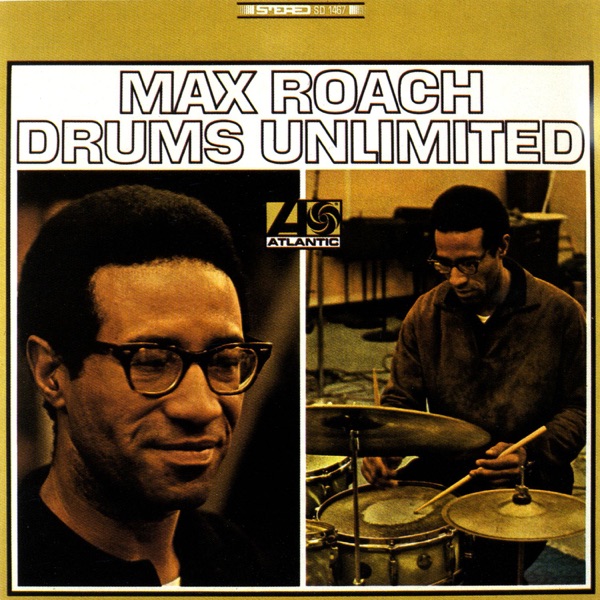
Max Roach
Drums - United States - Bebop, Hard Bop, Free Jazz
Max Roach didn't just keep time—he reinvented what drums could say in jazz. As a bebop pioneer and relentless innovator, he transformed the kit from a timekeeping instrument into a conversational voice equal to any horn, wielding brushes and sticks with compositional precision. His restless curiosity drove him across decades of musical evolution, from hard bop sophistication to politically charged free jazz.
♫
Shorty Rogers
Trumpet - United States - Cool Jazz
Shorty Rogers was the guy who made West Coast jazz sound like it was having fun. He wrote charts that swung hard but never broke a sweat, and he put together small groups that felt like chamber music with a wink. If cool jazz has a mascot, it's probably him, trumpet in hand, grinning at the absurdity of taking jazz this seriously while making it sound this light.
♫
Jimmy Rowles
Piano - United States - Swing / Cool Jazz
Jimmy Rowles spent decades as the piano player singers wanted standing behind them, which is a strange kind of fame — everyone who mattered in jazz vocals knew his name, but the wider public mostly didn't. He had ears like nobody else, a dry sense of humor, and a way of finding the weird, beautiful chord that made a familiar tune sound like you'd never heard it.
♫
Arturo Sandoval
Trumpet - Cuba - Latin Jazz
Arturo Sandoval plays trumpet the way some people argue — fast, loud, and absolutely certain he's right. Born in Cuba and trained in classical music before falling hard for jazz, he became one of the most technically ferocious brass players alive, a guy who can hit a double high C and make it swing at the same time. His story is also genuinely dramatic: a defection, a Cold War friendship with Dizzy Gillespie, and a career that took him from Havana to Hollywood.
♫
Zoot Sims
Tenor Saxophone - USA - Swing / Cool Jazz
Zoot Sims was the kind of tenor saxophonist who made the whole thing look easy — and that ease was exactly the point. He swung hard without breaking a sweat, played with warmth and directness, and never got tangled up in complexity for its own sake. In a world full of heavyweights wrestling with the horn, Zoot just sang through it.
♫
Stuff Smith
Violin - USA - Swing
Stuff Smith took the violin, an instrument nobody expected to swing hard, and made it snarl and holler like a trumpet section. He played loud, he played dirty, and he built his career in smoky rooms where subtlety wasn't the point — feeling was.
♫
Martial Solal
Piano - France - Bebop
Martial Solal spent seventy years proving that European jazz pianists didn't need to imitate Americans to be taken seriously. He had a mind for harmony that could make a standard sound like it was being invented on the spot, and he never really slowed down trying to prove it.
♫
Slam Stewart
Bass - USA - Swing / Bebop
Slam Stewart invented something genuinely strange and made it work: he bowed his bass while simultaneously humming the same line an octave higher, creating a sound that was part instrument, part voice, part cartoon. Nobody else did it quite like him, and nobody who heard it ever forgot it. He was a swing-era fixture who moved comfortably into bebop territory, and his groove was so natural that he made the whole trick sound effortless.
♫
Sonny Stitt
Saxophone - United States - Bebop
Sonny Stitt spent his whole career answering a question nobody asked him to answer: could you sound like Charlie Parker without actually being Charlie Parker? He got tired of the comparison fast, picked up the tenor to shake it off, and ended up one of the hardest-working, most recorded saxophonists bebop ever produced. Not the innovator, but the guy who could out-blow almost anybody on a given night.
♫
Art Taylor
Drums - USA - Hard Bop
Art Taylor was the drummer that half of New York's jazz scene called when they needed someone who could hold it together without getting in the way. He recorded on so many essential hard bop records in the 1950s and 60s that his name reads like a spine running through the whole era. Then he walked away from the music business, moved to Europe, and stayed gone for nearly two decades — which is either the most principled thing a musician ever did or the most frustrating, depending on who you ask.
♫
Rene Thomas
Guitar - Belgium - Bebop
Rene Thomas grew up in the shadow of Django Reinhardt's legend, but he never settled for being the next Django. He pushed his guitar toward bebop's sharper edges, and by the time American players like Sonny Rollins and Stan Getz came through Europe, they wanted him in the band, not just on the bill.
♫
Lennie Tristano
Piano - USA - Cool Jazz / Avant-Garde
Lennie Tristano built his own corner of jazz and refused to let anyone redecorate it. Blind from childhood, self-taught in ways that bent the rules most pianists took for granted, he developed a style so logically intricate and emotionally cool that it still sounds like nothing else. He was a teacher as much as a performer, and some of his students went on to define what cool jazz actually meant in practice.
♫
Mark Turner
Tenor Saxophone - USA - Post-Bop
Mark Turner is the kind of tenor saxophonist who makes you lean in and pay close attention, because what he's doing is subtle enough to miss and rewarding enough to chase. He came up through the New York scene in the 1990s and quietly built one of the most distinctive voices on his instrument without ever chasing the spotlight. His playing is dry, precise, and harmonically dense — the opposite of showboating, and all the better for it.
♫
Stanley Turrentine
Tenor Saxophone - USA - Soul Jazz
Stanley Turrentine played tenor saxophone like he was telling you something important and didn't want to repeat himself. His sound was big, warm, and unmistakably his own — rooted in the blues, built for small rooms with good acoustics and people who actually wanted to listen. For three decades he made some of the most satisfying jazz records you can find, and somehow still gets underrated in conversations about the greats.
♫
Bebo Valdés
Piano – Cuba/Spain – Latin Jazz
Bebo Valdés spent decades being one of the best-kept secrets in Cuban music, largely because he left Cuba in 1960 and effectively vanished from the international radar for a generation. When the world finally caught up with him in the late 1990s, it found a pianist in his eighties who had lost nothing — the touch was still there, the invention was still there, and he clearly had no interest in coasting on nostalgia. He gave some of the most alive performances of his career after most musicians his age had long since retired.
♫
Chucho Valdés
Piano · Cuba · Latin Jazz
Chucho Valdés is the pianist who made Afro-Cuban jazz feel genuinely modern without stripping it of anything essential. As the founder of Irakere in 1970s Havana, he helped build one of the most ferociously original bands in jazz history — one that played for audiences on both sides of the Cold War cultural divide. Decades on, he remains one of the few pianists working today whose left hand alone could anchor an entire band.
♫
Sarah Vaughan
Vocals - United States - Bebop & Ballad
Sarah Vaughan possessed one of jazz's most technically extraordinary voices—a rich contralto with a range that seemed to defy the laws of physiology. Her ability to navigate complex harmonic changes with the precision of an instrumentalist made her a favorite among musicians and a standard-bearer for vocal sophistication. From bebop to ballad, she sang with an elegance and daring that remains unsurpassed.
♫
Sadao Watanabe
Alto Saxophone - Japan - Contemporary Jazz
Sadao Watanabe spent decades quietly dismantling the assumption that jazz belonged exclusively to the West, building a body of work that moved freely between bebop, fusion, and African and Brazilian rhythms without ever sounding like he was making a point about it. He came up playing hard bop in Tokyo during the 1950s, eventually studied at Berklee, and returned to Japan as one of the most versatile alto saxophonists the country has produced. His sound is warm, unhurried, and surprisingly soulful — closer to Cannonball Adderley than to the cool, cerebral school you might expect from a Japanese musician navigating a foreign genre.
♫
Phil Woods
Alto Saxophone - USA - Bebop
Phil Woods had the unenviable job of picking up the alto saxophone right after Charlie Parker set it on fire. He didn't try to put the fire out or start a different one — he just kept playing, for sixty years, with a tone so clean and so quick that eventually people stopped comparing him to Bird and started just listening to Woods.