Warm Sound, Long Road
Watanabe was born in Utsunomiya in 1933 and came of age during the postwar American occupation, when jazz flooded into Japan through radio broadcasts and US military clubs. He absorbed it the way a lot of his generation did — obsessively, and from a distance. By the time he joined Toshiko Akiyoshi's quartet in the late 1950s, he was already a serious player, and her recommendation helped get him into Berklee College of Music in Boston. Studying abroad at that point wasn't just an educational detour; it was the move that put him in rooms with musicians who would shape the next decade of jazz.
His early albums from the 1960s sit comfortably in hard bop territory — alto lines that show he had absorbed Charlie Parker without simply copying him. There's always been a melodic generosity to his playing, a preference for lines that breathe and resolve rather than showcase. He doesn't pile on the notes to prove anything. When he returned to Japan and started leading his own groups, he brought back that Berklee-sharpened technique and applied it to a recording career that would stretch across styles in ways that sometimes confused critics who wanted him to stay in one lane.
Through the 1970s and 1980s he moved into fusion and jazz-funk territory, pulling in Brazilian rhythms, African percussion, and pop-adjacent production that made some of his records genuine commercial crossovers in Japan. Albums like Fill Up the Night (1983) showed he wasn't afraid of a groove or a studio sheen, and in Japan he found large audiences who might never have engaged with straight-ahead jazz at all. That commercial success earned him some side-eye from purists, but his playing throughout this period remained honest — he just happened to put it inside arrangements that had a beat people could dance to.
What makes him worth sitting with, beyond the biographical interest, is how consistently warm his saxophone sound is. There's a certain softness at the edges of his tone that keeps even his most technically demanding passages from feeling cold or academic. Cannonball Adderley is the obvious comparison — that same round, rolling quality on the alto, that same instinct for where the soul of a melody lives. Watanabe never tries to be aggressive on the horn; he persuades rather than commands, and it works.
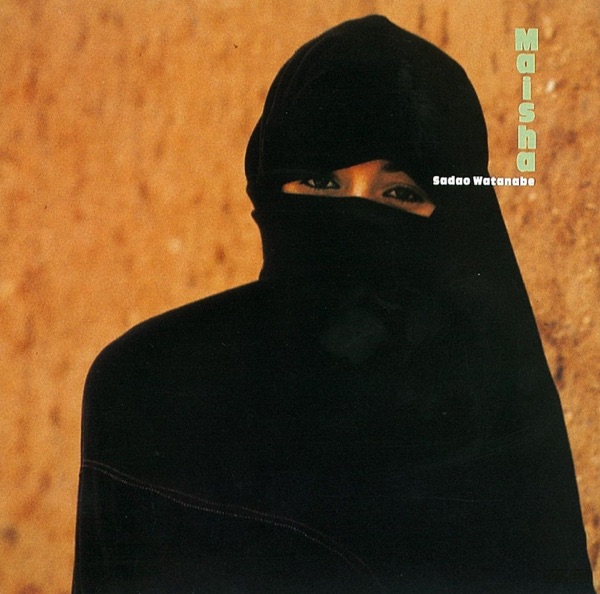
Late in his career he returned more often to acoustic settings and straight-ahead playing, as if closing a loop. He has recorded steadily into his eighties, which is remarkable by any measure. For a listener coming in fresh, Maisha (1987) offers a good entry point — it balances the fusion production with enough genuine blowing to show what the man sounds like when he's digging in. From there you can go backward to the hard bop records or forward depending on your taste. Either direction, you're spending time with a player who built something real over a very long run.