Where do you listen?
Choose your streaming service
inside the sleeve
Loading…
inside the sleeveITS
⌕
Read About
Piano - USA - Cool Jazz / Avant-Garde

Lennie
Tristano

Start here The New Tristano (1962) →
1919 - 1982, USA

Lennie Tristano built his own corner of jazz and refused to let anyone redecorate it. Blind from childhood, self-taught in ways that bent the rules most pianists took for granted, he developed a style so logically intricate and emotionally cool that it still sounds like nothing else. He was a teacher as much as a performer, and some of his students went on to define what cool jazz actually meant in practice.

Cool JazzBebopAvant-Garde JazzFree Jazz
Lennie Tristano

The Logic of Cold Fire

If you come to Tristano expecting the warmth and swing of a classic piano trio, you are going to be confused for the first few minutes. His lines are long, almost serpentine — they don't resolve where you expect them to, they don't breathe where a vocalist would breathe, and they don't seem particularly interested in making you feel comfortable. Once you settle into his frequency, though, the music starts to reveal something genuinely unusual: a kind of ferocious intellectual discipline that still, somehow, swings.

He grew up in Chicago, lost his sight progressively as a child, and came up listening to everything — boogie-woogie, stride, classical piano, early bebop. By the time he moved to New York in the mid-1940s, he had already developed a fully formed approach. He was bebop-adjacent but not really a bebop pianist. His harmonic thinking was more linear than vertical, and he played with a rhythmic independence between the hands that was genuinely strange for the time. He also played fast — not showy fast, but the kind of fast that comes from someone who has spent years working out exactly what they want to say.

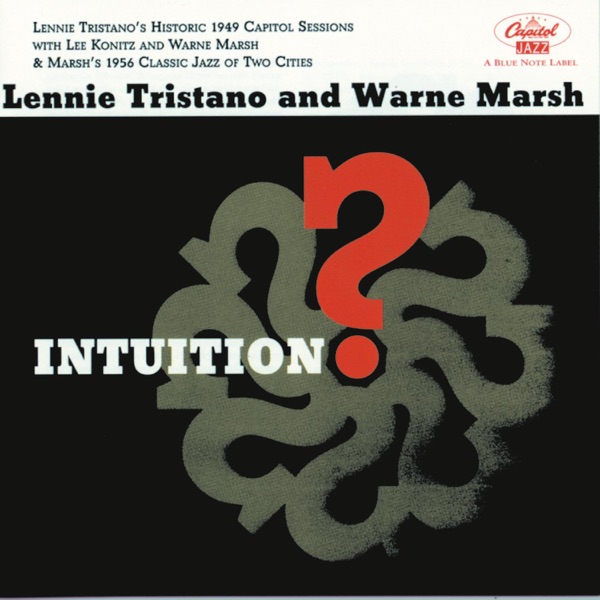
The 1949 Atlantic sessions are where most people start, and that's reasonable. Crosscurrents (1949) documents him alongside Lee Konitz and Warne Marsh, the two saxophonists he'd been teaching in New York, and the interplay is remarkable — everyone is moving through the same harmonic space with an almost eerie unanimity. That same year, he recorded what are often cited as the first free jazz performances, completely improvised pieces with no preset harmonic structure. Whether or not you buy that framing historically, the recordings themselves are worth hearing because they don't sound like a stunt. They sound like where his logic naturally led.

His teaching is maybe the most underrated part of his story. He ran a studio in New York for decades and his students included Lee Konitz, Warne Marsh, Sal Mosca, and Bill Evans — yes, that Bill Evans. You can hear Tristano's influence directly in the way Evans voiced chords and built long melodic lines across the bar, though Evans eventually softened the edges considerably. Tristano himself was less interested in commercial success than in developing a coherent musical language, and he was reportedly not shy about saying so.

He recorded sporadically throughout his career and spent a lot of his later years teaching rather than performing. Lennie Tristano (1956) and The New Tristano (1962) are both worth tracking down — the latter especially, since it's solo piano and gives you the clearest possible view of how his mind worked without any other musicians to navigate around. He died in New York in 1982. The school of thought he built never became a mainstream movement, but the pianists and saxophonists who absorbed his ideas kept doing interesting work for decades afterward, which is about as much as you can reasonably ask.

Facts
BornMarch 19, 1919, Chicago, Illinois
DiedNovember 18, 1982, New York City
InstrumentPiano
Active1940s – 1970s
Known forCool jazz linearity, early free improvisation, influential teaching
Connections
Lee KonitzStudent and frequent collaborator, New York
→
Warne MarshStudent and collaborator, New York
→
Bill EvansStudent, New York
→
Read more

Discography

12 records
Holiday in Piano
Holiday in Piano
1953
♫
The Jazz Keyboards
1955
Lennie Tristano
Lennie Tristano
1956
The New Tristano
The New Tristano
1962
Descent Into the Maelstrom
1978
New York Improvisations
1983
Note to Note
Note to Note
1993
Concert in Copenhagen
1997
♫
I Can't Get Started
2006
♫
Live at the Café Bohemia
2008
♫
Chicago April 1951
2014
The Duo Sessions
The Duo Sessions
2020

Collaborations

Live on Youtube

Explore Further

Selected connections
Pianist, USA
Bill Evans
Evans absorbed Tristano's harmonic thinking and melodic linearity and then wrapped it in a warmer, more lyrical sound. A logical next stop if Tristano's architecture interests you but you want something more emotionally open.
Explore →
Album, 1949
Crosscurrents
The essential Tristano document — him, Lee Konitz, and Warne Marsh moving through complex harmonic terrain like they share one brain. Start here.
Explore →

Who's playing
Listen next
Recording Info
Track listing
Musicians
Further Reading
Read more

Where next?

More by this artist

Albums with the same musicians

From the same era

Similar artists

inside the sleeve
Growing
Jazz, explained without pretension.
Read · Follow the connections · Press play
Right now: 7,100+ albums · 440+ artists
Start here
New to jazz? These artists are good places to start.
Loading…
Explore
Nine records worth getting lost in.
Born today
Album of the day
A landmark record, every day.
Read
  • Loading…
Article archive →
Recently added
Purpose
Inside the Sleeve is your companion on a journey through jazz — not a textbook, but something closer to a knowledgeable friend sitting next to you while you listen. Read about an artist, press play, follow a connection, discover an album you didn't know you needed.
Suggestions
Read

Articles

Essays, guides, and lists about jazz and the records that matter.

Loading…

Genre

Key Artists
Further Reading

Essential Albums

Related Genres

In This Genre

About

Inside the Sleeve

Work in progress

Inside the Sleeve grows continuously — new artists and albums are added, essays refined, as visitors explore and our editors follow up on what they find. Content, features, and design are still evolving; use the Report error button on any page to flag something that seems off.

Content

Every artist, album, and release date on Inside the Sleeve is real — verified against trusted sources including MusicBrainz and Wikipedia. We don't invent discographies or fabricate records. AI compiles that verified information into readable prose — essays on artists, albums, and the music itself. We can't manually review every essay before publishing, but every reported error is checked by a human editor.

Inside the Sleeve is not a review site. We're not here to rate or rank — we're here to guide you in. Where an album stands out, we'll say so. Where an artist changed everything, you'll know why. But we won't tear anything down. Jazz history is complex and sources sometimes disagree — if you spot something that seems off, please report it.

Streaming

Inside the Sleeve links to Spotify and Apple Music so you can listen while you read. These are not affiliate links. For Spotify, links open a search on open.spotify.com — we do not have direct links to specific recordings. For Apple Music, direct links are used where available, otherwise a search is opened.

Your choice of streaming service is stored locally in your browser only. It is never sent to our servers.

We're working on deeper Spotify integration, including direct links to specific recordings.

Privacy

Inside the Sleeve does not collect personal data and does not use cookies. We count page visits anonymously using a self-hosted analytics tool — no personal identifiers are stored, and the data never leaves our own server. The only preference stored on your device is your streaming service choice, saved locally in your browser and never transmitted.

When you submit a suggestion or error report, the text you write is stored in our database. No name or email is required or collected unless you choose to provide one.

Third-party services

Spotify and Apple Music are independent services with their own terms of use and privacy policies. Inside the Sleeve is not affiliated with or endorsed by either company.

Support

Inside the Sleeve is free and ad-free. If you enjoy it, a coffee helps cover server costs and keeps the project going.

Amazon

Some book recommendations on Inside the Sleeve link to Amazon. Buying through these links costs you nothing extra — but Amazon pays us a small commission, which goes directly towards keeping the site running. It's a simple way to support the project if you were going to buy the book anyway.

As an Amazon Associate, Inside the Sleeve earns from qualifying purchases.

Questions or feedback? Use the suggestion box on the front page.

Inside the Sleeve — A guide for those who want to go beyond the obvious About & Privacy