Where do you listen?
Choose your streaming service
inside the sleeve
Loading…
inside the sleeveITS
⌕
Read About
Tenor Saxophone - USA - Cool Jazz

Warne
Marsh

1927 - 1987, USA

Warne Marsh spent most of his career as one of jazz's best-kept secrets — a tenor saxophonist of extraordinary subtlety who never quite fit the commercial mold and seemed perfectly fine with that. A devoted disciple of Lennie Tristano, he pursued a kind of linear, emotionally controlled improvisation that could sound alien on first listen and completely addictive on the tenth. If you've never heard him, you're in for a slow-burn surprise.

Cool JazzBebopPost-Bop
♫

The Long, Cool Line

Warne Marsh came up in the late 1940s inside Lennie Tristano's small but intensely focused circle in New York, and he never really left — not ideologically, anyway. Tristano's approach was about long melodic lines, rhythmic displacement, and a kind of emotional restraint that ran completely counter to the expressionist heat of bebop. Marsh absorbed all of it and spent the rest of his life refining it. He wasn't copying Tristano. He was genuinely committed to the same ideas, and you can hear that commitment in every solo he ever played.

His tone on the tenor is unlike almost anyone else you'll hear. There's no edge to it, no grit — it's smooth, slightly cool, almost weightless. Where John Coltrane would press down and build intensity through density, Marsh floats. His lines are long and angular, full of unexpected turns that don't resolve where you expect them to. The rhythm feels elastic, constantly playing with where the beat lands. First-time listeners sometimes find it cold. Spend more time with it and what comes through instead is concentration — a musician working at a very high level on problems most players don't even bother asking.

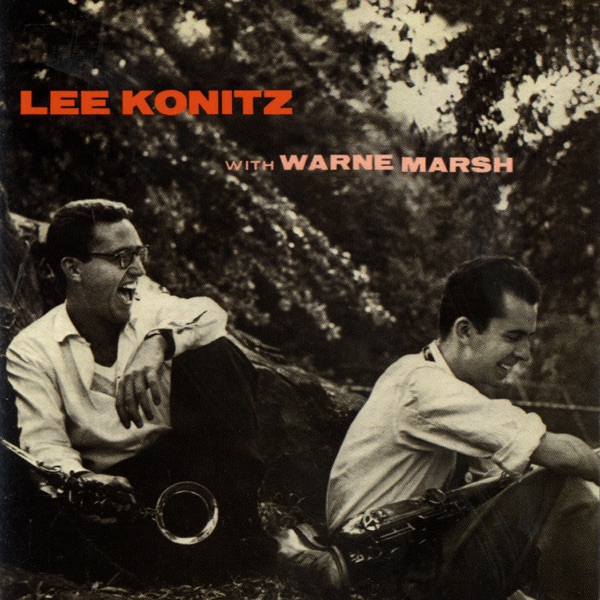
His recorded output is smaller and more scattered than it deserves to be. Lee Konitz (1955) — sorry, the right frame here is Warne Marsh (1956), his debut as a leader — announced a genuinely distinctive voice. The records he made with Lee Konitz are essential listening if you want to understand what the Tristano school actually sounded like at its best: two horns weaving together without any tonal markers to grab onto, just the logic of the lines themselves. It's demanding but not austere. There's real pleasure in following the thread.

Marsh stayed largely outside the mainstream jazz industry. He worked day jobs for stretches, taught, played in relative obscurity in Los Angeles for years. He wasn't bitter about it — by most accounts he was simply more interested in the music than in the career. He kept playing at a high level right through the 1970s and 1980s, and the later recordings show a player who had deepened rather than settled. Star Highs (1982) is probably the easiest entry point for new listeners — recorded with a rhythm section that gives the music room to breathe, it shows Marsh at his most accessible without any loss of rigor.

He died on the bandstand in 1987, mid-performance at Donte's in Los Angeles — which is, in some sense, the most Warne Marsh ending imaginable. He wasn't famous enough for that story to become the kind of mythology that follows other jazz deaths. But listen to the recordings and the music makes its own case quietly and completely. He is one of those players who rewards patience in ways that flashier musicians simply don't.


Facts
BornOctober 26, 1927, Los Angeles, California
DiedDecember 18, 1987, Los Angeles, California
InstrumentTenor Saxophone
ActiveLate 1940s – 1987
Known forTristano school improvisation, long melodic lines, chamber-like duo recordings with Lee Konitz
Connections
Lennie TristanoTeacher and central influence, New York
→
Lee KonitzLongtime musical partner and fellow Tristano disciple, New York
→
Billy BauerCollaborator within the Tristano circle, New York
→
Read more

Discography

31 records
♫
Live In Hollywood
1952
Art Pepper With Warne Marsh
1956
Music for Prancing
Music for Prancing
1957
Jazz of Two Cities
Jazz of Two Cities
1957
Warne Marsh
Warne Marsh
1958
Ne Plus Ultra
Ne Plus Ultra
1970
Live At The Montmartre Club - Jazz Exchange Vol. 2
1975
Lee Konitz Meets Warne Marsh Again
1976
London Concert
London Concert
1977
♫
Tenor Gladness
1977
♫
How Deep, How High
1977
♫
Warne Out
1977
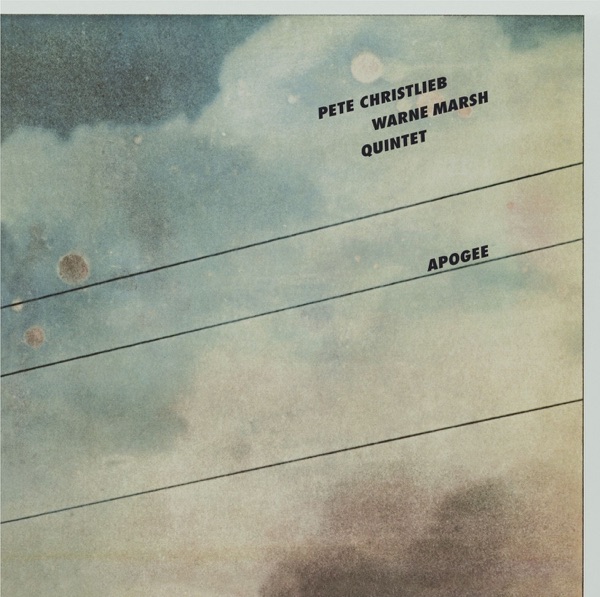
Apogee
Apogee
1978
Crosscurrents
Crosscurrents
1978
Big Two
Big Two
1980
♫
Warne Marsh - Sal Mosca Quartet: At the Vanguard, Volume 1
1981
I Remember You
I Remember You
1981
♫
Warne Marsh - Sal Mosca Quartet: At the Vanguard, Volume 2
1981
Warne Marsh Meets Gary Foster
1983
A Ballad Album
A Ballad Album
1983
The Mitchell-Marsh Big Two - Hot House
1985
♫
Blues for a Reason
1985
Ballad for You
Ballad for You
1985
♫
Two Days In The Life Of ...
1987
♫
Newly Warne
1989
Big Two, Vol. 2
Big Two, Vol. 2
1998
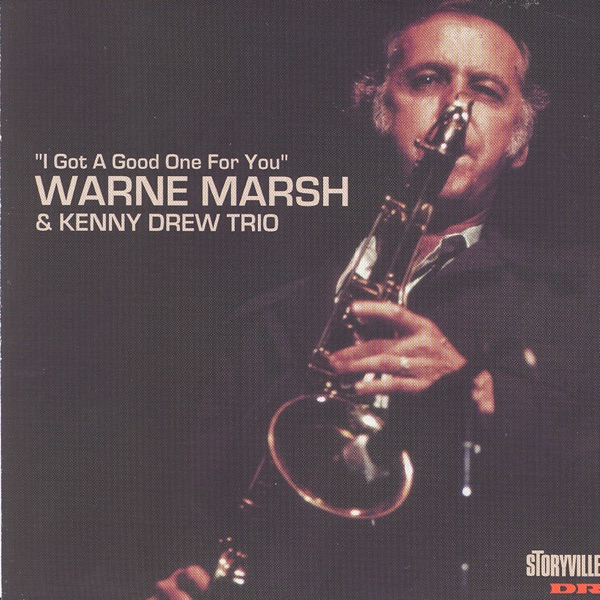
"I Got A Good One For You"
1999
Release Record. Send Tape.
1999
More Jazz From the East Village
2001
Marshlands
Marshlands
2003
All Music
All Music
2008

Collaborations

Live on Youtube

Explore Further

Selected connections
Album, 1982
Star Highs
Marsh's most listener-friendly album as a leader — relaxed, unhurried, and a good place to start before moving to the more demanding earlier work.
Explore →
Pianist, USA
Lennie Tristano
You can't fully understand Marsh without spending time with Tristano himself — the piano records reveal where all those ideas about line and rhythm actually came from.
Explore →
Alto Saxophonist, USA
Lee Konitz
Marsh's closest musical companion — their duo recordings are the purest expression of what the Tristano approach could achieve. Start there if you want context.
Explore →

Who's playing
Listen next
Recording Info
Track listing
Musicians
Further Reading
Read more

Where next?

More by this artist

Albums with the same musicians

From the same era

Similar artists

inside the sleeve
Growing
Jazz, explained without pretension.
Read · Follow the connections · Press play
Right now: 7,100+ albums · 440+ artists
Start here
New to jazz? These artists are good places to start.
Loading…
Explore
Nine records worth getting lost in.
Born today
Album of the day
A landmark record, every day.
Read
  • Loading…
Article archive →
Recently added
Purpose
Inside the Sleeve is your companion on a journey through jazz — not a textbook, but something closer to a knowledgeable friend sitting next to you while you listen. Read about an artist, press play, follow a connection, discover an album you didn't know you needed.
Suggestions
Read

Articles

Essays, guides, and lists about jazz and the records that matter.

Loading…

Genre

Key Artists
Further Reading

Essential Albums

Related Genres

In This Genre

About

Inside the Sleeve

Work in progress

Inside the Sleeve grows continuously — new artists and albums are added, essays refined, as visitors explore and our editors follow up on what they find. Content, features, and design are still evolving; use the Report error button on any page to flag something that seems off.

Content

Every artist, album, and release date on Inside the Sleeve is real — verified against trusted sources including MusicBrainz and Wikipedia. We don't invent discographies or fabricate records. AI compiles that verified information into readable prose — essays on artists, albums, and the music itself. We can't manually review every essay before publishing, but every reported error is checked by a human editor.

Inside the Sleeve is not a review site. We're not here to rate or rank — we're here to guide you in. Where an album stands out, we'll say so. Where an artist changed everything, you'll know why. But we won't tear anything down. Jazz history is complex and sources sometimes disagree — if you spot something that seems off, please report it.

Streaming

Inside the Sleeve links to Spotify and Apple Music so you can listen while you read. These are not affiliate links. For Spotify, links open a search on open.spotify.com — we do not have direct links to specific recordings. For Apple Music, direct links are used where available, otherwise a search is opened.

Your choice of streaming service is stored locally in your browser only. It is never sent to our servers.

We're working on deeper Spotify integration, including direct links to specific recordings.

Privacy

Inside the Sleeve does not collect personal data and does not use cookies. We count page visits anonymously using a self-hosted analytics tool — no personal identifiers are stored, and the data never leaves our own server. The only preference stored on your device is your streaming service choice, saved locally in your browser and never transmitted.

When you submit a suggestion or error report, the text you write is stored in our database. No name or email is required or collected unless you choose to provide one.

Third-party services

Spotify and Apple Music are independent services with their own terms of use and privacy policies. Inside the Sleeve is not affiliated with or endorsed by either company.

Support

Inside the Sleeve is free and ad-free. If you enjoy it, a coffee helps cover server costs and keeps the project going.

Amazon

Some book recommendations on Inside the Sleeve link to Amazon. Buying through these links costs you nothing extra — but Amazon pays us a small commission, which goes directly towards keeping the site running. It's a simple way to support the project if you were going to buy the book anyway.

As an Amazon Associate, Inside the Sleeve earns from qualifying purchases.

Questions or feedback? Use the suggestion box on the front page.

Inside the Sleeve — A guide for those who want to go beyond the obvious About & Privacy