Where do you listen?
Choose your streaming service
inside the sleeve
Loading…
inside the sleeveITS
⌕
Read About
Bass - USA - Bebop / Hard Bop

Ray
Brown

1926 - 2002, USA

Ray Brown was the bass player other bass players wanted to be when they grew up. He had a sound so big and warm it felt like it was coming up through the floor, and a sense of swing so dependable that bandleaders would organize whole rhythm sections around him. For five decades he was the first call, the gold standard, the guy you put on the record when you needed the bottom end to be absolutely right.

BebopHard BopCool JazzPost-Bop
Ray Brown

The Bottom That Never Moved

Ray Brown came up in Pittsburgh and got to New York in the mid-1940s just as bebop was breaking open. He was barely out of his teens when he started playing with Dizzy Gillespie, and within a couple of years he was one of the most recorded bassists in jazz. What's remarkable isn't just how fast he arrived — it's how fully formed he already sounded. There was no early awkward period on his records. He just showed up, ready.

For nearly two decades he was part of the Oscar Peterson Trio, and that's probably where most people first really heard what he could do. The trio format is unforgiving — every instrument is exposed — and Brown thrived on it. His lines weren't ornamental. They were structural. He didn't decorate what the piano was doing; he held the whole thing together from underneath while still swinging hard enough to push the music forward. Listen to Night Train (1963) and you'll hear exactly what I mean. The pocket he creates is enormous.

He also spent years as musical director for Ella Fitzgerald during her time with Norman Granz and Verve, which put him at the center of some of the most polished jazz recordings of the 1950s and 60s. He had the ears for it — he could read a room, read a soloist, read a singer, and give each one exactly what they needed. That kind of musical intelligence doesn't show up in liner notes the way a blistering solo does, but anyone paying attention can hear it.

In his later decades Brown led his own trios and small groups, and those records are worth seeking out if you've only heard him in a sideman role. He plays with real authority as a leader — choosing tempos deliberately, letting the music breathe, trusting his bandmates. Super Bass (1989) is a good starting point, a showcase that doesn't feel like a showcase. He sounds like a man who has nothing left to prove and is simply enjoying himself, which makes it genuinely enjoyable to listen to.

He died in 2002, on the road, which somehow feels right. He was still touring, still playing, still swinging. What he left behind isn't a puzzle or a controversy — it's just a body of work that sounds great. Put on almost anything he played on and the bass sounds the way you want the bass to sound: present, warm, in time, and swinging without effort. That's harder than it looks, and he made it look easy for fifty years.

Facts
BornOctober 13, 1926, Pittsburgh, Pennsylvania
DiedJuly 2, 2002, Indianapolis, Indiana
InstrumentDouble bass
Active1945 – 2002
Known forBig warm tone, impeccable swing, decades as jazz's most in-demand bassist
Connections
Oscar PetersonTrio partner, 1951–1966
→
Dizzy GillespieEarly collaborator, New York
→
Ella FitzgeraldMusical director / accompanist, Los Angeles
→
Read more
GuideRay Brown at 100: where to start with jazz's most recorded bassist

Discography

28 records
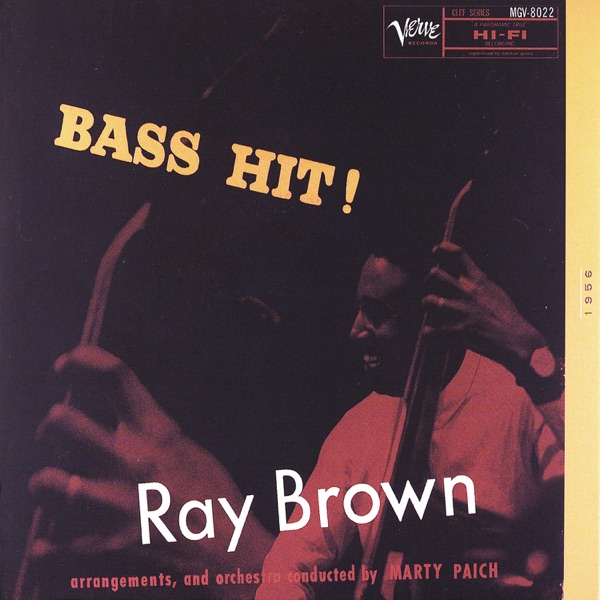
Bass Hit!
Bass Hit!
1957
Barney Kessel Vol. 5
1959
Cannonball Adderley and the Poll-Winners
1960
With The All-Star Big Band
1962
4 to Go
4 to Go
1963
Ray Brown / Milt Jackson
1965
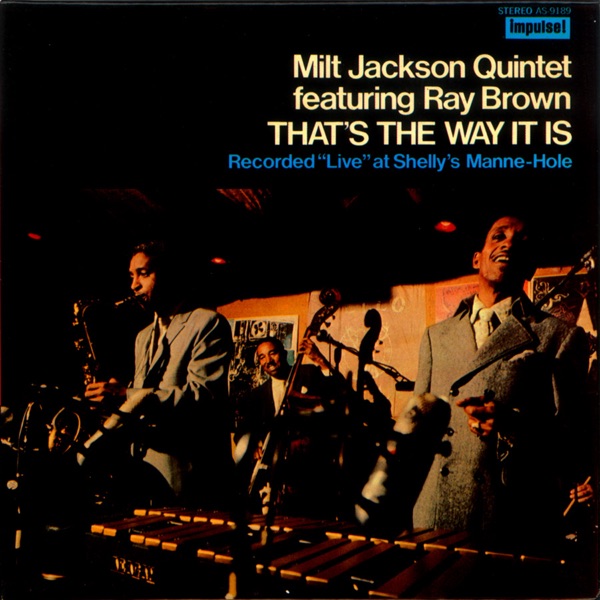
That's the Way It Is
1969
Bach Ground Blues & Green
1970
Soft Shoe
Soft Shoe
1974
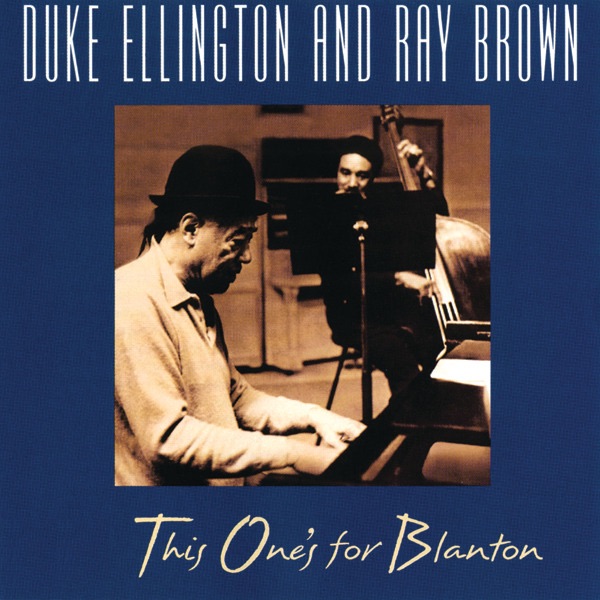
This One's for Blanton!
1975
Brown's Bag
Brown's Bag
1976
The Three
The Three
1976
As Good as It Gets
As Good as It Gets
1978
Live At Concord '77
Live At Concord '77
1978
♫
Intensive Care
1978
♫
Jazz Maturity... Where It's Coming From
1978
♫
Paul Smith With Ray Brown And Louis Bellson
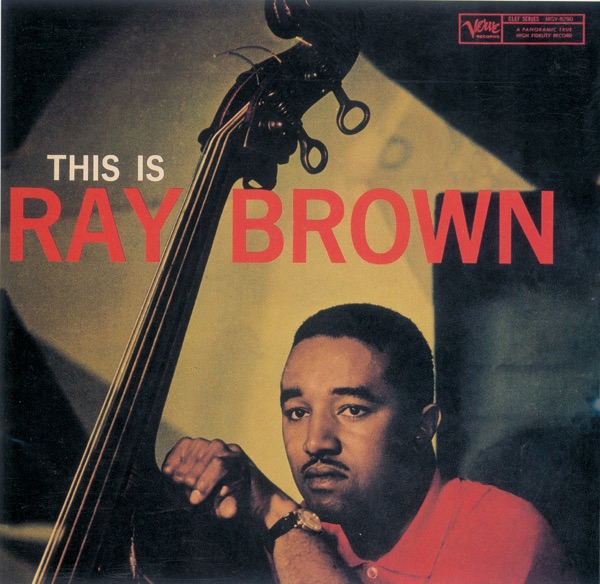
1979
This Is Ray Brown
This Is Ray Brown
1981
On Stage
On Stage
1981
♫
Shades of Dring
1981
♫
I Giganti Del Jazz Vol. 53
1981
One O'Clock Jump 1953
1983
A Ray Brown 3
A Ray Brown 3
1983
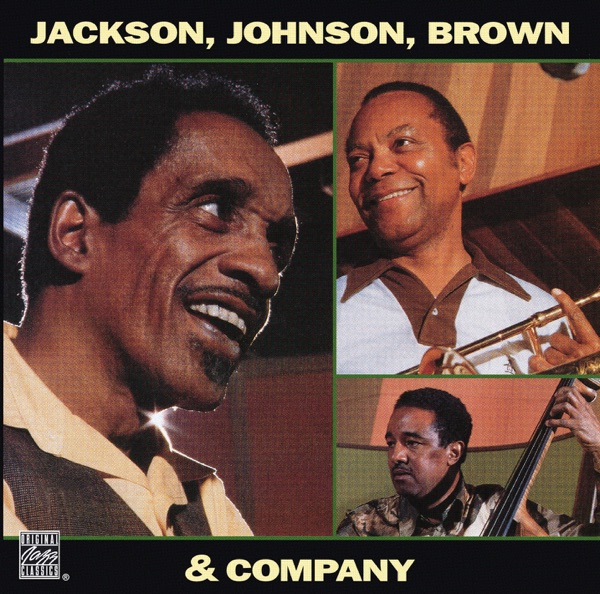
Jackson, Johnson, Brown & Company
1983
Child's Play
Child's Play
1987
♫
Triple Treat, Volume 3
1988
♫
Triple Treat, Volume 2
1988
The 20th Concord Festival All Stars
1989

Collaborations

Live on Youtube

Explore Further

Selected connections
Pianist, Canada
Oscar Peterson
The piano voice Brown locked in with for nearly two decades — hearing them together is the clearest window into what Brown brought to a rhythm section.
Explore →
Album, 1953
The Trio (Oscar Peterson Trio)
One of the definitive trio recordings of the era, and Brown is essential to why it works as well as it does.
Explore →
Bassist, USA
Paul Chambers
Brown's rough contemporary on the hard bop side — different in feel and context, but another master of making the bass indispensable.
Explore →

Who's playing
Listen next
Recording Info
Track listing
Musicians
Further Reading
Read more

Where next?

More by this artist

Albums with the same musicians

From the same era

Similar artists

inside the sleeve
Growing
Jazz, explained without pretension.
Read · Follow the connections · Press play
Right now: 7,100+ albums · 440+ artists
Start here
New to jazz? These artists are good places to start.
Loading…
Explore
Nine records worth getting lost in.
Born today
Album of the day
A landmark record, every day.
Read
  • Loading…
Article archive →
Recently added
Purpose
Inside the Sleeve is your companion on a journey through jazz — not a textbook, but something closer to a knowledgeable friend sitting next to you while you listen. Read about an artist, press play, follow a connection, discover an album you didn't know you needed.
Suggestions
Read

Articles

Essays, guides, and lists about jazz and the records that matter.

Loading…

Genre

Key Artists
Further Reading

Essential Albums

Related Genres

In This Genre

About

Inside the Sleeve

Work in progress

Inside the Sleeve grows continuously — new artists and albums are added, essays refined, as visitors explore and our editors follow up on what they find. Content, features, and design are still evolving; use the Report error button on any page to flag something that seems off.

Content

Every artist, album, and release date on Inside the Sleeve is real — verified against trusted sources including MusicBrainz and Wikipedia. We don't invent discographies or fabricate records. AI compiles that verified information into readable prose — essays on artists, albums, and the music itself. We can't manually review every essay before publishing, but every reported error is checked by a human editor.

Inside the Sleeve is not a review site. We're not here to rate or rank — we're here to guide you in. Where an album stands out, we'll say so. Where an artist changed everything, you'll know why. But we won't tear anything down. Jazz history is complex and sources sometimes disagree — if you spot something that seems off, please report it.

Streaming

Inside the Sleeve links to Spotify and Apple Music so you can listen while you read. These are not affiliate links. For Spotify, links open a search on open.spotify.com — we do not have direct links to specific recordings. For Apple Music, direct links are used where available, otherwise a search is opened.

Your choice of streaming service is stored locally in your browser only. It is never sent to our servers.

We're working on deeper Spotify integration, including direct links to specific recordings.

Privacy

Inside the Sleeve does not collect personal data and does not use cookies. We count page visits anonymously using a self-hosted analytics tool — no personal identifiers are stored, and the data never leaves our own server. The only preference stored on your device is your streaming service choice, saved locally in your browser and never transmitted.

When you submit a suggestion or error report, the text you write is stored in our database. No name or email is required or collected unless you choose to provide one.

Third-party services

Spotify and Apple Music are independent services with their own terms of use and privacy policies. Inside the Sleeve is not affiliated with or endorsed by either company.

Support

Inside the Sleeve is free and ad-free. If you enjoy it, a coffee helps cover server costs and keeps the project going.

Amazon

Some book recommendations on Inside the Sleeve link to Amazon. Buying through these links costs you nothing extra — but Amazon pays us a small commission, which goes directly towards keeping the site running. It's a simple way to support the project if you were going to buy the book anyway.

As an Amazon Associate, Inside the Sleeve earns from qualifying purchases.

Questions or feedback? Use the suggestion box on the front page.

Inside the Sleeve — A guide for those who want to go beyond the obvious About & Privacy