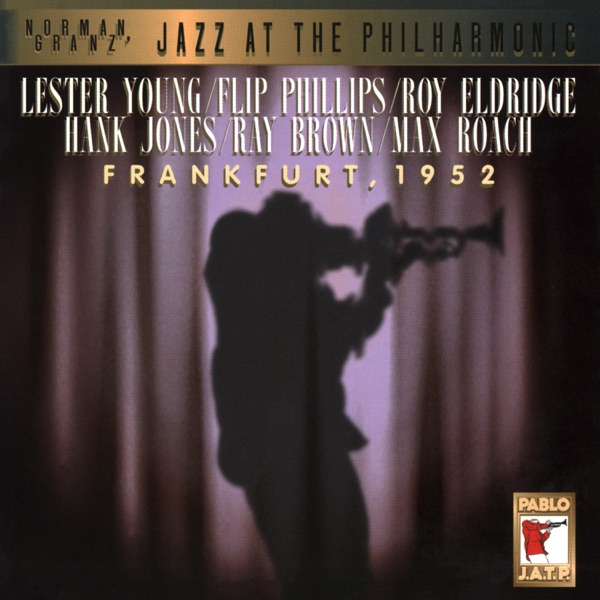
The Man Behind the Curtain
Granz came up in Los Angeles in the 1940s, and from the start he was angry about the way jazz clubs treated African American musicians and audiences — separate entrances, segregated seating, the whole ugly apparatus. He started throwing jam sessions at the Philharmonic Auditorium in Los Angeles partly just to blow that up. If it was a concert hall, the rules changed. Everyone sat where they wanted. The musicians got paid well. That was the idea, and it stuck.
Jazz at the Philharmonic — usually shortened to JATP — became his signature vehicle: touring concerts that put Coleman Hawkins, Lester Young, Dizzy Gillespie, and Charlie Parker on the same stage and let them stretch out and battle it out in front of real audiences. Critics sometimes sneered at the honking and crowd-pleasing. Granz didn't care. He cared that the tickets were desegregated and the musicians went home with money in their pockets. Both things were true at once, and he saw no contradiction.
On the business side, he built Clef Records, then Norgran, then Verve — and Verve is the one that stuck. He ran it with an unusual amount of respect for his artists. Ella Fitzgerald got to record the Great American Songbook series on her own schedule, across multiple years, without being rushed or second-guessed. Oscar Peterson made hundreds of recordings for Granz, often in small-group settings that suited him perfectly. The catalog Granz assembled at Verve is staggering — not because he chased trends, but because he just kept booking good musicians in good studios and letting them play.
He sold Verve in 1961 and eventually founded Pablo Records in 1973, which became a home for mainstream jazz at a moment when fusion was eating up all the oxygen in the room. Pablo was where you went to hear Count Basie, Joe Pass, Dizzy Gillespie, and Ella Fitzgerald playing the music they actually wanted to play, without being prodded into anything modern or commercial. It was unfashionable and completely confident about being unfashionable.
Granz relocated to Geneva later in life and kept working into his eighties. The thing people miss when they focus on his business acumen is how personal his taste was — he wasn't a suit making calculated bets, he was a genuine fan who happened to be very good at making the economics work. He fought for his artists legally, contractually, and sometimes physically when promoters in the South tried to reimpose segregated seating at his shows. That combination — serious music, serious money, serious ethics — is rarer than it should be, and Granz pulled it off for decades.