Genre
Swing
1930s–1940s — United States — Propulsive, Danceable, Big-Band
Swing is jazz at its most communal — music built to move bodies, lift spirits, and fill ballrooms. Anchored by big bands, call-and-response arrangements, and a rhythmic pulse that sits just ahead of where you expect it, swing turned jazz into America's popular music for over a decade.
Swing grew out of earlier jazz and blues in the late 1920s and early 1930s, as bandleaders started expanding their ensembles and arrangers figured out how to make ten or fifteen musicians sound like a single, breathing organism. The key was the rhythm section — particularly the way the bass and drums locked together — and the way brass and reed sections could trade phrases back and forth like a conversation at full volume. By the mid-1930s, it had exploded into something no one quite expected: a genuine mass movement. White teenagers screamed for Benny Goodman at the Palomar Ballroom in Los Angeles in 1935 in scenes that looked more like a pop concert than a jazz show. That moment is often cited as the start of the Swing Era proper.
The big band format put arrangers at the center of things in a way earlier jazz hadn't. Figures like Fletcher Henderson had been working out how to write for large ensembles since the late 1920s, and his arrangements were central to Goodman's success — a fact that doesn't always get enough credit. On the African American side of the industry, Duke Ellington and Count Basie were running bands that operated on completely different philosophies. Ellington wrote for the specific voices of his musicians, treating the orchestra almost like a composer's private palette. Basie's band, by contrast, was built on riffing and space — a Kansas City looseness that made even scripted arrangements feel improvised.
Soloing mattered just as much as the ensemble playing. Swing gave the world Coleman Hawkins establishing the tenor saxophone as a serious instrument, Lester Young reimagining it as something cooler and more conversational, Roy Eldridge pushing the trumpet toward the upper register with a ferocity that practically invented bebop in advance. Vocalists became central too — Billie Holiday, Ella Fitzgerald, and Frank Sinatra all came up through the big band world, learning to phrase against rhythm sections before they ever worked as solo artists. The music and the singers developed each other.
Swing's commercial peak didn't last — bebop arrived in the early 1940s and deliberately broke the rules that swing had established, shrinking the ensembles and making the music harder to dance to. But swing never really disappeared. It shaped everything that came after it: the vocabulary beboppers rebelled against was swing's vocabulary; the rhythm changes that bop musicians used as a harmonic proving ground came from Gershwin songs that swing bands had been playing for years. And the music itself holds up. A great Basie band recording still sounds like one of the most satisfying things a group of musicians can do together — organized, joyful, and swinging hard enough to make sitting still feel like a minor act of resistance.
Swing took jazz out of the clubs and into the culture — for a decade, it was simply what American popular music sounded like.
Essential Albums
♫
The Complete Decca Recordings
Count Basie · 1937
The Kansas City approach in full effect — riffing, space, and a rhythm section that defined what swinging actually means.
♫
Ellington at Newport
Duke Ellington · 1956
Ellington's band reminding a new generation what a great swing orchestra could do, with Paul Gonsalves's famous extended tenor solo as the centerpiece.
♫
The Complete Small Group Recordings
Benny Goodman · 1935
Goodman's trios and quartets strip swing down to its essentials and show how much the music could breathe with room to move.
♫
Lady Day: The Complete Billie Holiday on Columbia
Billie Holiday · 1933
Holiday learning — and then mastering — how to bend a melody against a swinging rhythm section, song after song.
In This Genre
92 artists in your library♫
Albert Ammons
Piano - USA - Boogie-Woogie
Albert Ammons hammered out boogie-woogie piano in Chicago rent parties and taverns until the rest of the country caught up with what he already knew: that a rolling left-hand bassline could carry a whole room. He never left jazz history books as a headline name, but his fingerprints are all over how American piano music learned to swing low and hit hard.
♫
Lil Hardin Armstrong
Piano - United States - Early Jazz
Everyone knows the name Armstrong because of Louis. Fewer people know that the piano chair in those legendary Hot Five and Hot Seven records belonged to his wife, a classically trained musician from Memphis who wrote half the tunes, ran the rehearsals, and basically built the band around him. Lil Hardin Armstrong wasn't a footnote in someone else's story — she was running the show.
♫
Louis Armstrong
Trumpet - USA - New Orleans Jazz, Swing, Popular
Louis Armstrong didn't just play trumpet — he rewired what it meant to be a soloist in jazz, pulling melody out of collective improvisation and making individual voice the center of the music. He came up through the roughest neighborhoods of New Orleans, learned from the best players around him, and by his mid-twenties had recorded some of the most startlingly original music anyone had ever heard. What followed was five decades of constant work, worldwide fame, and a personality so large it sometimes overshadowed just how technically and musically gifted he actually was.
♫
Mario Bauza
Trumpet - Cuba - Latin Jazz
Mario Bauza spent half his career inside American swing bands before he decided the missing ingredient in jazz was Cuba itself. He didn't just borrow a clave rhythm here and there — he built a whole band around the idea that African American swing and Afro-Cuban rhythm were cousins who'd simply never been properly introduced.
♫
Sidney Bechet
Soprano Saxophone & Clarinet — USA/France — Early Jazz
Sidney Bechet played with a ferocity and individuality that made him stand out even in an era full of giants. He was among the first jazz musicians to make the soprano saxophone his primary voice, bending it into something that sounded almost vocal — raw, wide-vibrato, impossible to mistake for anyone else. New Orleans born, Paris adopted, he spent his life being simultaneously ahead of his time and deeply rooted in the oldest strains of the music.
♫
Rolf Billberg
Alto Saxophone - Sweden - Cool Jazz
Rolf Billberg was the sound of Swedish jazz at its quietest and most inward-looking, an alto player who could make a melody feel like a secret he was telling just you. He never got the international attention some of his countrymen did, but anyone who's heard his tone understands why Swedish musicians still bring his name up with a kind of hush.
♫
Ray Bryant
Piano - United States - Hard Bop / Soul Jazz
Ray Bryant played piano like he grew up in church and never left the block — because he did both. He came out of Philadelphia with a sound built on blues and gospel changes, and he never bothered to hide it under bebop's more polite vocabulary.
♫
Jaki Byard
Piano - United States - Post-Bop
Jaki Byard could play like Jelly Roll Morton and then, four bars later, sound like he'd never heard a melody before in his life. He was the pianist other pianists worried about following on the bandstand, a man who treated jazz history not as a timeline but as a toolbox he carried everywhere. Charles Mingus loved him for exactly that reason, and so did generations of students at the New England Conservatory who had no idea what they were in for.
♫
Charlie Christian
Guitar - United States - Swing / Early Bebop
Charlie Christian picked up an electric guitar and made it a lead voice in jazz almost overnight. He was only on the scene for a couple of years before tuberculosis took him at 25, but in that short stretch he changed how the instrument was heard and played.
♫
Evan Christopher
Clarinet - United States - Early Jazz
Evan Christopher picked up the clarinet in California and ended up rebuilding a New Orleans tradition that most people assumed had quietly died out. He plays the old Creole clarinet style the way it was meant to be played — vocal, bluesy, a little dangerous — and he's spent his career proving it still has somewhere to go.
♫
Arnett Cobb
Tenor Saxophone - United States - Swing
Arnett Cobb played tenor sax like he was trying to knock the back wall out of the club. He came up in Texas, cut his teeth in territory bands, and ended up filling one of the biggest shoes in jazz history when he replaced Illinois Jacquet in Lionel Hampton's band. He spent the rest of his career proving that the big, honking, blues-soaked Texas tenor sound was a tradition worth keeping alive, even after a car accident and years of health trouble should have ended it.
♫
Al Cohn
Tenor Saxophone - USA - Cool Jazz / Bebop
Al Cohn was one of the great tenors of his generation — warm, swinging, and built for conversation. He spent decades trading ideas with Zoot Sims in one of jazz's most naturally matched partnerships, but his solo work deserves just as much attention. If you've been sleeping on him, that's on you.
♫
Nat King Cole
Piano & Vocals · USA · Swing / Jazz Pop
Before the world knew Nat King Cole as a singer, jazz musicians knew him as a pianist — one of the cleanest, most harmonically advanced players of the swing era. His King Cole Trio recordings of the 1940s are quietly extraordinary: small-group jazz of real elegance. The voice eventually overshadowed the piano, but Cole never forgot where he came from, and his phrasing as a singer was shaped entirely by his understanding of jazz harmony.
♫
Bob Cooper
Tenor Saxophone - United States - Cool Jazz
Bob Cooper spent his career as one of the most reliable tenor players on the West Coast, a guy who could swing hard in a big band and then turn around and play oboe on a cool jazz date without blinking. He never chased the spotlight the way some of his Lighthouse All-Stars bandmates did, but ask anyone who worked with him and they'll tell you he was the glue.
♫
Israel Crosby
Bass - USA - Swing / Early Jazz
Israel Crosby was playing bass with a sophistication that most musicians wouldn't catch up to for another decade, and he was doing it as a teenager in Chicago. He spent much of his career as the quiet engine behind other people's famous records, the kind of player you only notice when he's gone. Ask anyone who worked with him and the answer is always the same: the band just felt better.
♫
Stanley Crouch
Drums & Pen - USA - Jazz Criticism
Stanley Crouch played drums behind some of the wildest free jazz of the 1960s before deciding the music needed saving from itself. He spent the next five decades arguing, loudly and often beautifully, that swing and the blues were the backbone of American art — and he made more enemies and friends doing it than almost anyone in jazz writing.
♫
Aaron Diehl
Piano - United States - Swing/Contemporary Jazz
Aaron Diehl plays piano like someone who actually read the whole history book instead of skimming the highlights. He can do stride, he can do Gershwin, he can do modern harmony, and he moves between them without ever sounding like he's showing off — which, honestly, is rarer than it sounds.
♫
Tommy Dorsey
Trombone - USA - Swing
Tommy Dorsey ran one of the most commercially successful big bands of the Swing Era, but he was also a genuinely extraordinary trombone player — smooth in a way that made other trombonists quietly furious. He had a gift for ballads that bordered on uncanny, and he understood showbiz well enough to build an empire around it without losing the musicianship that made him worth watching in the first place.
♫
Billy Eckstine
Vocalist - United States - Bebop / Vocal Jazz
Before he was known as the guy with the impossibly smooth baritone and the rolled-collar shirt named after him, Billy Eckstine ran the most important incubator bebop ever had — a big band that at various points included Dizzy Gillespie, Charlie Parker, and Sarah Vaughan. He never got the sales numbers his voice deserved, but without him half of modern jazz doesn't happen the way it did.
♫
Roy Eldridge
Trumpet - USA - Swing / Bebop
Roy Eldridge was the guy standing between Louis Armstrong and Dizzy Gillespie — not as a footnote, but as the engine that made that whole leap possible. He played trumpet with a recklessness that made other players nervous and audiences lean forward. Small in stature, ferocious in output, he spent his whole career swinging harder than the room expected.
♫
Duke Ellington
Piano · USA · Big Band / Swing / Jazz Orchestration
Duke Ellington didn't just lead a band — he wrote music specifically for the people in it, treating his orchestra like a living instrument that happened to be made of human beings. Over five decades, he produced an almost incomprehensible body of work: ballads, suites, film scores, sacred concerts, and some of the most sophisticated small-group recordings in the jazz canon. He remains one of the rare figures in American music whose ambition and output were genuinely matched.
♫
Herb Ellis
Guitar - USA - Swing / Bebop
Herb Ellis was the kind of guitarist who made everything look easy — swinging hard without breaking a sweat, slipping bebop lines into a blues framework like he'd been doing it his whole life. He came up through the big bands, found his voice in the intimate setting of the Oscar Peterson Trio, and spent the rest of his career proving that clean, soulful, straight-ahead guitar never goes out of style. If you love the guitar and you haven't spent time with Ellis, you've got a treat waiting.
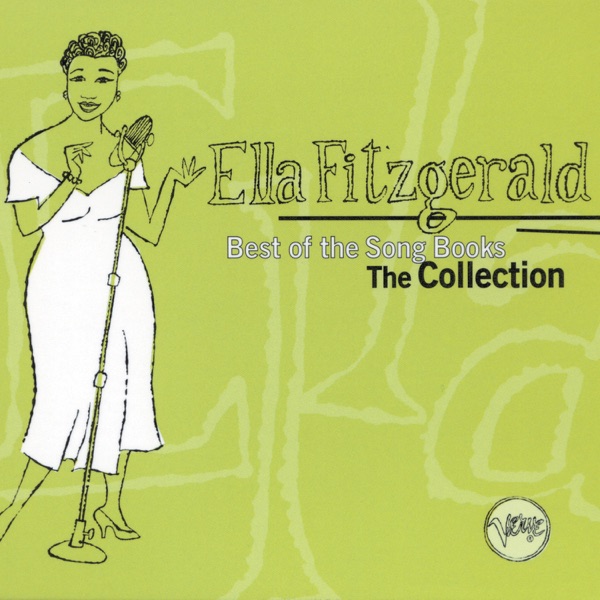
Ella Fitzgerald
Vocals - USA - Swing, Standards, Bebop
Ella Fitzgerald possessed a voice of such crystalline purity and technical mastery that she became the gold standard against which all jazz singers would be measured. Her impeccable intonation, lightning-fast scat improvisations, and interpretive depth transformed the American songbook into a deeply personal artistic statement. For nearly seven decades, she remained jazz's most beloved and influential vocalist, a living bridge between swing and the modern era.
♫
Slim Gaillard
Vocals, Guitar, Piano - USA - Swing
Slim Gaillard made up his own language, called it Vout, and somehow got half of jazz to speak it back to him. He was a novelty act, a genuine musician, and a walking argument that jazz could be funny without being small.
♫
Erroll Garner
Piano · USA · Swing / Mainstream Jazz
Erroll Garner was a self-taught pianist who never learned to read music and became one of the most popular jazz musicians of the twentieth century. His style was immediately recognisable: a strumming left hand that laid down a rhythmic guitar-like pattern while the right hand played melodic lines slightly behind the beat, giving everything a floating, swinging quality that audiences found irresistible. Concert by the Sea, recorded live in Carmel, California in 1955, became one of the best-selling jazz albums in history. He also composed "Misty," which became a standard. Garner was proof that jazz could be deeply personal and still reach a mass audience.
♫
Paul Gonsalves
Tenor Saxophone · USA · Swing / Hard Bop
Paul Gonsalves spent most of his career in the shadow of the man he worked for — Duke Ellington — and that's both the story of his life and a mild injustice. He had a tenor sound that was warm and slightly rough around the edges, a player who could swing hard or play a ballad with real tenderness, and who became famous almost overnight for a single extended solo at a 1956 Newport Jazz Festival performance that most people still talk about decades later. The funny thing is, that moment captures maybe half of what he actually was.
♫
Benny Goodman
Clarinet - USA - Swing
He was the guy who made swing music explode into mainstream American life, and for a few years in the late 1930s there was nobody bigger. But peel back the pop phenomenon and you find a genuinely ferocious clarinet player who could hold his own with anyone, in any room. He was also, quietly, one of the first bandleaders to insist on racially integrated groups at a time when that was genuinely dangerous for a career.
♫
Wycliffe Gordon
Trombone · USA · Traditional Jazz / Hard Bop
Wycliffe Gordon plays trombone like he's having the best conversation of his life — big, loose, full of laughter and surprise. He came up through the Wynton Marsalis school and absorbed everything the tradition had to offer, but what he does with it is unmistakably his own. If you've ever thought the trombone was a supporting instrument, he'll change your mind fast.
♫
Norman Granz
Producer & Impresario - USA - Swing / Bebop
Norman Granz never played an instrument, but he shaped the sound of jazz more directly than most musicians ever did. He turned concert halls into battlegrounds for civil rights, built record labels that gave artists total creative control, and managed to make bebop and swing pay — on his terms. If you love Ella Fitzgerald, Oscar Peterson, or Charlie Parker on record, you owe a debt to a guy most casual listeners have never heard of.
♫
Stéphane Grappelli
Violin — France — Swing
Stéphane Grappelli spent decades proving that the violin belonged in jazz as much as any horn, and he did it with a lightness of touch that made the whole thing look effortless. His partnership with guitarist Django Reinhardt in the Quintette du Hot Club de France during the 1930s produced some of the most joyful and distinctive music the jazz world has ever heard. Even after Django died and the world moved on to bebop, Grappelli kept swinging well into his eighties, as sharp and playful as ever.
♫
Freddie Green
Guitar - USA - Swing
Freddie Green played rhythm guitar in the Count Basie Orchestra for nearly fifty years, and in all that time you could almost never hear him on a recording. That invisibility was the point. He was the foundation that made everything else feel inevitable — the human metronome nobody talks about at parties but every musician in the room knew was holding the whole thing together.
♫
Lionel Hampton
Vibraphone · USA · Swing / Bebop
Lionel Hampton didn't just play the vibraphone — he basically invented the idea of it as a jazz instrument. Before Hampton, the vibes were a novelty; after him, they were a voice. He was also just relentlessly, almost aggressively joyful on stage, the kind of bandleader who made you feel like the party had been waiting specifically for you to arrive.
♫
Coleman Hawkins
Tenor Saxophone · USA · Swing / Bebop
Coleman Hawkins basically invented the tenor saxophone as a jazz instrument — before him, it was considered something of a novelty. He spent five decades staying relevant without ever losing himself, which is rarer than it sounds. By the time younger players thought they were leaving him behind, he'd already moved on to something they hadn't figured out yet.
♫
Fletcher Henderson
Piano, Arranger - United States - Swing
Fletcher Henderson is the guy whose name barely comes up when people talk about swing, even though he basically wrote the rulebook. His band at the Roseland Ballroom in the 1920s figured out how to make a big group of horns swing like a small combo, and a decade later Benny Goodman built his empire largely on Henderson's charts.
♫
Woody Herman
Clarinet / Vocals - USA - Big Band / Swing / Bop
Woody Herman led a big band for over five decades — not the same band, but a rolling series of them, each one rebuilt from scratch with whoever was young and hungry and willing to play hard. He had an instinct for talent that bordered on eerie, and he kept reinventing his sound long after most of his contemporaries had stopped trying.
♫
Earl Hines
Piano · USA · Stride / Swing / Bebop
Earl Hines essentially invented the modern jazz piano, finding a way to cut through the noise of a big band before amplification existed by treating the piano like a horn. He called it trumpet-style piano, and once you hear it, you'll understand immediately — single-note lines in the right hand, punchy and rhythmically unpredictable, like something Louis Armstrong might have played if he'd had ten fingers on keys. He was still doing it brilliantly at seventy, which tells you everything about how solid the idea was.
♫
Johnny Hodges
Alto Saxophone - USA - Swing
Johnny Hodges spent most of his career in the shadow of Duke Ellington's orchestra, which is a little like saying Sinatra spent most of his career in the shadow of a microphone. His alto saxophone sound was so immediately recognizable — warm, slightly lazy, impossibly sensual — that Ellington built entire compositions just to show it off. Nobody else on the instrument sounded quite like him, before or since.

Billie Holiday
Vocals - USA - Jazz Standards & Blues
Billie Holiday transformed the jazz vocal tradition through sheer force of emotional authenticity, bending melody and time to serve her interpretation rather than the song itself. Her voice—fractured, world-weary, and achingly human—became an instrument of profound vulnerability that influenced generations of singers. Despite a life shadowed by racism, poverty, and addiction, she created some of the twentieth century's most indelible art.
♫
Illinois Jacquet
Tenor Saxophone - USA - Swing
Illinois Jacquet was twenty years old when he played a solo that basically invented a sound. That one chorus on 'Flying Home' with Lionel Hampton's band didn't just make him famous overnight, it gave an entire generation of saxophonists a new way to scream, honk, and shout through their horns.
♫
Pete Johnson
Piano - United States - Early Jazz
Pete Johnson could make a piano sound like a freight train and a party at the same time. He spent years playing in Kansas City joints before the rest of the country caught up to what he and his friends had already perfected: boogie-woogie, played loud, fast, and built for dancing.
♫
Jo Jones
Drums - United States - Swing
Before Jo Jones, drummers kept time by hammering the bass drum on every beat. He moved all of that lightness up to the hi-hat and ride cymbal, and suddenly a big band could swing instead of just march. If you've ever heard a drummer float behind a soloist instead of stomping underneath them, you're hearing something Jones figured out first.
♫
Thad Jones
Trumpet, Flugelhorn - USA - Hard Bop, Post-Bop
Thad Jones was one of those musicians who could make you feel underdressed just by walking onstage — a trumpet player of formidable imagination and a composer-arranger who built some of the most sophisticated big band music of the 1960s and 70s without ever making it feel like homework. He spent years as a sideman in the Count Basie orchestra, quietly absorbing everything, before co-founding the Thad Jones/Mel Lewis Orchestra in New York, which became the kind of band that other musicians would go out of their way to catch on a Monday night. The fact that he spent his last years leading a European orchestra is one of those jazz footnotes that says a lot about where the music found its most devoted audiences.
♫
Quincy Jones
Arranger / Producer - USA - Hard Bop, Big Band, Soul Jazz
Quincy Jones spent decades being the most useful person in any room he walked into — as a teenage trumpet prodigy in Seattle, as an arranger rebuilding Count Basie's band on the fly, as the producer who helped Michael Jackson sell records in numbers nobody had seen before. Jazz was where he started, and it never really left him, even when everything else got much bigger and much louder.
♫
Jimmy Jones
Piano - USA - Swing / Bebop
Jimmy Jones was the kind of pianist that singers trusted with their careers — quietly brilliant, harmonically sophisticated, and almost pathologically reliable. He spent years as Sarah Vaughan's musical director and accompanist, a role that suited his temperament but occasionally obscured just how much he had going on as a player in his own right. If you know his name at all, it's probably because of whose name appeared above his on the marquee.
♫
Hank Jones
Piano - United States - Swing to Bebop
Hank Jones spent seven decades being the pianist everybody wanted on the session, and almost nobody outside the business knew his name. He was there for Charlie Parker's bebop revolution, there for Ella Fitzgerald's best years, there for Marilyn Monroe's birthday serenade to a president. Through all of it he played with the same unshowy, immaculate touch, like a man who had nothing left to prove and never needed to.
♫
Stan Kenton
Piano & Bandleader - USA - Big Band / Avant-Garde
Stan Kenton led one of the loudest, most argumentative orchestras in jazz history — a band that could shake walls and provoke equal amounts of devotion and eye-rolling from critics. He was never content to just swing; he wanted jazz to be taken seriously as concert music, and he pushed his orchestras into territory that made a lot of people genuinely uncomfortable. Whether that ambition always paid off is a debate jazz fans still haven't settled.
♫
Barney Kessel
Guitar - USA - Swing/Bebop
Barney Kessel could play absolutely anything you put in front of him, which is exactly why you've heard him a hundred times without knowing it. He built a reputation as one of the great small-group jazz guitarists of the '50s while also quietly becoming one of the busiest session players in Los Angeles, popping up behind pop singers, film scores, and everything in between.
♫
Gene Krupa
Drums - USA - Swing
Gene Krupa turned the drum kit into a spectacle at a time when drummers were supposed to stay in the background and keep their heads down. He played with a physicality that made audiences lean forward, and he did it fronting some of the most popular big bands of the swing era. Love him or find him a bit much, you have to admit: he made people care about drums.
♫
Rolf Kühn
Clarinet - Germany - Swing & Bebop
Rolf Kühn was the clarinet player who refused to let the instrument stay stuck in the swing era. He crossed the Atlantic to play with Benny Goodman's generation, came home to Germany, and then spent the next six decades proving the clarinet could keep up with bebop, free jazz, and fusion without losing its warmth.
♫
Biréli Lagrène
Guitar - France - Jazz Fusion / Post-Bop
Biréli Lagrène arrived on the jazz scene as a teenager playing Django Reinhardt note-for-note with an eerie accuracy that made grown musicians uncomfortable. He then spent the next four decades proving that was just the starting point — pivoting through fusion, bebop, and acoustic swing with a fluency that most guitarists would kill for. He is one of those rare players who can make almost any style sound like it belongs to him.
♫
Meade Lewis
Piano - United States - Boogie-Woogie
Meade Lux Lewis cut a record in 1927 that sat forgotten for almost a decade, then came roaring back to make him famous as the man who could turn a piano into a freight train. He never strayed far from boogie-woogie's rolling bass figures, but within that narrow lane he found more variation and drama than most pianists find in a whole career.
♫
Frank Machito (Grillo)
Vocals & Bandleader - Cuba/USA - Latin Jazz
Machito didn't play an instrument in the traditional sense — he sang, shook a pair of maracas, and led one of the great bands in American music history. He and his brother-in-law Mario Bauzá took Cuban dance rhythms and jazz horns and welded them together so tightly that nobody could tell where one ended and the other began.
♫
Shelly Manne
Drums - USA - Cool Jazz / Hard Bop
Shelly Manne was the drummer who made West Coast jazz sound like something more than a soundtrack for palm trees. He could swing as hard as anyone in New York, but he also knew how to listen — which, for a drummer, is rarer than it sounds.
♫
Billy May
Arranger / Trumpeter - USA - Swing / Big Band
Billy May was the arranger who made big band swing sound like it was grinning at you — brassy, loose, and just a little cartoonish in the best possible way. He wrote charts for Glenn Miller, Charlie Barnet, and eventually Frank Sinatra, and his signature slurring saxophone sound became one of the most recognizable textures in mid-century American pop. He never chased cool, and that shameless enthusiasm for entertainment is exactly what makes his work hold up.
♫
Tom McDermott
Piano - USA - New Orleans / Latin Jazz
Tom McDermott is a St. Louis-born, New Orleans-adopted pianist who has spent decades building one of the most quietly distinctive voices in American piano music. He moves between New Orleans second-line grooves, Cuban habanera rhythms, Brazilian choro, and early jazz with the ease of someone who genuinely loves all of it equally. He is not a crossover artist hunting novelty — he is a scholar who plays like he is having a very good time.
♫
Carmen McRae
Vocals - USA - Bebop / Swing
Carmen McRae was one of the great jazz singers, and she'd probably be the first to tell you she didn't get the credit she deserved. She sang like she was thinking out loud — every lyric dissected, every word placed exactly where she wanted it. What she did with a song was less about beauty and more about truth.
♫
Anita O'Day
Vocals - USA - Swing / Bop
Anita O'Day came up hard — carnivals, walkathons, dime-a-dance halls — and it showed in her voice in the best possible way. She sang with a cool, almost detached authority that made other singers sound like they were trying too hard. When bebop arrived, she didn't resist it; she figured it out and made it hers.
♫
Chico O'Farrill
Composer/Arranger - Cuba - Latin Jazz
Chico O'Farrill wrote charts that made big bands sound like they'd grown up speaking two languages at once. He came out of Havana with a classical education and a trumpet, but it was his pen — not his horn — that got him into rooms with Dizzy Gillespie, Machito, and Benny Goodman.
♫
King Oliver
Cornet - USA - Early Jazz
Before Louis Armstrong became Louis Armstrong, he was sitting in the second cornet chair learning from this man. King Oliver ran the tightest, hottest band in Chicago in the early 1920s, and his Creole Jazz Band recordings capture a sound that was still being invented in real time. He was the king before anyone else had a crown to take.
♫
Lincoln Center Jazz Orchestra
Big Band - USA - Swing
This is the house band at Jazz at Lincoln Center, built by Wynton Marsalis to play the music of Duke Ellington, Thelonious Monk, and Charles Mingus the way a symphony plays Beethoven — with the parts written out and the respect baked in. It is a working big band with real soloists, not a museum display case, even if some critics think otherwise.
♫
Walter Page
Bass - USA - Swing
Walter Page didn't solo much and he didn't need to. He built the floor other people danced on, first with his own territory band and then inside the greatest rhythm section swing ever produced. If you've ever felt a Count Basie record just lock into a groove and stay there, that's Page doing his job.

Oscar Peterson
Piano - Canada - Swing, Bebop, Hard Bop
Oscar Peterson was a virtuoso pianist whose technical brilliance and harmonic sophistication made him one of jazz's most influential instrumentalists. Discovered by Norman Granz and championed by Louis Armstrong, Peterson became the gold standard for jazz piano, leading influential trios and recording prolifically across seven decades. His rippling touch and inexhaustible musical intelligence earned him a place alongside Art Tatum as a titan of the instrument.
♫
Tito Puente
Timbales & Percussion - USA - Latin Jazz
If you were anywhere near a Latin dance hall in New York between 1950 and 2000, you were probably hearing Tito Puente before you even walked through the door. He played timbales like he was conducting an argument — loud, precise, and always winning. Over a career that stretched across mambo, cha-cha, boogaloo, salsa, and jazz, he became the face of Latin music in America without ever abandoning the neighborhood he came from.
♫
Ike Quebec
Tenor Saxophone - United States - Soul Jazz
Ike Quebec had one of the fattest, most patient tenor sounds to come out of the swing era, and he spent his last years proving that sound still had a place in the Blue Note of the early sixties. He was also, quietly, one of the most important ears the label ever had — the guy in the room who told Alfred Lion who to record next.
♫
Sun Ra
Piano, Keyboards - USA - Avant-Garde Jazz
Sun Ra built a world before he built a band. Born Herman Poole Blount in Birmingham, Alabama, he eventually claimed to be from Saturn — and whether you take that literally or not, his music does sound like it came from somewhere else. For nearly five decades he led the Arkestra, a collective that played everything from Fletcher Henderson-style swing to free noise to electronic chaos, often on the same night.
♫
Django Reinhardt
Guitar — Belgium/France — Gypsy Jazz
Django Reinhardt played guitar with two fully functioning fingers on his left hand — the other two were badly burned in a caravan fire when he was eighteen — and still became the most distinctive guitarist in jazz history. He grew up in a Romani community on the outskirts of Paris, never learned to read music, and by his mid-twenties was recording some of the most joyful, inventive string music ever put to tape. The fact that he did all of this in Europe, largely outside the African American tradition that built jazz, makes his story even stranger and more worth knowing.
♫
Buddy Rich
Drums · USA · Big Band / Swing
Buddy Rich was by most accounts the most technically gifted drummer in jazz history — and he would have been the first to tell you so. His big band recordings are showcases for speed, power, and precision that remain startling decades later. Difficult, demanding, and occasionally unbearable as a personality, he was nonetheless a bandleader who commanded total loyalty from musicians who understood what they were witnessing every night.
♫
Nelson Riddle
Arranger / Conductor - USA - Vocal Jazz
Nelson Riddle is the reason Frank Sinatra's Capitol Records albums sound the way they do — those strings that swell without going soft, those brass sections that punch without turning ugly. He was the arranger's arranger, a man who understood that the best orchestral writing stays out of the singer's way while somehow making everything around them feel inevitable. If you've ever wondered why certain mid-century vocal recordings feel like they exist in their own complete universe, Riddle is usually somewhere near the answer.
♫
Marcus Roberts
Piano - United States - Swing / Contemporary Jazz
Marcus Roberts came up in Wynton Marsalis's band preaching the gospel of jazz history, and he never stopped. He plays piano like he's got Jelly Roll Morton and Thelonious Monk arguing in one hand and a modern harmonic sense in the other, and somehow it all holds together.
♫
Shorty Rogers
Trumpet - United States - Cool Jazz
Shorty Rogers was the guy who made West Coast jazz sound like it was having fun. He wrote charts that swung hard but never broke a sweat, and he put together small groups that felt like chamber music with a wink. If cool jazz has a mascot, it's probably him, trumpet in hand, grinning at the absurdity of taking jazz this seriously while making it sound this light.
♫
Jimmy Rowles
Piano - United States - Swing / Cool Jazz
Jimmy Rowles spent decades as the piano player singers wanted standing behind them, which is a strange kind of fame — everyone who mattered in jazz vocals knew his name, but the wider public mostly didn't. He had ears like nobody else, a dry sense of humor, and a way of finding the weird, beautiful chord that made a familiar tune sound like you'd never heard it.
♫
Pete Rugolo
Arranger/Composer - Italy/USA - Cool Jazz
Pete Rugolo never blew a horn on a bandstand, but he shaped how a whole generation thought a big band could sound. As Stan Kenton's chief arranger in the 1940s, he turned a dance orchestra into something closer to a modern classical ensemble, then spent the rest of his career writing music for television that millions of people heard without ever knowing his name.
♫
Jimmy Rushing
Vocalist - United States - Swing
Jimmy Rushing had a voice built to cut through a brass section without a microphone, and for over a decade that's exactly what he did with Count Basie's band. He wasn't a blues singer pretending to swing or a swing singer pretending to sing the blues — he did both at once, and made it sound like the easiest thing in the world.
♫
Henri Salvador
Guitar, Vocals - France - Vocal Jazz / Bossa Nova
Henri Salvador spent seventy years being three or four different kinds of famous in France, and jazz was only ever one of them. He started out as a guitarist good enough to trade licks with Django Reinhardt, spent decades as a comic crooner and children's-song novelty act, then at eighty-three became cooler than almost anyone half his age with a bossa-nova record nobody saw coming.
♫
Artie Shaw
Clarinet - USA - Swing / Big Band
Artie Shaw was probably the best clarinet player in the swing era — and he would have told you so himself, which is part of why people found him maddening. He led some of the most popular bands in America, then kept quitting and walking away, as if success were something he was allergic to. The music he left behind is sharper and more interesting than his reputation sometimes suggests.
♫
George Shearing
Piano - England/USA - Cool Jazz
George Shearing was blind from birth and built one of the most recognizable sounds in jazz piano anyway — a lush, close-harmony voicing that made his quintet a hit machine in the 1950s. He wrote 'Lullaby of Birdland' almost as an afterthought, and it outlived nearly everything else he did, which says more about the tune than about the rest of his catalog.
♫
Zoot Sims
Tenor Saxophone - USA - Swing / Cool Jazz
Zoot Sims was the kind of tenor saxophonist who made the whole thing look easy — and that ease was exactly the point. He swung hard without breaking a sweat, played with warmth and directness, and never got tangled up in complexity for its own sake. In a world full of heavyweights wrestling with the horn, Zoot just sang through it.
♫
Frank Sinatra
Vocals - USA - Swing / Saloon Song
Nobody sold a lyric like Frank Sinatra — not because he had the biggest voice in the room, but because he made you believe every word was his own confession. He came up through the big band era, burned out, came back harder, and spent the rest of his life recording songs that sound like they were written about him specifically. The whole saloon-singer-at-2am thing? He basically invented it.
♫
Bessie Smith
Vocals - USA - Blues & Early Jazz
Before there was a jazz vocal tradition to speak of, Bessie Smith was already defining it. She came up through tent shows and Southern vaudeville circuits, and by the time she hit records in the early 1920s, she had a voice that could fill a room without a microphone and a delivery that made every lyric feel like a personal reckoning. Nobody before her sounded quite like that, and a lot of people who came after spent years trying to figure out how she did it.
♫
Stuff Smith
Violin - USA - Swing
Stuff Smith took the violin, an instrument nobody expected to swing hard, and made it snarl and holler like a trumpet section. He played loud, he played dirty, and he built his career in smoky rooms where subtlety wasn't the point — feeling was.
♫
Slam Stewart
Bass - USA - Swing / Bebop
Slam Stewart invented something genuinely strange and made it work: he bowed his bass while simultaneously humming the same line an octave higher, creating a sound that was part instrument, part voice, part cartoon. Nobody else did it quite like him, and nobody who heard it ever forgot it. He was a swing-era fixture who moved comfortably into bebop territory, and his groove was so natural that he made the whole trick sound effortless.
♫
Billy Strayhorn
Piano & Composition - USA - Swing / Cool Jazz
Billy Strayhorn spent most of his career inside the shadow of Duke Ellington, and that arrangement suited neither of them perfectly — but what came out of it was some of the most sophisticated music the jazz world has ever heard. He wrote the songs you already know by heart without knowing his name: 'Take the A Train,' 'Lush Life,' 'Chelsea Bridge.' The miracle is that his voice was so distinct from Ellington's that anyone paying attention could hear the difference immediately.
♫
Art Tatum
Piano - USA - Stride / Swing
Art Tatum played the piano in a way that made other pianists question what the instrument was capable of — and what they themselves were doing with their lives. Nearly blind from birth, he developed a technique so complete and so fast that musicians and classical virtuosos alike would come to hear him play in small clubs just to be certain it was real. He didn't reinvent jazz so much as he expanded what one pair of hands could contain.
♫
Claude Thornhill
Piano - USA - Cool Jazz / Big Band
Claude Thornhill led one of the strangest, most beautiful big bands of the 1940s — a band that moved slow, sat low, and sounded like no one else. He added French horns and a tuba to the jazz orchestra and then told everyone to cool it, literally. His influence ran deep into what would eventually be called cool jazz, though he rarely gets the credit he deserves.
♫
Mel Tormé
Vocalist - USA - Vocal Jazz
They called him the Velvet Fog because of that smooth, controlled voice, but the nickname undersold how much musician was packed into it. Tormé could scat like a horn player, write songs that became standards, and sing a ballad so clean it almost sounded too easy — which was the whole trick.
♫
Fats Waller
Piano & Vocals · USA · Stride / Swing
Thomas Wright Waller was one of the great entertainers in jazz history — a stride pianist of extraordinary technique who hid his seriousness behind a grin. His playing was joyful and precise, his stage persona outrageous, and his compositions (Ain't Misbehavin', Honeysuckle Rose) became jazz standards that outlived the era that produced them. Behind the showmanship was a musician who understood the piano better than almost anyone of his generation.
♫
Chick Webb
Drums - USA - Swing
Chick Webb led one of the most combustible big bands of the Swing era from behind his drum kit at Harlem's Savoy Ballroom, turning a venue into a throne room. He was small, played on a custom-built kit to accommodate a severe spinal condition, and routinely demolished every rival band that dared challenge him in a cutting contest. The music he made was less polished than some of his peers and more alive because of it.
♫
Ben Webster
Tenor Saxophone - USA - Swing / Ballad
Ben Webster had two sounds in one horn — a breathy, almost whispering tenderness on slow ballads and a big, gruff bark when the tempo picked up. Nobody else has ever quite split that difference so completely. He spent decades as one of the most in-demand tenors in jazz before relocating to Europe, where he found an audience that never let him go.
♫
Joe Williams
Vocalist - United States - Swing / Vocal Jazz
Joe Williams had one of those voices that could fill a room without raising to a shout — deep, warm, and built for the blues even when he was singing something else entirely. He spent most of the 1950s fronting the Count Basie band and turned a twelve-bar blues into a signature so strong that people forgot anyone else had ever sung it.
♫
Teddy Wilson
Piano - United States - Swing
Teddy Wilson played piano like he was dressed for a formal dinner — every note placed, nothing spilled. He's the guy who made Benny Goodman's trio swing without ever raising his voice, and the guy Billie Holiday leaned on for some of her finest early sides.
♫
Jimmy Witherspoon
Vocals - United States - Blues & Vocal Jazz
Jimmy Witherspoon had one of those voices that didn't need a microphone, a big booming blues shout that came up through Kansas City swing bands and never lost its grit. He spent a career moving between the blues circuit and jazz stages, equally at home belting over a honking tenor sax or trading phrases with cool-school horn players who usually worked with singers half as loud as him.
♫
Lester Young
Tenor Saxophone - USA - Swing / Cool Jazz
Lester Young played the tenor saxophone like he was in no particular hurry, which was either deeply relaxing or deeply unsettling depending on what you expected jazz to sound like in the late 1930s. He had a tone that was lighter and airier than almost anyone else on the instrument at the time, and he used space the way other musicians used notes. Calling him 'Pres' — short for President — was Billie Holiday's idea, and it stuck, because it fit.