Where do you listen?
Choose your streaming service
inside the sleeve
Loading…
inside the sleeveITS
⌕
Read About
Arranger / Conductor - USA - Vocal Jazz

Nelson
Riddle

1921 - 1985, USA

Nelson Riddle is the reason Frank Sinatra's Capitol Records albums sound the way they do — those strings that swell without going soft, those brass sections that punch without turning ugly. He was the arranger's arranger, a man who understood that the best orchestral writing stays out of the singer's way while somehow making everything around them feel inevitable. If you've ever wondered why certain mid-century vocal recordings feel like they exist in their own complete universe, Riddle is usually somewhere near the answer.

Vocal JazzSwingCool JazzContemporary Jazz
Nelson Riddle

The Man Behind the Curtain

Riddle grew up playing trombone and got his early education working in dance bands, which is exactly the kind of training that teaches you how music actually functions in a room full of people rather than on a page. By the time he landed at Capitol Records in the early 1950s, he had already developed a way of building orchestral arrangements that felt alive rather than decorative. He wasn't trying to write classical music with a big band — he was trying to make pop records that didn't feel cheap, and that's a harder problem than it sounds.

His work with Frank Sinatra across albums like In the Wee Small Hours (1955) and Songs for Swingin' Lovers! (1956) is where most people encounter him, and for good reason. Those records hold up because Riddle figured out how to match the emotional register of each song without overdoing it. The slow, inward-looking ballads on In the Wee Small Hours (1955) are arranged with a kind of restraint that's genuinely difficult to pull off — lots of space, strings that support without smothering, brass that shows up only when the song needs a little weight. The up-tempo records swing hard without sounding frantic. He was essentially calibrating the whole orchestra to the emotional temperature of a single human voice.

What people underestimate about Riddle is how adaptable he was without losing a consistent sensibility. He worked with Nat King Cole for years, shaping some of Cole's most commercially successful and musically satisfying recordings. He collaborated with Ella Fitzgerald on her Ella Fitzgerald Sings the Johnny Mercer Songbook (1964) and other projects in her celebrated songbook series. Each of those singers had completely different needs — Cole's buttery tone required different textural choices than Fitzgerald's precision or Sinatra's dramatic phrasing — and Riddle shifted his approach accordingly without sounding like a different person each time.

He came back into public conversation in the early 1980s when Linda Ronstadt brought him in to arrange and conduct a series of pop standard albums, starting with What's New (1983). A lot of people were skeptical — Ronstadt was a rock singer, Riddle was in his sixties and associated with a very specific era — but the records worked because Riddle treated the project seriously and Ronstadt could genuinely sing. It was a reminder that the craft he'd been practicing for decades didn't have an expiration date.

If you're coming to Riddle fresh, the move is to start with Songs for Swingin' Lovers! (1956) if you want the full-throttle version of what he could do, or In the Wee Small Hours (1955) if you want to hear him working at the quieter, more careful end of the spectrum. Either one will tell you pretty quickly why arrangers in this tradition still talk about him the way musicians talk about a player with an unusually precise and reliable touch.

Facts
BornJune 1, 1921, Oradell, New Jersey, USA
DiedOctober 6, 1985, Los Angeles, California, USA
InstrumentArranger, Conductor, Trombone
Active1940s – 1985
Known forOrchestral arrangements for Sinatra, Cole, Fitzgerald, and Ronstadt; defining the Capitol Records sound of the 1950s
Connections
Frank SinatraPrimary collaborator, Los Angeles
→
Nat King ColeLong-term recording partner, Los Angeles
→
Ella FitzgeraldSongbook series collaborator, Los Angeles
→
Linda RonstadtLate-career collaborator, Los Angeles
→
Read more

Discography

24 records
The Tender Touch
The Tender Touch
1956
Sea of Dreams
Sea of Dreams
1958
The Joy of Living
The Joy of Living
1959
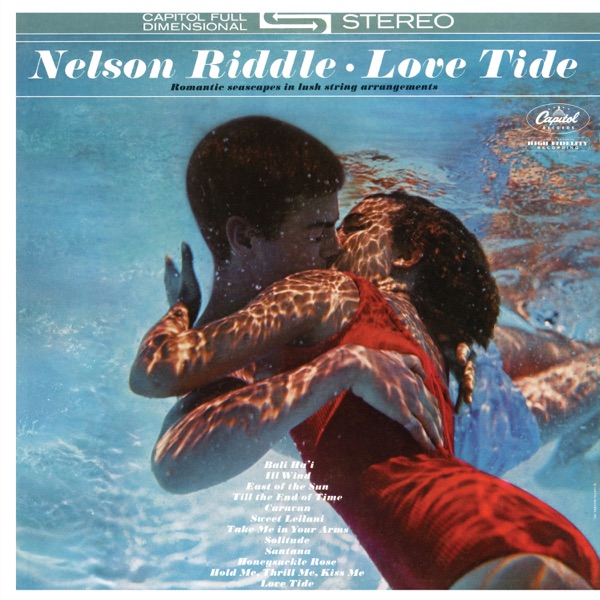
Love Tide
Love Tide
1961
♫
Swinging for You
1962
♫
Love Is a Game of Poker
1962
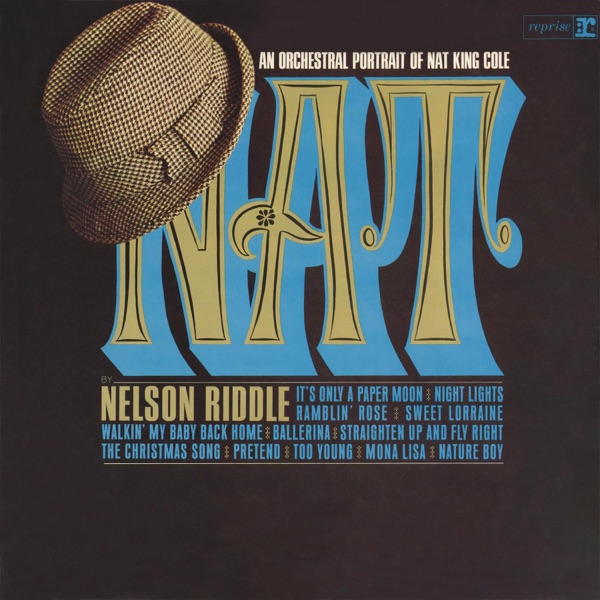
An Orchestral Portrait of Nat "King" Cole
1966
Matt Sings, Nelson Swings
1967
Contemporary Sound of Nelson Riddle
1968
♫
British Columbia Suite
1969
♫
101 Strings: Spectacular Brass!!! Fantastic Reeds!!!
1971
Communication
Communication
1971
♫
Top Hat (Songs Made Famous By Fred Astaire)
1981
101 Strings
101 Strings
1984
Nelson Riddle: The Riddle Touch
1987
♫
The Sound of Magnificence
1987
Route 66 & Other TV Themes / More Hit TV Themes
2002
Sea of Dreams / Love Tide
2004
Changing Colors
Changing Colors
2004
Oklahoma / Can Can
Oklahoma / Can Can
2005
♫
The Joy of Living / Love Is a Game of Poker
2007
Hey... Let Yourself Go / C'mon... Get Happy
2008
♫
Close To You And More
2014
Hey Diddle Riddle
Hey Diddle Riddle

Collaborations

Live on Youtube

Explore Further

Selected connections
Arranger, USA
Billy May
Another Capitol Records arranger who worked with Sinatra — more brash and playful where Riddle was precise, but a good contrast to hear how different arrangers shaped the same voice.
Explore →
Album, 1955
In the Wee Small Hours
The deepest and most carefully constructed of the Riddle-Sinatra collaborations — a master class in how orchestral arrangement serves a singer's emotional intent.
Explore →
Arranger, USA
Gordon Jenkins
The third major arranger in Sinatra's Capitol years, Jenkins leaned toward lush romanticism — hearing him alongside Riddle shows you the full range of what that era could sound like.
Explore →

Who's playing
Listen next
Recording Info
Track listing
Musicians
Further Reading
Read more

Where next?

More by this artist

Albums with the same musicians

From the same era

Similar artists

inside the sleeve
Growing
Jazz, explained without pretension.
Read · Follow the connections · Press play
Right now: 7,100+ albums · 440+ artists
Start here
New to jazz? These artists are good places to start.
Loading…
Explore
Nine records worth getting lost in.
Born today
Album of the day
A landmark record, every day.
Read
  • Loading…
Article archive →
Recently added
Purpose
Inside the Sleeve is your companion on a journey through jazz — not a textbook, but something closer to a knowledgeable friend sitting next to you while you listen. Read about an artist, press play, follow a connection, discover an album you didn't know you needed.
Suggestions
Read

Articles

Essays, guides, and lists about jazz and the records that matter.

Loading…

Genre

Key Artists
Further Reading

Essential Albums

Related Genres

In This Genre

About

Inside the Sleeve

Work in progress

Inside the Sleeve grows continuously — new artists and albums are added, essays refined, as visitors explore and our editors follow up on what they find. Content, features, and design are still evolving; use the Report error button on any page to flag something that seems off.

Content

Every artist, album, and release date on Inside the Sleeve is real — verified against trusted sources including MusicBrainz and Wikipedia. We don't invent discographies or fabricate records. AI compiles that verified information into readable prose — essays on artists, albums, and the music itself. We can't manually review every essay before publishing, but every reported error is checked by a human editor.

Inside the Sleeve is not a review site. We're not here to rate or rank — we're here to guide you in. Where an album stands out, we'll say so. Where an artist changed everything, you'll know why. But we won't tear anything down. Jazz history is complex and sources sometimes disagree — if you spot something that seems off, please report it.

Streaming

Inside the Sleeve links to Spotify and Apple Music so you can listen while you read. These are not affiliate links. For Spotify, links open a search on open.spotify.com — we do not have direct links to specific recordings. For Apple Music, direct links are used where available, otherwise a search is opened.

Your choice of streaming service is stored locally in your browser only. It is never sent to our servers.

We're working on deeper Spotify integration, including direct links to specific recordings.

Privacy

Inside the Sleeve does not collect personal data and does not use cookies. We count page visits anonymously using a self-hosted analytics tool — no personal identifiers are stored, and the data never leaves our own server. The only preference stored on your device is your streaming service choice, saved locally in your browser and never transmitted.

When you submit a suggestion or error report, the text you write is stored in our database. No name or email is required or collected unless you choose to provide one.

Third-party services

Spotify and Apple Music are independent services with their own terms of use and privacy policies. Inside the Sleeve is not affiliated with or endorsed by either company.

Support

Inside the Sleeve is free and ad-free. If you enjoy it, a coffee helps cover server costs and keeps the project going.

Amazon

Some book recommendations on Inside the Sleeve link to Amazon. Buying through these links costs you nothing extra — but Amazon pays us a small commission, which goes directly towards keeping the site running. It's a simple way to support the project if you were going to buy the book anyway.

As an Amazon Associate, Inside the Sleeve earns from qualifying purchases.

Questions or feedback? Use the suggestion box on the front page.

Inside the Sleeve — A guide for those who want to go beyond the obvious About & Privacy