Genre
Vocal Jazz
1920s–Present — United States — Intimate, Swinging, Conversational
Vocal jazz puts the human voice at the center of the jazz tradition — not as an ornament over the band, but as an equal instrument in the conversation. At its best, a great jazz singer doesn't just perform a song; they reharmonize it with phrasing alone, bending time and melody the way a horn player would. The result sits somewhere between a pop song and pure improvisation, and the best of it feels like someone telling you something true.

The roots run deep into the blues and the African American church, but vocal jazz as a distinct art form really crystallized in the swing era, when big bands needed a front person and singers discovered they could do a lot more than just carry the melody. Billie Holiday was the pivot point. She wasn't the loudest voice in the room or the most technically equipped, but she heard harmony differently from everyone around her — she'd delay a phrase, sit behind the beat, change a note just enough to make a lyric mean something it didn't before. Her recordings with Teddy Wilson in the mid-1930s still sound fresh because she and the band are actually playing together, not just accompanying each other.
Ella Fitzgerald took a different route — precision, range, and a virtuosity with scat that treated the voice as a genuine bebop instrument. Her Songbook series in the late 1950s, working through the American standard repertoire composer by composer, set a benchmark for what a vocalist could do with material. Sarah Vaughan pushed even further into the harmonic deep end, influenced by bebop so thoroughly that her pitch choices sometimes sounded more like Dizzy Gillespie than any pop singer. These three — Holiday, Fitzgerald, Vaughan — define the upper range of what the form can do, and they each defined it differently.
The 1950s and 60s brought a wave of singers who worked the cooler, more intimate end of the spectrum. Chet Baker used his voice the same way he used his trumpet — minimal, fragile, almost conversational. Johnny Hartman recorded John Coltrane and Johnny Hartman (1963) with Coltrane's quartet, and it remains one of the most improbable pairings in jazz history — a balladeer backed by one of the most harmonically adventurous groups of the era, and it works completely. Carmen McRae brought a harder, more unsentimental edge to standards, treating lyrics as texts to be examined rather than sentiments to be delivered.
Vocal jazz fell somewhat out of fashion as jazz became more instrumental and abstract through the 1960s and 70s, but it never went away, and the 1980s brought a genuine revival. Cassandra Wilson spent the late 1980s expanding the vocabulary dramatically — pulling in blues, folk, and rock influences without losing the jazz harmonic language underneath. Kurt Elling and Mark Murphy showed that the tradition could absorb spoken word and hip-hop-adjacent ideas without losing its grounding. Today the form is healthy precisely because it resists easy categorization — a good jazz vocalist is really just someone who understands that a song is a framework for expression, not a blueprint to be followed.
A great jazz singer doesn't perform a song — they negotiate with it.
Essential Albums
♫
Lady in Satin
Billie Holiday · 1958
Holiday's voice is worn and fragile here, and that becomes the whole point — the emotional weight is inseparable from the physical sound.
♫
Ella Fitzgerald Sings the Cole Porter Songbook
Ella Fitzgerald · 1956
The album that established what it means to interpret a songwriter rather than just sing his songs, with Fitzgerald treating each tune as a small world worth exploring.
♫
John Coltrane and Johnny Hartman
John Coltrane & Johnny Hartman · 1963
Hartman's baritone and Coltrane's tenor find a shared warmth that makes this the definitive jazz ballad record — unhurried, deep, and completely assured.
♫
Blue Light 'Til Dawn
Cassandra Wilson · 1993
Wilson pulls the vocal jazz tradition into blues, delta folk, and dark Americana without it feeling like a stunt — it just sounds like where the music needed to go.
In This Genre
75 artists in your library♫
Toquinho
Guitar - Brazil - Bossa Nova
Toquinho picked up a guitar as a kid in São Paulo and never really put it down, eventually becoming the steady hand behind some of Brazil's most beloved songs. He's best known for his decade-plus partnership with poet Vinicius de Moraes, a pairing that turned casual guitar strumming into something you could build an entire songbook around.
♫
Claudia Acuña
Vocals - Chile - Vocal Jazz
Claudia Acuña left Santiago for New York in the mid-90s with no real plan beyond singing, and ended up becoming one of the city's most trusted voices in a scene that doesn't hand that out easily. She sings in Spanish and English like they're the same language, carrying the rhythms of Chilean folk music straight into the heart of modern jazz.
♫
Irene Aebi
Vocals, Cello - Switzerland - Avant-Garde Jazz
Irene Aebi didn't come up through jazz clubs — she came up through classical training, and it shows in every note she sings. For decades she was the voice at the center of Steve Lacy's music, turning poems by writers like Robert Creeley and Brion Gysin into something between art song and free improvisation.
♫
Amina Alaoui
Vocal - Morocco - Andalusian Jazz
Amina Alaoui sings in a language that predates the microphone by centuries, and somehow it still sounds like it belongs in a room with a jazz rhythm section. She grew up steeped in the Andalusian classical tradition of Fez, then spent a career finding out what happens when you let that tradition breathe next to improvisation.
♫
Louis Armstrong
Trumpet - USA - New Orleans Jazz, Swing, Popular
Louis Armstrong didn't just play trumpet — he rewired what it meant to be a soloist in jazz, pulling melody out of collective improvisation and making individual voice the center of the music. He came up through the roughest neighborhoods of New Orleans, learned from the best players around him, and by his mid-twenties had recorded some of the most startlingly original music anyone had ever heard. What followed was five decades of constant work, worldwide fame, and a personality so large it sometimes overshadowed just how technically and musically gifted he actually was.
Chet Baker
Trumpet & Vocals - United States - Cool Jazz & West Coast Jazz
Chet Baker was the reluctant poster boy of cool jazz, a trumpeter whose lyrical tone and vulnerable vocals made him one of the most distinctive voices in modern jazz. Born in Oklahoma and raised in California, his ethereal sound and boyish charm captivated audiences in the 1950s, even as personal demons threatened to derail a meteoric rise. By turns innovative and heartbreaking, Baker embodied both the promise and tragedy of the jazz life.
♫
James Booker
Piano - USA - New Orleans R&B / Jazz
James Booker was the most technically staggering pianist New Orleans ever produced, which is saying a lot given the competition. He played classical, jazz, R&B, gospel, and funk simultaneously, not as a party trick but because that was just how his brain worked. He was also wildly self-destructive, deeply eccentric, and largely broke when he died at 43 — which means most people still don't know his name the way they should.
♫
Betty Carter
Vocals - USA - Modern Jazz
Betty Carter was a virtuoso vocalist who refused to be confined by the commercial demands of the music industry, instead carving her own path as a bandleader and interpreter of jazz standards. With her complex phrasing, adventurous scatting, and unwavering commitment to musical experimentation, she earned the respect of every major jazz musician of her era while remaining defiantly independent. Her legacy stands as a testament to artistic integrity and the boundless possibilities of the human voice.
♫
Dorival Caymmi
Voice, Guitar - Brazil - Samba / MPB
Dorival Caymmi sang the ocean like he'd grown up with salt in his lungs, because he had. He wrote the songs that Bahia sounds like in people's heads — fishermen, saints, coconut palms, women walking slow in the heat — and in doing so handed the next generation of Brazilian musicians a whole vocabulary they didn't know they needed yet.
♫
Ray Charles
Piano & Vocals - American - Soul Jazz / Vocal Jazz
Ray Charles didn't so much blend genres as ignore the walls between them — gospel, blues, country, jazz, pop all went into the same pot and came out sounding like nothing else. He was blind from the age of seven and playing professionally by his teens, working out his style in the roadhouses and radio stations of the American South before the rest of the world caught up. By the time he was famous, he'd already reinvented himself several times over.
♫
June Christy
Vocals - USA - Cool Jazz
June Christy sang like she'd already seen how the night was going to end and decided not to make a fuss about it. She stepped into Stan Kenton's orchestra as the replacement for Anita O'Day and somehow made the job her own, turning restraint into a whole style of singing that West Coast jazz fans still swear by.
♫
Jacob Collier
Multi-Instrumentalist / Vocalist - United Kingdom - Harmonic Pop / Jazz-Adjacent
Jacob Collier is the kind of musician who makes other musicians put their heads in their hands — not out of frustration, but out of sheer disbelief. He grew up in a musical household in London, taught himself an absurd number of instruments, and became famous through YouTube videos where he performed every part himself, stacking harmonies in ways that shouldn't work but somehow do. He's won multiple Grammy Awards before most people his age had figured out what they wanted to do with their lives.
♫
Nicola Conte
Guitar - Italy - Spiritual Jazz & Latin Jazz Revival
Nicola Conte didn't come up through smoky clubs or conservatories — he came up through record crates. A DJ from Bari who fell hard for bossa nova, spiritual jazz, and Blue Note deep cuts, he turned that obsession into a career making new records that sound like lost ones. He's less a jazz musician in the traditional sense and more a curator who learned to play.
♫
Will Marion Cook
Composer / Conductor - USA - Early Jazz
Will Marion Cook was a classically trained violinist who decided the concert hall wasn't going to let him in, so he built something else entirely. He became one of the most important composers and conductors bridging the gap between the African American musical theater tradition and what would eventually become jazz. Duke Ellington called him his most important teacher, which tells you everything.
♫
Chip Crawford
Piano - USA - Contemporary Jazz
Chip Crawford is the kind of pianist who makes everyone around him sound better, which is probably why he has spent so much of his career as a first-call accompanist. He has been the engine behind Chris Walker, and logged serious time alongside some of the best vocalists and horn players working in contemporary jazz. His playing is warm, unpretentious, and deeply swinging — the sort of thing you notice most when it isn't there.
♫
Randy Crawford
Vocalist - USA - Vocal Jazz / Soul
Randy Crawford is the voice you've heard even if you don't know her name — that smoky, unhurried delivery on 'Street Life' with The Crusaders. She came up through church choirs and smoky Ohio clubs before landing in the gap between jazz, soul, and pop, and she's spent her career refusing to pick a side.
♫
Maria Creuza
Vocalist - Brazil - Bossa Nova / MPB
Maria Creuza is the voice a lot of bossa nova fans don't know they already love — the one singing alongside Vinicius de Moraes and Toquinho on those warm, loose live recordings that feel like eavesdropping on a great night out. She never chased the spotlight the way some of her peers did, but her phrasing on songs like 'Tarde em Itapoã' has stuck around for decades.
♫
Vinicius De Moraes
Guitar, Voice - Brazil - Bossa Nova / Latin Jazz
Poet, playwright, diplomat, and songwriter, Vinicius de Moraes was the man who put words to bossa nova before most people knew what bossa nova was. He wrote the lyrics to 'Garota de Ipanema' and the libretto for 'Orfeu da Conceição,' the play that became the film Black Orpheus — but reducing him to those two things is like describing a river by its mouth. He spent his life moving between the literary and the musical, and the seam between those two worlds is where his best work lives.
♫
Tommy Dorsey
Trombone - USA - Swing
Tommy Dorsey ran one of the most commercially successful big bands of the Swing Era, but he was also a genuinely extraordinary trombone player — smooth in a way that made other trombonists quietly furious. He had a gift for ballads that bordered on uncanny, and he understood showbiz well enough to build an empire around it without losing the musicianship that made him worth watching in the first place.
♫
Billy Eckstine
Vocalist - United States - Bebop / Vocal Jazz
Before he was known as the guy with the impossibly smooth baritone and the rolled-collar shirt named after him, Billy Eckstine ran the most important incubator bebop ever had — a big band that at various points included Dizzy Gillespie, Charlie Parker, and Sarah Vaughan. He never got the sales numbers his voice deserved, but without him half of modern jazz doesn't happen the way it did.
♫
Kurt Elling
Voice - USA - Jazz Vocal
Kurt Elling is the kind of jazz singer who makes you forget you have opinions about jazz singers. He came up through Chicago in the 1990s with a baritone that could drop through the floor and a brain full of poetry, beat literature, and bebop, and he spent the next three decades proving that vocalese wasn't a museum piece. There's nobody else quite doing what he does — and he's been doing it long enough that the case is pretty much closed.
♫
Quarteto Em Cy
Vocal Harmony - Brazil - Vocal Jazz
Four sisters from Salvador, Bahia, whose names all happened to start with the same two letters, turned that coincidence into a group name and then into one of the great vocal harmony outfits of Brazilian music. They built a sound out of close, interlocking voices that could handle samba, bossa, and MPB with the same ease a jazz vocal group handles standards.
♫
Sidsel Endresen
Vocals - Norway - Avant-Garde Jazz
Sidsel Endresen started out singing clean, confident jazz-pop lines in Oslo and ended up somewhere nobody expected — making sounds with her voice that barely register as singing at all. She's one of those rare artists who got more radical as she got older, trading melody for texture and comfort for risk.
♫
Ahmet Ertegun
Record Producer / Label Founder - Turkey / USA - Jazz & R&B
Ahmet Ertegun never played an instrument on the records that made him famous, but without him a huge chunk of American jazz and R&B might sound completely different. He co-founded Atlantic Records out of a hotel room with borrowed money and a genuine love of the music, and somehow turned that into one of the most important labels in jazz, soul, and rock history.
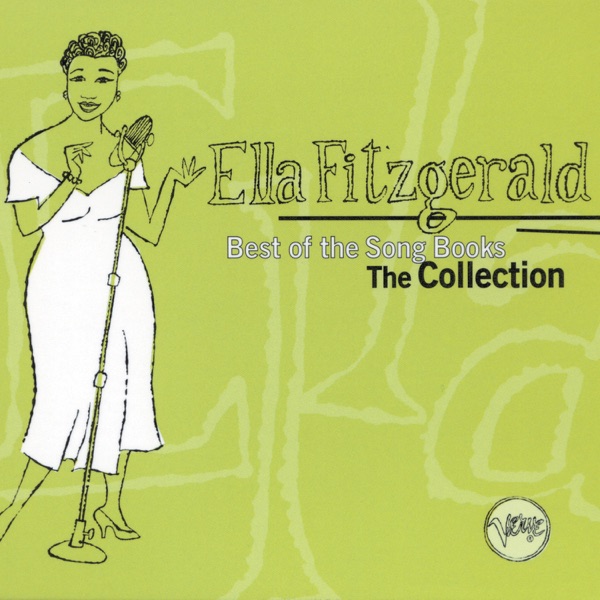
Ella Fitzgerald
Vocals - USA - Swing, Standards, Bebop
Ella Fitzgerald possessed a voice of such crystalline purity and technical mastery that she became the gold standard against which all jazz singers would be measured. Her impeccable intonation, lightning-fast scat improvisations, and interpretive depth transformed the American songbook into a deeply personal artistic statement. For nearly seven decades, she remained jazz's most beloved and influential vocalist, a living bridge between swing and the modern era.
♫
Tommy Flanagan
Piano - USA - Bebop
Tommy Flanagan spent decades as the most tasteful pianist in the room, whether that room was a Detroit basement session or the wings behind Ella Fitzgerald on a world tour. He never chased the spotlight, but if you know where to listen, his fingerprints are all over some of the most important jazz records ever made.
♫
Slim Gaillard
Vocals, Guitar, Piano - USA - Swing
Slim Gaillard made up his own language, called it Vout, and somehow got half of jazz to speak it back to him. He was a novelty act, a genuine musician, and a walking argument that jazz could be funny without being small.
♫
Astrud Gilberto
Vocals · Brazil · Bossa Nova / Latin Jazz
Astrud Gilberto walked into a recording session in 1963 with no professional singing experience and walked out having recorded one of the most recognizable vocal performances in the history of popular music. Her voice — small, cool, almost conversational — turned out to be exactly what bossa nova needed to reach the world. She never quite got the credit she deserved for it.
♫
Norman Granz
Producer & Impresario - USA - Swing / Bebop
Norman Granz never played an instrument, but he shaped the sound of jazz more directly than most musicians ever did. He turned concert halls into battlegrounds for civil rights, built record labels that gave artists total creative control, and managed to make bebop and swing pay — on his terms. If you love Ella Fitzgerald, Oscar Peterson, or Charlie Parker on record, you owe a debt to a guy most casual listeners have never heard of.
♫
Rigmor Gustafsson
Vocalist - Sweden - Vocal Jazz
Rigmor Gustafsson sings the way you'd want a friend to tell you a long story — unhurried, clear-eyed, never showing off just because she can. She became one of Sweden's most trusted jazz voices by refusing to oversing anything, letting the lyric do the work while she quietly bends the time around it.
♫
Alicia Hall Moran
Voice - United States - Vocal Jazz
Alicia Hall Moran trained as a classical mezzo-soprano, then decided the walls between opera, jazz, and performance art were mostly imaginary. She sings standards like she's interrogating them, and she builds whole multimedia projects out of a single question about African American sound and memory.
♫
Laurence Hobgood
Piano - United States - Contemporary Jazz
For most of two decades, Laurence Hobgood was the guy standing just offstage from Kurt Elling's spotlight, writing the arrangements that made Elling sound like a genius and quietly being a genius himself. He's one of those pianists whose name you learn after you already love the records, then wonder why you didn't know it sooner.
♫
Langston Hughes
Poetry & Voice - USA - Jazz & Blues
Langston Hughes didn't play an instrument, but he understood jazz and blues as well as anyone who ever picked one up. He heard in that music the full emotional range of African American life and spent decades trying to put it into words — sometimes literally, by performing his poetry over live jazz accompaniment. The result was something genuinely unusual: a literary voice that swung.
♫
Antonio Carlos Jobim
Piano, Guitar - Brazil - Latin Jazz
Jobim didn't just write songs, he built a whole harmonic weather system that jazz musicians have been living inside ever since. Start with 'Garota de Ipanema' and you'll think you know him, but stick around for the deep cuts and you'll find a composer as interested in dissonance and shadow as he was in sunshine and beaches.
♫
Jimmy Jones
Piano - USA - Swing / Bebop
Jimmy Jones was the kind of pianist that singers trusted with their careers — quietly brilliant, harmonically sophisticated, and almost pathologically reliable. He spent years as Sarah Vaughan's musical director and accompanist, a role that suited his temperament but occasionally obscured just how much he had going on as a player in his own right. If you know his name at all, it's probably because of whose name appeared above his on the marquee.
♫
Norah Jones
Piano, Vocals — USA — Indie Pop, Jazz, Country Soul
Norah Jones arrived in 2002 with a debut album that somehow made jazz-adjacent piano ballads feel like the most natural thing in the world — and then sold nine million copies of it in the United States alone. She is the daughter of Ravi Shankar, which is a fact people keep mentioning as if it explains something, though her music is about as far from Indian classical as you can get. What she actually sounds like is late-night Americana filtered through a jazz sensibility, sung in a voice that never pushes harder than it needs to.
♫
Diana Krall
Piano, Vocals — Canada — Jazz Pop
Diana Krall grew up in a small town on Vancouver Island playing her father's old Nat King Cole records, and you can hear every one of them in the way she approaches a standard. She sits at the piano and sings like someone who actually means the lyrics, which sounds obvious but is rarer than you'd think. By the late 1990s she had become one of the best-selling jazz artists in the world, which made some purists suspicious — though the music itself has always been better than the hype surrounding it.
♫
Nils Landgren
Trombone, Vocals - Sweden - Jazz Fusion
He plays a red trombone, sings like he means it, and has spent decades proving that jazz doesn't have to apologize for groove. Nils Landgren is the guy who shows up at a festival in a leather jacket and leaves the stage drenched in sweat, funk horns blaring behind him.
♫
Michel Legrand
Piano, Composition - France - Cool Jazz
Michel Legrand wrote some of the most hummable melodies of the twentieth century and somehow still found time to be a serious jazz pianist and arranger. He moved between film scores, chanson, and jazz sessions so easily that people sometimes forgot how good he actually was at all three.
♫
Frank Machito (Grillo)
Vocals & Bandleader - Cuba/USA - Latin Jazz
Machito didn't play an instrument in the traditional sense — he sang, shook a pair of maracas, and led one of the great bands in American music history. He and his brother-in-law Mario Bauzá took Cuban dance rhythms and jazz horns and welded them together so tightly that nobody could tell where one ended and the other began.
♫
Miriam Makeba
Vocals - South Africa - Afro-Jazz & Protest Song
Miriam Makeba sang her way out of a township and into exile, then spent thirty years turning that exile into a global stage. She brought Xhosa click songs to American ears who'd never heard anything like it, and she never let anyone forget why she couldn't go home.
♫
Arif Mardin
Producer / Arranger - USA - Vocal Jazz & Soul Jazz
Born into an aristocratic Istanbul family, Arif Mardin arrived in Boston on a Berklee scholarship and never really left the music industry — he just kept climbing until he was shaping the sound of Atlantic Records for decades. He was the rare arranger-producer who could make a jazz vocal session feel intimate on a Tuesday and have a pop record sounding like a million dollars on a Wednesday, without either one feeling like a compromise. The musicians who worked with him tended to come back.
♫
Cesar Camargo Mariano
Piano - Brazil - Latin Jazz
Cesar Camargo Mariano is the guy who made Brazilian jazz piano sound like it was breathing in Portuguese. He built his name in the samba jazz trios of São Paulo in the '60s, then spent the '70s reshaping how MPB records were arranged, most famously alongside his then-wife Elis Regina. Decades later he's still recording, still refining that unmistakable touch — dense harmony, light hands, total control.
♫
Billy May
Arranger / Trumpeter - USA - Swing / Big Band
Billy May was the arranger who made big band swing sound like it was grinning at you — brassy, loose, and just a little cartoonish in the best possible way. He wrote charts for Glenn Miller, Charlie Barnet, and eventually Frank Sinatra, and his signature slurring saxophone sound became one of the most recognizable textures in mid-century American pop. He never chased cool, and that shameless enthusiasm for entertainment is exactly what makes his work hold up.
♫
Les McCann
Piano, Vocals - USA - Soul Jazz
Les McCann played piano like he was preaching and singing like he had somewhere urgent to be. He came up through gospel and blues before jazz got hold of him, and that mix never left his music — funky, direct, built for people who wanted to feel something, not just admire it.
♫
Gary McFarland
Vibraphone / Composer - USA - Cool Jazz
Gary McFarland came to jazz late, picked up arranging almost entirely on his own, and within a few years was writing charts that seasoned professionals couldn't stop talking about. He had a gift for making a big band sound intimate and a small group sound lush, and he did it without ever losing the swing. He was dead at 38, which means we're left guessing how far he might have gone.
♫
Carmen McRae
Vocals - USA - Bebop / Swing
Carmen McRae was one of the great jazz singers, and she'd probably be the first to tell you she didn't get the credit she deserved. She sang like she was thinking out loud — every lyric dissected, every word placed exactly where she wanted it. What she did with a song was less about beauty and more about truth.
♫
Joni Mitchell
Vocalist, Guitarist - Canada - Vocal Jazz, Jazz Fusion
Joni Mitchell never called herself a jazz musician, and for most of her career she wasn't one. But somewhere around the mid-1970s she got restless with folk music's chords and started chasing something looser, and the people she chased it with were jazz players — Jaco Pastorius, Wayne Shorter, Charles Mingus himself. What came out of that stretch is some of the strangest, most rewarding music of her career.
♫
Milton Nascimento
Vocals / Guitar — Brazil — MPB / Latin Jazz
Milton Nascimento has one of those voices you hear once and never quite shake — a falsetto that can drop into a warm baritone mid-phrase, somehow sounding like a choir even when he's singing alone. Coming out of Minas Gerais in the late 1960s, he fused Brazilian folk tradition, Catholic church music, and jazz harmony into something that didn't have a name at the time. He became one of the central figures of the Clube da Esquina movement and eventually pulled in collaborators from Wayne Shorter to Herbie Hancock without ever losing what made him sound like himself.
♫
Claude Nougaro
Vocalist - France - Vocal Jazz
Claude Nougaro started out as a poet who happened to sing, and ended up one of the few French singers who could stand next to jazz musicians without looking like a tourist. He spent four decades chasing the sound of Armstrong and Brazil through chanson, funk, and whatever else caught his ear, and somehow never lost his own voice in the process.
♫
Ulysses Owens Jr
Drums - USA - Contemporary Jazz
Ulysses Owens Jr came up through the Christian McBride band and never really looked back — except to dig deeper into the tradition. He plays drums with a swagger that feels earned rather than inherited, and he leads sessions that sound like a real band having a real conversation, not a showcase.
♫
Houston Person
Tenor Saxophone - USA - Soul Jazz
Houston Person never chased the avant-garde and never apologized for it. He built a career on blues, ballads, and a tone so warm and direct it sounds like it's talking to you across a kitchen table, and he's been doing it for over sixty years without much interest in trends.
♫
André Previn
Piano - Germany/USA - Cool Jazz
André Previn never settled on one job title, and that's the whole story. He was a studio pianist who scored Hollywood pictures, a jazz trio leader who could swing hard without breaking a sweat, and later a conductor leading major symphony orchestras. Most musicians pick a lane; Previn just kept driving through all of them.
♫
Flora Purim
Vocalist - Brazil - Jazz Fusion
Flora Purim didn't sing jazz standards, she sang like an instrument that happened to have a voice attached to it. She came out of Rio, landed in the middle of the fusion boom, and ended up as the sound that made Chick Corea's Return to Forever feel like it was floating instead of just playing fast.
♫
Verve Records
Record Label - United States - Jazz Institution
Verve was never a sound so much as a sensibility — the idea that jazz could be glamorous without losing its nerve. Norman Granz built it on the back of Jazz at the Philharmonic and the Songbook sessions, and for a few golden years it was the label where the biggest names in jazz sounded like they'd finally gotten the studio and the strings they deserved.
♫
Elis Regina
Vocalist - Brazil - MPB / Bossa Nova
Elis Regina sang like she had something urgent to tell you and no time to waste being polite about it. She took bossa nova's whisper and gave it lungs, turning Brazilian popular song into something that could stop a room cold.
♫
Nelson Riddle
Arranger / Conductor - USA - Vocal Jazz
Nelson Riddle is the reason Frank Sinatra's Capitol Records albums sound the way they do — those strings that swell without going soft, those brass sections that punch without turning ugly. He was the arranger's arranger, a man who understood that the best orchestral writing stays out of the singer's way while somehow making everything around them feel inevitable. If you've ever wondered why certain mid-century vocal recordings feel like they exist in their own complete universe, Riddle is usually somewhere near the answer.
♫
Jimmy Rowles
Piano - United States - Swing / Cool Jazz
Jimmy Rowles spent decades as the piano player singers wanted standing behind them, which is a strange kind of fame — everyone who mattered in jazz vocals knew his name, but the wider public mostly didn't. He had ears like nobody else, a dry sense of humor, and a way of finding the weird, beautiful chord that made a familiar tune sound like you'd never heard it.
♫
Jimmy Rushing
Vocalist - United States - Swing
Jimmy Rushing had a voice built to cut through a brass section without a microphone, and for over a decade that's exactly what he did with Count Basie's band. He wasn't a blues singer pretending to swing or a swing singer pretending to sing the blues — he did both at once, and made it sound like the easiest thing in the world.
♫
Henri Salvador
Guitar, Vocals - France - Vocal Jazz / Bossa Nova
Henri Salvador spent seventy years being three or four different kinds of famous in France, and jazz was only ever one of them. He started out as a guitarist good enough to trade licks with Django Reinhardt, spent decades as a comic crooner and children's-song novelty act, then at eighty-three became cooler than almost anyone half his age with a bossa-nova record nobody saw coming.
♫
George Shearing
Piano - England/USA - Cool Jazz
George Shearing was blind from birth and built one of the most recognizable sounds in jazz piano anyway — a lush, close-harmony voicing that made his quintet a hit machine in the 1950s. He wrote 'Lullaby of Birdland' almost as an afterthought, and it outlived nearly everything else he did, which says more about the tune than about the rest of his catalog.
♫
Frank Sinatra
Vocals - USA - Swing / Saloon Song
Nobody sold a lyric like Frank Sinatra — not because he had the biggest voice in the room, but because he made you believe every word was his own confession. He came up through the big band era, burned out, came back harder, and spent the rest of his life recording songs that sound like they were written about him specifically. The whole saloon-singer-at-2am thing? He basically invented it.
♫
Donald Smith
Piano - United States - Spiritual Jazz
Donald Smith made one classic album and then mostly vanished into other people's bands, which is exactly the kind of quiet injustice that makes record collectors obsessive. He came out of a musical family in Richmond, Virginia, and spent his career as a pianist, vocalist, and arranger who showed up on other musicians' sessions far more often than his own name showed up on a cover.
♫
Bessie Smith
Vocals - USA - Blues & Early Jazz
Before there was a jazz vocal tradition to speak of, Bessie Smith was already defining it. She came up through tent shows and Southern vaudeville circuits, and by the time she hit records in the early 1920s, she had a voice that could fill a room without a microphone and a delivery that made every lyric feel like a personal reckoning. Nobody before her sounded quite like that, and a lot of people who came after spent years trying to figure out how she did it.
♫
Esperanza Spalding
Bass & Voice - USA - Contemporary Jazz
Esperanza Spalding showed up playing upright bass at a level that made people do a double-take, and then she started singing, and then she started writing, and suddenly it was hard to know which thing she was most remarkable at. She came out of the jazz world but never really settled there, pulling in soul, funk, Brazilian music, and chamber pop with the ease of someone who just doesn't recognize borders. What makes her genuinely interesting is that the ambition never feels like a pose — it sounds like she actually hears all of it as one continuous thing.
♫
Billy Strayhorn
Piano & Composition - USA - Swing / Cool Jazz
Billy Strayhorn spent most of his career inside the shadow of Duke Ellington, and that arrangement suited neither of them perfectly — but what came out of it was some of the most sophisticated music the jazz world has ever heard. He wrote the songs you already know by heart without knowing his name: 'Take the A Train,' 'Lush Life,' 'Chelsea Bridge.' The miracle is that his voice was so distinct from Ellington's that anyone paying attention could hear the difference immediately.
♫
Mel Tormé
Vocalist - USA - Vocal Jazz
They called him the Velvet Fog because of that smooth, controlled voice, but the nickname undersold how much musician was packed into it. Tormé could scat like a horn player, write songs that became standards, and sing a ballad so clean it almost sounded too easy — which was the whole trick.
♫
Sarah Vaughan
Vocals - United States - Bebop & Ballad
Sarah Vaughan possessed one of jazz's most technically extraordinary voices—a rich contralto with a range that seemed to defy the laws of physiology. Her ability to navigate complex harmonic changes with the precision of an instrumentalist made her a favorite among musicians and a standard-bearer for vocal sophistication. From bebop to ballad, she sang with an elegance and daring that remains unsurpassed.
♫
Chris Walker
Bass, Vocals - USA - Contemporary Jazz / Vocal Jazz
Chris Walker is one of those musicians who spent decades making other people's records sound better before stepping out front with his own smoky baritone. He built his reputation as George Benson's bassist, locking down grooves night after night, then turned around and became a quiet storm vocalist in his own right.
♫
Lena Willemark
Voice, Fiddle - Sweden - Nordic Folk-Jazz
Lena Willemark sings in a dialect from the Dalarna region of Sweden that most Swedes themselves can barely parse, and somehow that's part of the appeal. She took the old herding calls and fiddle tunes of her home valley and put them next to jazz piano and improvisation, and the result sounds like nothing else coming out of Scandinavia.
♫
Joe Williams
Vocalist - United States - Swing / Vocal Jazz
Joe Williams had one of those voices that could fill a room without raising to a shout — deep, warm, and built for the blues even when he was singing something else entirely. He spent most of the 1950s fronting the Count Basie band and turned a twelve-bar blues into a signature so strong that people forgot anyone else had ever sung it.
♫
Teddy Wilson
Piano - United States - Swing
Teddy Wilson played piano like he was dressed for a formal dinner — every note placed, nothing spilled. He's the guy who made Benny Goodman's trio swing without ever raising his voice, and the guy Billie Holiday leaned on for some of her finest early sides.
♫
Nancy Wilson
Vocals - United States - Vocal Jazz
Nancy Wilson could sing anything and make it sound like it was written just for her — ballads, blues, pop, standards, didn't matter. She never liked being called a jazz singer, and honestly, she had a point: she was a song interpreter who happened to run in jazz circles and came up with some of the best musicians of her generation.
♫
Jimmy Witherspoon
Vocals - United States - Blues & Vocal Jazz
Jimmy Witherspoon had one of those voices that didn't need a microphone, a big booming blues shout that came up through Kansas City swing bands and never lost its grit. He spent a career moving between the blues circuit and jazz stages, equally at home belting over a honking tenor sax or trading phrases with cool-school horn players who usually worked with singers half as loud as him.
♫
Monica Zetterlund
Voice - Sweden - Nordic Jazz / Bossa Nova
Monica Zetterlund was the voice that made Swedish sound inevitable in jazz — warm, conversational, and quietly assured in a way that never begged for your attention. She worked in two languages and two worlds, recording with some of the finest American musicians while remaining deeply rooted in Swedish folk melody and humor. The combination produced something genuinely rare: a jazz singer who felt completely at home in the idiom without ever losing her own accent.