Every Chord At Once
If you've never heard Jacob Collier, the easiest way to understand him is this: imagine someone who grew up obsessing over Stevie Wonder, Herbie Hancock, and Joni Mitchell simultaneously, then decided the most interesting thing to do was figure out what all three had in common harmonically and push that as far as it could possibly go. That's roughly what his music sounds like. Dense, layered, often surprising, and sometimes a little exhausting — in the best possible way.
He came up through those bedroom YouTube videos in the early 2010s, performing entire songs alone by overdubbing himself into a small choir of Jacobs. The videos went viral in musician circles first, because what he was doing harmonically was genuinely unusual. He uses something called "negative harmony" and toys with microtones — pitches that fall between the standard notes on a piano — which gives some of his arrangements this slightly alien, wobbly quality that takes a few listens to stop noticing and start enjoying. Quincy Jones famously spotted him early and championed him publicly, which helped put him on the map outside the internet.
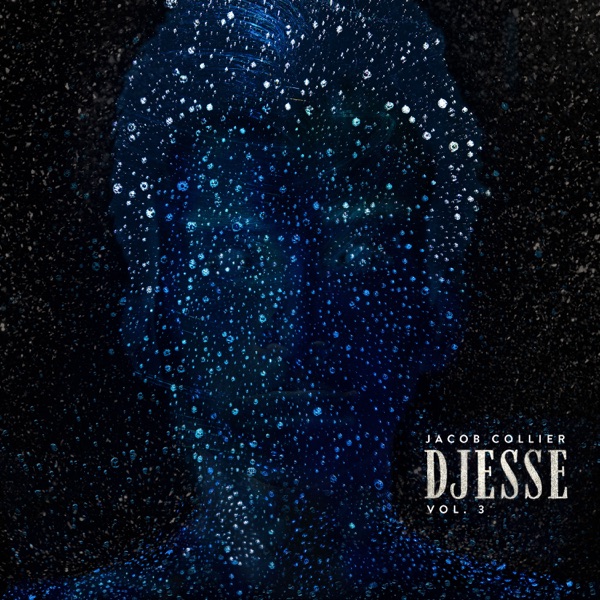
His studio albums — particularly Djesse Vol. 1 (2018) through Djesse Vol. 4 (2023), a massive four-album project — are ambitious to a fault. Each volume leans into a different sonic world: orchestral arrangements, acoustic intimacy, electronic production, full-on pop. The ambition is real and so is the craft. But it can feel like a lot, especially if you're coming to him hoping for something stripped back and swinging. This is not that. This is someone who, given the option between three notes and twelve, will almost always choose twelve.
What actually makes him interesting to jazz-minded listeners isn't the production showmanship — it's his understanding of harmony as a living, moving thing rather than a set of rules. He thinks about chords the way a good improviser thinks about them: as places you can bend, question, and leave from unexpected angles. When he plays piano, you hear that immediately. He's not a jazz pianist in the conventional sense, but he's absorbed enough of the tradition that his choices feel informed rather than accidental.
The honest caveat is that some of his music tips over into a kind of maximalism that can feel more like a demonstration than a song. Not everything on the Djesse series lands equally, and his live concerts — which lean heavily on audience participation and spontaneous harmonic games — are an acquired taste. But when it clicks, like on the quieter, more focused moments across those albums, you hear something genuinely fresh: a musician who grew up after the internet dissolved genre walls and actually figured out something to do with that freedom.