Where do you listen?
Choose your streaming service
inside the sleeve
Loading…
inside the sleeveITS
⌕
Read About
Vocalist, Guitarist - Canada - Vocal Jazz, Jazz Fusion

Joni
Mitchell

1943 - , Canada

Joni Mitchell never called herself a jazz musician, and for most of her career she wasn't one. But somewhere around the mid-1970s she got restless with folk music's chords and started chasing something looser, and the people she chased it with were jazz players — Jaco Pastorius, Wayne Shorter, Charles Mingus himself. What came out of that stretch is some of the strangest, most rewarding music of her career.

Vocal JazzJazz FusionContemporary Jazz
Joni Mitchell

The Folk Singer Who Kept Wandering

Joni Mitchell built her name on guitar tunings nobody else used and lyrics sharp enough to draw blood, and if that was all she'd done she'd still be one of the great songwriters of her era. But by the mid-1970s she was bored of the boxes people put her in, and she started writing songs that didn't resolve the way pop songs are supposed to — melodies that drift, chords that hang open, phrasing that talks instead of sings. That's when jazz musicians started showing up on her records, and it's why she belongs in a book like this one.

Hejira (1976) is the record to start with. It was written mostly while she was driving across the country alone, and it sounds like it — spacious, unhurried, full of long lines that don't want to end. The bass player is Jaco Pastorius, and what he does on that record is not really bass playing in the traditional sense. He floats under her voice, answers her guitar lines, sometimes just about takes over the song. It's one of the strangest and best pairings in 1970s music, a fretless bass virtuoso decorating a folk singer's tour diary.

Then came Mingus (1979), which is the boldest thing she ever did. Charles Mingus was dying, he'd lost the ability to play, and he asked Joni Mitchell — a folk singer, not a jazz musician — to write lyrics to some of his last melodies. She said yes, brought in players like Wayne Shorter, and made a record that is half tribute, half interview, half something else entirely. It confused a lot of her old fans. It's also one of the more honest things anyone tried to do with jazz in that decade.

The touring band she put together around that period reads like a fusion dream team — Pat Metheny, Michael Brecker, Lyle Mays, Wayne Shorter would keep turning up on her records for years after. She wasn't trying to become a jazz singer. She was trying to find musicians who could keep up with where her songs wanted to go, and it happened that those musicians were jazz players, because nobody else could follow her chord voicings without a map.

What you're left with is an artist who isn't really a jazz artist but who made a handful of records that jazz listeners keep coming back to, because the harmony is genuinely strange and the collaborators are genuinely serious. If you want to hear a songwriter push past what songwriting is supposed to sound like, start with Hejira, sit with Mingus, and don't expect it to behave.

Facts
BornNovember 7, 1943, Fort Macleod, Alberta, Canada
InstrumentVoice, guitar, piano
Active1960s - present
Known forBridging folk songwriting and jazz harmony, especially on Hejira and Mingus
Connections
Charles MingusCollaborator, New York
→
Jaco PastoriusBassist and collaborator, Los Angeles
→
Wayne ShorterRecurring saxophonist, Los Angeles
→
Read more

Discography

38 records
Song to a Seagull
Song to a Seagull
1968
Live at Club 47
Live at Club 47
1968
♫
''Germany 1968'' - WONDERFUL SBD (remaster)
1968
Clouds
Clouds
1969
1969-07-19: Newport Folk Festival, Newport, RI, USA
1969
Ladies of the Canyon
1970
♫
(Kept On) By Her Own Devices
1972
For the Roses
For the Roses
1972
♫
1972-02-23: New York, NY, USA
1972
♫
Live in Hawaii 1973
1973
Miles of Aisles
Miles of Aisles
1974
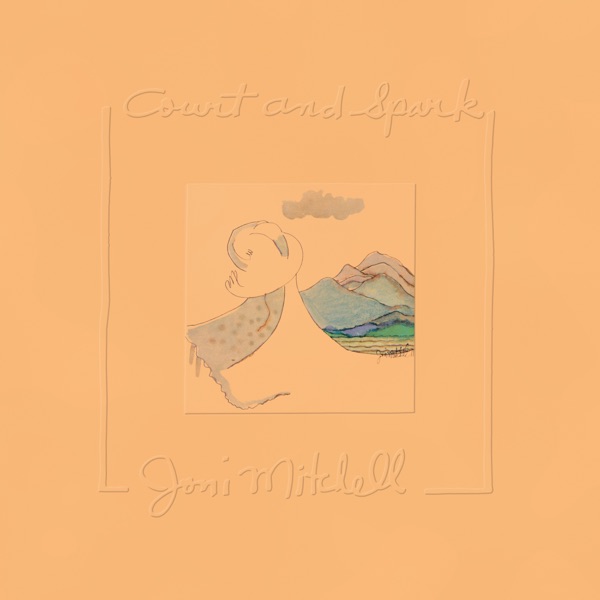
Court and Spark
Court and Spark
1974
Joni Mitchell Live: Bread & Roses Festival, 1975
1975
The Hissing of Summer Lawns
1975
Hejira
Hejira
1976
Don Juan’s Reckless Daughter
1977
Mingus
Mingus
1979
Shadows and Light
Shadows and Light
1980
♫
Wild Things Run Fast
1982
♫
Live at Red Rocks
1983
♫
Live at Wembley Arena, 4/24/83
1983
♫
Dog Eat Dog
1985
Chalk Mark in a Rain Storm
1988
1970-10-28: Royal Albert Hall, London, UK
1990
♫
Night Ride Home
1991
♫
Turbulent Indigo
1994
♫
1994-09-12 Santa Monica (KCRW-FM)
1994
♫
Live at the Fez 1995
1995
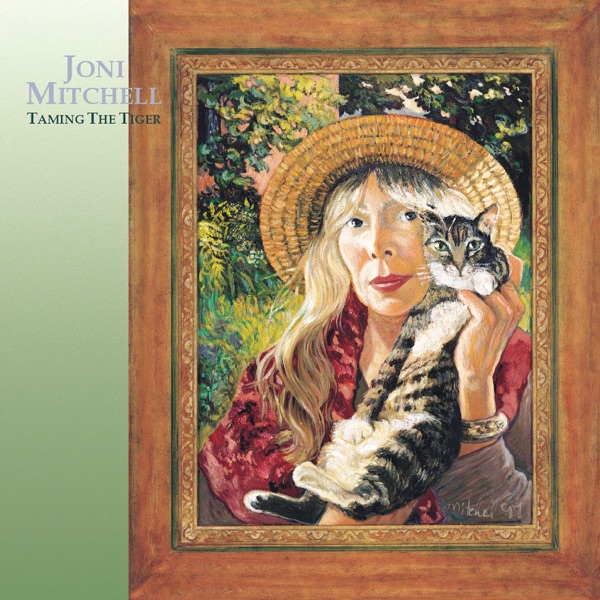
Taming the Tiger
Taming the Tiger
1998
♫
Painting With Words and Music
1999
Both Sides Now
Both Sides Now
2000
Travelogue
Travelogue
2002
♫
BBC In Concert
2004
♫
The Circle Game
2007
Shine
Shine
2007
The Seeding of Summer Lawns
2009
♫
Amchitka: The 1970 Concert That Launched Greenpeace
2009
♫
Live at the Second Fret 1966
2014

Collaborations

Live on Youtube

Explore Further

Selected connections
Bassist, USA
Jaco Pastorius
His fretless bass on Hejira redefined what the instrument could do underneath a singer.
Explore →
Album, 1979
Mingus
Her most direct jazz statement — lyrics written to Charles Mingus's final compositions.
Explore →
Saxophonist, USA
Wayne Shorter
A recurring collaborator across her late-70s and 80s work, softening every record he touched.
Explore →

Who's playing
Listen next
Recording Info
Track listing
Musicians
Further Reading
Read more

Where next?

More by this artist

Albums with the same musicians

From the same era

Similar artists

inside the sleeve
Growing
Jazz, explained without pretension.
Read · Follow the connections · Press play
Right now: 7,100+ albums · 440+ artists
Start here
New to jazz? These artists are good places to start.
Loading…
Explore
Nine records worth getting lost in.
Born today
Album of the day
A landmark record, every day.
Read
  • Loading…
Article archive →
Recently added
Purpose
Inside the Sleeve is your companion on a journey through jazz — not a textbook, but something closer to a knowledgeable friend sitting next to you while you listen. Read about an artist, press play, follow a connection, discover an album you didn't know you needed.
Suggestions
Read

Articles

Essays, guides, and lists about jazz and the records that matter.

Loading…

Genre

Key Artists
Further Reading

Essential Albums

Related Genres

In This Genre

About

Inside the Sleeve

Work in progress

Inside the Sleeve grows continuously — new artists and albums are added, essays refined, as visitors explore and our editors follow up on what they find. Content, features, and design are still evolving; use the Report error button on any page to flag something that seems off.

Content

Every artist, album, and release date on Inside the Sleeve is real — verified against trusted sources including MusicBrainz and Wikipedia. We don't invent discographies or fabricate records. AI compiles that verified information into readable prose — essays on artists, albums, and the music itself. We can't manually review every essay before publishing, but every reported error is checked by a human editor.

Inside the Sleeve is not a review site. We're not here to rate or rank — we're here to guide you in. Where an album stands out, we'll say so. Where an artist changed everything, you'll know why. But we won't tear anything down. Jazz history is complex and sources sometimes disagree — if you spot something that seems off, please report it.

Streaming

Inside the Sleeve links to Spotify and Apple Music so you can listen while you read. These are not affiliate links. For Spotify, links open a search on open.spotify.com — we do not have direct links to specific recordings. For Apple Music, direct links are used where available, otherwise a search is opened.

Your choice of streaming service is stored locally in your browser only. It is never sent to our servers.

We're working on deeper Spotify integration, including direct links to specific recordings.

Privacy

Inside the Sleeve does not collect personal data and does not use cookies. We count page visits anonymously using a self-hosted analytics tool — no personal identifiers are stored, and the data never leaves our own server. The only preference stored on your device is your streaming service choice, saved locally in your browser and never transmitted.

When you submit a suggestion or error report, the text you write is stored in our database. No name or email is required or collected unless you choose to provide one.

Third-party services

Spotify and Apple Music are independent services with their own terms of use and privacy policies. Inside the Sleeve is not affiliated with or endorsed by either company.

Support

Inside the Sleeve is free and ad-free. If you enjoy it, a coffee helps cover server costs and keeps the project going.

Amazon

Some book recommendations on Inside the Sleeve link to Amazon. Buying through these links costs you nothing extra — but Amazon pays us a small commission, which goes directly towards keeping the site running. It's a simple way to support the project if you were going to buy the book anyway.

As an Amazon Associate, Inside the Sleeve earns from qualifying purchases.

Questions or feedback? Use the suggestion box on the front page.

Inside the Sleeve — A guide for those who want to go beyond the obvious About & Privacy