Where do you listen?
Choose your streaming service
inside the sleeve
Loading…
inside the sleeveITS
⌕
Read About
Saxophone & Composition - USA - Hard Bop to Fusion

Wayne
Shorter

1933 - 2023, Newark, New Jersey, USA

Wayne Shorter was a tenor and soprano saxophonist whose restless compositional mind refused easy categorization across seven decades. Whether in the austere modernism of Art Blakey's messengers, the modal sophistication of Miles Davis's second great quintet, or the electrified experimentalism of Weather Report, Shorter carved a path defined by intellectual rigor and spiritual searching. His melodies were angular and unpredictable; his sound was lean and penetrating; his vision was uncompromising.

Hard BopModal JazzJazz Fusion
Wayne Shorter

The Shapes of Things Unspoken

Wayne Shorter grew up in Newark right after World War II, when jazz was everywhere and changing fast. But instead of just hanging around clubs learning from older players, he studied composition seriously and really paid attention to what the bebop guys were doing with harmony. When he joined Art Blakey's Jazz Messengers in 1959, he came in already knowing exactly what he wanted to write. Songs like "Footprints," "Infant Eyes," and "The All Seeing Eye" weren't just additions to the band—they actually made everyone raise their game. His tenor saxophone sound was cool and inward-looking, nothing like the warm, robust tone most of his peers were going for. He played more carefully, more like he was working something out.

Everything accelerated in 1964 when Miles Davis built his second great quintet around Shorter's writing and Herbie Hancock's harmonic thinking. For about five years straight, Shorter and Miles made some of the most challenging and beautiful jazz records ever—E.S.P. (1965), Miles Smiles (1966), Nefertiti (1968). These albums didn't treat the melody as the whole point; it was more like a starting place. On soprano saxophone, Shorter played with the kind of boldness John Coltrane had shown, finding things on that instrument nobody else was really exploring. The way he played, his lines didn't just make you feel something—they actually described specific feelings, if that makes sense.

When electric instruments started taking over in the early seventies, Shorter didn't resist it. He and keyboardist Joe Zawinul started Weather Report in 1971 because they genuinely believed electric sounds could expand what jazz could do. It wasn't just rock drums behind jazz solos—they actually rethought how rhythm and texture could work together. On soprano, Shorter would play these intricate melodies that wove through Zawinul's keyboards without getting lost in them. Heavy Weather (1977) showed that you could sell a lot of records and still make real art.

Later on, Shorter got more thoughtful about what jazz meant spiritually, especially after embracing the Bahá'í faith. His solo records in the nineties and two thousands, often with Hancock on piano, showed someone still learning, still exploring. Even when he was older, his soprano saxophone sounded like it was asking questions—not showing off answers, just genuinely curious about what was possible.

Facts
BornAugust 25, 1933, Newark, New Jersey
DiedMarch 2, 2023, Los Angeles, California
Primary InstrumentsTenor saxophone, soprano saxophone
Active Period1959 - 2023
Known forCompositional innovation, modal jazz, fusion, Weather Report, Miles Davis second great quintet
Connections
Art BlakeyBandleader and mentor, New York
→
Miles DavisCollaborator and bandleader, New York
→
Joe ZawinulCo-founder of Weather Report, Vienna
→
Herbie HancockFrequent collaborator and bandmate, Chicago
→
Ethan IversonPianist and contemporary interpreter, New York
→
Read more
GuideJaco Pastorius at 75: before him, the bass stayed out of the wayExplainerWhat is modal jazz?LabelBlue Note Records: 10 albums that defined a label

Discography

24 records
Speak No Evil
Speak No Evil
1965
Super Nova
Super Nova
1960
Wayning Moments
Wayning Moments
1962
Night Dreamer
Night Dreamer
1964
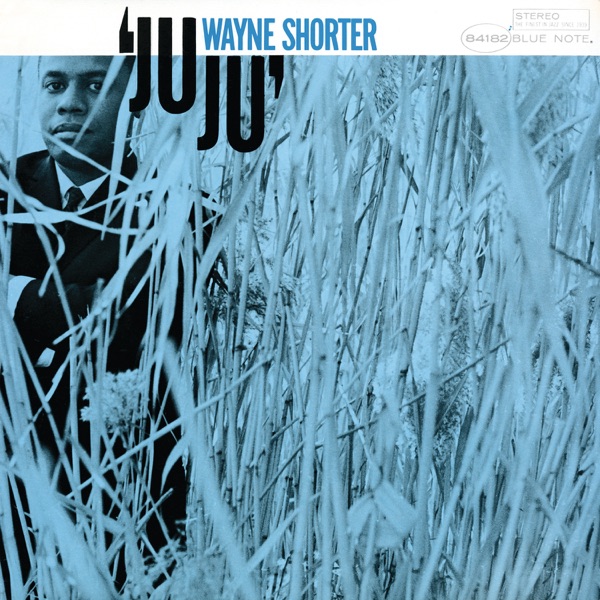
JuJu
JuJu
1964
Classic
Classic
1966
The All Seeing Eye
The All Seeing Eye
1966
Adam's Apple
Adam's Apple
1967
Schizophrenia
Schizophrenia
1969
Native Dancer
Native Dancer
1975
The Soothsayer
The Soothsayer
1979
Etcetera
Etcetera
1980
Joy Ryder
Joy Ryder
1988
A Tribute to Miles
A Tribute to Miles
1994
High Life
High Life
1995
Footprints Live!
Footprints Live!
2002
Atlantis
Atlantis
♫
Tribute to John Coltrane: Live Under the Sky
Second Genesis
Second Genesis
Moto Grosso Feio
Moto Grosso Feio
Introducing Wayne Shorter
Phantom Navigator
Phantom Navigator
♫
En concert avec Europe 1: Olympia, 13 Mai 1961
Odyssey of Iska
Odyssey of Iska

Collaborations

Live on Youtube

Explore Further

Selected connections
Album, 1965
E.S.P.
Shorter's compositional brilliance fully realized within Miles Davis's second quintet framework.
Explore →
Album, 1966
Nefertiti
The apotheosis of modal composition—a masterpiece where melody and harmony dissolve into pure introspection.
Explore →
Album, 1973
Heavy Weather by Weather Report
Shorter's evolution into fusion while maintaining unwavering compositional vision and spiritual depth.
Explore →
Saxophonist, USA
Coltrane, John
The soprano saxophone innovator who influenced Shorter's approach to the instrument's expressive potential.
Explore →
Composer, USA
Monk, Thelonious
The compositional eccentric whose uncompromising vision paved the way for Shorter's harmonic independence.
Explore →

Who's playing
Listen next
Recording Info
Track listing
Musicians
Further Reading
Read more

Where next?

More by this artist

Albums with the same musicians

From the same era

Similar artists

inside the sleeve
Growing
Jazz, explained without pretension.
Read · Follow the connections · Press play
Right now: 7,100+ albums · 440+ artists
Start here
New to jazz? These artists are good places to start.
Loading…
Explore
Nine records worth getting lost in.
Born today
Album of the day
A landmark record, every day.
Read
  • Loading…
Article archive →
Recently added
Purpose
Inside the Sleeve is your companion on a journey through jazz — not a textbook, but something closer to a knowledgeable friend sitting next to you while you listen. Read about an artist, press play, follow a connection, discover an album you didn't know you needed.
Suggestions
Read

Articles

Essays, guides, and lists about jazz and the records that matter.

Loading…

Genre

Key Artists
Further Reading

Essential Albums

Related Genres

In This Genre

About

Inside the Sleeve

Work in progress

Inside the Sleeve grows continuously — new artists and albums are added, essays refined, as visitors explore and our editors follow up on what they find. Content, features, and design are still evolving; use the Report error button on any page to flag something that seems off.

Content

Every artist, album, and release date on Inside the Sleeve is real — verified against trusted sources including MusicBrainz and Wikipedia. We don't invent discographies or fabricate records. AI compiles that verified information into readable prose — essays on artists, albums, and the music itself. We can't manually review every essay before publishing, but every reported error is checked by a human editor.

Inside the Sleeve is not a review site. We're not here to rate or rank — we're here to guide you in. Where an album stands out, we'll say so. Where an artist changed everything, you'll know why. But we won't tear anything down. Jazz history is complex and sources sometimes disagree — if you spot something that seems off, please report it.

Streaming

Inside the Sleeve links to Spotify and Apple Music so you can listen while you read. These are not affiliate links. For Spotify, links open a search on open.spotify.com — we do not have direct links to specific recordings. For Apple Music, direct links are used where available, otherwise a search is opened.

Your choice of streaming service is stored locally in your browser only. It is never sent to our servers.

We're working on deeper Spotify integration, including direct links to specific recordings.

Privacy

Inside the Sleeve does not collect personal data and does not use cookies. We count page visits anonymously using a self-hosted analytics tool — no personal identifiers are stored, and the data never leaves our own server. The only preference stored on your device is your streaming service choice, saved locally in your browser and never transmitted.

When you submit a suggestion or error report, the text you write is stored in our database. No name or email is required or collected unless you choose to provide one.

Third-party services

Spotify and Apple Music are independent services with their own terms of use and privacy policies. Inside the Sleeve is not affiliated with or endorsed by either company.

Support

Inside the Sleeve is free and ad-free. If you enjoy it, a coffee helps cover server costs and keeps the project going.

Amazon

Some book recommendations on Inside the Sleeve link to Amazon. Buying through these links costs you nothing extra — but Amazon pays us a small commission, which goes directly towards keeping the site running. It's a simple way to support the project if you were going to buy the book anyway.

As an Amazon Associate, Inside the Sleeve earns from qualifying purchases.

Questions or feedback? Use the suggestion box on the front page.

Inside the Sleeve — A guide for those who want to go beyond the obvious About & Privacy