1964 · Album
JuJu
Recorded August 12, 1964 · Blue Note Records · Produced by Alfred Lion
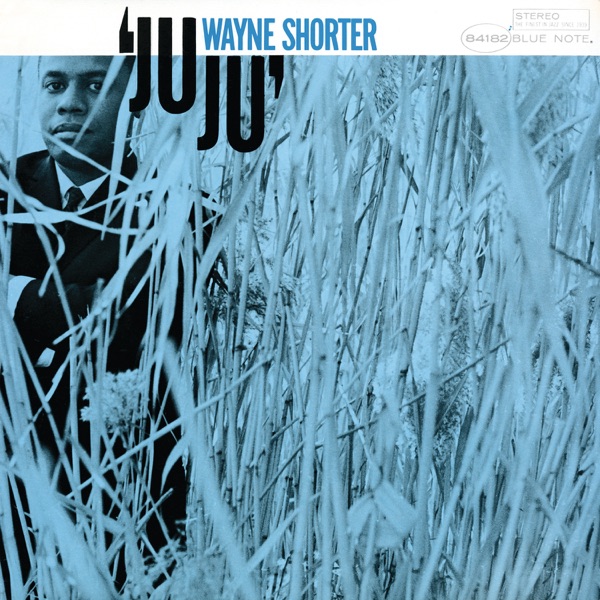
Shorter's Mysterious Voices in the Dark
JuJu captures Wayne Shorter at his most cryptic, composing puzzles that his bandmates are still solving.
JuJu arrives as Wayne Shorter (1964) is establishing himself as one of jazz's most restless voices, a composer who writes tunes that seem to dodge your understanding even as they pull you in. This isn't a debut—Shorter had already made his mark as a saxophonist and composer—but it's the album where his stubborn originality really declares itself. The title track immediately tells you something's different. Shorter's soprano sax enters like a voice asking a question nobody quite understands, while Elvin Jones' drumming unfolds with the logic of weather rather than a steady pulse. The band here—with McCoy Tyner on piano, Reggie Workman on bass, and Shorter on tenor as well—operates in what feels like organized chaos, each player listening hard but rarely locking into groove the way you'd expect.
What makes JuJu difficult and compelling is that Shorter refuses to write melodies you can hum. Instead he sketches moods and harmonic territories, then lets his players navigate the dark. Tracks like "Ping Pong" move with angular energy, while "Moment's Notice" (a Coltrane composition, oddly enough) gets reshaped into something more hermetic and tense. Tyner's piano lines twist around Shorter's compositions rather than supporting them, and Jones' drumming on "Footprints" feels almost interrogative, questioning the ground beneath everything else. It's not easy listening, but it rewards close attention.
This record sits at the intersection of where Shorter came from—the hard bop world of Art Blakey's Messengers—and where he was heading toward something more abstract and searching. It's not his most accessible work, and it's not where you'd start with him, but it's essential if you want to understand how he became one of jazz's most uncompromising voices. The album feels like overhearing a private conversation you're not entirely equipped to understand, which is exactly the point.
Who's playing
Where next?
More by Wayne Shorter
All 24 albums →


The musicians on this record

The Real McCoy 1967
McCoy Tyner
plays piano here
plays piano here

Dear John C. 1965
Elvin Jones
plays drums (drum set) here
plays drums (drum set) here


