Vienna by Way of Birdland
Before Weather Report, before the Fender Rhodes became his signature voice, Zawinul spent years as a working sideman absorbing the African American musical tradition from the inside. His time with Cannonball Adderley through most of the 1960s was the education that mattered most. The Adderley band played a warm, blues-soaked soul jazz, and Zawinul fit in so naturally that listeners often assumed he shared that background. 'Mercy, Mercy, Mercy,' the slow-burning gospel-inflected piano piece he wrote for the group, became a genuine crossover hit — the kind of song that sounds like it has always existed. That ability to write melody people feel they already know would define him for the rest of his career.
His work on Miles Davis's In a Silent Way (1969) and Bitches Brew (1970) placed him at the center of the electric revolution in jazz. Zawinul contributed the title piece to 'In a Silent Way' — a slowly unfolding, meditative piece built from repetition and texture rather than conventional chord changes. It sounds like a place more than a song. Those sessions showed him what electric instruments could do when you stopped thinking of them as substitutes for acoustic ones and started treating them as something new altogether.
Weather Report, which he co-founded with Wayne Shorter in 1970, became the laboratory for everything he had learned. The band's sound shifted considerably across its fifteen-year run, but Zawinul was always its architect. He layered synthesizers, electric piano, and rhythm in ways that created dense, humid atmospheres — the music often feels warm and slightly pressurized, like a room where something is about to happen. Heavy Weather (1977), the album that contained 'Birdland,' was the moment the group reached a mass audience without obviously pandering to one. 'Birdland' itself is a strange achievement: a piece that references the legendary New York club and captures something of jazz history while being built almost entirely from synthesizer riffs and a groove that owes as much to funk as to bebop.
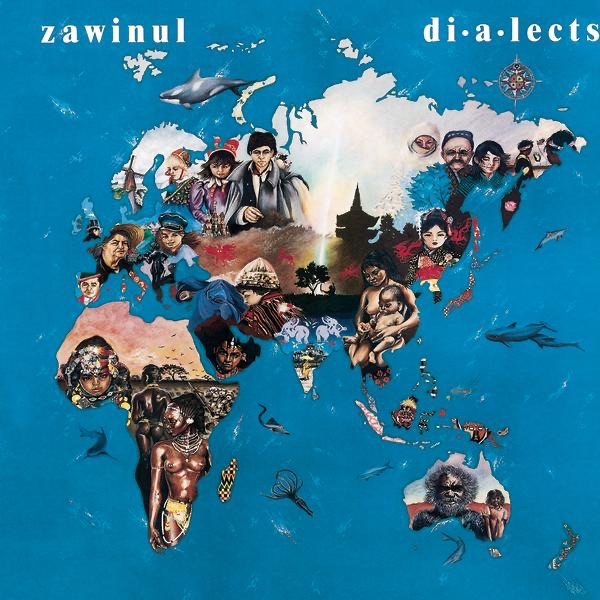
After Weather Report dissolved in the mid-1980s, Zawinul formed the Zawinul Syndicate, a rotating world music ensemble that drew on African, Middle Eastern, and European folk traditions alongside jazz and funk. The Syndicate was less celebrated than Weather Report but it showed his restless curiosity — he was genuinely interested in musical systems outside the jazz tradition, not just borrowing their surface textures. The recordings from this period reward patience; they can feel busy and sprawling, but the rhythmic invention is real.
What makes Zawinul worth your time is specificity. He had a particular sound — dense left-hand voicings, a fondness for repeating melodic cells that build gradually, a way of making synthesizers breathe — that you can identify within a few bars. He was also a serious melodist in an era when melody sometimes got sacrificed for texture or complexity. If you're coming to him fresh, start with the Adderley years to hear his roots, then move to 'In a Silent Way,' then let 'Heavy Weather' be the bridge to Weather Report's deeper catalog. The journey makes more sense in that order.