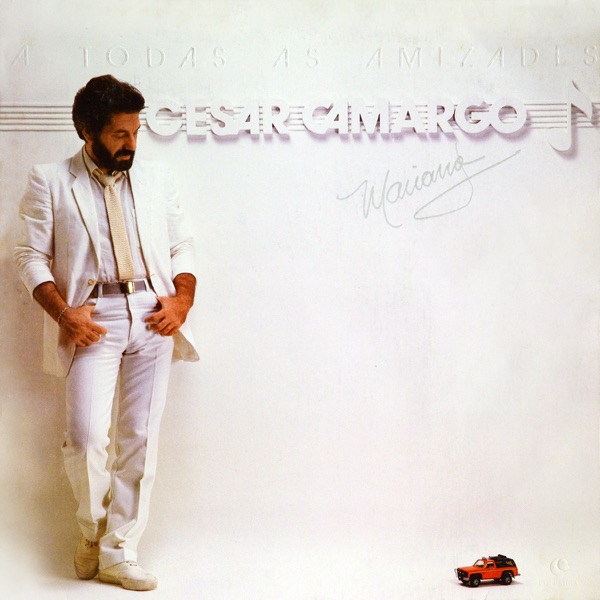
The Architect Behind the Voice
If you know Cesar Camargo Mariano at all, you probably know him as the piano behind Elis Regina — and that's fair, because their partnership produced some of the most sophisticated pop-adjacent records to come out of Brazil. He arranged, played, and shaped albums like Elis & Tom (1974), stacking chords under her voice with a precision that never once felt cold. That's the trick with Mariano: he can be incredibly harmonically dense and still sound relaxed, like he's not trying to prove anything, just solving a puzzle he happens to enjoy.
Before all that he came up through samba jazz, playing in trios in São Paulo during the '60s when Brazilian musicians were absorbing bebop and Bill Evans-style harmony and running it through samba's rhythmic logic. You can hear that lineage in everything he's done since — the left hand keeps time like a percussion section, the right hand floats these long, unhurried melodic lines on top. It's not showy virtuosity. It's control.
What separates him from a lot of pianists working in the same Brazilian jazz space is how comfortable he is as an arranger, not just a soloist. He thinks in terms of the whole record — strings, horns, vocal phrasing, the works — which is part of why singers wanted him in the room. His own solo and trio albums scale that same instinct down to just piano, bass, and drums, and they reward patience. Nothing screams for attention. You just notice, twenty minutes in, that you've been completely absorbed.
If you're coming to him fresh, don't expect fireworks. Expect somebody who has spent sixty years getting quieter and more precise, not louder and flashier. That's rare, and it's worth your time.