Genre
Latin Jazz
1940s–Present — New York, Havana, San Juan — Hot, Rhythmic, Sophisticated
Latin jazz is what happens when jazz harmony and improvisation lock in with Afro-Cuban, Puerto Rican, and Brazilian rhythmic traditions — and neither side gives an inch. The result is music that swings and rolls at the same time, with percussion doing the structural work that a drummer might do in a standard jazz context. It has been one of the most generative cross-cultural conversations in all of American music.

The story really starts in New York in the 1940s, when Cuban musicians and jazz players began finding each other in earnest. Mario Bauzá, a trumpeter and musical director who had played with Chick Webb and Cab Calloway, understood both worlds from the inside. He pushed his bandleader and brother-in-law Frank Grillo — known as Machito — to blend big band arrangements with the rhythmic engine of the Afro-Cuban son. What they built together in Machito and His Afro-Cubans was not a novelty act. It was a working orchestra that could satisfy dancers and serious listeners simultaneously, and it gave jazz musicians a new rhythmic vocabulary to experiment with.
The bebop generation caught on fast. Dizzy Gillespie was particularly serious about it — he brought in Cuban percussionist Chano Pozo and the results were immediate and electric. Pozo brought the conga and a deep grounding in Afro-Cuban religious drumming traditions into Gillespie's band, which was already one of the most harmonically advanced units in jazz. The combination didn't dilute either tradition; it pushed both forward. The partnership was tragically short — Pozo was killed in 1948 — but the recordings they made established that this synthesis was something permanent, not a passing experiment.
The 1950s and 60s brought Latin jazz into a new phase through the work of Tito Puente and Tito Rodriguez, who ran rival orchestras out of New York and generated an intense, friendly competition that kept standards high and audiences obsessive. Puente in particular never stopped recording or touring, and his timbales playing was a clinic in how to lead a band from the center of the rhythm section. Meanwhile, the bossa nova wave from Brazil introduced a cooler, more introspective current — João Gilberto and Antônio Carlos Jobim were doing something quieter than anything coming out of the salsa world, but it carried the same commitment to rhythm as the foundation of everything.
By the 1970s and beyond, musicians like Eddie Palmieri and Chucho Valdés were pushing the harmonic and structural complexity of Latin jazz into territory that could compete with anything happening in straight-ahead jazz. Palmieri's piano playing was aggressive and angular in ways that surprised people who expected something more decorative. Valdés, leading Irakere out of Havana, was absorbing jazz, rock, and Afro-Cuban sacred music all at once. What holds all of this together across eight decades is a shared insistence that rhythm is not background — it is the argument the music is making.
The rhythm is not decoration here. It is the whole point.
Essential Albums
♫
Afro-Cuban Jazz Suite
Machito and His Afro-Cubans with Charlie Parker · 1950
One of the first fully realized meetings of bebop and Afro-Cuban music, with Bird sounding completely at home over rhythms he had never recorded with before.
♫
Dance Mania
Tito Puente · 1958
Puente at the height of his powers with a big band that could move a room of thousands — this is the record that defines the New York Latin dance hall at its best.
♫
El Sonido Nuevo
Eddie Palmieri and Cal Tjader · 1966
An unlikely pairing — Palmieri's hard-edged New York piano against Tjader's West Coast vibraphonist sensibility — that somehow produces something tighter and more focused than either brought separately.
♫
Irakere
Irakere · 1979
The album that introduced Chucho Valdés and his Havana-based band to an international audience, blending jazz, rock, and Afro-Cuban sacred traditions into something that still sounds like nothing else.
In This Genre
65 artists in your library♫
Toquinho
Guitar - Brazil - Bossa Nova
Toquinho picked up a guitar as a kid in São Paulo and never really put it down, eventually becoming the steady hand behind some of Brazil's most beloved songs. He's best known for his decade-plus partnership with poet Vinicius de Moraes, a pairing that turned casual guitar strumming into something you could build an entire songbook around.
♫
Vinx
Voice & Percussion - USA - Afro-Cuban Jazz / World Groove
Vinx is a singer, percussionist, and one-man groove machine who spent years as a world-class decathlete before discovering that his real arena was music. His sound sits somewhere between Afro-Cuban rhythm, funk, and jazz — built around his voice, his congas, and a personality so warm it practically radiates through the speakers. He is not widely famous, which is exactly the kind of thing that makes finding him feel like a genuine discovery.
♫
Irakere
Ensemble - Cuba - Latin Jazz
Irakere started as a rule-breaking experiment inside Cuba's state-run music system and turned into one of the loudest, most technically stunning bands to come out of Havana. They took santería drumming, big band horns, rock guitar and bebop chops and mashed them into something nobody in the US or Cuba had quite heard before.
♫
Claudia Acuña
Vocals - Chile - Vocal Jazz
Claudia Acuña left Santiago for New York in the mid-90s with no real plan beyond singing, and ended up becoming one of the city's most trusted voices in a scene that doesn't hand that out easily. She sings in Spanish and English like they're the same language, carrying the rhythms of Chilean folk music straight into the heart of modern jazz.
♫
Peter Apfelbaum
Saxophone, Keyboards - USA - Spiritual Jazz / Fusion
Peter Apfelbaum is the guy who never met a genre he didn't want to throw into the pot. He built his reputation leading a sprawling, horn-heavy collective called the Hieroglyphics Ensemble, a band that sounded like it had one foot in a Harlem big band and the other in a Lagos street parade. Spend any time with his records and you start to understand he's less interested in jazz as a category than jazz as a meeting place.
♫
Gato Barbieri
Tenor Saxophone - Argentina - Latin Jazz / Free Jazz
Gato Barbieri played the tenor saxophone like he was shouting across a canyon — raw, cracked, full of feeling. He started out screaming inside the free jazz movement in Europe, then turned around and built a sound soaked in the folk music of his native Argentina, and somewhere in between he scored a movie that made him briefly, strangely famous.
♫
Mario Bauza
Trumpet - Cuba - Latin Jazz
Mario Bauza spent half his career inside American swing bands before he decided the missing ingredient in jazz was Cuba itself. He didn't just borrow a clave rhythm here and there — he built a whole band around the idea that African American swing and Afro-Cuban rhythm were cousins who'd simply never been properly introduced.
Art Blakey
Drums - United States - Hard Bop
Art Blakey was the heartbeat of hard bop, a drummer whose thunderous technique and spiritual depth transformed the ensemble sound of modern jazz. Leading the Jazz Messengers for over three decades, he became the music's most dependable catalyst for discovering and nurturing young talent. His infectious polyrhythmic style and unwavering commitment to swing made him an institution unto himself.
♫
Willie Bobo
Percussion - United States - Latin Jazz
Willie Bobo grew up in Spanish Harlem banging on whatever was around until the banging turned into a career. He spent his life translating Afro-Cuban rhythm into something New York and Los Angeles could dance to, and along the way he helped invent a sound that was neither straight Latin nor straight jazz but its own thing entirely.
♫
James Booker
Piano - USA - New Orleans R&B / Jazz
James Booker was the most technically staggering pianist New Orleans ever produced, which is saying a lot given the competition. He played classical, jazz, R&B, gospel, and funk simultaneously, not as a party trick but because that was just how his brain worked. He was also wildly self-destructive, deeply eccentric, and largely broke when he died at 43 — which means most people still don't know his name the way they should.
♫
Charlie Byrd
Guitar - United States - Latin Jazz / Cool Jazz
Charlie Byrd was a classical guitarist who wandered into jazz and ended up changing what American listeners thought a samba could sound like. He played nylon strings, fingerstyle, often without an amp, and somehow that quiet, precise sound became the engine behind one of the biggest jazz records of the 1960s.
♫
Dorival Caymmi
Voice, Guitar - Brazil - Samba / MPB
Dorival Caymmi sang the ocean like he'd grown up with salt in his lungs, because he had. He wrote the songs that Bahia sounds like in people's heads — fishermen, saints, coconut palms, women walking slow in the heat — and in doing so handed the next generation of Brazilian musicians a whole vocabulary they didn't know they needed yet.
♫
Evan Christopher
Clarinet - United States - Early Jazz
Evan Christopher picked up the clarinet in California and ended up rebuilding a New Orleans tradition that most people assumed had quietly died out. He plays the old Creole clarinet style the way it was meant to be played — vocal, bluesy, a little dangerous — and he's spent his career proving it still has somewhere to go.
♫
Billy Cobham
Drums - USA - Jazz Fusion
There are drummers who keep time, and then there is Billy Cobham, who seemed to reinvent what a drum kit could do in real time. His work on Miles Davis's electric sessions and then with Mahavishnu Orchestra made it impossible to hear rock and jazz the same way again. He hit harder, faster, and more precisely than almost anyone around him, and he made it look effortless.
♫
Nicola Conte
Guitar - Italy - Spiritual Jazz & Latin Jazz Revival
Nicola Conte didn't come up through smoky clubs or conservatories — he came up through record crates. A DJ from Bari who fell hard for bossa nova, spiritual jazz, and Blue Note deep cuts, he turned that obsession into a career making new records that sound like lost ones. He's less a jazz musician in the traditional sense and more a curator who learned to play.

Chick Corea
Piano - United States - Fusion, Bebop, Latin Jazz
Chick Corea was a virtuoso pianist whose restless creativity reshaped jazz across five decades, from his revolutionary work with Miles Davis to his genre-defying fusion experiments. His fleet fingers and harmonic sophistication made him one of the most recorded and influential jazz musicians of the modern era. Whether leading his own ensembles or collaborating across genres, Corea remained a tireless innovator who refused to settle into any single style.
♫
Maria Creuza
Vocalist - Brazil - Bossa Nova / MPB
Maria Creuza is the voice a lot of bossa nova fans don't know they already love — the one singing alongside Vinicius de Moraes and Toquinho on those warm, loose live recordings that feel like eavesdropping on a great night out. She never chased the spotlight the way some of her peers did, but her phrasing on songs like 'Tarde em Itapoã' has stuck around for decades.
♫
Paquito D'Rivera
Saxophone & Clarinet — Cuba / USA — Latin Jazz, Bebop
Paquito D'Rivera grew up in Havana playing bebop and classical clarinet, defected from Cuba in 1980, and promptly became one of the most restless and joyful horn players in jazz. He has never been content to stay in one lane — you'll find him blowing hard bop one night and conducting a chamber piece the next. The sheer range would be exhausting if it weren't so clearly fun for him.
♫
Vinicius De Moraes
Guitar, Voice - Brazil - Bossa Nova / Latin Jazz
Poet, playwright, diplomat, and songwriter, Vinicius de Moraes was the man who put words to bossa nova before most people knew what bossa nova was. He wrote the lyrics to 'Garota de Ipanema' and the libretto for 'Orfeu da Conceição,' the play that became the film Black Orpheus — but reducing him to those two things is like describing a river by its mouth. He spent his life moving between the literary and the musical, and the seam between those two worlds is where his best work lives.
♫
Raul De Souza
Trombone · Brazil · Jazz-Funk / Brazilian Jazz
Raul De Souza is a Brazilian trombonist who figured out how to make one of jazz's least glamorous instruments sound genuinely funky — warm, sliding, almost vocal. He came up through the Rio samba and bossa nova scene before landing in the United States in the 1970s, where he recorded some of the most enjoyable Brazilian-flavored jazz-funk of that decade. He never became a household name, but anyone who has heard his playing tends to remember it.
♫
Quarteto Em Cy
Vocal Harmony - Brazil - Vocal Jazz
Four sisters from Salvador, Bahia, whose names all happened to start with the same two letters, turned that coincidence into a group name and then into one of the great vocal harmony outfits of Brazilian music. They built a sound out of close, interlocking voices that could handle samba, bossa, and MPB with the same ease a jazz vocal group handles standards.
♫
Gil Evans
Arranger/Pianist - Canadian/American - Cool Jazz
Gil Evans didn't solo much and barely wrote conventional melodies, but he reshaped how jazz could sound when a whole orchestra breathed as one instrument. He's the quiet architect behind some of the most beautiful records Miles Davis ever made, and a guy who kept reinventing himself well into his sixties.
♫
Richard Galliano
Accordion - France - Jazz Fusion
Richard Galliano took an instrument everybody associated with sidewalk cafes and Parisian clichés and made it swing, cry, and burn like a saxophone. He didn't just play jazz on accordion — he rebuilt the whole vocabulary of the instrument so it could sit comfortably next to a bebop horn or a tango bandoneon. Decades later, he's still the guy serious musicians call when they want that sound.
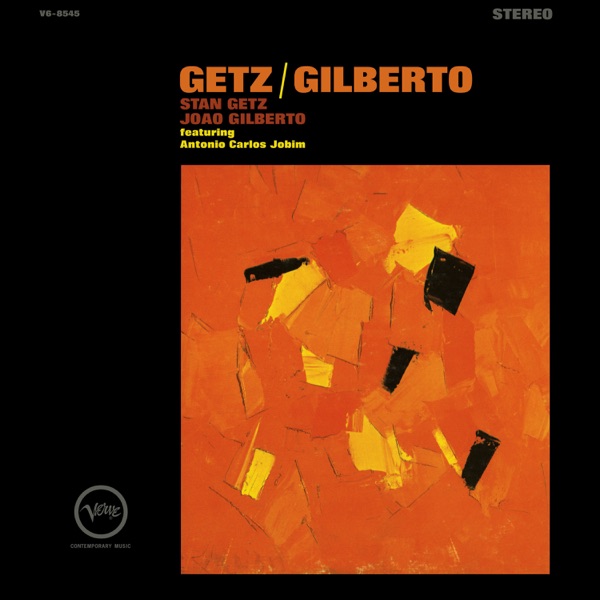
Stan Getz
Tenor Saxophone - United States - Cool Jazz & Bossa Nova
Stan Getz was the most lyrical tenor saxophonist of the cool jazz era, a master of ballad playing whose breathy, intimate tone became the sound of sophisticated restraint. He bridged the worlds of bebop and European sensibility, and later became the unlikely ambassador who brought bossa nova to American audiences, transforming a Brazilian regional style into a global phenomenon. His partnership with João Gilberto and Astrud Gilberto on "Getz/Gilberto" remains one of jazz's most commercially successful and artistically significant albums.
♫
Astrud Gilberto
Vocals · Brazil · Bossa Nova / Latin Jazz
Astrud Gilberto walked into a recording session in 1963 with no professional singing experience and walked out having recorded one of the most recognizable vocal performances in the history of popular music. Her voice — small, cool, almost conversational — turned out to be exactly what bossa nova needed to reach the world. She never quite got the credit she deserved for it.
♫
João Gilberto
Vocals & Guitar - Brazil - Bossa Nova
João Gilberto didn't just sing bossa nova—he invented the intimate, conversational vocal approach that became its beating heart. With his impossibly subtle phrasing and revolutionary rhythmic sophistication, he transformed the guitar and voice into a sophisticated dialogue that whispered rather than proclaimed. His influence rippled far beyond Brazil, reshaping how the entire world understood modern popular music.
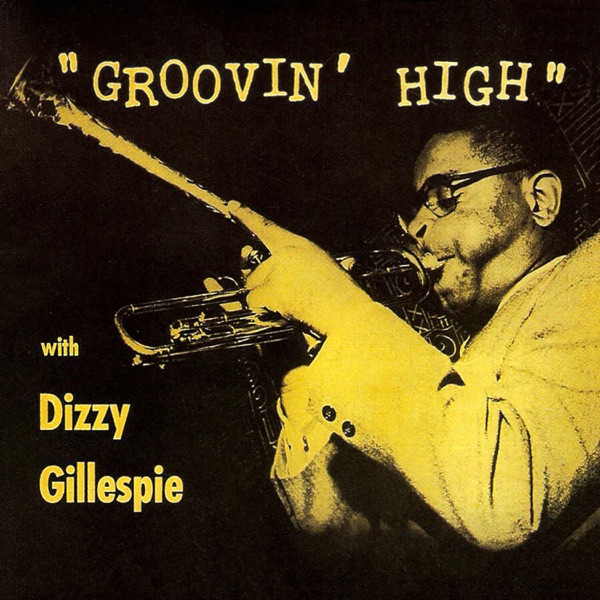
Dizzy Gillespie
Trumpet - United States - Bebop
John Birks Gillespie bent the trumpet into impossible angles and played at velocities that seemed to defy physics. A visionary architect of bebop, he revolutionized jazz improvisation through harmonic innovation and fearless experimentation, leaving fingerprints on everything from Afro-Cuban fusion to world music.

Roy Hargrove
Trumpet - United States - Post-Bop, Hard Bop, Soul Jazz
Roy Hargrove arrived in New York in the late 1980s as a prodigy with a burnished tone and an instinctive grasp of tradition—yet he never mistook reverence for invention. Over three decades, he moved fluidly between bebop, funk, and Afro-Cuban rhythms, always leading with emotion rather than technical display. His best work captured something increasingly rare in jazz: the feeling of a musician genuinely discovering what to play in the moment.
♫
Donald Harrison Jr
Alto Saxophone - USA - Hard Bop / Post-Bop
Donald Harrison grew up with two family businesses: jazz and Mardi Gras Indian tradition. He learned to play alto saxophone the way other kids learn to ride a bike, then went and did the hard work of actually mastering bebop, hard bop, and the deep second-line rhythms of his hometown, and somehow never had to choose between them.
♫
Toninho Horta
Guitar - Brazil - Contemporary Jazz
Toninho Horta plays guitar like he's thinking out loud — chords that bend in directions you don't expect, melodies that wander off and somehow find their way home. He came out of Belo Horizonte's Clube da Esquina scene alongside Milton Nascimento and never really left that world behind, even as he started working jazz rooms and studios from Rio to New York.
♫
Antonio Carlos Jobim
Piano, Guitar - Brazil - Latin Jazz
Jobim didn't just write songs, he built a whole harmonic weather system that jazz musicians have been living inside ever since. Start with 'Garota de Ipanema' and you'll think you know him, but stick around for the deep cuts and you'll find a composer as interested in dissonance and shadow as he was in sunshine and beaches.
♫
Stan Kenton
Piano & Bandleader - USA - Big Band / Avant-Garde
Stan Kenton led one of the loudest, most argumentative orchestras in jazz history — a band that could shake walls and provoke equal amounts of devotion and eye-rolling from critics. He was never content to just swing; he wanted jazz to be taken seriously as concert music, and he pushed his orchestras into territory that made a lot of people genuinely uncomfortable. Whether that ambition always paid off is a debate jazz fans still haven't settled.
♫
Frank Machito (Grillo)
Vocals & Bandleader - Cuba/USA - Latin Jazz
Machito didn't play an instrument in the traditional sense — he sang, shook a pair of maracas, and led one of the great bands in American music history. He and his brother-in-law Mario Bauzá took Cuban dance rhythms and jazz horns and welded them together so tightly that nobody could tell where one ended and the other began.
♫
Miriam Makeba
Vocals - South Africa - Afro-Jazz & Protest Song
Miriam Makeba sang her way out of a township and into exile, then spent thirty years turning that exile into a global stage. She brought Xhosa click songs to American ears who'd never heard anything like it, and she never let anyone forget why she couldn't go home.
♫
Herbie Mann
Flute - USA - Jazz Fusion
Herbie Mann was the guy who made the flute a real jazz instrument, then spent the rest of his career annoying critics by refusing to sit still in one genre. He chased bossa nova to Brazil, funk to Memphis, and highlife to Africa, and he usually came back with a hit record. Jazz snobs sneered, audiences didn't care, and Mann just kept going.
♫
Cesar Camargo Mariano
Piano - Brazil - Latin Jazz
Cesar Camargo Mariano is the guy who made Brazilian jazz piano sound like it was breathing in Portuguese. He built his name in the samba jazz trios of São Paulo in the '60s, then spent the '70s reshaping how MPB records were arranged, most famously alongside his then-wife Elis Regina. Decades later he's still recording, still refining that unmistakable touch — dense harmony, light hands, total control.
♫
Tom McDermott
Piano - USA - New Orleans / Latin Jazz
Tom McDermott is a St. Louis-born, New Orleans-adopted pianist who has spent decades building one of the most quietly distinctive voices in American piano music. He moves between New Orleans second-line grooves, Cuban habanera rhythms, Brazilian choro, and early jazz with the ease of someone who genuinely loves all of it equally. He is not a crossover artist hunting novelty — he is a scholar who plays like he is having a very good time.
♫
Pablo Menares
Bass - Chile - Contemporary Jazz
Pablo Menares is a Chilean bassist who built his reputation on the New York scene through sheer reliability and musicality — the kind of player other musicians call because he makes every gig feel grounded. He moves comfortably between post-bop, Latin rhythms, and more open contemporary contexts without ever sounding like he's trying to cover territory. His playing is supportive without being invisible, and assertive without stepping on anyone.
♫
Airto Moreira
Percussion - Brazil - Jazz Fusion
Airto Moreira showed up in the American jazz scene in the late 1960s with a suitcase full of instruments most musicians had never seen, let alone heard on a jazz record. Within a few years he'd changed what a rhythm section could sound like, sneaking berimbaus and cuicas into sessions that were supposed to be about electric pianos and distorted trumpets. He's one of those players you've heard a hundred times without knowing his name.
♫
Jelly Roll Morton
Piano - USA - Early Jazz
Jelly Roll Morton was one of the first people to actually think about jazz — to sit down and figure out how it worked and then write it down. He came out of New Orleans when the music was still finding its shape, and he spent the rest of his life insisting, sometimes obnoxiously, that he had invented it. He hadn't, exactly, but he understood it earlier and more deeply than almost anyone else.
♫
Milton Nascimento
Vocals / Guitar — Brazil — MPB / Latin Jazz
Milton Nascimento has one of those voices you hear once and never quite shake — a falsetto that can drop into a warm baritone mid-phrase, somehow sounding like a choir even when he's singing alone. Coming out of Minas Gerais in the late 1960s, he fused Brazilian folk tradition, Catholic church music, and jazz harmony into something that didn't have a name at the time. He became one of the central figures of the Clube da Esquina movement and eventually pulled in collaborators from Wayne Shorter to Herbie Hancock without ever losing what made him sound like himself.
♫
Arturo O'Farrill
Piano - Mexico/USA - Latin Jazz
Arturo O'Farrill grew up in the shadow of a famous last name and spent decades figuring out what to do with it. He ended up building something his father never quite got to: a working big band dedicated to keeping Afro-Cuban jazz alive, loud, and unafraid of modern harmony.
♫
Chico O'Farrill
Composer/Arranger - Cuba - Latin Jazz
Chico O'Farrill wrote charts that made big bands sound like they'd grown up speaking two languages at once. He came out of Havana with a classical education and a trumpet, but it was his pen — not his horn — that got him into rooms with Dizzy Gillespie, Machito, and Benny Goodman.
♫
Lincoln Center Jazz Orchestra
Big Band - USA - Swing
This is the house band at Jazz at Lincoln Center, built by Wynton Marsalis to play the music of Duke Ellington, Thelonious Monk, and Charles Mingus the way a symphony plays Beethoven — with the parts written out and the respect baked in. It is a working big band with real soloists, not a museum display case, even if some critics think otherwise.
♫
Charlie Palmieri
Piano - United States - Latin Jazz
Charlie Palmieri ran the dance floors of New York before his younger brother Eddie ever picked up a stick of dynamite on the keyboard. He was the guy who could sight-read a mambo chart, swing a bebop solo, and still keep a room full of dancers moving without breaking a sweat.
♫
Eddie Palmieri
Piano - USA - Latin Jazz
Eddie Palmieri took the hard bop piano he grew up loving and ran it headlong into Afro-Cuban and Puerto Rican rhythms, and the collision produced something that neither jazz nor salsa fully owns. For six decades he has been one of the most restless, argumentative bandleaders in New York — a guy who will stop a groove mid-flight to do something harmonically weird and then dare you to keep up. The music is loud, dense, joyful, and occasionally a little dangerous.
♫
John Patitucci
Bass - United States - Jazz Fusion / Contemporary Jazz
John Patitucci is the rare bassist who can plug in a six-string electric and burn through a fusion set, then pick up an upright and sound like he's been playing Ron Carter's gig for thirty years. He came up through Chick Corea's Elektric Band in the '80s and later found a second life as the anchor of Wayne Shorter's quartet — two very different jobs, both of which he nailed.
♫
Baden Powell
Guitar - Brazil - Afro-Samba
Baden Powell picked up a guitar as a kid in the hills outside Rio and turned it into something nobody else was doing quite the same way — part classical technique, part samba pulse, part something older and stranger pulled from Afro-Brazilian ritual music. He wrote some of the most enduring songs in the Brazilian songbook, then spent decades proving the guitar could carry all of that weight by itself.
♫
Chano Pozo
Percussion - Cuba - Latin Jazz
Chano Pozo showed up in New York not speaking English and left a mark on jazz that's still audible every time a conga drum shows up in a bebop tune. He and Dizzy Gillespie only worked together for about a year and a half, but that was enough time to permanently bend jazz toward Cuba.
♫
Tito Puente
Timbales & Percussion - USA - Latin Jazz
If you were anywhere near a Latin dance hall in New York between 1950 and 2000, you were probably hearing Tito Puente before you even walked through the door. He played timbales like he was conducting an argument — loud, precise, and always winning. Over a career that stretched across mambo, cha-cha, boogaloo, salsa, and jazz, he became the face of Latin music in America without ever abandoning the neighborhood he came from.
♫
Flora Purim
Vocalist - Brazil - Jazz Fusion
Flora Purim didn't sing jazz standards, she sang like an instrument that happened to have a voice attached to it. She came out of Rio, landed in the middle of the fusion boom, and ended up as the sound that made Chick Corea's Return to Forever feel like it was floating instead of just playing fast.
♫
Danilo Pérez
Piano - Panama - Latin Jazz
Danilo Pérez plays piano like someone who grew up with a marching band in one ear and Thelonious Monk in the other — because he did. He's spent decades finding the seams between Panamanian folk rhythm and modern jazz harmony, and along the way became one of the most trusted pianists Wayne Shorter ever worked with.
♫
Elis Regina
Vocalist - Brazil - MPB / Bossa Nova
Elis Regina sang like she had something urgent to tell you and no time to waste being polite about it. She took bossa nova's whisper and gave it lungs, turning Brazilian popular song into something that could stop a room cold.
♫
Gonzalo Rubalcaba
Piano - Cuba - Latin Jazz
Rubalcaba plays piano like he's got four hands and a metronome built into his spine — dazzling technique that somehow never feels like showing off. He came out of Havana with a classical conservatory background and a family full of musicians, and by the time American audiences caught up with him he was already fully formed.
♫
Henri Salvador
Guitar, Vocals - France - Vocal Jazz / Bossa Nova
Henri Salvador spent seventy years being three or four different kinds of famous in France, and jazz was only ever one of them. He started out as a guitarist good enough to trade licks with Django Reinhardt, spent decades as a comic crooner and children's-song novelty act, then at eighty-three became cooler than almost anyone half his age with a bossa-nova record nobody saw coming.
♫
Antonio Sanchez
Drums - Mexico - Post-Bop
Antonio Sanchez is the kind of drummer who makes you forget you're paying attention to the drums. Born in Mexico City and shaped by years inside some of the most demanding working bands in jazz, he built a reputation as a musician's musician long before the film world came calling. Then the Birdman soundtrack happened, and suddenly everyone had an opinion about him.
♫
Arturo Sandoval
Trumpet - Cuba - Latin Jazz
Arturo Sandoval plays trumpet the way some people argue — fast, loud, and absolutely certain he's right. Born in Cuba and trained in classical music before falling hard for jazz, he became one of the most technically ferocious brass players alive, a guy who can hit a double high C and make it swing at the same time. His story is also genuinely dramatic: a defection, a Cold War friendship with Dizzy Gillespie, and a career that took him from Havana to Hollywood.
♫
George Shearing
Piano - England/USA - Cool Jazz
George Shearing was blind from birth and built one of the most recognizable sounds in jazz piano anyway — a lush, close-harmony voicing that made his quintet a hit machine in the 1950s. He wrote 'Lullaby of Birdland' almost as an afterthought, and it outlived nearly everything else he did, which says more about the tune than about the rest of his catalog.
♫
Toots Thielemans
Harmonica & Guitar - Belgium - Jazz / Bossa Nova
Toots Thielemans turned the chromatic harmonica into a jazz voice so warm and flexible that you forget it was ever considered a novelty instrument. Born in Brussels, he spent decades in the United States absorbing bebop, rubbing shoulders with the biggest names in jazz, and quietly becoming the most recorded harmonica player in history. You've heard him on more soundtracks, commercials, and sessions than you probably realize.
♫
Cal Tjader
Vibraphone - USA - Latin Jazz
Cal Tjader was the guy who made Latin jazz feel completely natural coming from a Swedish-American kid from St. Louis. He spent decades recording for Fantasy Records out of San Francisco, building a sound that mixed Afro-Cuban rhythms with cool West Coast jazz in a way that never felt forced. If you've ever heard vibraphone and bongos lock together in a way that makes a room feel warmer, there's a decent chance Tjader was somewhere in the family tree.
♫
Bebo Valdés
Piano – Cuba/Spain – Latin Jazz
Bebo Valdés spent decades being one of the best-kept secrets in Cuban music, largely because he left Cuba in 1960 and effectively vanished from the international radar for a generation. When the world finally caught up with him in the late 1990s, it found a pianist in his eighties who had lost nothing — the touch was still there, the invention was still there, and he clearly had no interest in coasting on nostalgia. He gave some of the most alive performances of his career after most musicians his age had long since retired.
♫
Chucho Valdés
Piano · Cuba · Latin Jazz
Chucho Valdés is the pianist who made Afro-Cuban jazz feel genuinely modern without stripping it of anything essential. As the founder of Irakere in 1970s Havana, he helped build one of the most ferociously original bands in jazz history — one that played for audiences on both sides of the Cold War cultural divide. Decades on, he remains one of the few pianists working today whose left hand alone could anchor an entire band.
♫
Miguel Zenón
Alto Saxophone - Puerto Rico - Contemporary Jazz
Miguel Zenón plays like he's got two things in his ears at once: a bebop lineage running back through Charlie Parker, and the rhythms of his childhood in San Juan. He's spent two decades figuring out how to make those things talk to each other without one swallowing the other, and the result is some of the most personal composed jazz of his generation.
♫
Monica Zetterlund
Voice - Sweden - Nordic Jazz / Bossa Nova
Monica Zetterlund was the voice that made Swedish sound inevitable in jazz — warm, conversational, and quietly assured in a way that never begged for your attention. She worked in two languages and two worlds, recording with some of the finest American musicians while remaining deeply rooted in Swedish folk melody and humor. The combination produced something genuinely rare: a jazz singer who felt completely at home in the idiom without ever losing her own accent.
♫
Paco de Lucía
Guitar · Spain · Flamenco / Jazz Fusion
Paco de Lucía did something genuinely rare: he took a tradition that was already complete and blew it open without breaking it. He was the guitarist who made flamenco speak to jazz musicians, classical players, and rock audiences — not by softening the edges, but by sharpening them. By the time he was done, the vocabulary of the guitar itself had expanded.