The Drummer Who Hit Different
Billy Cobham grew up in New York after his family moved from Panama when he was a child, and the city's musical density left a clear mark. He came up through a serious jazz education, worked with Horace Silver as a young man, and had the technical foundation that serious players respected. But what made him famous wasn't conservatory discipline — it was the way he could take that discipline and absolutely detonate it inside an electric band.
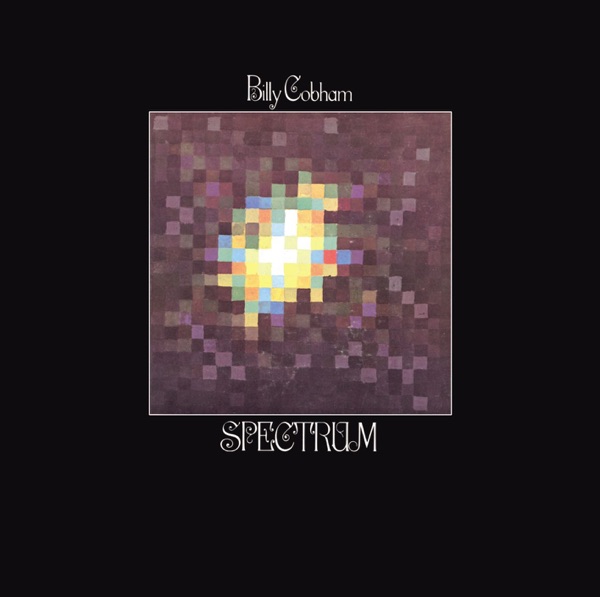
The record that put him on the map for a lot of people is Spectrum (1973), his debut as a leader, and it still sounds like someone turned the dial past the last number on the scale. The guitars are loud, the grooves are heavy, the time signatures shift without warning, and Cobham is right in the middle of it playing with a physical authority that most drummers couldn't approach. He was an early adopter of the open-handed technique — playing without crossing his arms — which gave him unusual speed and a distinctive visual style that people noticed immediately.
Before Spectrum (1973) there was his time with John McLaughlin's Mahavishnu Orchestra, and that is the context where most serious listeners first encountered him. The band was genuinely loud, genuinely intense, and playing at tempos that didn't really have precedent in jazz. Cobham wasn't just keeping up — he was driving the thing. His work on The Inner Mounting Flame (1971) is still studied by drummers who want to understand how someone can be simultaneously that powerful and that precise.
His solo career after Spectrum (1973) was more variable. He made plenty of records throughout the seventies and eighties, some of which leaned hard into funk and commercial fusion in ways that divided listeners. If you go in expecting every album to match the intensity of his early work, you'll find some disappointing detours. But that's also an honest picture of what a working musician's career looks like — not every record is a statement, some are just jobs or experiments that didn't fully land.
What holds up across all of it is the drumming itself. Cobham has a quality that is genuinely rare: you can hear him in a mix immediately. The attack, the tone, the way he places his hits slightly differently than anyone else — it is an identifiable voice on an instrument where that is hard to achieve. If you are just getting into him, start with Spectrum (1973) and The Inner Mounting Flame (1971), and don't be surprised if you find yourself listening to those records more than once before you move on.