Where do you listen?
Choose your streaming service
inside the sleeve
Loading…
inside the sleeveITS
⌕
Read About
Band - USA - Jazz-Rock Fusion

Mahavishnu
Orchestra

Start here The Inner Mounting Flame (1971) →
1971 - 1976, New York, USA

Few bands in the early 1970s played with this kind of controlled ferocity — a wall of electric sound that borrowed equally from Miles Davis, Indian classical music, and hard rock. The Mahavishnu Orchestra was the project of British guitarist John McLaughlin, who had just come off Bitches Brew (1970) with Miles and was ready to lead something entirely his own. At their best, they made music that felt genuinely urgent, like five extraordinarily skilled musicians pushing each other to the edge of what was possible in real time.

Jazz Fusion
Mahavishnu Orchestra

Fire, Precision, and Volume

The first Mahavishnu Orchestra lineup — John McLaughlin on guitar, Jan Hammer on keyboards, Jerry Goodman on violin, Rick Laird on bass, and Billy Cobham on drums — was assembled in New York in 1971 and recorded what many fans still consider their definitive statement: The Inner Mounting Flame (1971). If you're coming to this band cold, that's the place to start. The album opens with 'Meeting of the Spirits' and immediately announces its intentions: odd time signatures, interlocking lines, McLaughlin's guitar tone sitting somewhere between jazz articulation and rock aggression. It's loud, it's dense, and it rewards patience.

What made this lineup special was the combination of technical precision and genuine collective energy. Cobham in particular plays like he's solving a math problem at full sprint — polyrhythmic, powerful, always driving. McLaughlin had been studying with spiritual teacher Sri Chinmoy and brought that influence into the band's name and aesthetic, but the music itself never feels like meditation. It feels like sparring. The compositions are structured but leave room for long improvisations that don't meander so much as they accelerate, each musician finding ways to raise the temperature.

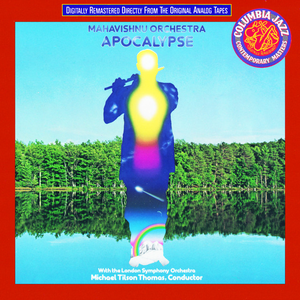
The second album, Birds of Fire (1973), refined what came before without adding much new. The title track became one of their most recognizable pieces — a coiling, asymmetric theme that shows how well they could lock together on difficult material. After that, the original lineup fractured. Personalities clashed, and by 1973 Goodman, Hammer, Laird, and Cobham had all departed. McLaughlin rebuilt the band with new members, including violinist Jean-Luc Ponty for a period, but this second incarnation never quite caught the same lightning. Apocalypse (1974), recorded with a full orchestra, was ambitious but divided opinion sharply — more grandiose, less ferocious.

It's worth being honest about what the Mahavishnu Orchestra were not. They weren't particularly interested in blues feeling or swing, two of jazz's foundational pillars. Their music was almost entirely composed and arranged, leaving little space for the kind of conversational interplay you find in a piano trio or a classic hard bop group. Some listeners find them cold or relentlessly intense — and that's a fair reaction. The music doesn't invite you in gently. It expects you to keep up. But if you're in the right mood for something that treats complexity as a form of expression rather than a showing-off exercise, they deliver that consistently.

Their legacy sits in a somewhat awkward place. They influenced generations of fusion players and guitarists, and McLaughlin's reputation as one of the most technically gifted guitarists in any genre is well-established. But fusion as a genre fell out of critical fashion fairly dramatically by the late 1970s, and the Orchestra got caught in that backlash. Today, with some distance, it's easier to hear what they were actually doing: trying to synthesize a genuinely global sound — Indian rhythmic concepts, European orchestral ambition, American rock energy, jazz improvisation — at a moment when that felt possible and exciting rather than eclectic. Whether they fully succeeded is still debated, but the attempt was serious.

Facts
Founded1971, New York, USA
Led byJohn McLaughlin
Active1971 – 1976 (with breaks and reformations)
Known forElectric jazz-rock fusion with Indian rhythmic influence and extraordinary technical demands
Connections
John McLaughlinFounder and guitarist, New York
→
Billy CobhamDrummer, original lineup
→
Jan HammerKeyboardist, original lineup
→
Read more

Discography

15 records
The Inner Mounting Flame
1971
The Inner Mounting Flame (With John McLaughlin)
1971
Inner Mounting Flame
1971
Original Album Classics
1971
Mahavishnu
Mahavishnu
1972
Birds Of Fire
Birds Of Fire
1973
Between Nothingness and Eternity
1973
Unreleased Tracks From Between Nothingness & Eternity
1973
Between Nothingness & Eternity
1973
The Lost Trident Sessions
1973
Apocalypse (with London Symphony Orchestra)
1974
Apocalypse
Apocalypse
1974
Visions of the Emerald Beyond
1975
Inner Worlds
Inner Worlds
1976
Adventures In Radioland
1986

Collaborations

Live on Youtube

Explore Further

Selected connections
Album, 1970
Bitches Brew
Miles Davis's electric landmark that McLaughlin played on — essential context for understanding where the Mahavishnu sound came from.
Explore →
Guitarist, UK
John McLaughlin
McLaughlin's solo work and his acoustic group Shakti show the full range of the musical mind behind the Orchestra.
Explore →

Who's playing
Listen next
Recording Info
Track listing
Musicians
Further Reading
Read more

Where next?

More by this artist

Albums with the same musicians

From the same era

Similar artists

inside the sleeve
Growing
Jazz, explained without pretension.
Read · Follow the connections · Press play
Right now: 7,100+ albums · 440+ artists
Start here
New to jazz? These artists are good places to start.
Loading…
Explore
Nine records worth getting lost in.
Born today
Album of the day
A landmark record, every day.
Read
  • Loading…
Article archive →
Recently added
Purpose
Inside the Sleeve is your companion on a journey through jazz — not a textbook, but something closer to a knowledgeable friend sitting next to you while you listen. Read about an artist, press play, follow a connection, discover an album you didn't know you needed.
Suggestions
Read

Articles

Essays, guides, and lists about jazz and the records that matter.

Loading…

Genre

Key Artists
Further Reading

Essential Albums

Related Genres

In This Genre

About

Inside the Sleeve

Work in progress

Inside the Sleeve grows continuously — new artists and albums are added, essays refined, as visitors explore and our editors follow up on what they find. Content, features, and design are still evolving; use the Report error button on any page to flag something that seems off.

Content

Every artist, album, and release date on Inside the Sleeve is real — verified against trusted sources including MusicBrainz and Wikipedia. We don't invent discographies or fabricate records. AI compiles that verified information into readable prose — essays on artists, albums, and the music itself. We can't manually review every essay before publishing, but every reported error is checked by a human editor.

Inside the Sleeve is not a review site. We're not here to rate or rank — we're here to guide you in. Where an album stands out, we'll say so. Where an artist changed everything, you'll know why. But we won't tear anything down. Jazz history is complex and sources sometimes disagree — if you spot something that seems off, please report it.

Streaming

Inside the Sleeve links to Spotify and Apple Music so you can listen while you read. These are not affiliate links. For Spotify, links open a search on open.spotify.com — we do not have direct links to specific recordings. For Apple Music, direct links are used where available, otherwise a search is opened.

Your choice of streaming service is stored locally in your browser only. It is never sent to our servers.

We're working on deeper Spotify integration, including direct links to specific recordings.

Privacy

Inside the Sleeve does not collect personal data and does not use cookies. We count page visits anonymously using a self-hosted analytics tool — no personal identifiers are stored, and the data never leaves our own server. The only preference stored on your device is your streaming service choice, saved locally in your browser and never transmitted.

When you submit a suggestion or error report, the text you write is stored in our database. No name or email is required or collected unless you choose to provide one.

Third-party services

Spotify and Apple Music are independent services with their own terms of use and privacy policies. Inside the Sleeve is not affiliated with or endorsed by either company.

Support

Inside the Sleeve is free and ad-free. If you enjoy it, a coffee helps cover server costs and keeps the project going.

Amazon

Some book recommendations on Inside the Sleeve link to Amazon. Buying through these links costs you nothing extra — but Amazon pays us a small commission, which goes directly towards keeping the site running. It's a simple way to support the project if you were going to buy the book anyway.

As an Amazon Associate, Inside the Sleeve earns from qualifying purchases.

Questions or feedback? Use the suggestion box on the front page.

Inside the Sleeve — A guide for those who want to go beyond the obvious About & Privacy