1974 · Album
Apocalypse (with London Symphony Orchestra)
Recorded 1974 · Columbia Records · Produced by Mahavishnu Orchestra
When Fusion Met the Orchestra
Mahavishnu Orchestra proved their music could expand beyond the trio format without losing its fire.
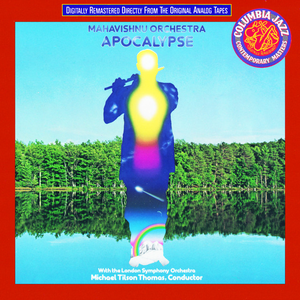
By the time Mahavishnu Orchestra recorded Apocalypse (1974), the band had already pushed fusion into some pretty aggressive territory. Working with the London Symphony Orchestra was a calculated risk—the kind of thing that could either feel like a natural evolution or a complete misstep. What happened was closer to the former, though it's not without its awkward moments. The orchestral arrangements give the band's volcanic energy a different kind of weight. Instead of the trio's claustrophobic intensity, you get these sweeping string sections and brass that actually has room to breathe, which sounds obvious but changes everything about how the music lands.
The album works best when John McLaughlin and his band stop trying to blend in with the orchestra and just let it happen naturally. There are passages where the fusion rhythm section crashes against the strings, and it's genuinely thrilling—like two different musics acknowledging each other but refusing to compromise. Other moments feel more labored, where the orchestra seems to be accompanying rather than collaborating. The pacing is uneven, and some tracks wander without quite justifying their length. It's not the best entry point to Mahavishnu Orchestra; that would be Birds of Fire (1973), which captures the trio at its most focused and furious.
Apocalypse isn't quite a peak either. It's more of a document of ambition—an attempt to prove that electric jazz fusion could coexist with classical resources without either one apologizing. The record has its defenders, and if you already love the band's earlier work, it's worth hearing what they were reaching for. Just go in knowing it's messier than their studio classics, and that's kind of the point.


