King of the Palladium Floor
Puente grew up in East Harlem, a neighborhood that in the 1930s and 40s was crackling with Caribbean music brought north by Puerto Rican and Cuban communities. He absorbed it all — Cuban son, Puerto Rican rhythms, American big band swing — and by the time he came back from Navy service and enrolled at Juilliard, he had both the street education and the formal training to do something nobody else was quite doing. He could write charts, lead a big band, and also get behind the timbales and tear the roof off a room.
The Palladium Ballroom on Broadway was his proving ground. Through the late 1940s and into the 1950s, Puente, Tito Rodriguez, and Machito were the three kings of mambo in New York, each with a distinct style and a loyal following. Puente's band was tight and driving, built for dancing but with enough sophistication to reward listening. His arrangements had the rhythmic precision of Afro-Cuban music locked together with the brass writing of American big bands. Mambo Diablo (1985) shows what that combination sounded like at full force — precise, layered, and completely relentless.
He recorded constantly, with estimates putting his album count somewhere north of a hundred. That kind of output means the catalog is uneven, but it also means Puente was always working, always gigging, always finding new contexts to apply what he knew. He collaborated with jazz heavyweights like Woody Herman and Cal Tjader, and those records hold up because Puente could code-switch between Latin and jazz settings without sounding like a guest in either direction. Top Percussion (1957) is worth seeking out if you want to hear what he could do when the focus was entirely on rhythm.
The 1987 collaboration with Charlie Palmieri and the wider salsa explosion of the 1970s and 80s kept him visible across generations. Younger audiences who had no memory of the Palladium era found him through his appearances with Carlos Santana — Santana's cover of "Oye Como Va" became so popular that it introduced Puente's writing to rock audiences worldwide. Puente reportedly found this amusing. He had been playing that tune for years before anyone at a rock festival had ever heard of him.
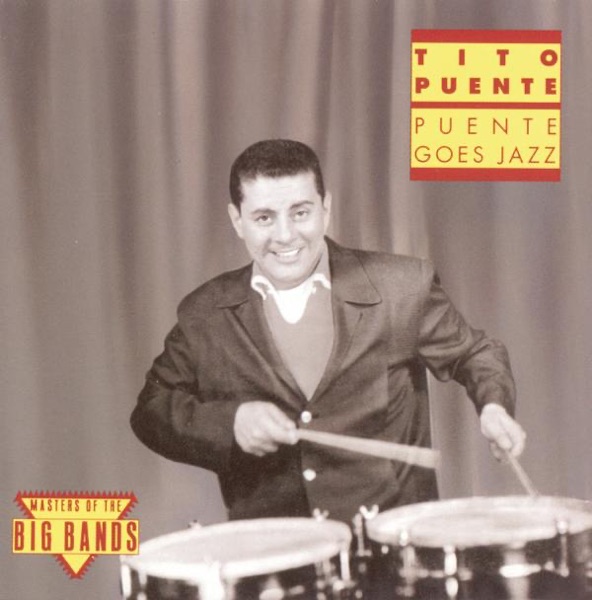
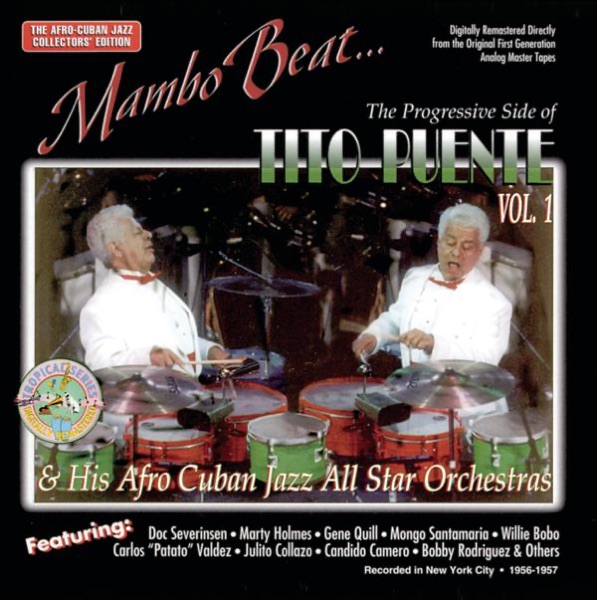
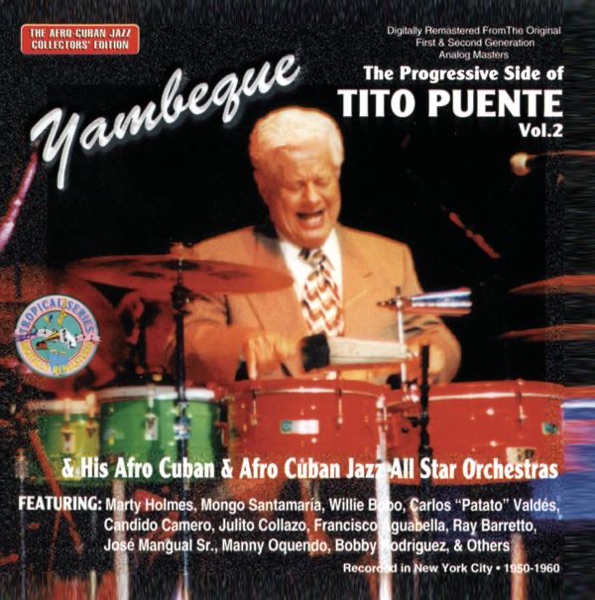
What you get when you put on a Puente record is not background music. The timbales are right up front, and his solos are conversational — he plays phrases that seem to respond to the horns, builds tension, releases it, builds it again. He had a showman's instinct for when to pull back and when to push hard, which is probably why his live recordings often outshine the studio ones. He kept performing into his seventies, and by all accounts the energy never really left. The man spent half a century doing the thing he was best at, and the recordings make it obvious that he knew exactly how good he was.