Where do you listen?
Choose your streaming service
inside the sleeve
Loading…
inside the sleeveITS
⌕
Read About
Piano & Bandleader - USA - Big Band / Avant-Garde

Stan
Kenton

1911 - 1979, USA

Stan Kenton led one of the loudest, most argumentative orchestras in jazz history — a band that could shake walls and provoke equal amounts of devotion and eye-rolling from critics. He was never content to just swing; he wanted jazz to be taken seriously as concert music, and he pushed his orchestras into territory that made a lot of people genuinely uncomfortable. Whether that ambition always paid off is a debate jazz fans still haven't settled.

SwingAvant-Garde JazzCool JazzLatin Jazz
Stan Kenton

Loud, Large, and Unapologetic

Kenton's sound is not subtle. If you put on almost any record from his peak years, you're going to hear brass sections playing like they're trying to fill a stadium, dissonant chord clusters, and a rhythmic aggression that swings differently than Basie or Ellington — it's heavier, more deliberate, like the band is daring you to keep up. Some people love it immediately. Others find it exhausting. Both reactions are completely reasonable.

He formed his first real orchestra in 1941 in California and built a following fast, partly because the band was genuinely exciting live and partly because Kenton had a showman's instinct. Songs like Artistry in Rhythm (1945) became calling cards — pieces that signaled he wasn't interested in playing background music for dancers. He wanted audiences to sit down and listen. That attitude made him a polarizing figure in the swing era, when most bandleaders were still trying to keep people on the dance floor.

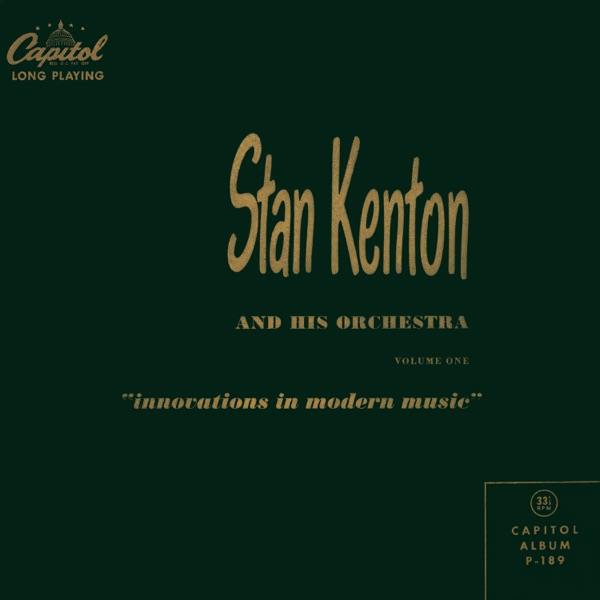
By the early 1950s, he was commissioning arrangements from writers like Pete Rugolo and Bill Russo that pushed into genuinely strange territory — strings, mellophoniums, extended forms that owed as much to 20th-century classical music as to jazz. The Innovations in Modern Music (1950) project was the peak of this, a forty-piece orchestra that was either visionary or overblown depending on your tolerance for ambition. Critics mostly thought it was overblown. Audiences were more divided. Kenton kept going anyway.

What's worth appreciating, even if you're not a convert, is how seriously he invested in developing young musicians. His bands over the decades produced an extraordinary number of players who went on to significant careers — Art Pepper, Maynard Ferguson, Lee Konitz, Zoot Sims, Conte Candoli, and many others passed through his orchestra. He also ran clinics and educational programs at a time when most bandleaders had no interest in that kind of work. The pedagogical side of Kenton is often overlooked because the big operatic records get all the attention.

The honest assessment is that Kenton's catalog is uneven. Some of it is thrilling and some of it tips into pomposity — the man genuinely believed jazz could be a form of high art, and occasionally that belief led him somewhere airless. But the best of his work, particularly the records with strong soloists and tight arrangements, holds up as some of the most muscular and distinctive big band music ever recorded. Go in expecting volume, ambition, and occasional excess, and you'll probably find something worth your time.

Facts
BornFebruary 19, 1911, Wichita, Kansas
DiedAugust 25, 1979, Los Angeles, California
InstrumentPiano, Bandleader
Active1941 – 1979
Known forProgressive big band orchestras, Innovations in Modern Music project, developing major jazz soloists
Connections
Pete RugoloChief arranger and musical collaborator, Los Angeles
→
Art PepperAlto saxophonist, Kenton Orchestra
→
Maynard FergusonTrumpet virtuoso, Kenton Orchestra
→
Lee KonitzAlto saxophonist, Kenton Orchestra
→
June ChristyFeatured vocalist, Kenton Orchestra
→
Read more

Discography

37 records
Artistry in Rhythm
Artistry in Rhythm
1946
♫
Encores
1949
Stan Kenton's Milestones
1950
Innovations in Modern Music
1950
Stan Kenton Presents
1951
Stan Kenton & His Innovations Orchestra
1952
City of Glass
City of Glass
1952
♫
Stan Kenton Conducts Robert Graettinger’s City of Glass and This Modern World
1953
Portraits on Standards
1953
This Modern World
This Modern World
1954
Popular Favorites By Stan Kenton
1955
Cuban Fire
Cuban Fire
1956
Kenton in Hi-Fi
Kenton in Hi-Fi
1956
Kenton With Voices
Kenton With Voices
1957
♫
Lush Interlude
1958
The Ballad Style of Stan Kenton
1958
A Merry Christmas!
A Merry Christmas!
1961
Kenton’s West Side Story
1961
The Romantic Approach
1961
Two Much!
Two Much!
1961
Sophisticated Approach
1962
Adventures in Jazz
Adventures in Jazz
1962
Adventures in Time
Adventures in Time
1962
Artistry In Bossa Nova
1963
Adventures in Blues
Adventures in Blues
1963
Artistry In Voices and Brass
1964
♫
Kenton / Wagner
1964
The Formative Years
The Formative Years
1967
From The Creative World Of Stan Kenton Comes... Finian's Rainbow
1968
♫
Hair
1969
Stan Kenton Plays Chicago
1974
♫
The Lost Concert: Live at the Cocoanut Grove, Los Angeles, Volume 2
1978
Festival of Modern American Jazz
1989
New Concepts of Artistry in Rhythm
1989
♫
At the Rendezvous, Volume I
1989
Kenton '56 In Concert
1990
Stan Kenton Vol. 2
Stan Kenton Vol. 2
1990

Collaborations

Live on Youtube

Explore Further

Selected connections
Bandleader, USA
Boyd Raeburn
Another 1940s bandleader who pushed big band jazz toward dissonance and orchestral ambition — less famous than Kenton but just as interesting if you liked the experimental edge.
Explore →
Album, 1950
Innovations in Modern Music
The most audacious thing Kenton ever put his name on — forty pieces, strings, and arrangements that have no business fitting inside jazz. Start here if you want to understand what he was actually reaching for.
Explore →
Alto Saxophonist, USA
Art Pepper
Pepper developed much of his voice inside the Kenton band and went on to record some of the most emotionally direct alto saxophone albums in the music. A natural next stop after exploring where he came from.
Explore →

Who's playing
Listen next
Recording Info
Track listing
Musicians
Further Reading
Read more

Where next?

More by this artist

Albums with the same musicians

From the same era

Similar artists

inside the sleeve
Growing
Jazz, explained without pretension.
Read · Follow the connections · Press play
Right now: 7,100+ albums · 440+ artists
Start here
New to jazz? These artists are good places to start.
Loading…
Explore
Nine records worth getting lost in.
Born today
Album of the day
A landmark record, every day.
Read
  • Loading…
Article archive →
Recently added
Purpose
Inside the Sleeve is your companion on a journey through jazz — not a textbook, but something closer to a knowledgeable friend sitting next to you while you listen. Read about an artist, press play, follow a connection, discover an album you didn't know you needed.
Suggestions
Read

Articles

Essays, guides, and lists about jazz and the records that matter.

Loading…

Genre

Key Artists
Further Reading

Essential Albums

Related Genres

In This Genre

About

Inside the Sleeve

Work in progress

Inside the Sleeve grows continuously — new artists and albums are added, essays refined, as visitors explore and our editors follow up on what they find. Content, features, and design are still evolving; use the Report error button on any page to flag something that seems off.

Content

Every artist, album, and release date on Inside the Sleeve is real — verified against trusted sources including MusicBrainz and Wikipedia. We don't invent discographies or fabricate records. AI compiles that verified information into readable prose — essays on artists, albums, and the music itself. We can't manually review every essay before publishing, but every reported error is checked by a human editor.

Inside the Sleeve is not a review site. We're not here to rate or rank — we're here to guide you in. Where an album stands out, we'll say so. Where an artist changed everything, you'll know why. But we won't tear anything down. Jazz history is complex and sources sometimes disagree — if you spot something that seems off, please report it.

Streaming

Inside the Sleeve links to Spotify and Apple Music so you can listen while you read. These are not affiliate links. For Spotify, links open a search on open.spotify.com — we do not have direct links to specific recordings. For Apple Music, direct links are used where available, otherwise a search is opened.

Your choice of streaming service is stored locally in your browser only. It is never sent to our servers.

We're working on deeper Spotify integration, including direct links to specific recordings.

Privacy

Inside the Sleeve does not collect personal data and does not use cookies. We count page visits anonymously using a self-hosted analytics tool — no personal identifiers are stored, and the data never leaves our own server. The only preference stored on your device is your streaming service choice, saved locally in your browser and never transmitted.

When you submit a suggestion or error report, the text you write is stored in our database. No name or email is required or collected unless you choose to provide one.

Third-party services

Spotify and Apple Music are independent services with their own terms of use and privacy policies. Inside the Sleeve is not affiliated with or endorsed by either company.

Support

Inside the Sleeve is free and ad-free. If you enjoy it, a coffee helps cover server costs and keeps the project going.

Amazon

Some book recommendations on Inside the Sleeve link to Amazon. Buying through these links costs you nothing extra — but Amazon pays us a small commission, which goes directly towards keeping the site running. It's a simple way to support the project if you were going to buy the book anyway.

As an Amazon Associate, Inside the Sleeve earns from qualifying purchases.

Questions or feedback? Use the suggestion box on the front page.

Inside the Sleeve — A guide for those who want to go beyond the obvious About & Privacy