The Swinger Who Never Strained
Zoot Sims came up through the big band world, most famously as one of Woody Herman's Four Brothers alongside Stan Getz, Herbie Steward, and [Serge Chaloff. That 1947 saxophone section became one of the most celebrated in jazz history, and it shaped Zoot's sound in important ways — light on the chest tone, rhythmically fluid, deeply rooted in Lester Young's influence. But where Getz drifted toward cool introspection, Zoot stayed warmer, more sociable, more committed to the pleasure of simply swinging.
What you actually hear when you put on a Zoot Sims record is a tenor voice that sits somewhere between a late-night conversation and a friendly argument at a bar. There's nothing academic about it. His phrases are clean and logical, built from the inside out, and he has a way of ending a line that feels like a wink — not smug, just knowing. He never sounds like he's trying to impress you, which somehow makes him more impressive. His tone has a slight roughness that keeps it honest, and his rhythm is so internalized that even ballads feel propulsive.
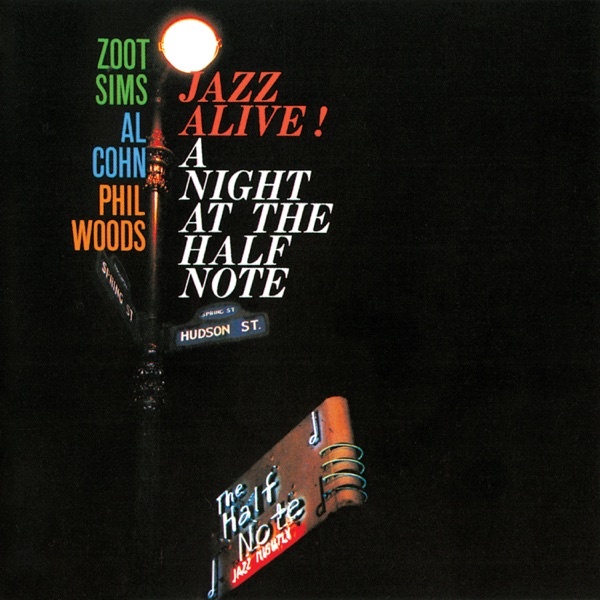
His partnership with alto saxophonist Al Cohn is one of the great two-saxophone friendships in jazz. They recorded together for decades, and their interplay had a rare quality — two voices so compatible they could finish each other's sentences, yet distinct enough that you could always tell them apart. Albums like Al and Zoot (1957) capture this chemistry perfectly: relaxed, swinging, completely unpretentious, the kind of record that makes you feel like you've been let into a very good rehearsal.
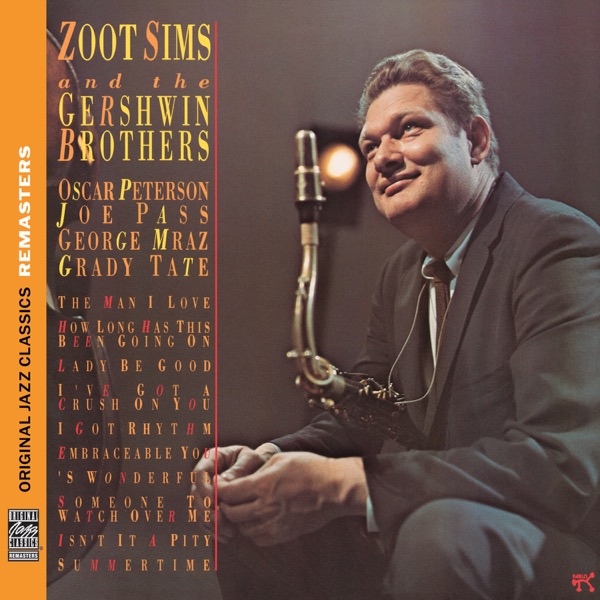
Zoot also made a series of excellent records for Pablo in the 1970s and early 1980s, often in small group settings with Oscar Peterson or Joe Pass, that showcased how well he'd aged. He wasn't reinventing himself; he was simply getting better at being himself. [Hawthorne Nights (1976) and Soprano Sax (1976) — the latter a surprise from a player not primarily associated with the soprano — show a musician completely at home in his own skin, still curious, still swinging, still warm.
If you're introducing someone to Zoot Sims, tell them to expect no drama, no grand statements, no stylistic revolutions. What they'll get instead is a deeply satisfying hour in the company of a player who loved jazz, understood it from the inside, and communicated that love directly and generously every time he picked up the horn. That's rarer than it sounds.