Where do you listen?
Choose your streaming service
inside the sleeve
Loading…
inside the sleeveITS
⌕
Read About
Trumpet - United States - Post-Bop, Hard Bop, Soul Jazz

Roy
Hargrove

1969 - 2018, Waxahachie, Texas, USA

Roy Hargrove arrived in New York in the late 1980s as a prodigy with a burnished tone and an instinctive grasp of tradition—yet he never mistook reverence for invention. Over three decades, he moved fluidly between bebop, funk, and Afro-Cuban rhythms, always leading with emotion rather than technical display. His best work captured something increasingly rare in jazz: the feeling of a musician genuinely discovering what to play in the moment.

Post-BopHard BopLatin JazzSoul Jazz
Roy Hargrove

A Trumpet's Honest Conversation

Roy Hargrove showed up in New York in the late 1980s and just belonged there immediately. He was from Texas, which meant he'd already soaked up real jazz history, and he knew how to play like Miles Davis, Wynton Marsalis, and Freddie Hubbard. But what made him special wasn't that he could nail every technical thing or that he was trying to break jazz apart. It was simpler than that—he sounded like he actually wanted to talk to you through his horn. His tone was rich and smooth, but it could turn sad or aggressive depending on what needed to happen in the moment.

In the early '90s, he started leading his own bands with albums like Visions (1971) and Of Kindred Spirits. His quintet usually had tenor saxophonist Antonio Hart in it, and they'd move between straight-ahead hard bop and more open, modal stuff. These weren't trying to change everything about jazz, but they were the real thing—thoughtfully made, honest in feeling, and proof that there was still plenty to say in the post-bop language. Roy just knew when to step on the gas and when to listen, when a bluesy bend mattered more than playing a bunch of fast notes.

As the decade went on, his curiosity took him all over the place. He started Crisol, an Afro-Cuban jazz group with conguero Giovanni Hidalgo and pianist Danilo Pérez, and it wasn't about treating Latin jazz like some precious thing—it was real musicians creating together. His acoustic band got tighter too, and he started playing more in organ trio settings, where you could hear how much he understood about playing with a Hammond B-3. He knew that groove was something alive that you had to lock into.

His later albums, especially from the 2000s on, showed him getting braver without losing what made him work in the first place. He played soul-jazz, led bigger groups, and never apologized for wanting to play something soulful or funky. He recorded with Herbie Hancock, Robert Glasper, and so many others—each one felt like a conversation with someone new. When he died in 2018 at 48, we lost somebody who was still figuring things out, still learning.

Facts
BornOctober 6, 1969, Waxahachie, Texas
DiedNovember 02, 2018, New York, United States
InstrumentTrumpet
Active1986–2018
Known forPost-bop quintet leadership, Afro-Cuban jazz (Crisol), warmth and emotional directness in tone
Connections
Wynton MarsalisMentor and early influence, New York
→
Antonio HartLongtime collaborator (tenor saxophone), Quintet member
→
Danilo PérezCollaborator in Crisol (piano), Afro-Cuban explorations
→
Giovanni HidalgoCrisol co-leader (congas), Latin jazz partnership
→
Robert GlasperLater collaborator (piano), Contemporary jazz dialogue
→
Read more

Discography

14 records
Diamond in the Rough
1990
Public Eye
Public Eye
1991
The Vibe
The Vibe
1992
Nothing Serious
Nothing Serious
1994
Approaching Standards
1994
Parker's Mood
Parker's Mood
1995
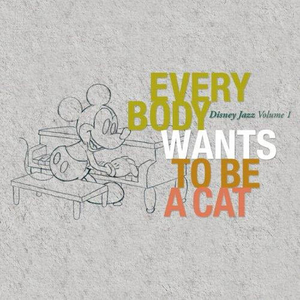
Disney Jazz Volume I: Everybody Wants To Be A Cat
1995
With The Tenors Of Our Time
1997
Habana
Habana
1997
Grande-Terre
Grande-Terre
1998
Moment To Moment
Moment To Moment
2000
Hard Groove
Hard Groove
2003
Family
Family
2008
Earfood
Earfood

Collaborations

Live on Youtube

Explore Further

Selected connections
Album, 1993
Visions
Essential early statement defining Hargrove's post-bop quintet voice and emotional approach to hard bop.
Explore →
Ensemble Project, 1995
Crisol
Demonstrates Hargrove's commitment to Afro-Cuban jazz as creative exchange rather than tradition, featuring Giovanni Hidalgo and Danilo Pérez.
Explore →
Album, 1995
Of Kindred Spirits
Deepens his quintet language while exploring soul-jazz and spiritual resonance beyond bebop orthodoxy.
Explore →

Who's playing
Listen next
Recording Info
Track listing
Musicians
Further Reading
Read more

Where next?

More by this artist

Albums with the same musicians

From the same era

Similar artists

inside the sleeve
Growing
Jazz, explained without pretension.
Read · Follow the connections · Press play
Right now: 7,100+ albums · 440+ artists
Start here
New to jazz? These artists are good places to start.
Loading…
Explore
Nine records worth getting lost in.
Born today
Album of the day
A landmark record, every day.
Read
  • Loading…
Article archive →
Recently added
Purpose
Inside the Sleeve is your companion on a journey through jazz — not a textbook, but something closer to a knowledgeable friend sitting next to you while you listen. Read about an artist, press play, follow a connection, discover an album you didn't know you needed.
Suggestions
Read

Articles

Essays, guides, and lists about jazz and the records that matter.

Loading…

Genre

Key Artists
Further Reading

Essential Albums

Related Genres

In This Genre

About

Inside the Sleeve

Work in progress

Inside the Sleeve grows continuously — new artists and albums are added, essays refined, as visitors explore and our editors follow up on what they find. Content, features, and design are still evolving; use the Report error button on any page to flag something that seems off.

Content

Every artist, album, and release date on Inside the Sleeve is real — verified against trusted sources including MusicBrainz and Wikipedia. We don't invent discographies or fabricate records. AI compiles that verified information into readable prose — essays on artists, albums, and the music itself. We can't manually review every essay before publishing, but every reported error is checked by a human editor.

Inside the Sleeve is not a review site. We're not here to rate or rank — we're here to guide you in. Where an album stands out, we'll say so. Where an artist changed everything, you'll know why. But we won't tear anything down. Jazz history is complex and sources sometimes disagree — if you spot something that seems off, please report it.

Streaming

Inside the Sleeve links to Spotify and Apple Music so you can listen while you read. These are not affiliate links. For Spotify, links open a search on open.spotify.com — we do not have direct links to specific recordings. For Apple Music, direct links are used where available, otherwise a search is opened.

Your choice of streaming service is stored locally in your browser only. It is never sent to our servers.

We're working on deeper Spotify integration, including direct links to specific recordings.

Privacy

Inside the Sleeve does not collect personal data and does not use cookies. We count page visits anonymously using a self-hosted analytics tool — no personal identifiers are stored, and the data never leaves our own server. The only preference stored on your device is your streaming service choice, saved locally in your browser and never transmitted.

When you submit a suggestion or error report, the text you write is stored in our database. No name or email is required or collected unless you choose to provide one.

Third-party services

Spotify and Apple Music are independent services with their own terms of use and privacy policies. Inside the Sleeve is not affiliated with or endorsed by either company.

Support

Inside the Sleeve is free and ad-free. If you enjoy it, a coffee helps cover server costs and keeps the project going.

Amazon

Some book recommendations on Inside the Sleeve link to Amazon. Buying through these links costs you nothing extra — but Amazon pays us a small commission, which goes directly towards keeping the site running. It's a simple way to support the project if you were going to buy the book anyway.

As an Amazon Associate, Inside the Sleeve earns from qualifying purchases.

Questions or feedback? Use the suggestion box on the front page.

Inside the Sleeve — A guide for those who want to go beyond the obvious About & Privacy