The Man Behind the Sound
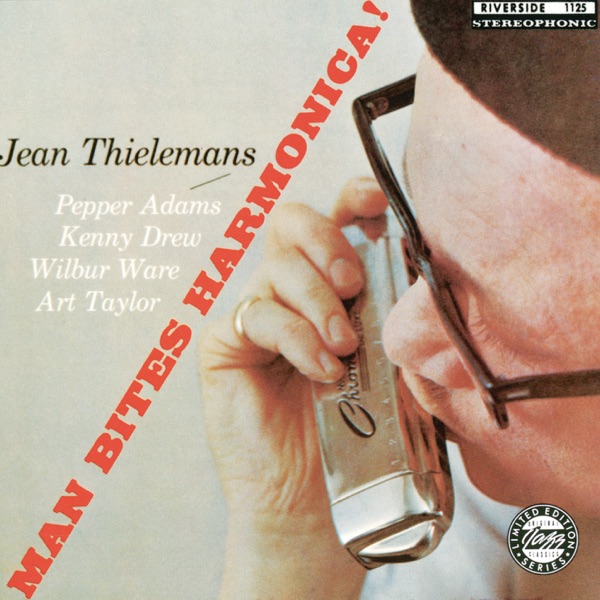
Toots came up in Brussels listening to American jazz on the radio and teaching himself guitar — eventually good enough that Django Reinhardt took notice. But it was the chromatic harmonica that became his real calling card, an instrument almost nobody took seriously as a jazz voice until he started playing it like a saxophone. The tone he got was round and slightly breathy, somewhere between a human voice and a muted horn, and he could bend notes and phrase in ways that made the whole thing feel inevitable rather than impressive.
He moved to the United States in the early 1950s and landed in exactly the right circles. He worked with George Shearing and fell in with the bebop scene in New York, absorbing the harmonic language that would define his playing for the rest of his career. What separated him from every other harmonica player wasn't just technique — it was that he genuinely swung, and he could play a ballad without a single wasted note. His whistling was equally musical, not a party trick but an actual second voice he'd use in tandem with the harp.
The bossa nova connection came through his friendship with Elis Regina and his long relationship with Brazilian music. He recorded Aquarela do Brasil and similar material with a sensitivity that felt earned rather than borrowed. He wasn't appropriating a style; he genuinely loved the music and understood how to inhabit it without flattening it. Those recordings hold up today in a way that a lot of 1960s cross-genre experiments don't.
As a session player, his list of collaborators reads like a who's who: Bill Evans, Quincy Jones, Paul Simon, Jaco Pastorius, Oscar Peterson. He played on the original Sesame Street theme. He played on countless film scores. He was the kind of musician producers called when they needed something that would make a recording feel like it had a soul. That's not a small thing — most session work disappears into the furniture, but people remember his contributions.
His own recordings as a leader — especially Toots Thielemans in Tokyo (1980) and Bluesette (1962) — are the best place to start if you've only encountered him sideways through other people's albums. The title track of Bluesette, which he composed, became a jazz standard and gets covered constantly. It's a tune that sounds simple until you try to play it, which is pretty much the definition of a well-written song. Toots kept performing well into his eighties, and the playing stayed honest until the very end.