Diana Krall and Toots in Intimate Conversation
Two masters of swing and touch meeting on equal ground, trading phrases like old friends.
Diana Krall appears on Chez Toots as a pianist, and her presence reshapes what could have been a standard harmonica showcase into something more mutual and conversational. Rather than frame the album around Toots Thielemans' dominance, Krall insists on genuine dialogue. Where a lesser pairing might split the difference between leader and accompanist, these two inhabit the same space, neither deferring unnecessarily to the other. Krall's touch is precise and unhurried, her comping restrained enough to let Thielemans breathe but responsive enough that you sense real listening happening in the room. Hein van de Geyn on bass and André Ceccarelli on drums provide steady ground, but the album lives in the space between harmonica and piano.
Thielemans was already in his eighties by this point, well past the point where musicians need to prove anything. What makes Chez Toots valuable is not a statement of endurance but the ease of the playing. There is no strain, no sense of a legend recounting old stories. Thielemans' harmonica work here feels lighter than it might have decades earlier—more interested in texture and timing than in technical display. His whistling, which had always been a secret weapon, surfaces at moments of genuine emotional directness rather than as a novelty. The session sounds like it took place in a club or living room rather than a formal studio, which turns out to be exactly what this kind of music needs.
This is neither a peak work nor a late-career summation. It is simply a good record of two accomplished musicians enjoying each other's company, which in jazz is often enough. The harmonica and piano combination rarely gets this much space in the jazz catalog, and Krall's willingness to meet Thielemans without hierarchy makes the listening experience feel unhurried and genuine.
Who's playing
Hein van de Geynbass
Bert van den Brinkpiano
André Ceccarellimembranophone
Toots Thielemansharmonica
Diana Krallperformer
Where next?
More by Toots Thielemans

Affinity 1978
The Sound: The Amazing Jean "Toots" Thielemans 1955
Toots Thielmans in Tokyo 1989
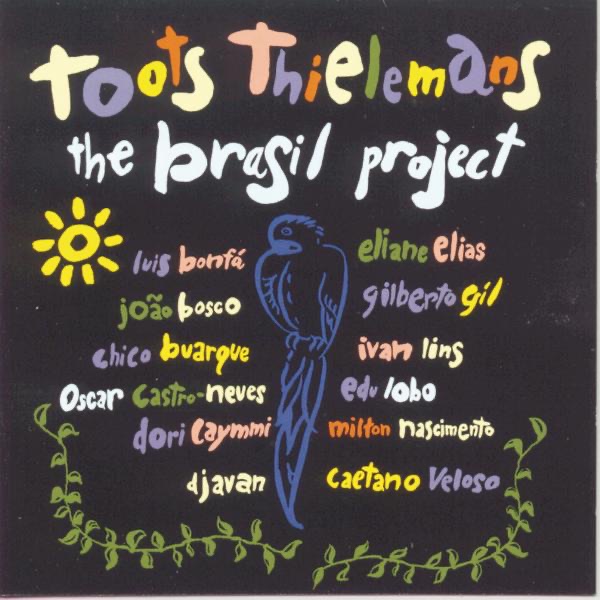
The Brasil Project 1992
The musicians on this record
Their own records, close in time