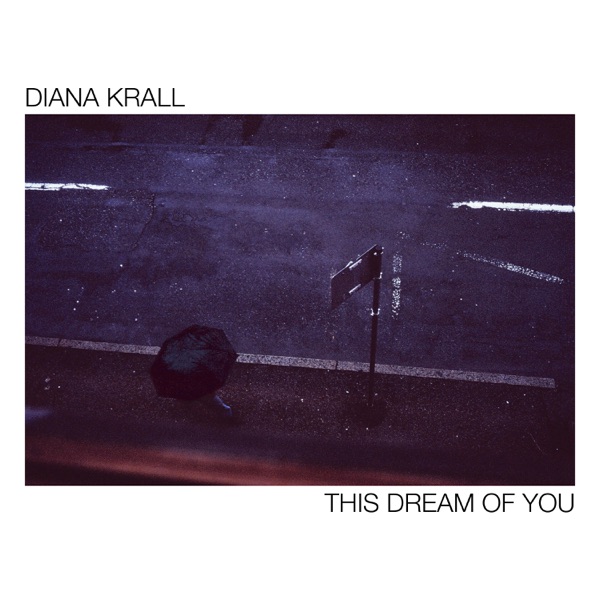
Cocktail Hour, Meant It
The knock on Diana Krall, usually from people who haven't listened closely, is that she's background music for wine bars. And sure, her albums get played in wine bars. So does Miles Davis. That tells you more about wine bars than about the music. Krall plays piano with real chops — she studied with Jimmy Rowles in Los Angeles as a young woman, and that experience gave her a harmonic vocabulary that goes well beyond what most singer-pianists bother with. She comps behind her own voice with the attentiveness of a sideman, which is genuinely hard to do.
Her early albums on the Justin Time label in the early 1990s were small, close, and clearly made by someone still figuring out her identity. Then When I Look in Your Eyes (1999) happened — a full orchestra, lush arrangements, and a commercial breakthrough that put her on a path very few jazz artists ever find. Some of those records from the early 2000s lean pretty hard into the pop side of things, and if you come to Krall looking for adventurous improvisation you might find them a little tidy. But The Look of Love (2001) and Live in Paris (2002) show what she sounds like when the setting suits her: controlled, warm, and quietly swinging.
Her piano playing is the thing that gets underrated. She doesn't showboat. Her solos tend to be short, melodically sensible, and well-placed — she's more interested in the shape of a performance than in demonstrating what she can do. Nat King Cole is the obvious touchstone, both the piano style and the intimate way of delivering a lyric without overselling it. But there's also a bit of Oscar Peterson in her left hand, which makes sense given that Peterson was something of a patron saint for Canadian jazz pianists of her generation.
She married Elvis Costello in 2003, and a few of her later albums show his influence — Glad Rag Doll (2012) was a genuine left turn into pre-war pop and blues that surprised people who had her pegged. It didn't all work, but it was clearly made out of real enthusiasm rather than market calculation. That restlessness is actually one of the more interesting things about her catalog if you spend time with it.
If you're coming to her fresh, start with Live in Paris (2002) — it's the best argument for everything she does well. The trio is tight, she sounds relaxed, and you get a clear sense of how she thinks about a song. From there, go back to Only Trust Your Heart (1995) to hear what she sounded like before the production got bigger. The orchestral albums are pleasant but they're not where the real personality is.