Where do you listen?
Choose your streaming service
inside the sleeve
Loading…
inside the sleeveITS
⌕
Read About

♫

Facts
Connections
Read more

Discography

Collaborations

Live on Youtube

Explore Further

Selected connections
2009 · Album

Quiet Nights

↑ Diana Krall

Verve Records · Released: March 31, 2009 · Album Number: Tenth studio album
Quiet Nights

Intimate Standards at Midpoint

A pianist returning to what she does best: accompany herself through elegant, unhurried songs.

When Quiet Nights arrived in spring 2009, it landed as a straightforward piano-and-voice record in a catalog full of them—which is to say it did not announce itself as a turning point. Krall had spent the decade since her commercial peak exploring different textures: orchestral arrangements, funk-inflected experiments, duets. This album, by contrast, was almost classical in its restraint. Critics who paid attention appreciated it, but there was no moment of sudden discovery or reassessment. The album sold respectably, moved through the market on Krall's established reputation, and settled in as a solid entry rather than a landmark. What mattered was not the landing but what the record actually contained.

Quiet Nights is Krall doing the thing she has always done best: sitting at the piano and singing standards with a touch so light it can feel almost invisible. The album strips away the session musicians and orchestration that had padded earlier records, trusting instead in the acoustics of voice and keys. The material is familiar—Jobim, the Great American Songbook—but the approach is deliberately understated. There is no showboating. A song breathes or it doesn't, and here most do. Tracks like the title track possess a stillness that rewards close listening; you notice the space between phrases, the way her voice sits just behind the beat.

This is neither her debut nor her peak—by this point in her career, Krall had already established who she was and what audiences expected. But Quiet Nights works precisely because it asks for nothing more than attention. It is a reminder that sometimes the best version of a musician is the simplest one.

Who's playing
John Claytonbass
Diana Krallpiano
Anthony Wilsonguitar
Jeff Hamiltondrums
Paulinho da Costapercussion
Eun Mee Ahnviolin
Charlie Bisharatviolin
Caroline Campbellviolin
Darius Campoviolin
Tony Cookecello
Larry Corbettcello
Mario DeLeonviolin
Yue Dengviolin
Thomas Diennerviola
Bruce Dukovviolin
David Ewartviolin
Marlow Fisherviola
James Freebarin-Smithcello
Matt Funesviola
Alan Grunfeldviolin
Trevor Handycello
Peter Kentviolin
Razdan Kuyumjianviolin
Janet Lakatosviola
Timothy Landauercello
Liane Mautnerviolin
Dan Neufeldviola
Helen Nightengaleviolin
Sid Pageviolin
Joel Pargmanviolin
Katia Popovviolin
Barbra Porterviolin
Steve Richardscello
Gil Romeroviolin
Dan Tobin Smithcello
Tereza Stanislavviolin
Rudy Steincello
Marda Toddviola
Cécilia Tsancello
Mari Tsumuraviolin
Josefina Vergaraviolin
David Waltherviola
Amy Wickmanviolin
Evan Wilsonviola
Listen next
By Diana Krall
Wallflower 2015
More Vocal Jazz
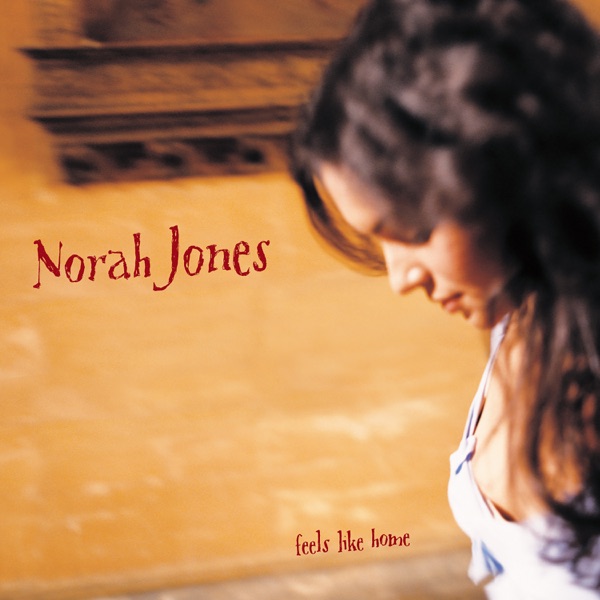
Feels Like Home 2004
Norah Jones
Recording Info
Track listing
1Where or When4:10
2Too Marvelous for Words4:06
3I’ve Grown Accustomed to Your Face4:48
4The Boy From Ipanema4:55
5Walk On By5:03
6You’re My Thrill5:47
7Este seu olhar2:46
8So Nice3:53
9Quiet Nights4:46
10Guess I’ll Hang My Tears Out to Dry5:00
11How Can You Mend a Broken Heart4:31
12Every Time We Say Goodbye5:19
Musicians
Further Reading
Read more

Where next?

More by Diana Krall
Wallflower 2015
Live in Paris 2001
Glad Rag Doll 2012
When I Look in Your Eyes 1999
All 22 albums →
More Vocal Jazz
Feels Like Home 2004
Norah Jones
Emily’s D+Evolution 2010
Esperanza Spalding
In My Room 2016
Jacob Collier
Sentimental Journey 2002
Nils Landgren
All 75 Vocal Jazz artists →

More by this artist

Albums with the same musicians

From the same era

Similar artists

inside the sleeve
Growing
Jazz, explained without pretension.
Read · Follow the connections · Press play
Right now: 7,100+ albums · 440+ artists
Start here
New to jazz? These artists are good places to start.
Loading…
Explore
Nine records worth getting lost in.
Born today
Album of the day
A landmark record, every day.
Read
  • Loading…
Article archive →
Recently added
Purpose
Inside the Sleeve is your companion on a journey through jazz — not a textbook, but something closer to a knowledgeable friend sitting next to you while you listen. Read about an artist, press play, follow a connection, discover an album you didn't know you needed.
Suggestions
Read

Articles

Essays, guides, and lists about jazz and the records that matter.

Loading…

Genre

Key Artists
Further Reading

Essential Albums

Related Genres

In This Genre

About

Inside the Sleeve

Work in progress

Inside the Sleeve grows continuously — new artists and albums are added, essays refined, as visitors explore and our editors follow up on what they find. Content, features, and design are still evolving; use the Report error button on any page to flag something that seems off.

Content

Every artist, album, and release date on Inside the Sleeve is real — verified against trusted sources including MusicBrainz and Wikipedia. We don't invent discographies or fabricate records. AI compiles that verified information into readable prose — essays on artists, albums, and the music itself. We can't manually review every essay before publishing, but every reported error is checked by a human editor.

Inside the Sleeve is not a review site. We're not here to rate or rank — we're here to guide you in. Where an album stands out, we'll say so. Where an artist changed everything, you'll know why. But we won't tear anything down. Jazz history is complex and sources sometimes disagree — if you spot something that seems off, please report it.

Streaming

Inside the Sleeve links to Spotify and Apple Music so you can listen while you read. These are not affiliate links. For Spotify, links open a search on open.spotify.com — we do not have direct links to specific recordings. For Apple Music, direct links are used where available, otherwise a search is opened.

Your choice of streaming service is stored locally in your browser only. It is never sent to our servers.

We're working on deeper Spotify integration, including direct links to specific recordings.

Privacy

Inside the Sleeve does not collect personal data and does not use cookies. We count page visits anonymously using a self-hosted analytics tool — no personal identifiers are stored, and the data never leaves our own server. The only preference stored on your device is your streaming service choice, saved locally in your browser and never transmitted.

When you submit a suggestion or error report, the text you write is stored in our database. No name or email is required or collected unless you choose to provide one.

Third-party services

Spotify and Apple Music are independent services with their own terms of use and privacy policies. Inside the Sleeve is not affiliated with or endorsed by either company.

Support

Inside the Sleeve is free and ad-free. If you enjoy it, a coffee helps cover server costs and keeps the project going.

Amazon

Some book recommendations on Inside the Sleeve link to Amazon. Buying through these links costs you nothing extra — but Amazon pays us a small commission, which goes directly towards keeping the site running. It's a simple way to support the project if you were going to buy the book anyway.

As an Amazon Associate, Inside the Sleeve earns from qualifying purchases.

Questions or feedback? Use the suggestion box on the front page.

Inside the Sleeve — A guide for those who want to go beyond the obvious About & Privacy