Toots Live: Harmonica in the Moment
A harmonica player proving he could hold a stage alone, live and unguarded.
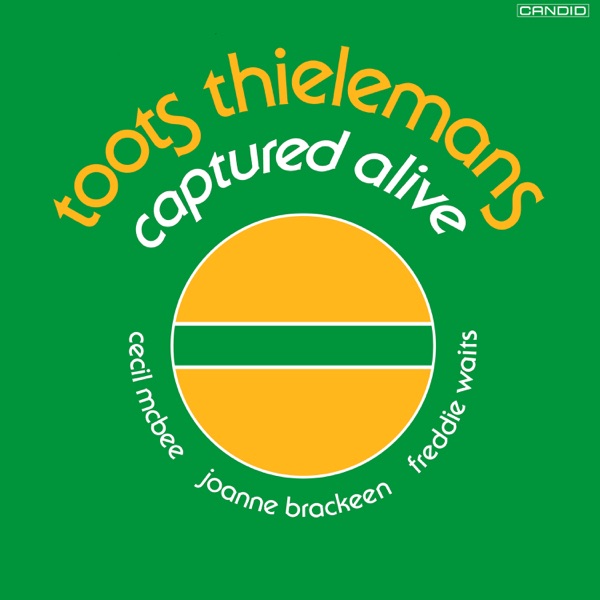
By 1974, Toots Thielemans had already established himself as jazz's harmonica voice—the musician who'd made the instrument credible when few believed it could swing. Captured Alive documents him at a point where that reputation was secure enough to risk a live recording with minimal safety net. This is Thielemans alone or in small ensemble, playing in front of an audience, which strips away studio arrangement and forces him to rely on what he does best: make the chromatic harmonica sing like a horn, breathe like a voice, and bend and sustain like nothing else in the jazz toolkit.
Live recordings from this era have a particular honesty. There's no second take, no overdub, no chance to fix a phrase that didn't land. What you hear is Thielemans listening to his bandmates and responding in real time, his harmonica darting between melody and counterline, sometimes stepping back to let others breathe. The album sits comfortably in his middle years—after the early recordings that built his name, before the elder-statesman period. He's at full power but still hungry to prove something.
For listeners new to Thielemans, this is an efficient way to hear why his reputation matters. He doesn't need strings, doesn't need a big band, doesn't need anything but his instrument and his ear. The harmonica on this record is not a novelty or a folk intrusion into jazz—it's a first-class voice, one that can carry a melody, improvise with precision, and make an audience lean in.